The review finds microplastics impair phytoplankton and zooplankton and alter microbial communities on plastics, weakening the ocean’s biological carbon pump. Published in the Journal of Hazardous Materials, the study warns these disruptions could reduce ocean CO2 uptake and contribute to warming, acidification and biodiversity loss. Authors call for coordinated policy action—cutting single‑use plastics, improving waste management and funding research to quantify climate impacts.
Study: Microplastics Are Undermining Oceans’ Ability To Absorb CO2
Microplastics are making it harder for oceans to absorb greenhouse gases, study warns
Microplastic pollution is reducing the oceans’ capacity to absorb carbon dioxide, weakening one of Earth’s most important natural defences against climate change, a new review warns.
How Microplastics Disrupt Ocean Carbon Storage
Researchers analysed existing literature and found that microplastics—particles smaller than 5 mm—are spreading throughout marine ecosystems and interfering with the biological and chemical processes that store carbon and regulate temperature.
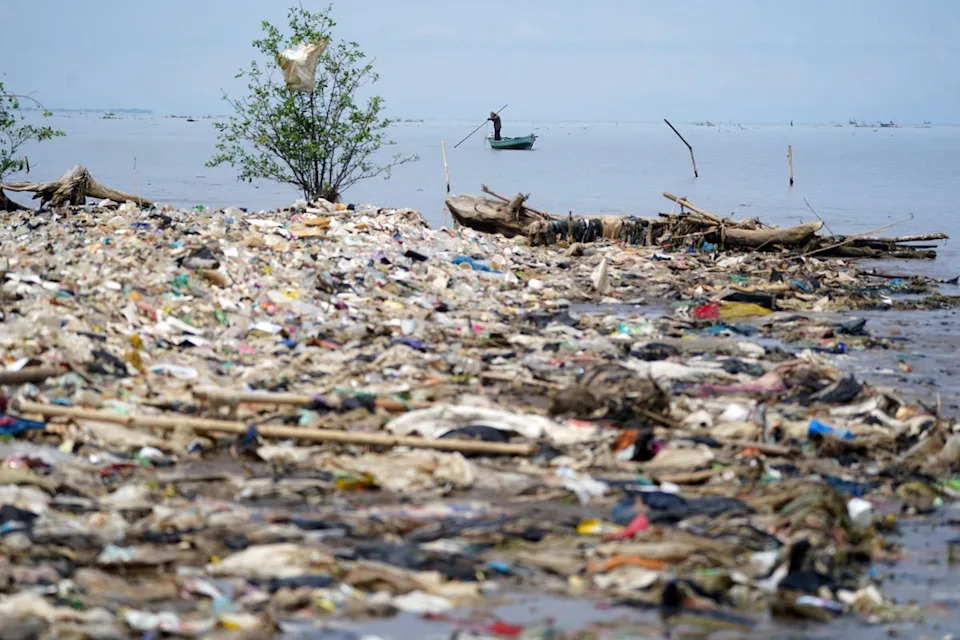
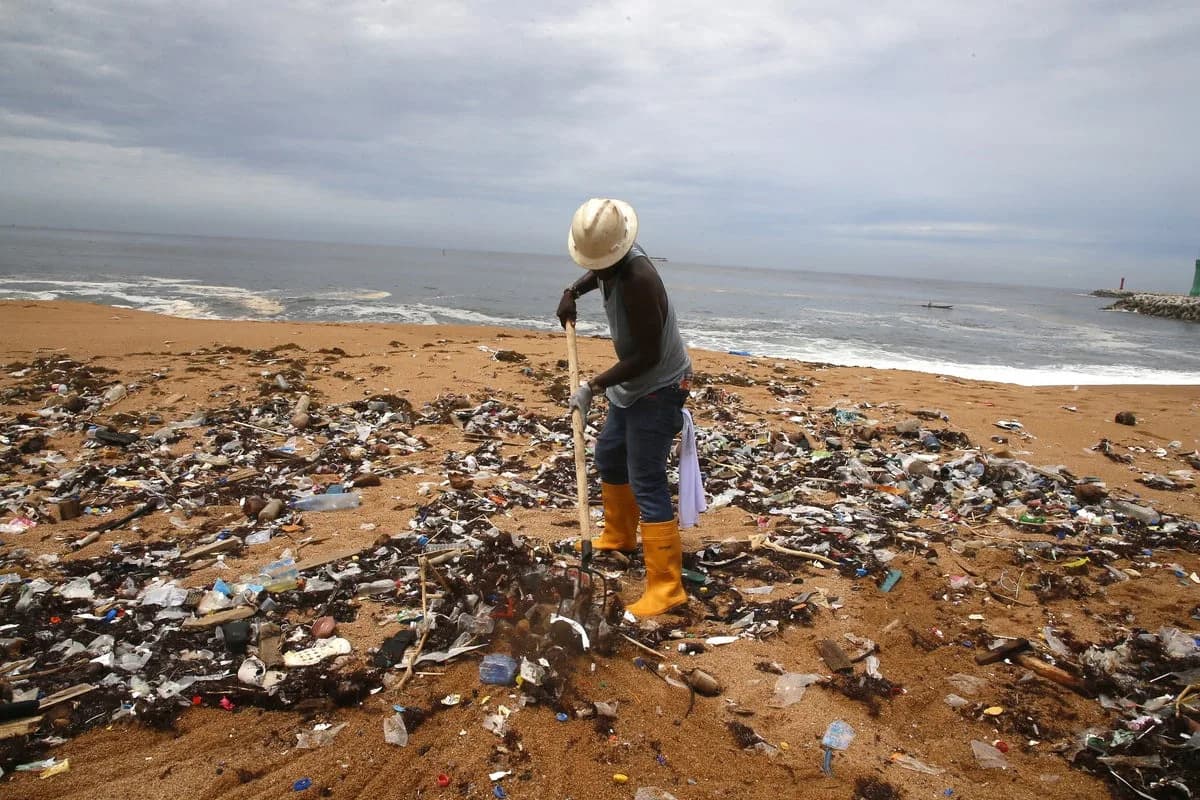
Plastic pollution clogs up oceans and beaches across the world which can be devastating for wildlife (PA Wire)
Key mechanisms affected:
- Phytoplankton photosynthesis: Microplastics reduce light penetration and can directly impair phytoplankton cell function, lowering the amount of CO2 captured by photosynthesis.
- Zooplankton metabolism: Ingestion of microplastics can alter zooplankton feeding, growth and excretion, disrupting the transfer of carbon to deeper waters.
- The plastisphere: Microbial communities that colonise plastics can change local carbon and nitrogen cycling and may produce greenhouse gases as plastics degrade.
Why This Matters
Oceans currently absorb roughly a quarter of human-produced CO2 emissions each year, much of it via the biological carbon pump—the process by which phytoplankton fix carbon and move it to deeper layers when they die or are consumed. The review, published in the Journal of Hazardous Materials, concludes that microplastics weaken that pump and could, over time, contribute to ocean warming, acidification and biodiversity loss.
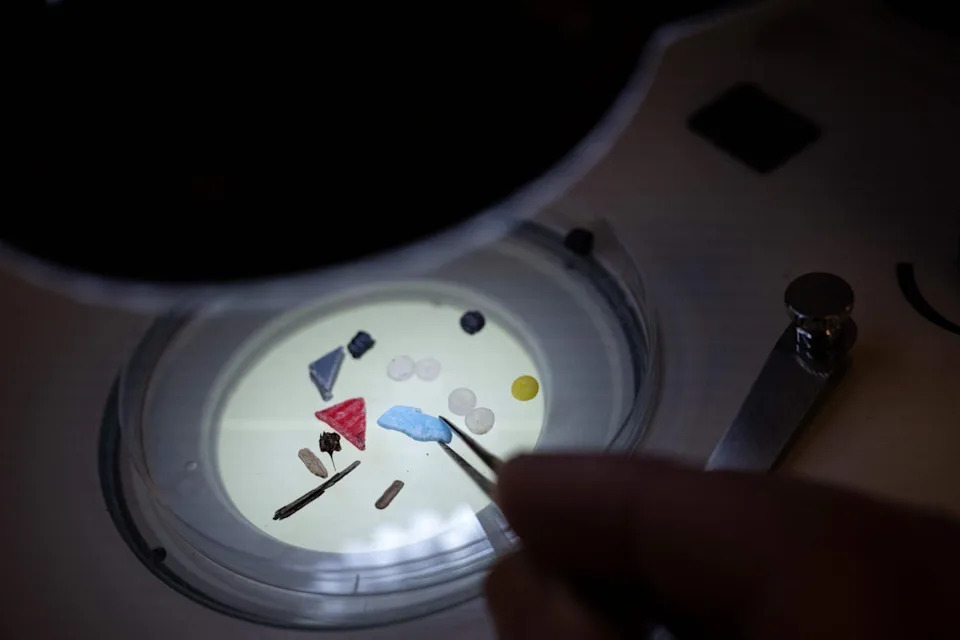
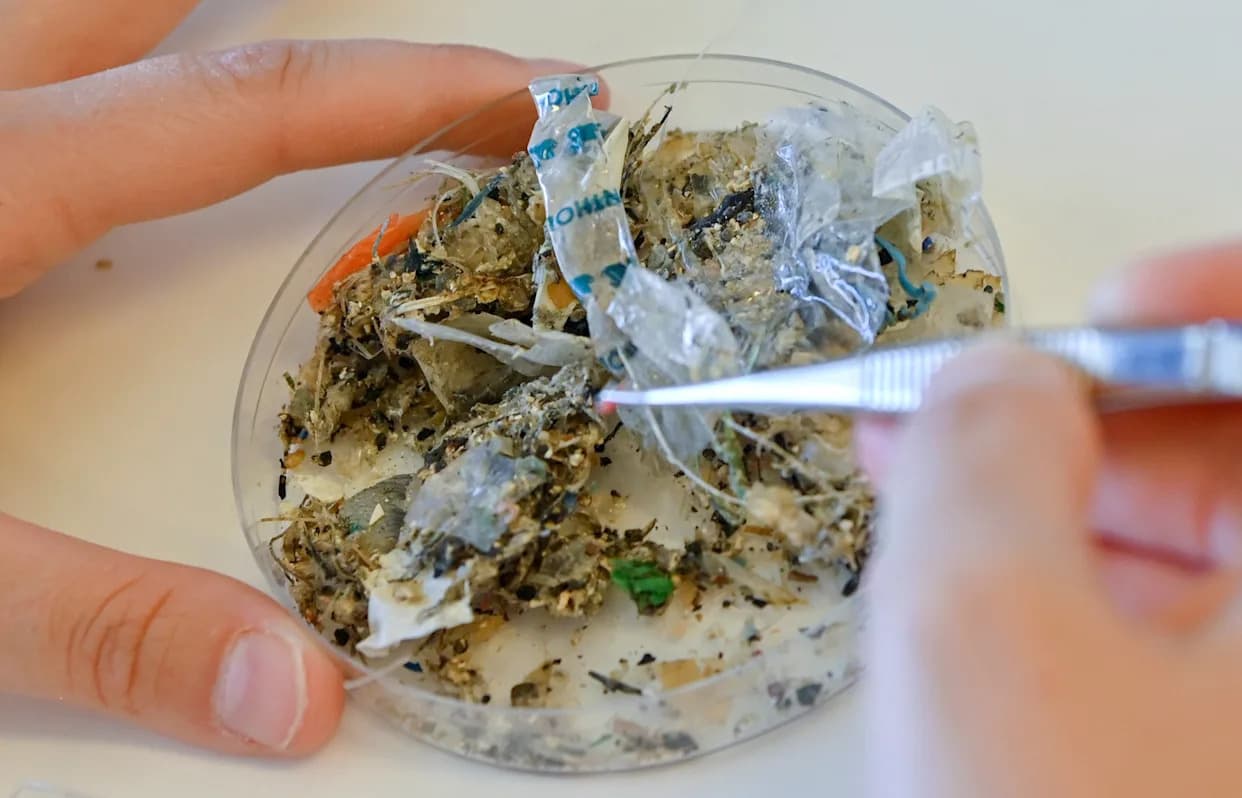
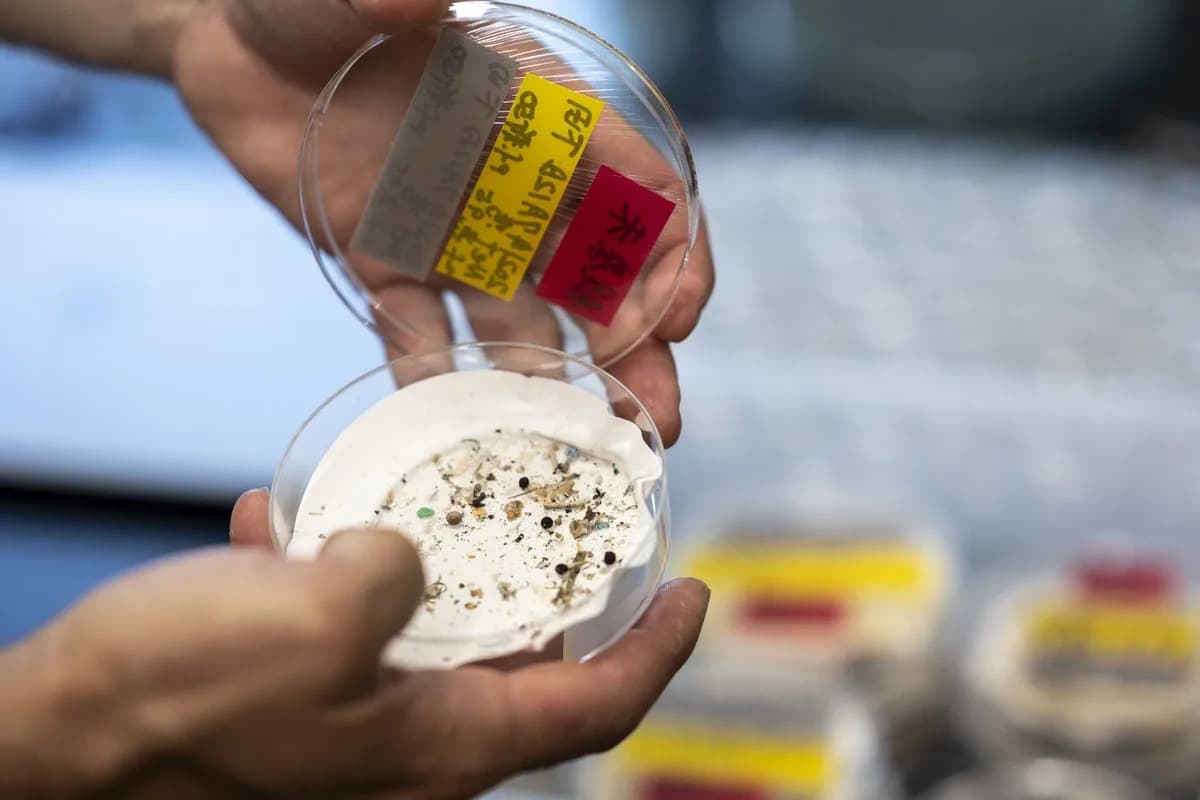
Nurdles and other microplastics examined under a microscope at the University of Plymouth (AFP via Getty)
“Oceans are the planet’s largest carbon sink and microplastics are undermining this natural shield against climate change,” said Ihsanullah Obaidullah of the University of Sharjah, a co-author of the review.
Scale Of The Problem
Global plastic production is rising rapidly. United Nations agencies estimate annual production at 400–430 million tonnes, about half of which is used for single‑use items. Less than 10% of plastic is recycled. Researchers estimate that more than 8 billion tonnes of plastic have been produced to date and roughly 80% is in landfills or the environment.
Policy And Research Recommendations
The authors urge policymakers to treat plastic pollution and the climate crisis as linked challenges. Recommended actions include reducing single‑use plastics, improving waste management and recycling, promoting safer and truly biodegradable alternatives, and investing in targeted research to quantify how microplastics alter ocean temperature, carbon cycling and greenhouse gas fluxes.
The paper also recommends that international frameworks—such as the UN Sustainable Development Goals—better reflect microplastics’ climate risks and that a global plastics treaty consider production caps and stronger accountability mechanisms.
Next steps: The authors say the priority is to quantify the climate impacts of microplastics and develop integrated solutions that address both pollution and climate mitigation.
Help us improve.