Researchers identified a shared genetic basis linking eight psychiatric disorders and mapped specific variants that are active during brain development. From nearly 18,000 tested gene variants, 683 were found to alter gene regulation; follow-up experiments in developing mouse neurons probed their function. Pleiotropic variants — those that affect multiple traits — showed broader protein interactions and activity across more brain cell types, suggesting shared developmental mechanisms and potential targets for therapies that could address several disorders simultaneously.
Eight Psychiatric Disorders Linked by Shared Genetic Signals — Study Maps Developmental Variants
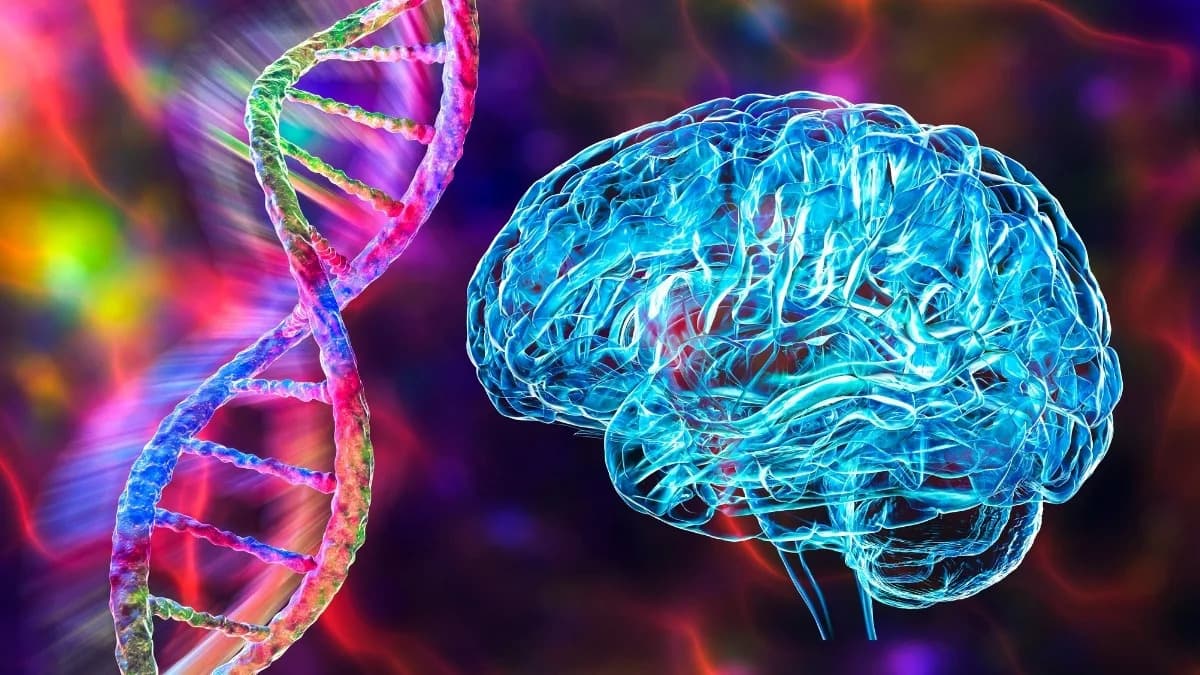
neon blue brain and dna strand
Researchers report that eight distinct psychiatric disorders share a common genetic foundation and that specific variants within those shared genes are active during brain development.
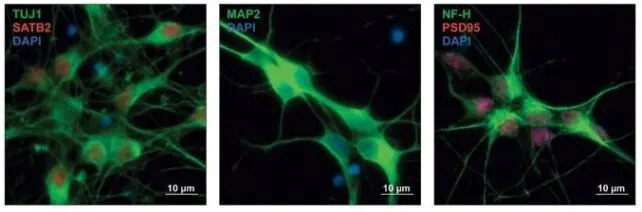
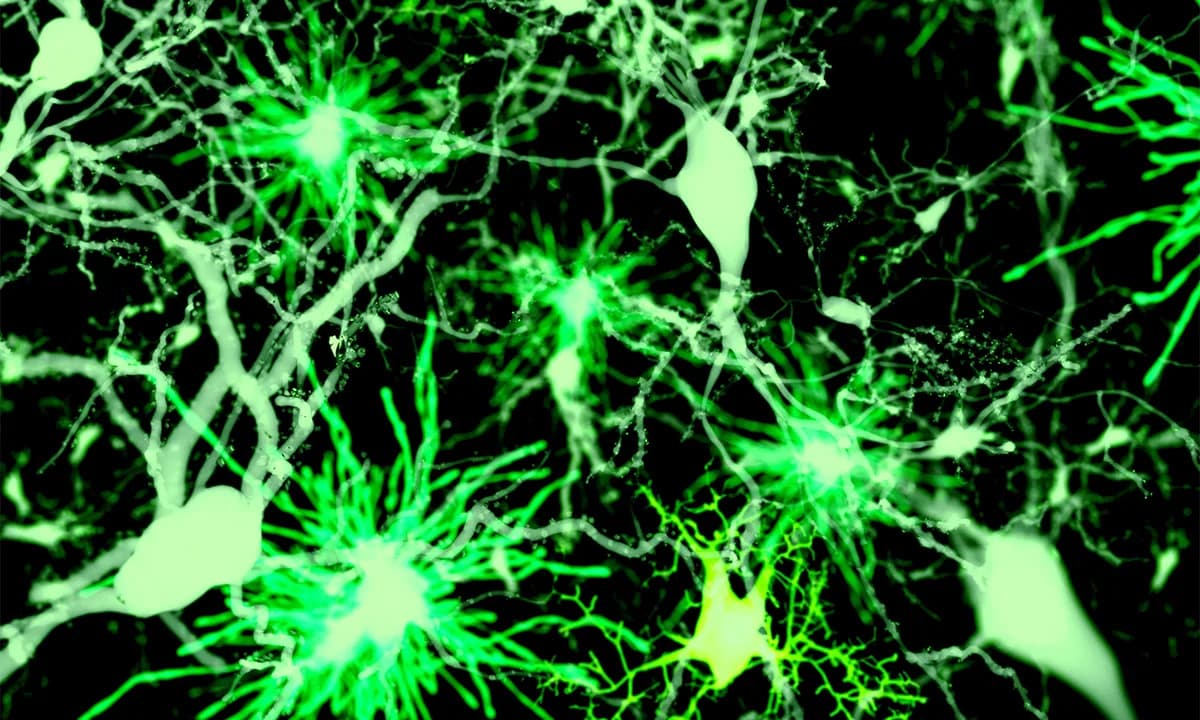
Human precursor neurons with protein expression stained in different colors, indicating the type of neurons developing. (Won et al.,Cell, 2025)
A study published in early 2025 examined how these shared genetic variants behave in developing neural cells. The U.S.-based team tested nearly 18,000 gene variants drawn from genes previously associated with multiple psychiatric diagnoses and identified 683 variants that altered gene regulation during neuronal development. Selected variants were then functionally assessed in neurons from developing mice to better understand their effects.
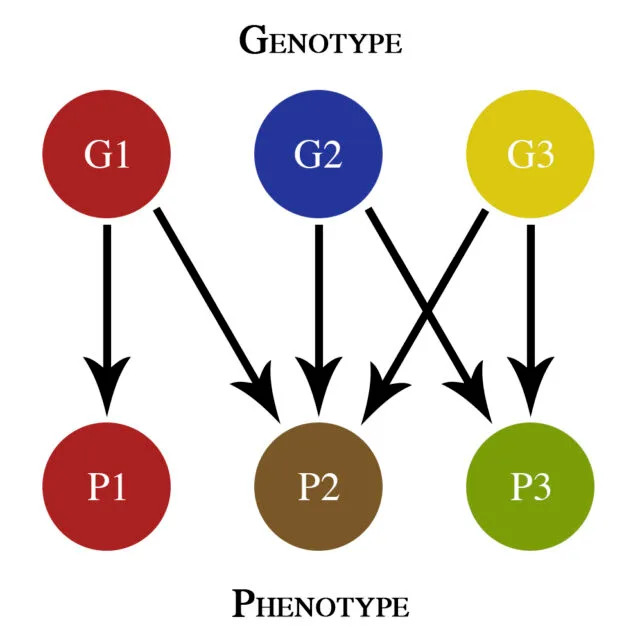
This simple genotype-phenotype map only shows additive pleiotropy effects. G1, G2, and G3 are different genes that contribute to phenotypic traits P1, P2, and P3. (Alphillips6/CC BY-SA 4.0/Wikimedia Commons)
"The proteins produced by these genes are also highly connected to other proteins," said University of North Carolina geneticist Hyejung Won. "Changes to these proteins in particular could ripple through the network, potentially causing widespread effects on the brain."
Earlier work in 2019 by an international consortium had highlighted 109 genes that appear in different combinations across eight diagnoses: autism spectrum disorder, attention-deficit/hyperactivity disorder (ADHD), schizophrenia, bipolar disorder, major depressive disorder, Tourette syndrome, obsessive-compulsive disorder (OCD), and anorexia nervosa. That overlap helps explain why psychiatric conditions often co-occur and why they can run in families.

Audition now for ScienceAlert's Casting Call
Importantly, the researchers distinguished between genes unique to individual disorders and those shared across multiple conditions. Variants that influence multiple seemingly unrelated traits — known as pleiotropic variants — showed markedly greater numbers of protein-to-protein interactions than variants unique to single disorders and were active across a broader range of brain cell types.
These pleiotropic variants were implicated in regulatory mechanisms that operate at multiple stages of brain maturation. Because they can affect cascades of gene regulation and widely connected protein networks, a single pleiotropic change could contribute to different psychiatric outcomes depending on timing, cell type, or other genetic and environmental factors.
"Pleiotropy was traditionally viewed as a challenge because it complicates the classification of psychiatric disorders," Won said. "However, understanding the genetic basis of pleiotropy might allow us to develop treatments that target shared genetic factors and potentially benefit multiple disorders at once."
The authors caution that translating these findings into therapies will require much more work: functional validation in human tissues, deeper mechanistic studies, and careful consideration of how broadly acting genetic changes could produce different clinical outcomes. Nevertheless, the study points to shared developmental biology that may reveal unified therapeutic targets.
The research was published in the journal Cell. The World Health Organization estimates roughly one in eight people — nearly one billion worldwide — live with some form of psychiatric condition, underlining the public-health relevance of discoveries that could affect multiple disorders.
Help us improve.