For decades, geneticists have wondered whether two damaging variants in the same gene might sometimes cancel one another out and restore normal protein function. A new experimental study — enabled by artificial intelligence — now provides strong evidence for that counterintuitive idea, showing that roughly 60% of paired defects in the enzyme argininosuccinate lyase (ASL) recover healthy enzyme activity.
What the Study Found
Researchers at George Mason University and the Pacific Northwest Research Institute (PNRI) examined more than 3,600 combinations of variant effects in ASL and found that about 60% of pairs that were individually damaging nevertheless restored enzyme activity when combined. ASL plays a central role in the urea cycle, removing toxic ammonia from the body; dysfunction can cause urea cycle disorders that produce symptoms such as lethargy, vomiting, seizures, or coma. In the United States, disorders of this class affect roughly one in every 35,000 newborns.
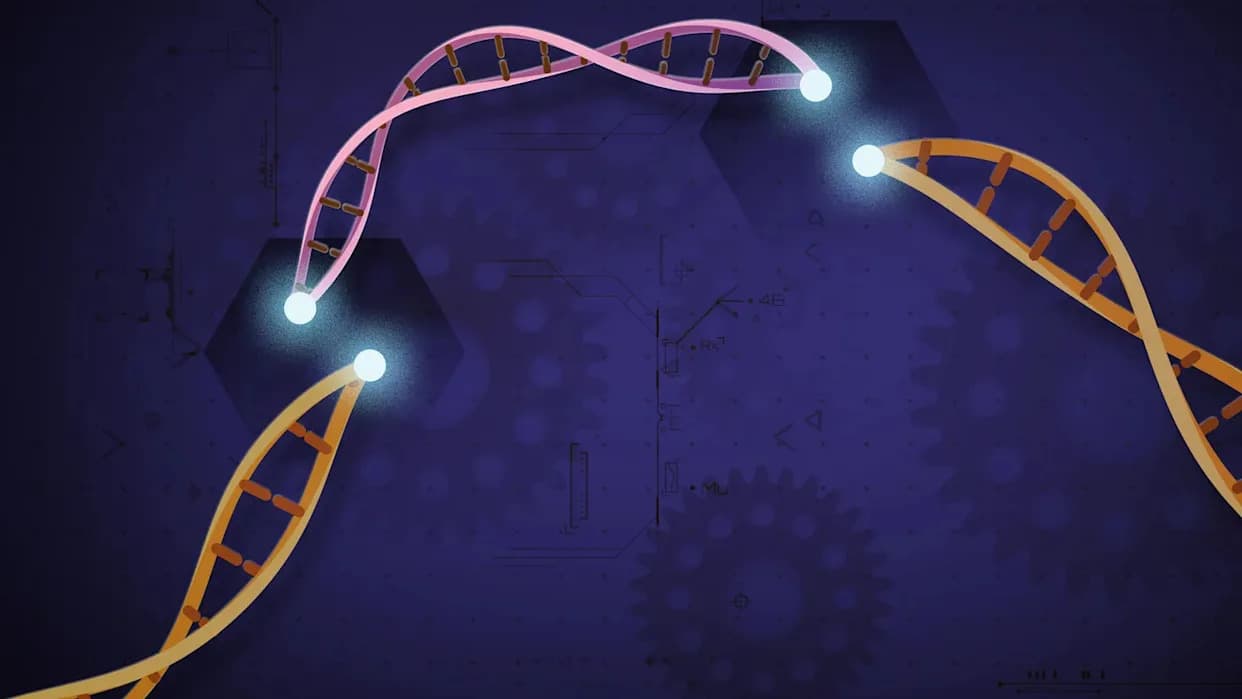
“Defects in two subunits mutually correct each other,” Francis Crick and Leslie Orgel wrote in 1964. “Thus a defect in A...might, after aggregation, lie next to a complementary defect, B...so that...in the combination (A+B) the two defects compensate for each other and active enzyme is formed.”
How AI Made This Possible
The experimental work was accelerated by AI models capable of predicting how two variants will interact in multimeric proteins. A computational team at George Mason reported near-100% accuracy predicting intragenic complementation for ASL and for the multimeric enzyme fumarase (FH), indicating the approach could generalize beyond a single protein. Based on their analyses, the authors estimate that about 4% of human genes might exhibit similar compensatory interactions.
Clinical Implications
These findings challenge the conventional clinical-genomics assumption that variants act independently. Instead, variant combinations can have non-additive effects that either worsen or — as in this case — restore protein function. That means geneticists and clinicians evaluating rare disease risk may need to consider combinations of variants within the same gene, not just individual changes in isolation.
Study authors and publication: The study appears in the Proceedings of the National Academy of Sciences (PNAS). Michelle Tang, lead author and staff scientist at PNRI, noted that “variants don’t act independently in many important cases.” Senior author Aimée Dudley of PNRI added that such interactions are “a widespread and under-appreciated way that variants can interact, especially in rare disease contexts.” Amarda Shehu, Chief AI Officer at George Mason University, emphasized that AI can accelerate interpretation and bring clinical genomics closer to true precision medicine.
Overall, the results point to a need for updated variant-interpretation frameworks and computational tools that account for intragenic interactions when assessing disease risk and designing therapies.