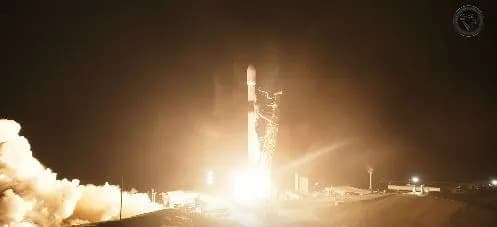
China’s CASC plans to build gigawatt-class, solar-powered AI data centres in orbit within five years, aiming to form an industrial-scale "Space Cloud" by 2030. The facilities would integrate cloud, edge and device capabilities to process Earth-generated data in space. SpaceX has similar ambitions, saying it will launch solar AI satellites in two to three years and may use IPO proceeds to help fund them. The move underscores rising U.S.-China competition in commercial and strategic space capabilities.
China Plans Gigawatt-Class Solar AI Data Centres In Orbit — A Direct Challenge To SpaceX
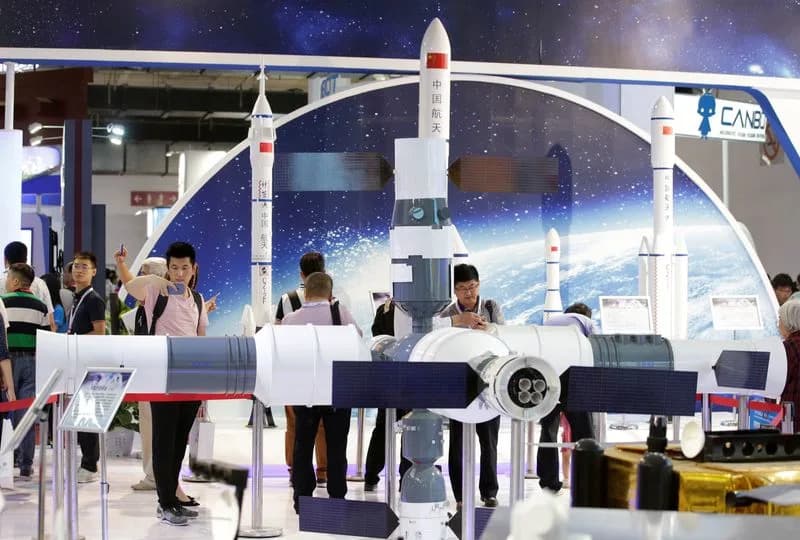
People visit the booth of China Aerospace Science and Technology Corporation at China Beijing International High-tech Expo in Beijing, China June 8, 2017. REUTERS/Jason Lee
BEIJING — China’s main space contractor, the China Aerospace Science and Technology Corporation (CASC), has announced ambitious plans to deploy gigawatt-class, solar-powered artificial intelligence data centres in orbit within the next five years, state media reported.
What CASC Is Proposing
According to a five-year development plan cited by state broadcaster CCTV, CASC aims to "construct gigawatt-class space digital-intelligence infrastructure" that will "integrate cloud, edge and terminal (device) capabilities" and deliver the "deep integration of computing power, storage capacity and transmission bandwidth." The facilities are intended to process data sent from Earth in space and to form an industrial-scale "Space Cloud" by 2030, the plan says.
How This Compares With SpaceX
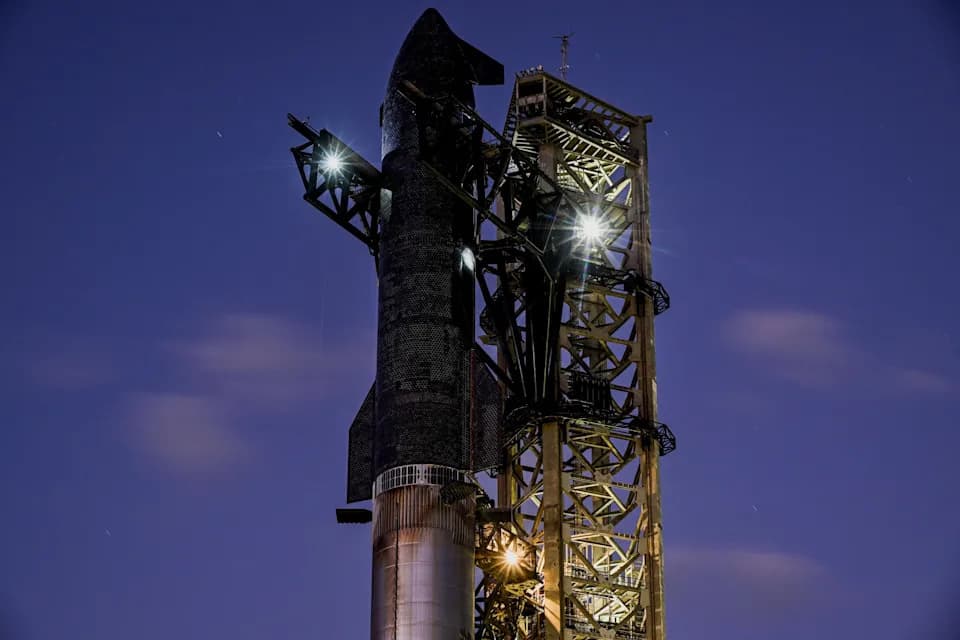
U.S. firm SpaceX has made similar proposals: founder Elon Musk told the World Economic Forum in Davos that SpaceX plans to launch solar-powered AI data centre satellites within two to three years, and that orbital solar can generate roughly five times the power of ground panels. SpaceX has also indicated it could use proceeds from a planned $25 billion initial public offering to help fund the effort.
Strategic Drivers And Technical Hurdles
Moving energy-intensive AI processing into orbit promises to ease terrestrial power constraints and to take advantage of higher solar output in space. CASC’s December policy document identifies the integration of space-based solar power with AI computing as a core element of China’s upcoming 15th Five-Year Plan.
However, China still faces technological challenges. Beijing has not yet demonstrated a fully operational reusable rocket system — a capability that has helped SpaceX lower launch costs and scale services such as its Starlink low Earth orbit constellation. Official figures show China conducted a record 93 space launches last year, supported by a growing commercial launch sector.
Investment In Talent And Deep-Space Ambitions
The CASC announcement followed the inauguration of China’s first School of Interstellar Navigation at the Chinese Academy of Sciences. The school is intended to cultivate specialists in interstellar propulsion, deep-space navigation and related frontier fields, signalling a strategic shift from near-Earth operations toward deeper space exploration.
Broader Context
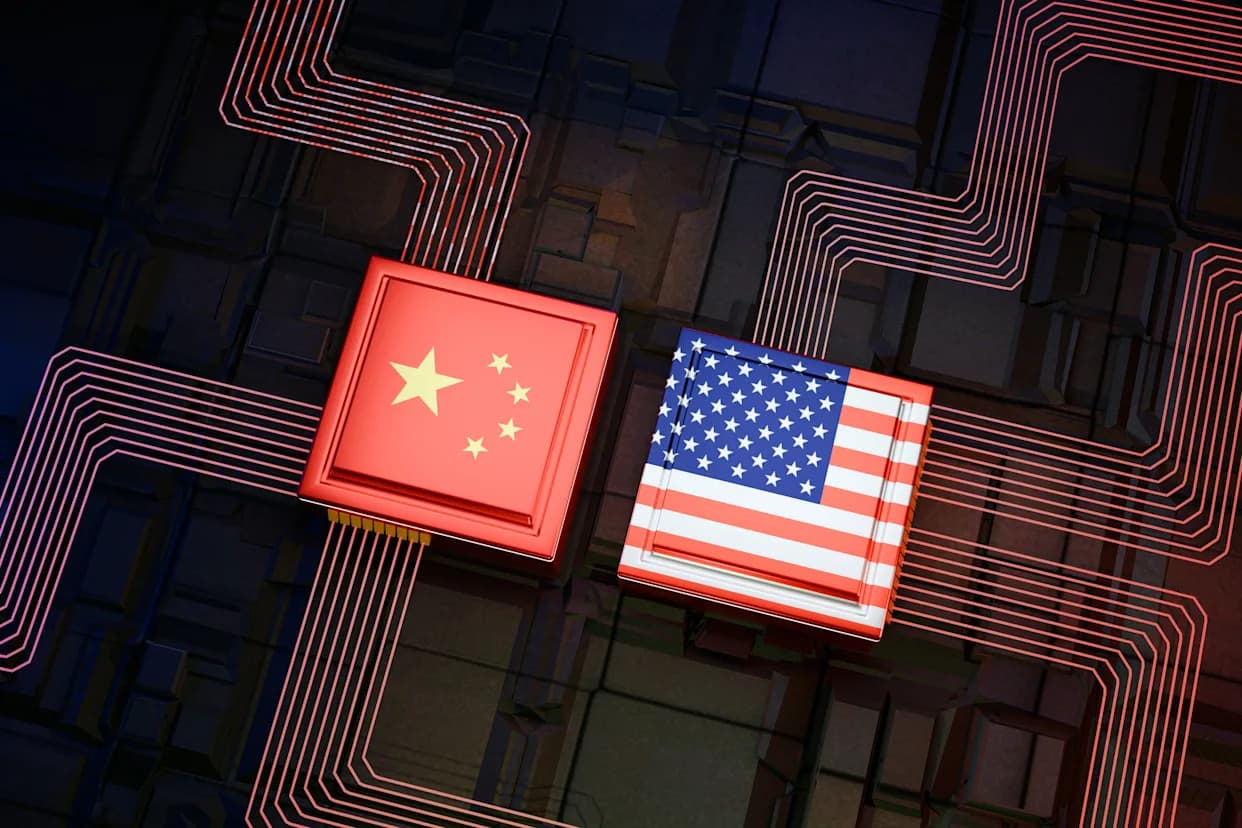
The plans highlight intensifying U.S.-China competition to commercialise space and to secure strategic and military advantages in orbit. CASC has pledged to transform China into a "world-leading space power" by 2045, while both nations race to develop technologies that could reshape the economics and geopolitics of space activity.
Reporting by Laurie Chen; Editing by Jamie Freed and Thomas Derpinghaus.
Help us improve.