The Arctic is facing a marked increase in extreme weather, according to a new international study that analyzed more than 70 years of data. Researchers report a rise in heatwaves, droughts, snow changes and rain-on-snow events, especially over the last three decades and in hotspots such as Central Siberia, Western Scandinavia and coastal Greenland. Scientists warn these shifts threaten wildlife, local livelihoods, drive "Arctic browning," and can alter the region's carbon balance.
Scientists: The Arctic Has Entered a New Era of Extreme Weather
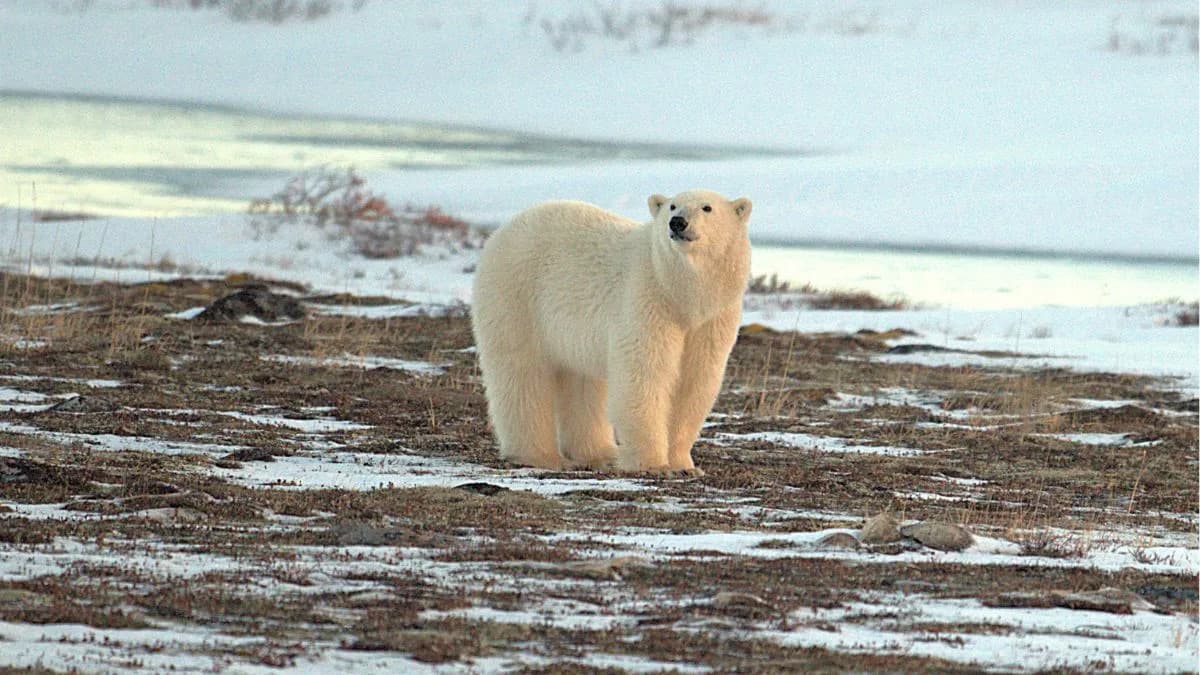
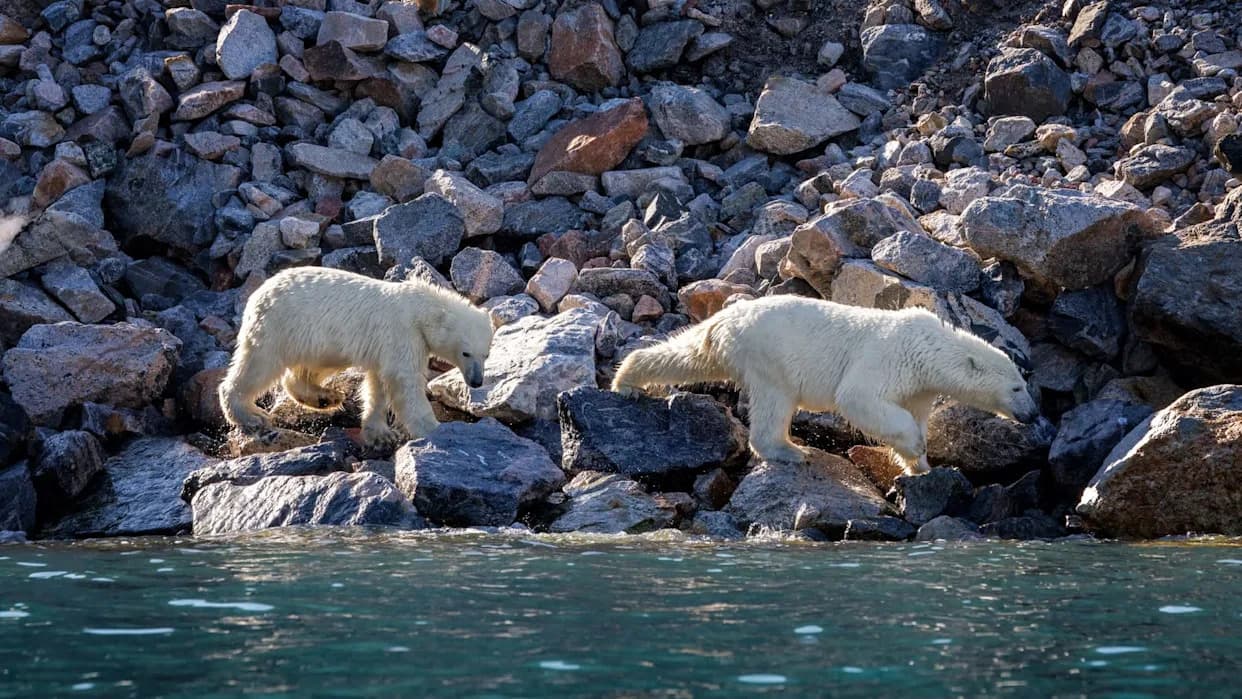
polar bear in arctic
The Arctic is experiencing a sharp rise in extreme weather events, according to a new international study that analyzed more than 70 years of observations. Researchers say this marks a transition into a "new era" of extremes — with growing implications for ecosystems, Indigenous and local communities, and the planet's climate balance.
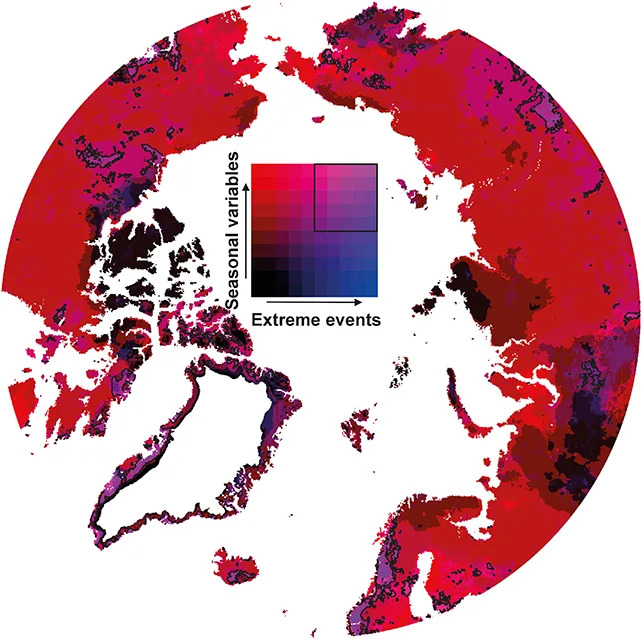
The researchers mapped how extreme weather events and seasonal variability have changed across the Arctic over the past 30 years (1993 to 2023) compared to earlier decades (1950 to 1979).Red areas show increasing seasonal variation; blue areas have experienced increasing extreme events; purple areas show increases in both factors.(Aalto et al.,Sci. Adv., 2026)
The team prioritized short-term weather extremes that can be masked by monthly averages, examining episodes of heatwaves, drought, changes in snow cover and events such as rain-on-snow. They found that extreme events have become more frequent and widespread, especially over the last three decades.
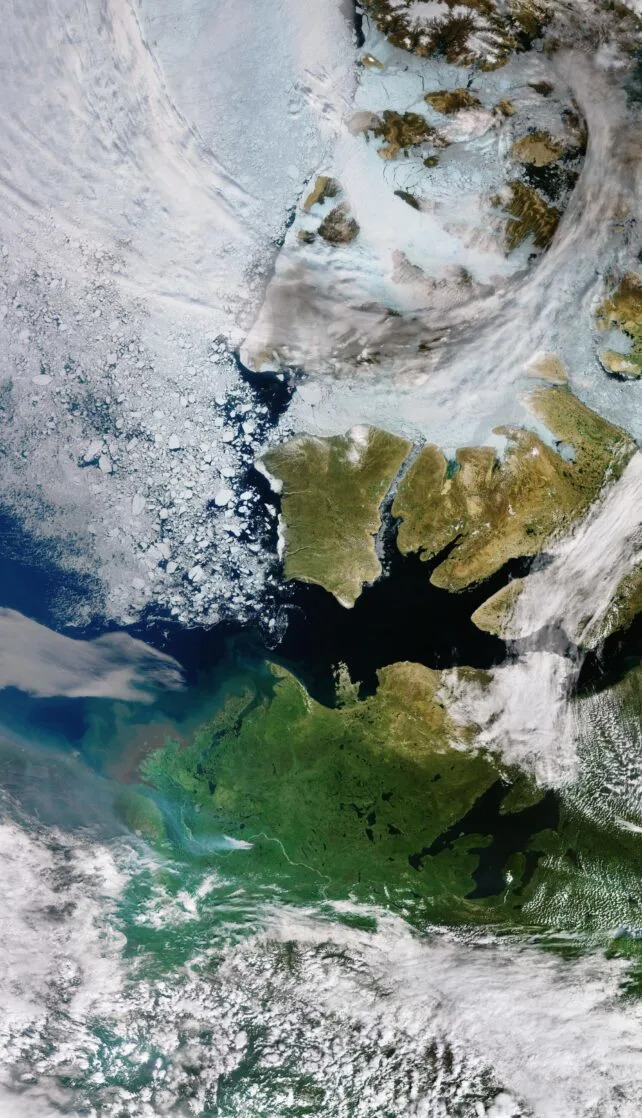
The Canadian high Arctic Archipelago was identified as another hotspot of extreme weather events. This satellite image, captured in 2019, shows broken-up sea ice and wildfire smoke. (ESA)
Several regional hotspots stand out, including Central Siberia, Western Scandinavia and coastal Greenland, where the rise in extreme events has been particularly pronounced. In many places, extremes are appearing only recently, exposing ecosystems to conditions they have not experienced before.

Audition now for ScienceAlert's Casting Call
"Our research shows that the frequency of extreme weather events has increased sharply in the Arctic," said ecologist Gareth Phoenix of the University of Sheffield.
One increasingly common phenomenon is rain-on-snow, which occurs when warming causes rainfall that later freezes at the surface. That surface ice can trap or obscure forage, with direct consequences for herbivores such as reindeer that depend on lichen and other ground vegetation.
Although the study did not directly measure ecological outcomes, the authors note strong evidence that these changing seasonal patterns will have severe and damaging knock-on effects. Seasonality — including the timing and duration of the growing season and the persistence and quality of snow cover — is crucial to the functioning and resilience of Arctic ecosystems.
"Seasonality, such as the growing season and snow conditions, is known to be crucial for ecosystem functioning and the success of northern species," said climate scientist Juha Aalto of the Finnish Meteorological Institute.
These extreme weather shifts are also linked to broader changes across the Arctic: sea ice is shrinking, tundra is thawing, and widespread vegetation loss — often described as "Arctic browning" — is becoming more common. That can alter the region's balance of carbon uptake and release, creating feedbacks that may accelerate climate change.
"This finding suggests that as the climate changes, Arctic ecosystems will be increasingly exposed to climate conditions they have never experienced before," said geoscientist Miska Luoto of the University of Helsinki. "This may have significant long-term consequences for Arctic nature."
The authors emphasize the need for more detailed, ground-based observations to complement the long-term datasets and modeled estimates used where field data are sparse. The full study is published in Science Advances.
Help us improve.