Researchers say human-caused climate change made 2025 one of the three warmest years on record and pushed the three-year global temperature average above the Paris Agreement’s 1.5°C limit for the first time. World Weather Attribution identified 157 severe events in 2025 and analyzed 22 in depth, finding heat waves to be the deadliest hazard and in some cases about 10 times more likely than a decade ago. The report warns that faster, more intense disasters are straining communities’ ability to adapt, while international talks failed to secure a clear plan to move away from fossil fuels.
2025 Among The Three Warmest Years On Record as Global 3-Year Average Tops Paris 1.5°C Limit

FILE - Grace Chyuwei pours water on Joe Chyuwei to help with the heat Aug. 3, 2025, in Death Valley National Park, Calif. (AP Photo/John Locher, File)(ASSOCIATED PRESS)
Scientists say human-driven climate change helped make 2025 one of the three warmest years on record. For the first time, the three-year global temperature average has surpassed the 1.5°C (2.7°F) threshold set by the 2015 Paris Agreement above preindustrial levels — a milestone experts warn raises the risk of widespread, serious impacts.
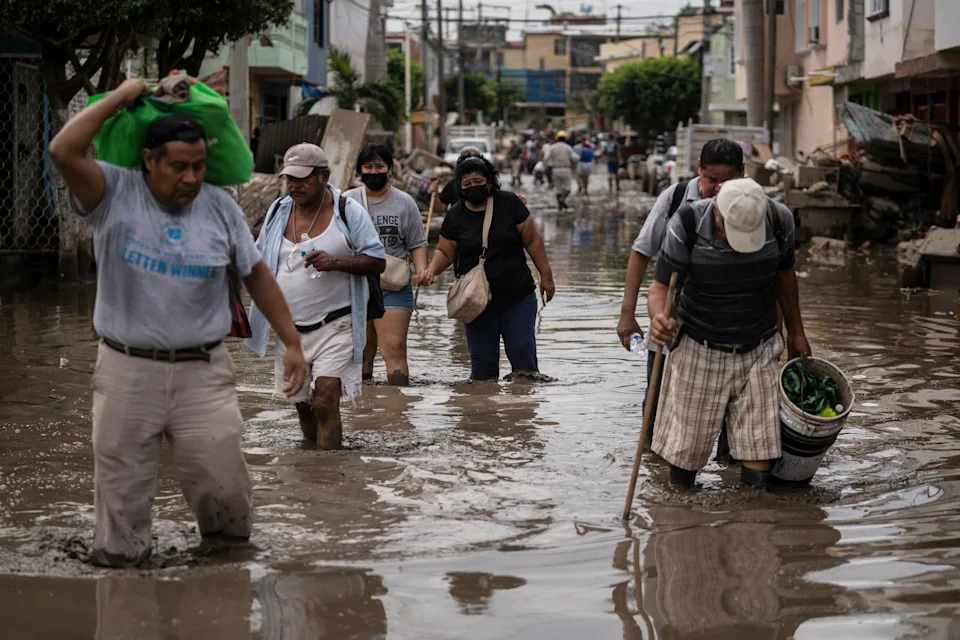
FILE - People traverse a flooded street in Poza Rica, Veracruz state, Mexico, Oct. 15, 2025, after torrential rain. (AP Photo/Felix Marquez, File)(ASSOCIATED PRESS)
What the Analysis Shows
The finding comes from World Weather Attribution (WWA), whose researchers released an analysis in Europe after a year marked by severe weather extremes tied to a warming planet. Temperatures stayed unusually high even while a La Niña — a natural Pacific cooling pattern that typically lowers global temperatures — was present. Scientists point to continued burning of fossil fuels (oil, gas and coal) as the main driver of the rising baseline of global heat.
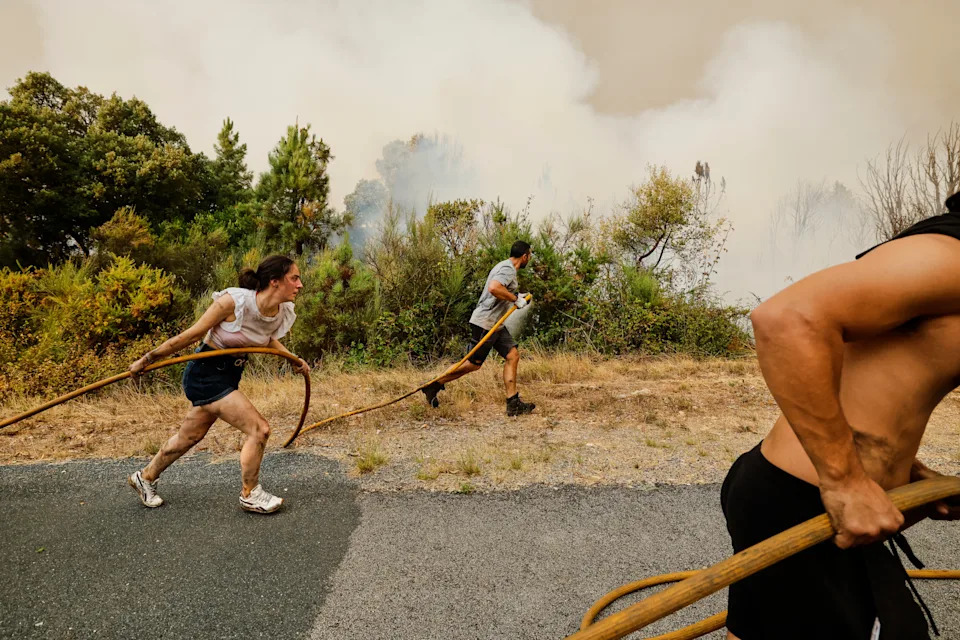
FILE - Local residents and volunteers work together to battle an encroaching wildfire in Larouco, northwestern Spain, Aug. 13, 2025. (AP Photo/Lalo R. Villar, File)(ASSOCIATED PRESS)
“If we don’t stop burning fossil fuels very, very, quickly, very soon, it will be very hard to keep that goal,” said Friederike Otto, co‑founder of WWA and a climate scientist at Imperial College London. “The science is increasingly clear.”
Extreme Events and Human Influence
WWA identified 157 extreme weather events in 2025 that met strict criteria — such as causing more than 100 deaths, affecting a large share of a population, or prompting formal states of emergency — and conducted detailed analyses of 22 of those events.

FILE - Tourists use umbrellas to shelter against the sun outside Hagia Sophia mosque during a hot summer day in Istanbul Aug. 12, 2025. (AP Photo/Francisco Seco, File)(ASSOCIATED PRESS)
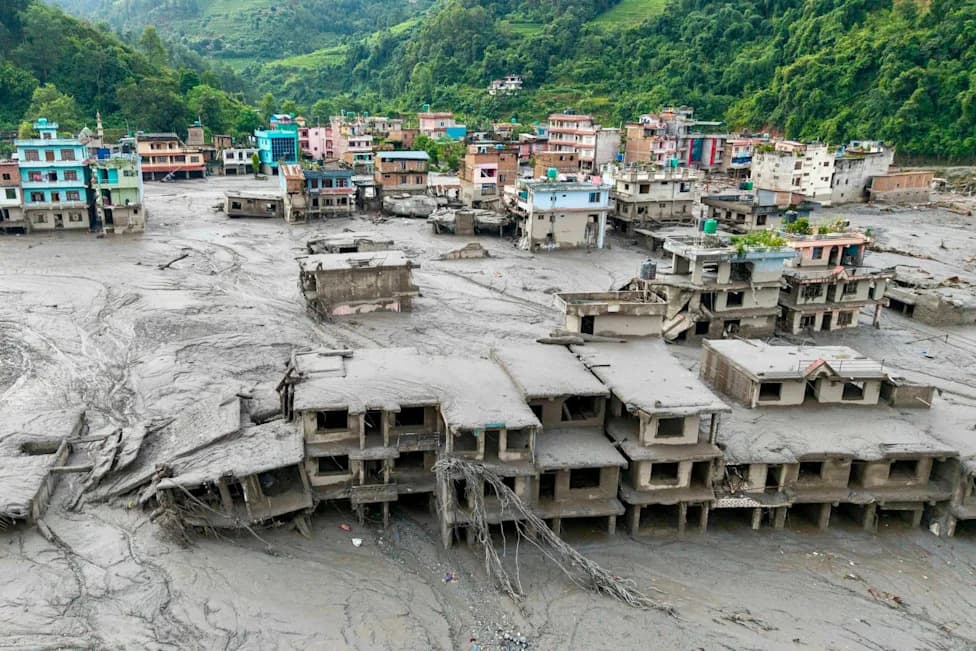
Heat waves were described as the year’s deadliest hazard. In several studied cases, heat extremes are now about 10 times more likely to occur than they were a decade ago because of human-caused climate change. Prolonged drought helped fuel wildfires in Greece and Turkey, torrential rains and floods ravaged parts of Mexico, Super Typhoon Fung-wong forced more than a million people to evacuate in the Philippines, and monsoon rains in India caused floods and landslides.
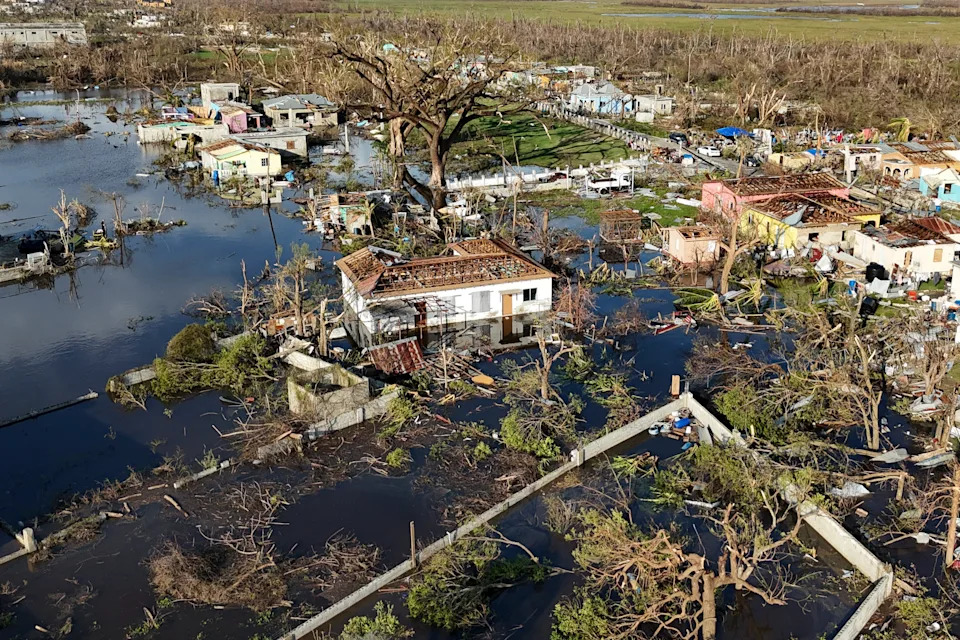
FILE - Debris surrounds damaged homes along the Black River, Jamaica, Thursday, Oct. 30, 2025, in the aftermath of Hurricane Melissa. (AP Photo/Matias Delacroix, File)(ASSOCIATED PRESS)
WWA warned these increasingly frequent, intense and faster-onset events are pushing communities toward the "limits of adaptation" — situations where there is insufficient time, warning or resources to prepare for and respond effectively. Hurricane Melissa was highlighted as an example of rapid intensification that complicated forecasting and overwhelmed the response capacities of small island nations hit hard by the storm.
Policy Response and Global Action
International climate negotiations in Brazil in November ended without an explicit plan to transition away from fossil fuels. While new adaptation funding was pledged, officials and analysts cautioned that implementation will take considerable time.
Progress varies by country: China is rapidly expanding solar and wind but continues investment in coal; several European nations face political resistance to measures they say could constrain growth; and U.S. federal policy has shifted toward supporting fossil-fuel industries. Experts say these mixed signals, combined with disinformation campaigns, undermine faster global action.
Columbia University researcher Andrew Kruczkiewicz, who was not involved in the WWA work, said disasters are becoming more complex and intensifying faster, requiring earlier warnings and new approaches to response and recovery. "On a global scale, progress is being made," he added, "but we must do more."
Note: The WWA analysis and these examples underscore the growing influence of human activity on extreme weather and the urgent need to reduce greenhouse gas emissions while strengthening adaptation and preparedness worldwide.
Help us improve.