Scientists warn that extreme ocean warming is now widespread, with marine heat waves doubling in frequency between 1982 and 2016. These events are already harming ecosystems—causing fish die-offs and coral bleaching—and disrupting fisheries, as illustrated by Alaska's canceled 2022 snow crab harvest. Researchers also fear the warming could weaken the Atlantic Meridional Overturning Current (AMOC), potentially altering weather patterns worldwide. International teams are working to better understand and forecast these heat waves to improve warnings and responses.
Scientists Warn: Rapid Ocean Warming Fuels More Frequent Marine Heat Waves — "This Is Worrying News"
Photo Credit: iStock
Scientists say the recent, widespread warming of the world's oceans shows the planet is changing faster than many models anticipated. Record-high water temperatures have been observed across regions from the North Atlantic down to Antarctica, with unusually warm conditions off Florida, along the U.S. and Canadian West Coasts, in the Western Mediterranean, in the Baltic Sea, and around New Zealand and Australia.
Frequency and Strength on the Rise
A report cited by the BBC found that the frequency of marine heat waves doubled between 1982 and 2016, and those events have become substantially stronger. "This is worrying news for the planet," said Christopher Hewitt, Director of Climate Services at the World Meteorological Organization.
Ecological and Economic Impacts
Marine heat waves harm marine ecosystems, driving large-scale fish die-offs and triggering coral bleaching. Warmer waters shift the distribution and behavior of sea life, making it harder for fishers to locate and harvest enough to sustain livelihoods. In 2022, Alaska canceled its snow crab harvest after the billions of crabs that historically inhabited the Bering Sea largely disappeared.
Threat To Global Ocean Circulation
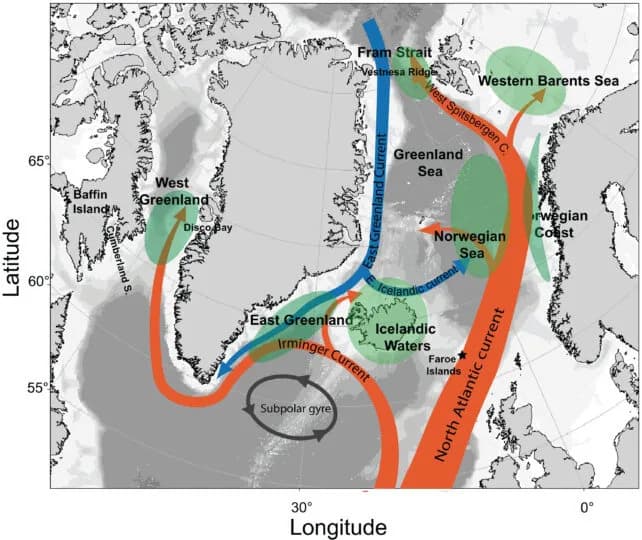
Scientists are particularly concerned about the Atlantic Meridional Overturning Current (AMOC), the vast "conveyor belt" that transports warm surface water northward from the tropics to the North Atlantic, where it cools, becomes saltier, sinks, and returns south at depth. The AMOC helps regulate global weather systems, including the jet stream. If North Atlantic waters warm enough, the AMOC could slow or even stop, producing major changes to weather patterns worldwide. Researchers have warned this outcome could conceivably occur sometime between 2025 and 2095, according to reporting by CNN.
Scientists Racing To Understand And Forecast Heat Waves
An international group of researchers is working to better understand the causes, impacts, and climate feedbacks of marine heat waves. There has been progress: a research team in Australia successfully predicted a marine heat wave several months in advance, a promising step toward earlier warnings and improved preparedness for fisheries, coastal communities, and ecosystems.
Why it matters: Increasing marine heat waves threaten biodiversity, food security for coastal communities, and the stability of climate systems that influence weather far from affected seas. Improved monitoring, forecasting and emissions reductions are needed to reduce risks.
Help us improve.