The study identifies an "Aging and Colon Cancer-Associated (ACCA)" epigenetic drift in intestinal stem cells driven by inflammation, reduced growth signaling and low iron. This drift involves DNA methylation changes that progressively silence tumor-suppressor genes, creating cancer-prone patches that expand as gut crypts divide. Experiments in human tissue, mice and organoids show the effect is intestine-specific and that boosting iron uptake or restoring growth signals can partially reverse the drift. The results, published in Nature Aging, suggest new targets for prevention and early intervention.
Hidden Epigenetic Warning in Gut Stem Cells Could Explain Rising Colorectal Cancer Risk With Age
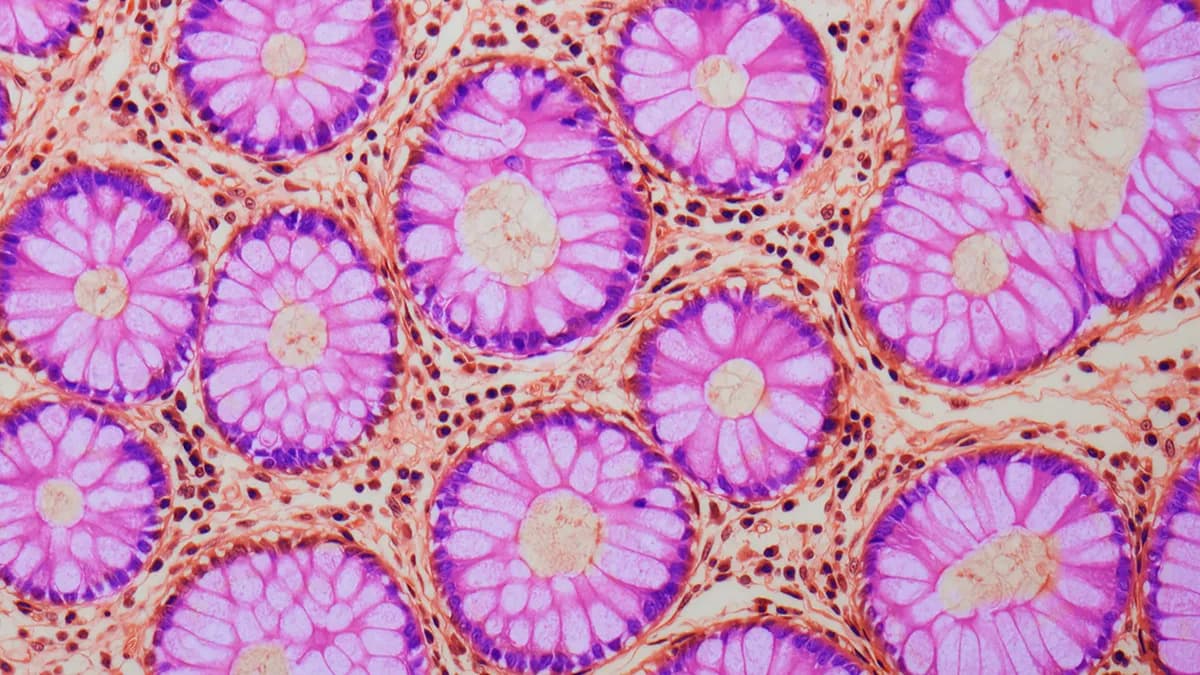
Crypts of Lieberkuhn, light micrograph
As we age, subtle chemical changes to DNA accumulate in cells. A new international study identifies an epigenetic "drift" in intestinal stem cells that may help explain why colorectal cancer risk increases with age.
What the Researchers Found
The team calls the process Aging and Colon Cancer-Associated (ACCA) drift. ACCA reflects shifts in DNA methylation — a reversible chemical modification that can silence genes without altering the DNA sequence itself. In this study, the drift progressively silences tumor-suppressor and protective genes, creating cancer-prone patches in the gut long before any tumor is detectable.
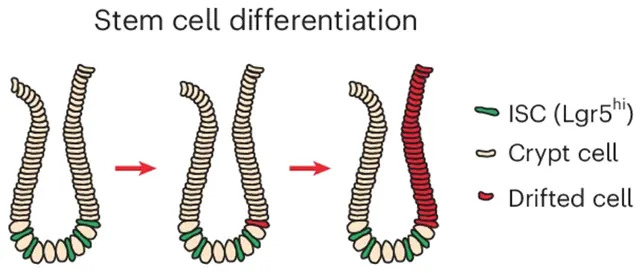
The researchers identified how crypt stem cells changed and spread. (Krepelova et al.,Nat. Aging, 2025)
Evidence From Human Tissue, Mice and Organoids
Researchers compared healthy human colon tissue from different ages with colorectal tumor samples and identified matching methylation signatures in older healthy tissue and tumors. Follow-up experiments in mouse models and in lab-grown organoids (mini-guts) confirmed that the phenomenon is specific to the intestinal epithelium and helped reveal how the drift begins and spreads.
How The Drift Starts And Expands
The effect originates in intestinal crypts — small pockets of the gut lining that house stem cells responsible for renewing the epithelium. ACCA drift appears first in these stem cells and expands as crypts divide and propagate, producing a mosaic of older, cancer-prone patches that grow over years.

Audition now for ScienceAlert's Casting Call
Main Biological Drivers
The investigators identified three interacting drivers that disrupt the cell machinery that maintains correct methylation patterns: increased inflammation, reduced growth signaling, and decreased cellular iron. Together these factors interfere with the processes that normally tidy up and remove faulty methylation marks, allowing harmful silencing of protective genes.
"We observe an epigenetic pattern that becomes increasingly apparent with age," said molecular biologist Francesco Neri of the University of Turin.
"Over time, more and more areas with an older epigenetic profile develop in the tissue," said Anna Krepelova, also of the University of Turin. "When cellular iron is insufficient, DNA markings persist because the cells lose the ability to remove them."
Reversibility And Implications
Importantly, organoid experiments showed that the ACCA drift can be slowed and partly reversed by boosting iron uptake or restoring specific growth signals. These results suggest that epigenetic aging in the gut is not necessarily irreversible, and they point to potential preventive or early-intervention strategies targeting inflammation, iron balance and cell-signaling pathways.
Caveats: The findings illuminate a mechanism that could increase risk but do not establish that ACCA drift alone causes colorectal cancer. The research, published in Nature Aging, supports new directions for study and eventual clinical translation, but further work is needed to determine safe and effective interventions in humans.
Source: Study published in Nature Aging.
Help us improve.