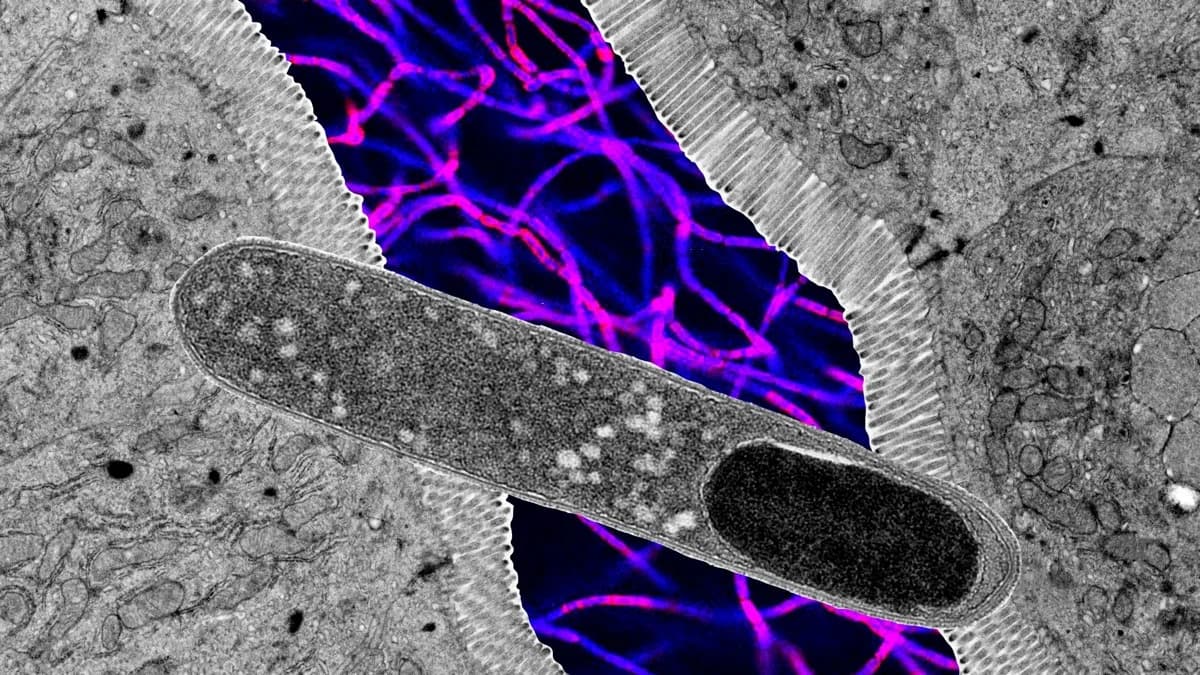
Researchers led by Tel Aviv University discovered how loss of the short arm of chromosome 17 — often eliminating p53 — lets breast cancer cells reprogram metabolism to survive in the brain. The defect increases fatty acid synthesis through elevated SCD1 activity and strengthens cancer cell interactions with astrocytes. Inhibiting SCD1 slowed brain metastasis in mouse models and human samples, suggesting both a predictive biomarker (17p/p53 loss) and a potential therapeutic target.
How Breast Cancer Cells Survive In The Brain: Tel Aviv Study Identifies p53 Loss And A Targetable Metabolic Weakness
Cancer Cell Spread and oncology or Malignant Cancerous Growth and Metastasis anatomy concept as growing tumor cells and Malignancy disease spreading metastasized as a 3D illustration. (photo credit: LIGHTSPRING/SHUTTERSTOCK)
Israeli researchers have for the first time described how some breast cancer cells adapt to and thrive in the brain — and pinpointed a druggable vulnerability that could help prevent or treat these lethal metastases, Tel Aviv University announced.
Large International Effort Maps A Brain-Specific Mechanism
The findings, published in Nature Genetics, come from a large international collaboration led by the Gray Faculty of Medical and Health Sciences at Tel Aviv University, involving 14 laboratories across six countries. The team was led by Prof. Uri Ben-David and Prof. Ronit Satchi-Fainaro, with key contributions from Dr. Kathrin Laue and Dr. Sabina Pozzi.
Why Brain Metastases Matter
Most cancer deaths result from metastases: when breast cancer spreads to vital organs, outcomes worsen dramatically. Brain metastases are among the deadliest and hardest to treat; roughly 10%–15% of patients with metastatic breast cancer develop brain metastases during their illness, according to Breastcancer.org.
Key Discovery: Loss Of 17p And Functional p53 Drives Brain Colonization
The study identified a recurrent chromosomal change — loss of the short arm of chromosome 17 (17p loss) — that predicts a higher risk of later brain metastasis. This deletion commonly removes a functional copy of the tumor suppressor gene p53.
"When chromosome 17 loses its short arm, the chances a cancer cell will seed the brain increase markedly," said Prof. Ben-David.
Crucially, the researchers found that p53 loss does not merely make tumors globally more aggressive. Instead, it enables a specific metabolic reprogramming that helps breast cancer cells survive in the brain’s unique microenvironment.
High-resolution 3D illustration of a human neuron with glowing axons and synaptic signals, symbolizing brain activity, neuroscience, and neural communication (credit: DRMEK/shutterstock)
Metabolic Rewiring: Fatty Acid Synthesis And Astrocyte Support
The brain has a distinct metabolic landscape. The team showed that p53 normally restrains fatty acid synthesis. When p53 is absent or impaired, breast cancer cells upregulate fatty acid production and exploit factors secreted by astrocytes — the brain’s support cells — as raw materials. This metabolic shift gives tumour cells a growth advantage in the brain.
A central enzyme in this pathway is stearoyl-CoA desaturase 1 (SCD1). Cancer cells lacking p53 show higher SCD1 expression and activity, making SCD1 a key vulnerability.
Preclinical Evidence For A Therapeutic Strategy
The researchers tested several SCD1 inhibitors — including compounds already in development for other indications — and found that blocking SCD1 significantly reduced the formation and growth of brain metastases in mouse models and in samples from human brain metastases. These results suggest SCD1 inhibition could be a promising therapeutic approach for tumors with p53 loss, although clinical trials will be needed to confirm safety and efficacy in patients.
Clinical Implications And Next Steps
- Risk stratification: Testing primary breast tumors for p53 mutations or 17p deletions could identify patients at higher risk of brain metastases and justify closer surveillance, such as more frequent brain MRI, while avoiding unnecessary imaging for low-risk patients.
- Targeted therapy: SCD1 inhibitors represent a plausible targeted approach for preventing or treating brain metastases from p53-deficient breast cancers, but translation to patients requires clinical trials.
"We identified cancer cell characteristics causally linked to this deadly phenomenon," the authors wrote. "While more work is needed, the therapeutic potential is substantial." The study highlights a mechanistic link between a specific genomic loss, metabolic adaptation, and a targetable enzyme — a rare combination that can accelerate drug development and clinical translation.
Limitations: Results to date are preclinical (mouse models and patient-derived samples). Human safety and efficacy data for SCD1 inhibitors in this context are not yet available. Additional research will be required to validate predictive tests and to design clinical trials.
Help us improve.