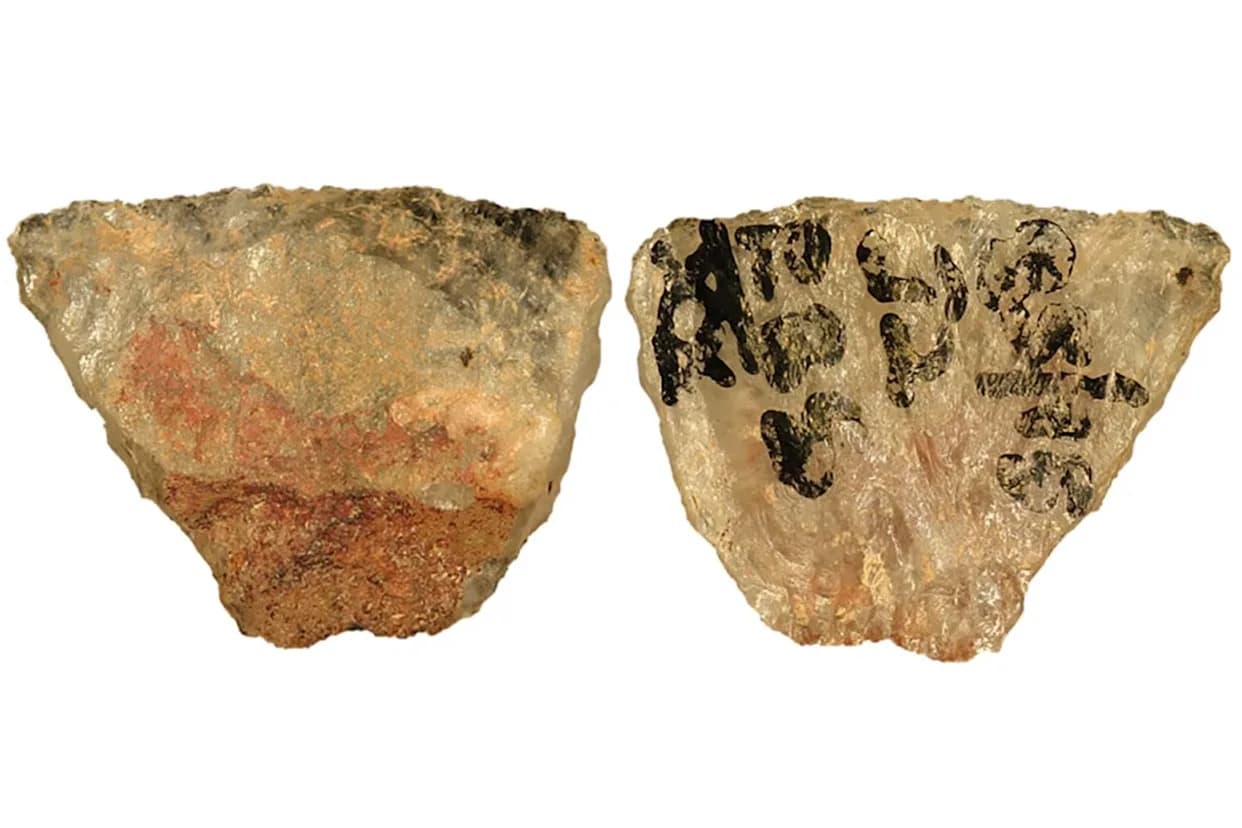
A 5,500-year-old skeleton from Colombia yielded DNA from Treponema pallidum, revealing an ancient strain (TE1-3) on an early-diverging lineage. Genetic dating places the split from other lineages at about 13,700 years ago, pushing treponemal genomic evidence back ~3,000 years. While the finding bolsters an American-origin hypothesis for syphilis-like infections, transmission routes remain unclear and more ancient genomes are needed to resolve the full history.
Ancient DNA Pushes Syphilis' Roots Back 5,500 Years — New Genome From Colombia Rewrites Timeline
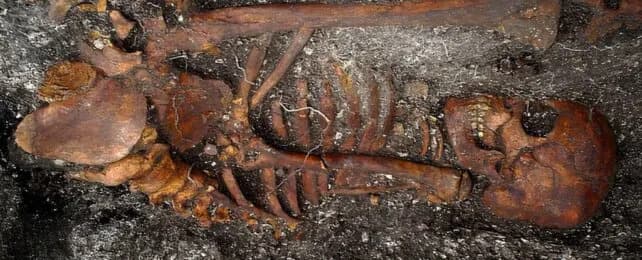
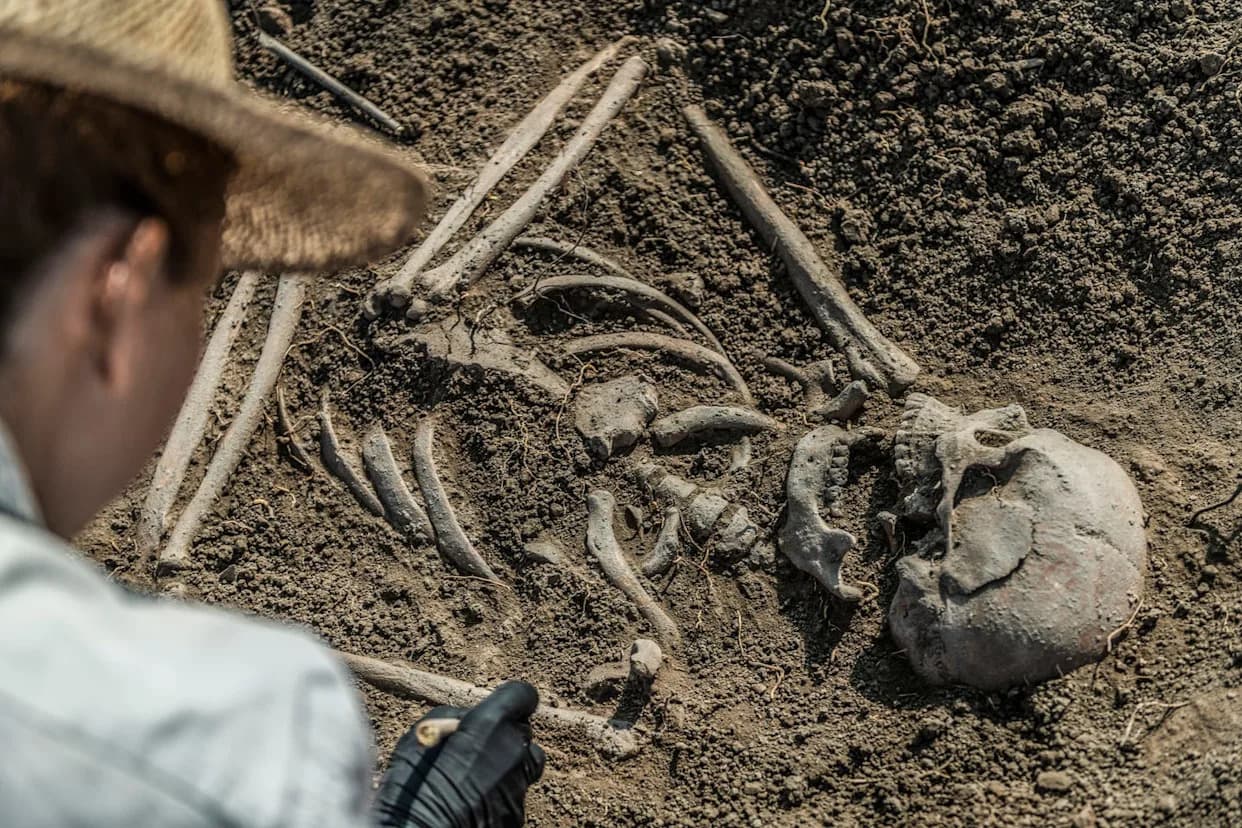
Pre-Columbian skeleton in Brazil found containing evidence of an ancient bacterial subspecies related to syphilis (Jose Filippini)
Archaeologists and geneticists have recovered DNA from the spiral-shaped bacterium Treponema pallidum in a 5,500-year-old skeleton unearthed in Colombia, providing the oldest direct genomic evidence of a treponemal infection to date.
What the Genome Reveals
The ancient strain, designated TE1-3, does not match any strains circulating today. Genomic analysis places TE1-3 on a deep branch described by the authors as an "early-diverging sister lineage" of T. pallidum. Based on calibrated molecular dates, the team estimates TE1-3 split from other T. pallidum lineages about 13,700 years ago — a timing that pushes documented treponemal genomic evidence back roughly 3,000 years.
Transmission and Virulence
It remains unclear whether TE1-3 was transmitted mainly through sexual contact (as with modern syphilis) or by skin-to-skin routes associated with yaws, bejel and pinta. The genome, however, contains virulence genes found in modern strains, indicating the bacterium was capable of infecting humans and causing disease.

Audition now for ScienceAlert's Casting Call
Broader Implications
The findings strengthen genetic support for an American origin hypothesis for the lineage that eventually gave rise to syphilis-like diseases, but they do not prove exclusivity. Some researchers argue, controversially, that related treponemal infections occurred in Europe before Columbus. The new genome instead highlights how ecological, social and demographic contexts — mobility of hunter-gatherers, later agricultural settlement, and local environments — likely shaped how treponemal infections emerged and spread.
'Far from static or specific to a human population or environment, pathogens are tethered to mobile hosts and shaped by biosocial and environmental conditions,' note anthropologists Molly Zuckerman and Lydia Bailey in a related perspective.
The study, led by evolutionary genomics researcher Davide Bozzi and colleagues, was published in Science. Researchers emphasize that additional ancient genomes and archaeological context are needed to resolve how transmission modes and disease expression changed over time.
Takeaway
TE1-3 demonstrates that treponemal bacteria were present in the Americas thousands of years before the first recorded European outbreaks of syphilis, complicating simple 'Old World vs New World' origin stories and underscoring the need for more ancient DNA to map the pathogen's complex history.
Help us improve.