The Jan. 2 Nature Astronomy analysis finds tentative evidence that dark matter and neutrinos may interact and exchange momentum, a possibility that could ease the S8 tension — the observed "less clumpy" distribution of matter compared with theoretical expectations. The team combined CMB data (Atacama, Planck) with galaxy and lensing surveys (Blanco, Sloan, Dark Energy Survey). The result is at ~3σ (≈0.3% chance of a fluke), so future surveys like the Vera C. Rubin Observatory and improved theory will be needed to confirm whether this hints at a true breakthrough.
Could Dark Matter Collide With 'Ghost Particles'? New Study Hints at a Cosmological Breakthrough
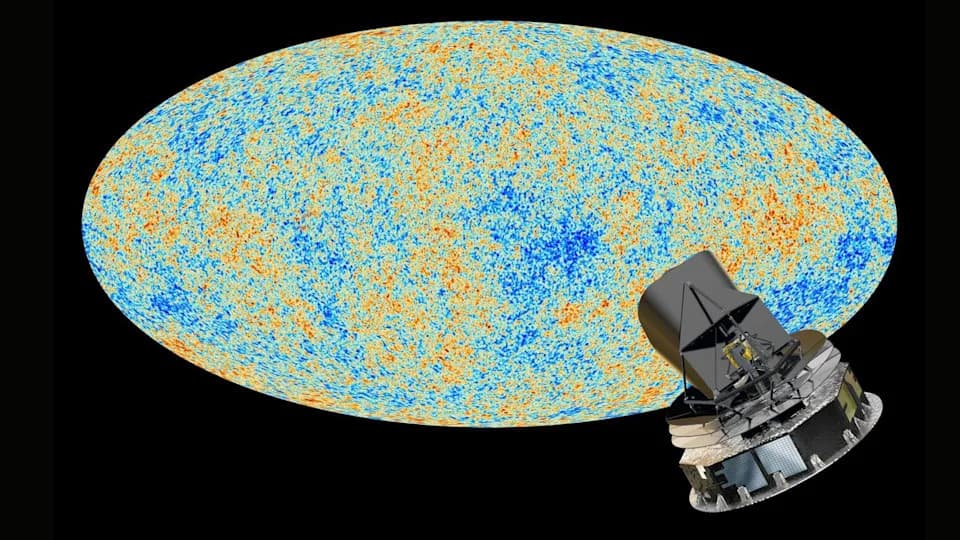
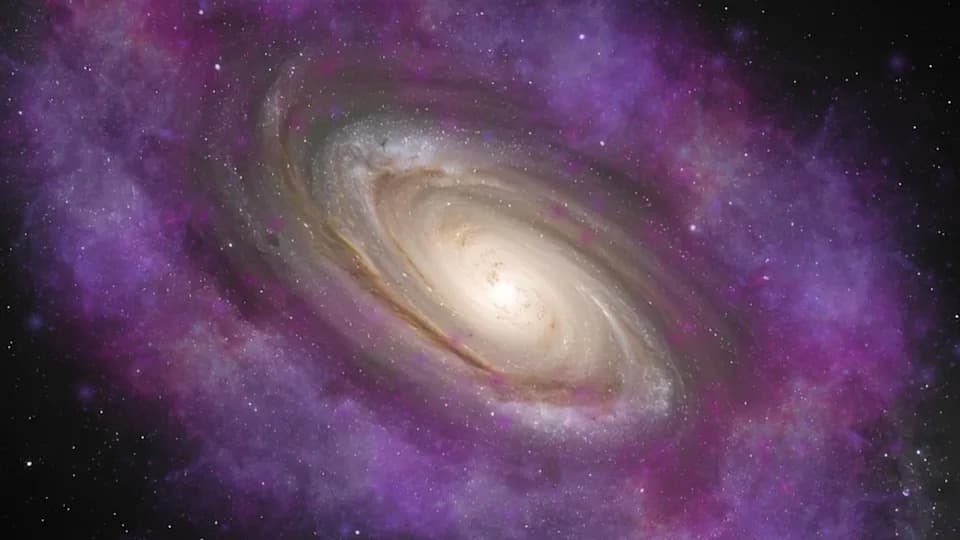
The cosmic microwave background is the oldest light in the universe. Imprinted on the sky when the universe was just 380,000 years old, it seeded every cosmic structure we see today. | Credit: ESA and the Planck Collaboration - D. Ducros
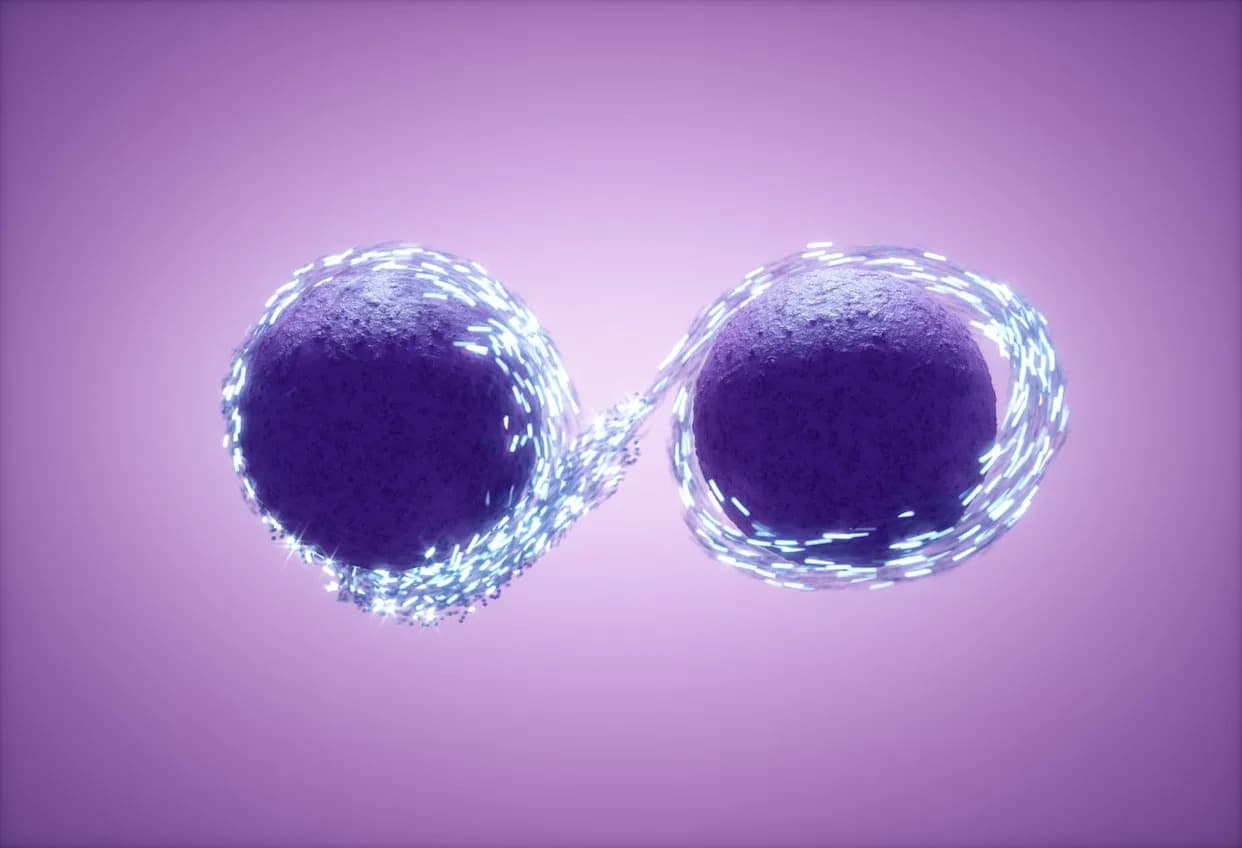
Researchers report new evidence that two of the universe's most mysterious components — dark matter and neutrinos (so-called "ghost particles") — may interact and exchange momentum. If confirmed, this interaction could resolve a long-standing discrepancy between theoretical predictions and observations of how clustered matter is in the universe.
What the Study Found
An international team published their analysis on Jan. 2 in Nature Astronomy, combining multiple cosmological data sets to test whether collisions between dark matter and neutrinos change the growth of cosmic structure. Their models that allow for momentum exchange produce a universe that better matches both early- and late-time observations than the standard lambda cold dark matter (λCDM) model alone.
Data and Methods
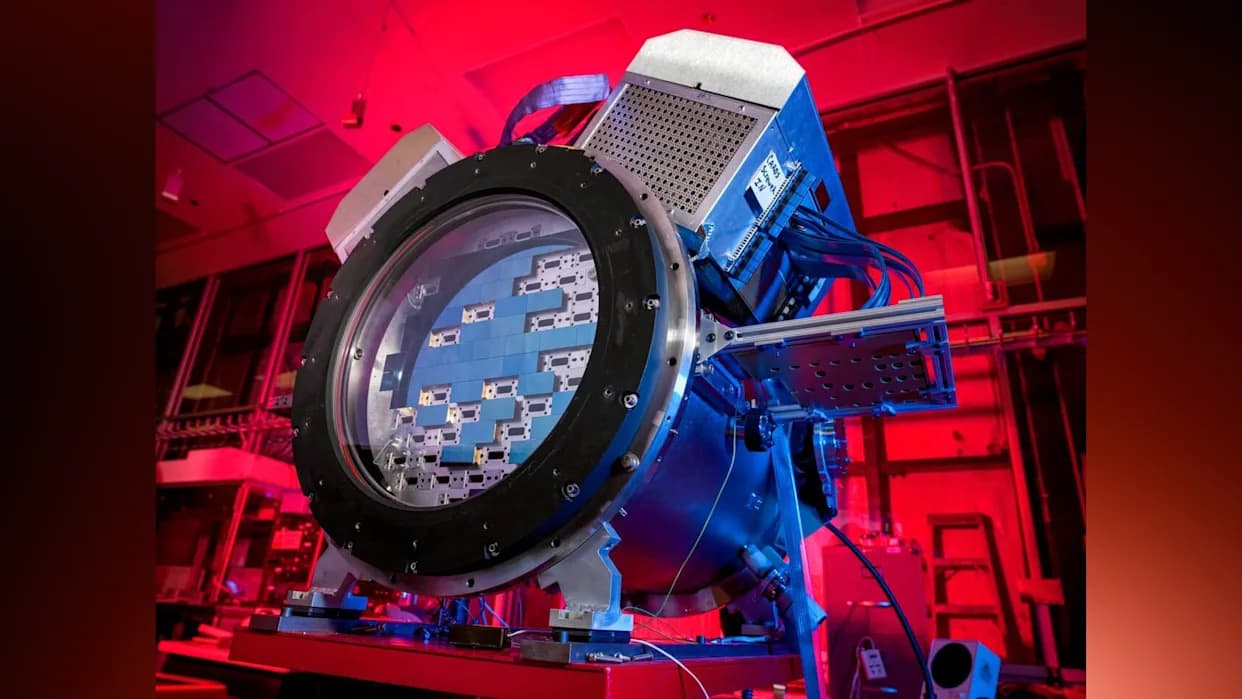
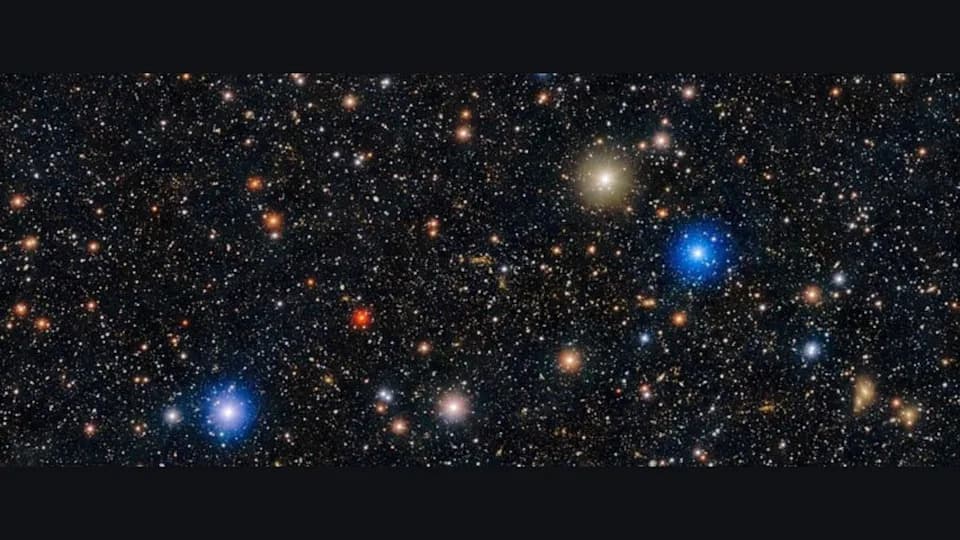
The researchers brought together measurements of the cosmic microwave background (CMB) from the Atacama Cosmology Telescope and the Planck satellite with later-time probes of large-scale structure: galaxy surveys from the Victor M. Blanco Telescope and the Sloan Digital Sky Survey, plus cosmic shear (weak lensing) data from the Dark Energy Survey. They also considered baryon acoustic oscillation (BAO) information to constrain density and expansion history while modeling cosmic evolution with and without dark matter–neutrino interactions.
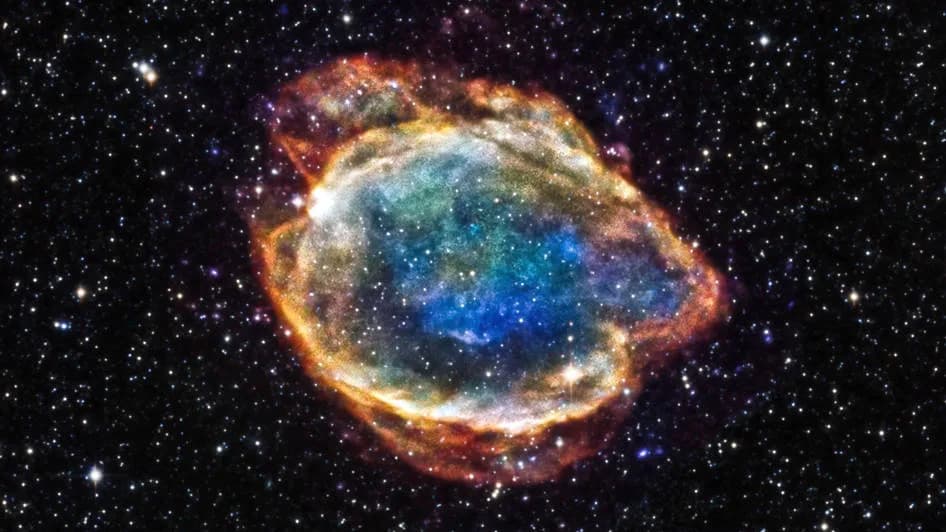
Credit: NASA Goddard
Why This Matters
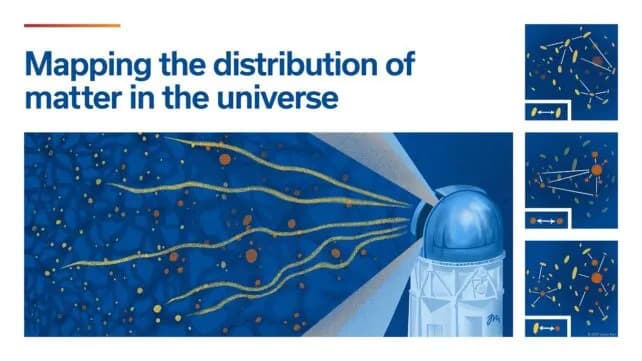
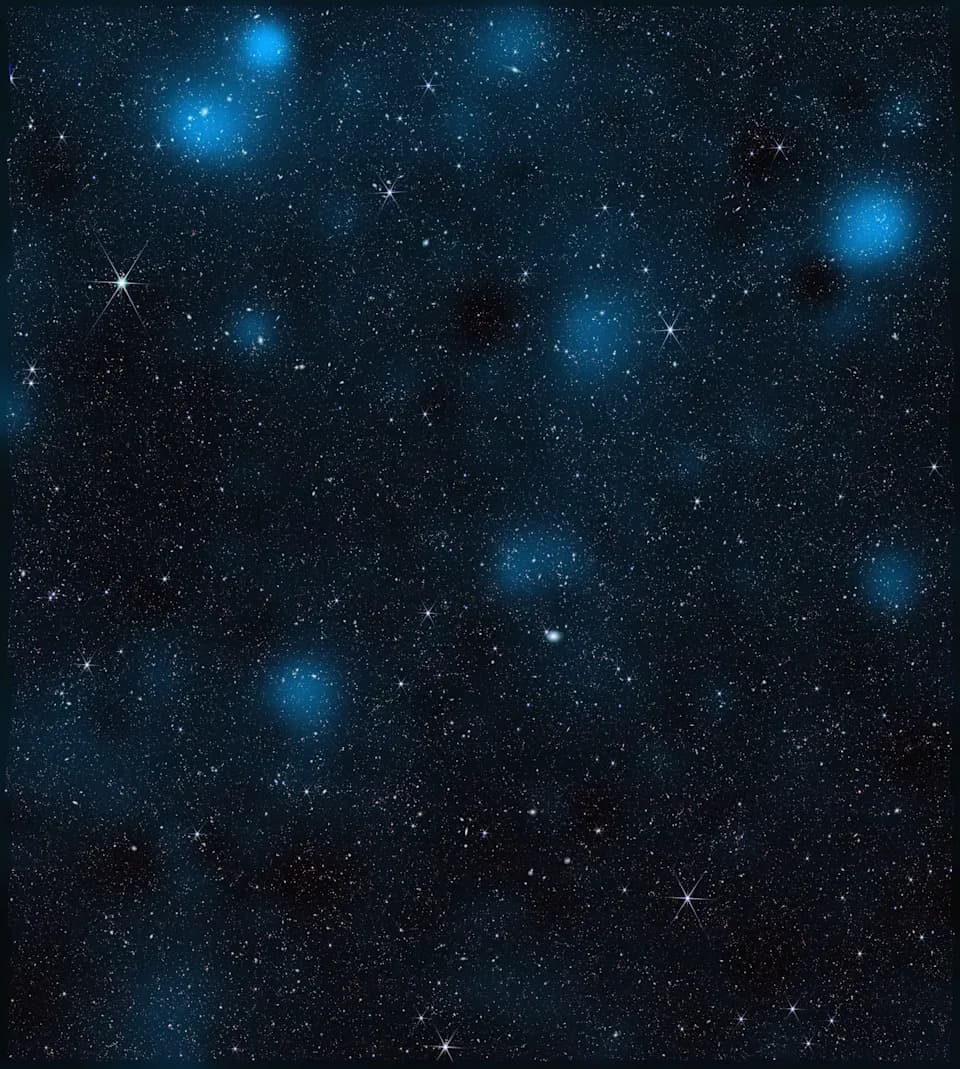
The proposed interaction offers a potential explanation for the so-called S8 tension — a statistical mismatch showing the present-day universe is "less clumpy" than expected from measurements of the early universe. This is not a visual change in individual galaxies but a reduced efficiency in the growth of structure across cosmic time. Allowing momentum transfer between dark matter and neutrinos damps small-scale structure formation and can bring predictions and observations into closer agreement.
Confidence and Next Steps
The signal is currently at roughly 3 sigma significance, corresponding to about a 0.3% probability that the result is a statistical fluke. That falls short of the 5-sigma threshold typically required for a definitive particle-physics discovery, but it is strong enough to motivate follow-up. Team leader Sebastian Trojanowski and co-authors emphasize that upcoming large surveys — notably from the Vera C. Rubin Observatory — and more precise theoretical modeling will be decisive in confirming or refuting this hint.
"This tension does not mean the standard cosmological model is wrong, but it may suggest that it is incomplete," said Eleonora Di Valentino, a study co-author. "Interactions between dark matter and neutrinos could help explain this difference, offering new insight into how structure formed in the Universe."
If confirmed, dark matter–neutrino interactions would prompt a major revision of aspects of the standard cosmological model and represent a significant advance in particle physics, opening a new window onto the dark sector.
Help us improve.