The six-year Dark Energy Survey analyzed 669 million galaxies and combined four cosmological probes to double the precision of previous expansion measurements. Results broadly support the standard ΛCDM model, in which dark energy has an effectively constant density, while a time-varying dark energy model remains compatible but not superior. A modest tension in galaxy-clustering measurements persists, motivating follow-up studies with the upcoming Vera C. Rubin Observatory.
“The Dream Has Come True”: Six-Year Dark Energy Survey Strengthens Standard Cosmology — With One Persistent Puzzle
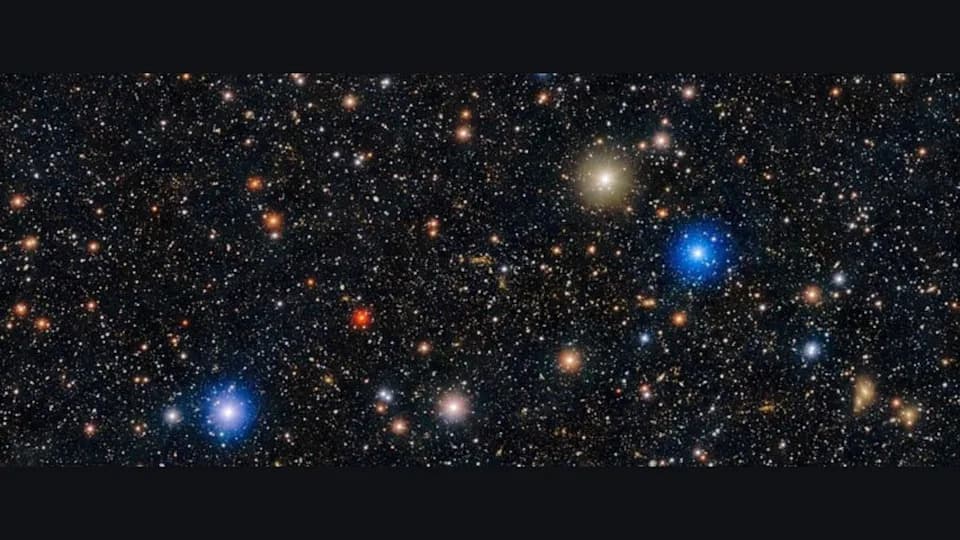
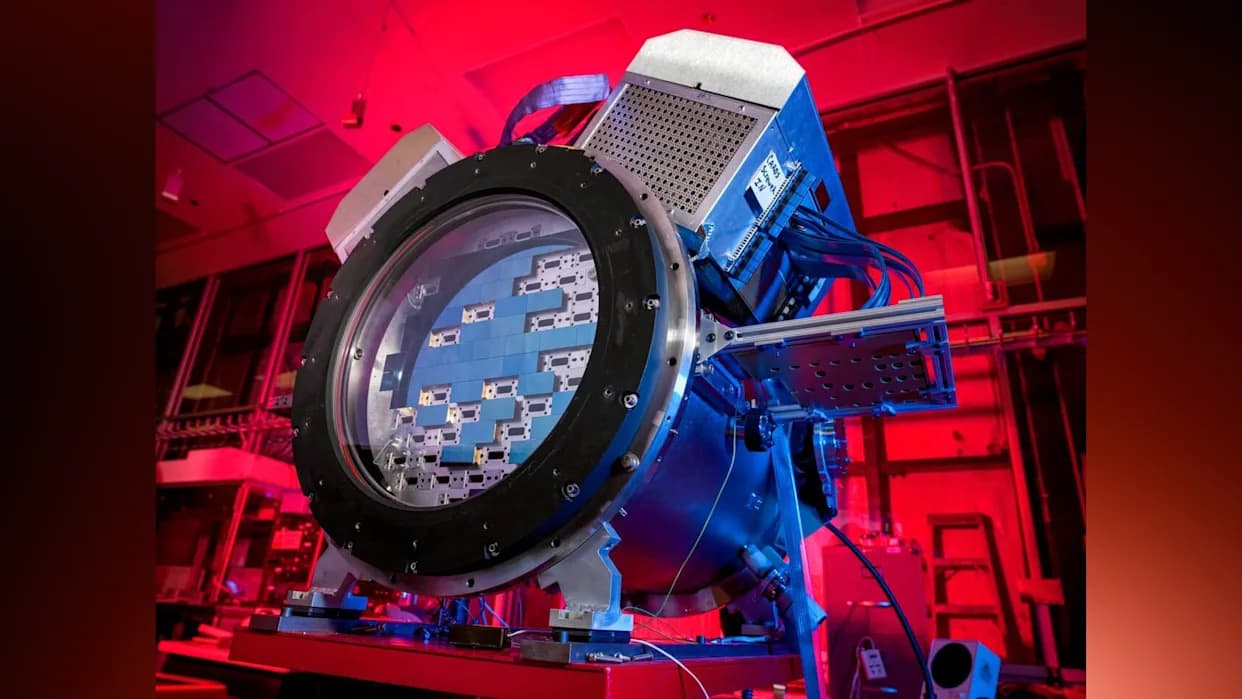
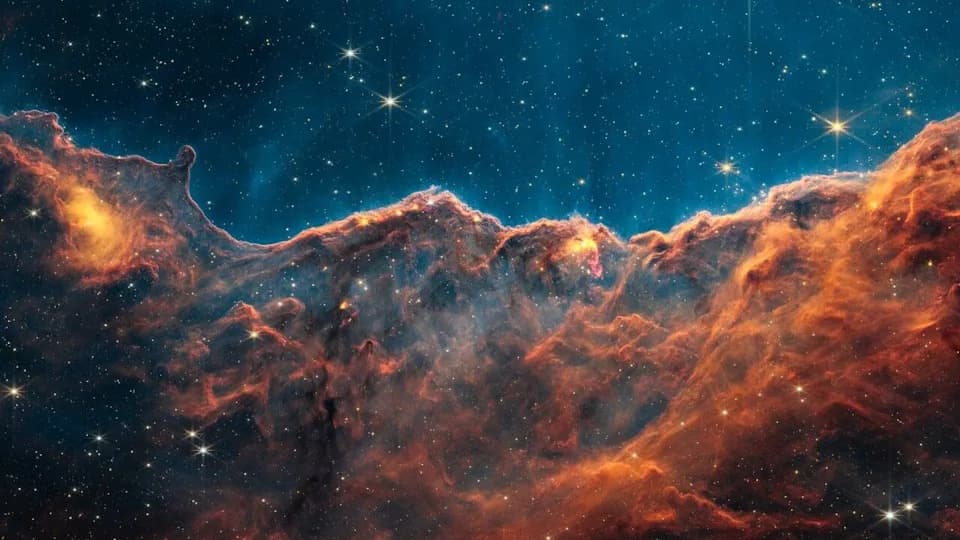
The Dark Energy Survey collected data from hundreds of millions of galaxies over six years to build on our understanding of the universe's expansion history. | Credit: CTIO/NOIRLab/DOE/NSF/AURA
A six-year observational campaign by the Dark Energy Survey (DES) that analyzed 669 million galaxies has produced tighter constraints on the universe's accelerated expansion — but left one notable tension unresolved.
Combining four complementary probes gathered with the Victor M. Blanco Telescope in Chile over roughly one-eighth of the sky, the DES team has roughly doubled the precision of previous measurements that track cosmic expansion. The main paper, posted to the preprint server arXiv on Jan. 21, is accompanied by 18 supporting papers that explore the results in detail.
What the Survey Measured
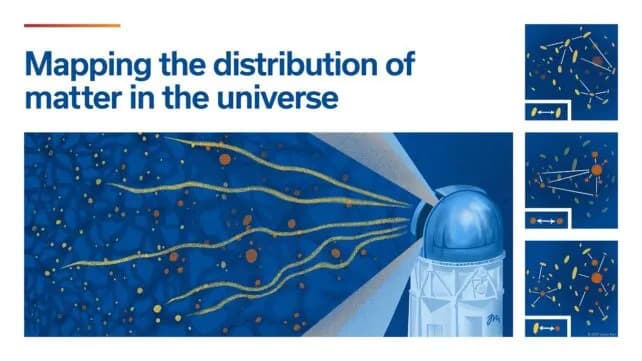
DES used four cosmological probes to map the universe's history and structure:
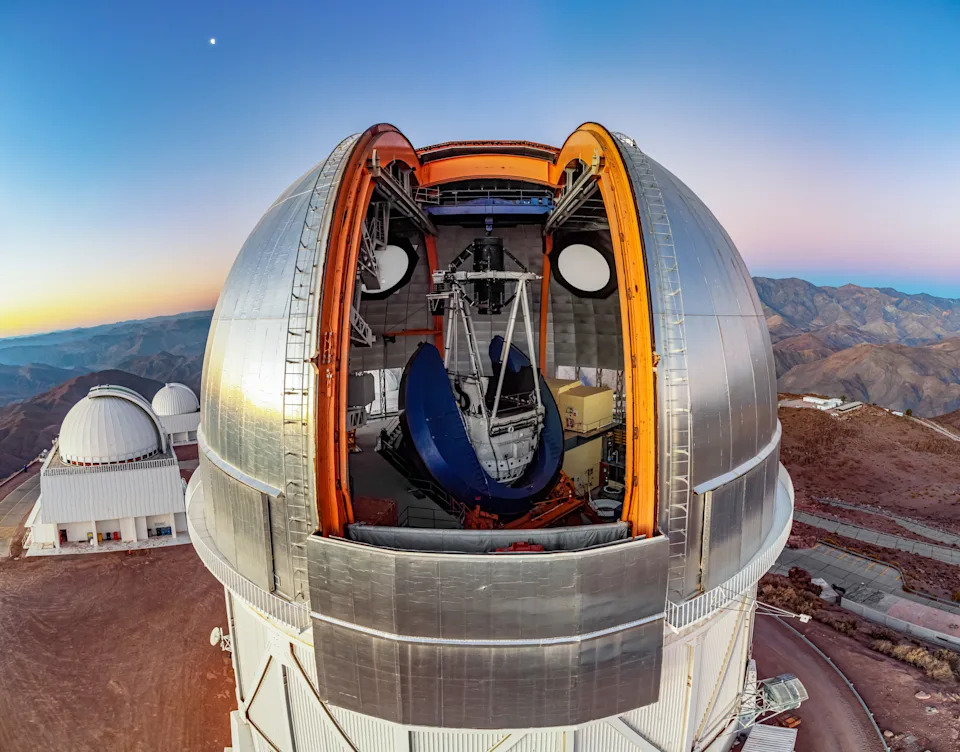
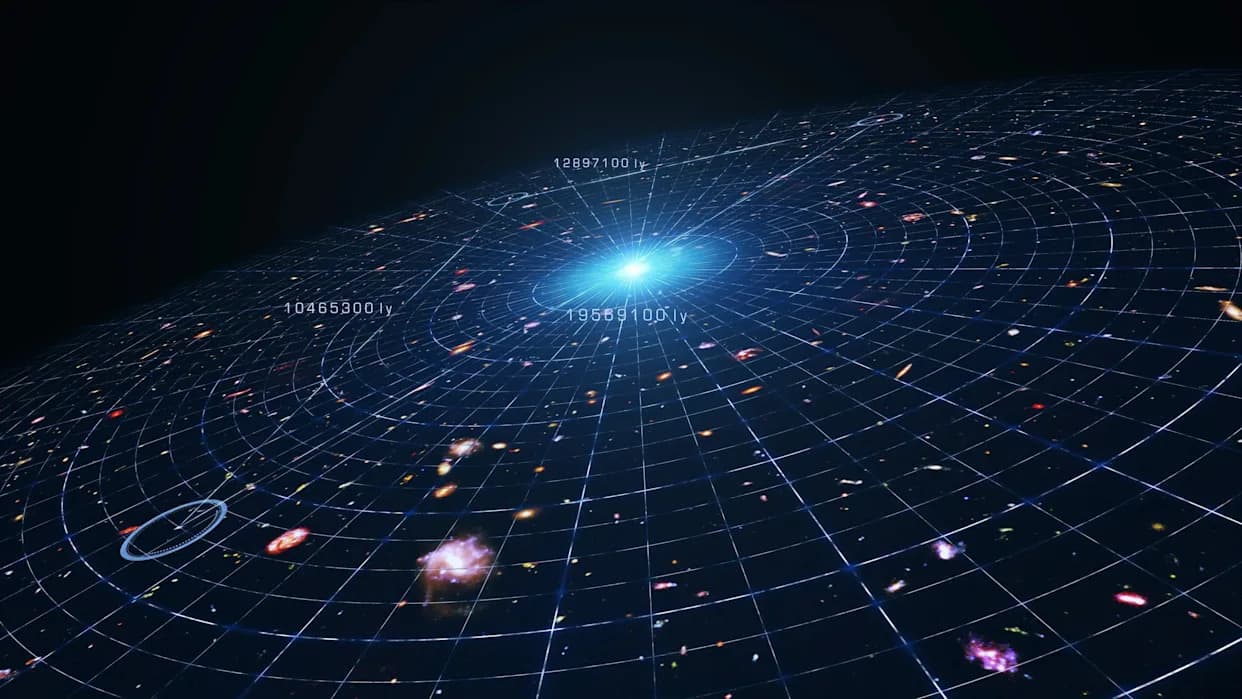
Scientists used the Victor M. Blanco Telescope in Chile to observe the expansion rate of the universe in four different ways. | Credit: CTIO/NOIRLab/NSF/AURA/T. Matsopoulos
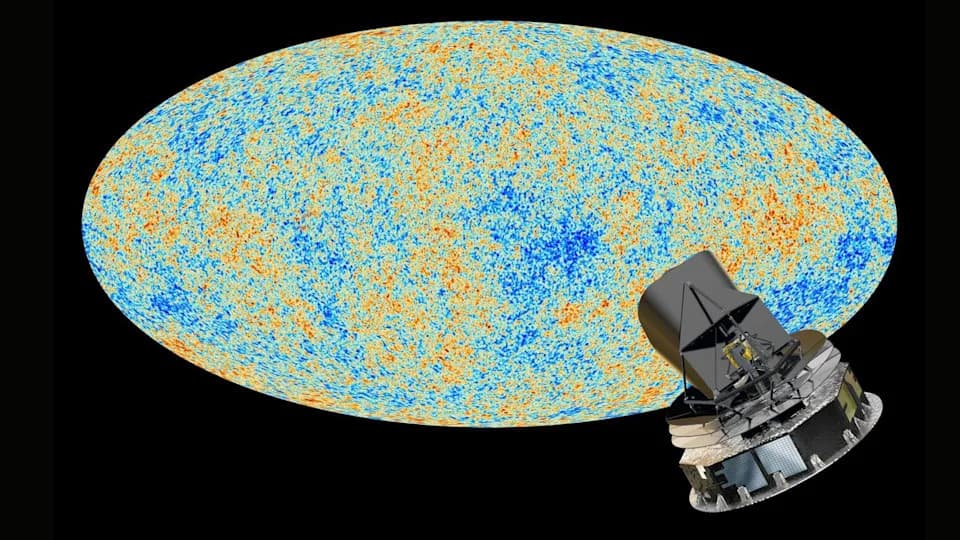
- Baryon Acoustic Oscillations (BAO): The imprint of early-universe density waves on the large-scale distribution of matter.
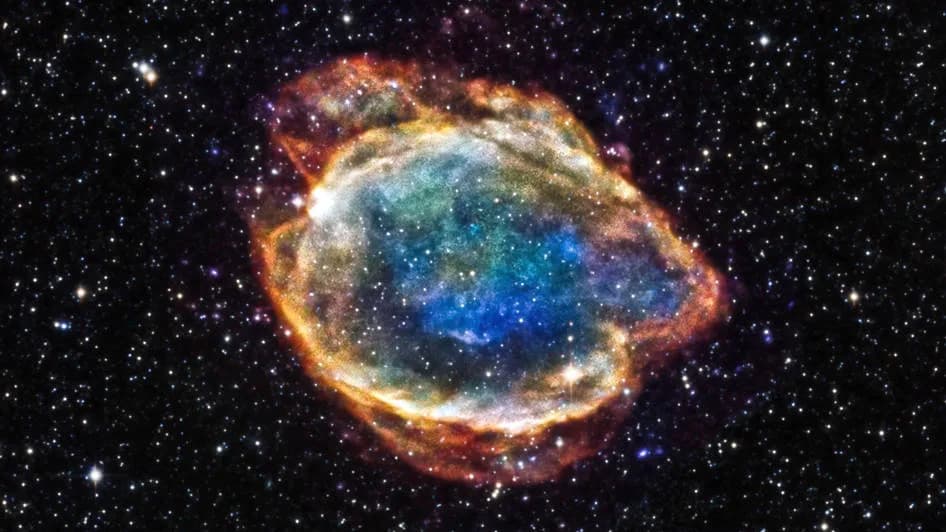
- Type Ia Supernovas: Stellar explosions that act as standardizable candles to measure cosmic distances.
- Galaxy Clusters: The most massive bound structures that trace how matter collapses under gravity.
- Weak Gravitational Lensing: Slight distortions in galaxy shapes caused by warped space-time from intervening mass.
Key Findings
The combined measurements are largely consistent with the standard cosmological model (Lambda Cold Dark Matter, or ΛCDM), in which dark energy acts like a constant energy density accelerating cosmic expansion. A related model where dark energy evolves over time also fits the data, but it does not provide a statistically better description than the constant-density scenario.
"These results from the Dark Energy Survey shine new light on our understanding of the Universe and its expansion," said Regina Rameika, associate director of the U.S. Department of Energy's Office of High Energy Physics. "They demonstrate how long-term investment in research and combining multiple types of analysis can provide insight into some of the Universe's biggest mysteries."
Despite the overall agreement, a lingering tension remains: the observed pattern of galaxy clustering does not match standard-model predictions perfectly. The discrepancy is modest — not large enough to overturn the standard model — but it is significant enough to motivate further study.
What Comes Next
DES researchers plan to push these tests further using future data from the Vera C. Rubin Observatory in Chile, whose wide, deep, and fast survey of the southern sky will improve measurements of dark energy and tests of gravity.
"Rubin's unprecedented survey of the southern sky will enable new tests of gravity and shed light on dark energy," said Chris Davis, NSF program director for NOIRLab.
In short, the Dark Energy Survey delivers a major step forward in precision cosmology: it largely validates the standard picture of cosmic acceleration while leaving an intriguing puzzle about how matter clusters on large scales.
Help us improve.