ESA’s Proba-3 mission released a time-lapse showing three prominence eruptions during a five-hour engineered eclipse, compressed into a four-second clip. Combining Proba-3’s coronagraph images with NASA’s SDO surface footage reveals how surface features and the corona interact. The eruptions are cooler prominence plasma (~10,000 K) rather than hotter flares, but their frequency and brightness may help researchers solve why the corona reaches million-degree temperatures.
Stunning Proba-3 Time-Lapse Shows Three Massive Solar Prominence Eruptions During an ‘Artificial Eclipse’
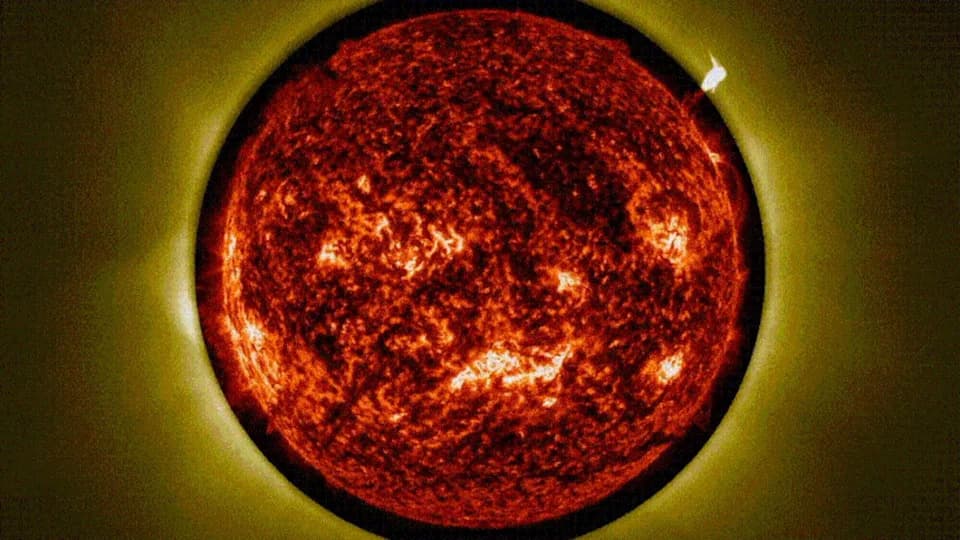
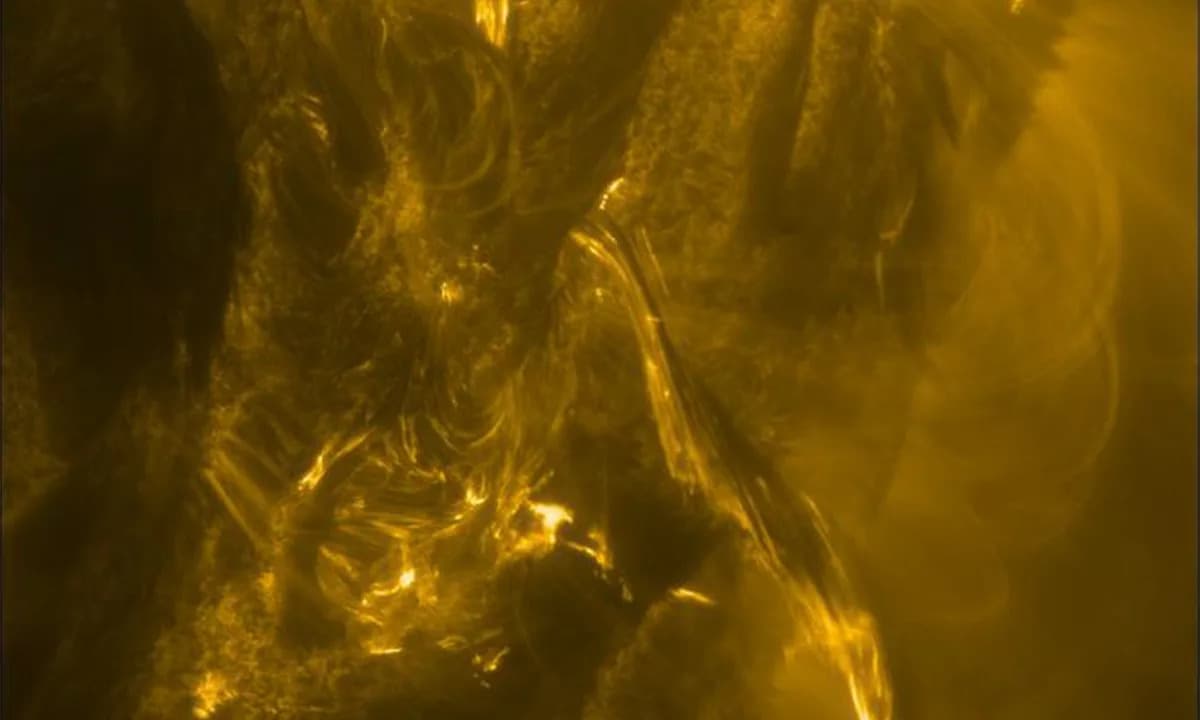
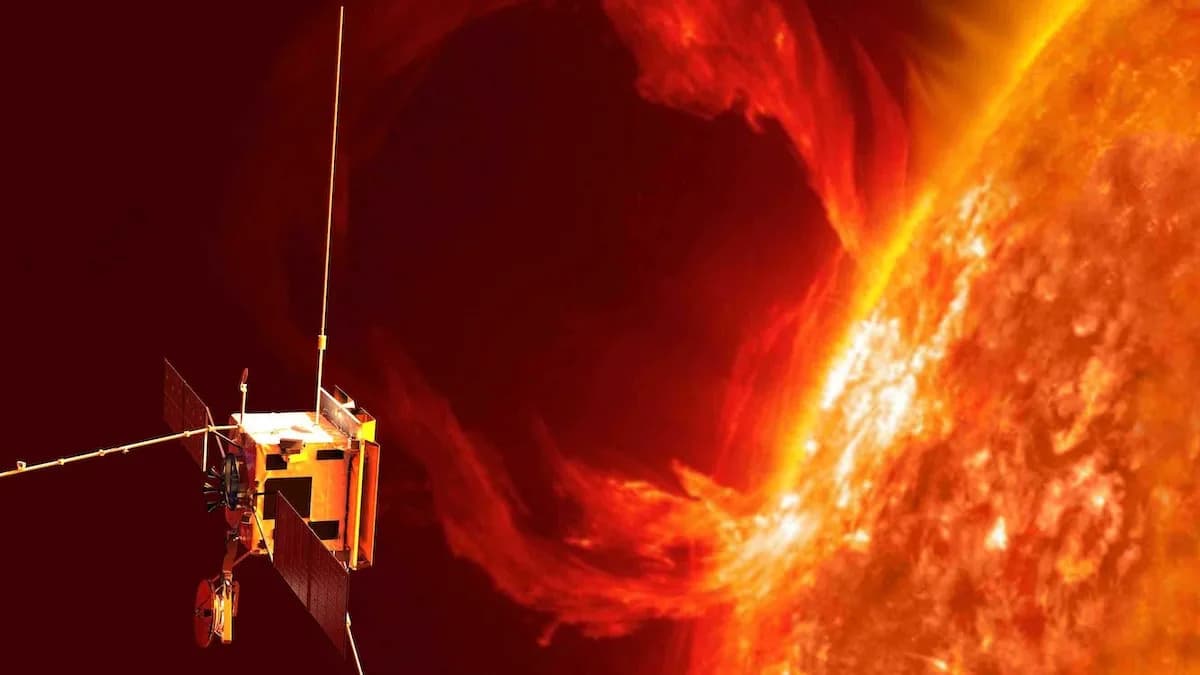
ESA's Proba-3 mission has captured a trio of solar prominences erupting from the sun, hurling plumes of plasma through the corona. . | Credit: ESA/Proba-3/ASPIICS, NASA/SDO/AIA
The European Space Agency (ESA) has released a striking time-lapse showing three large eruptions of plasma launching from the Sun during an engineered or “artificial” eclipse produced by the newly operational Proba-3 mission. The footage, captured during a five-hour observation on Sept. 2, 2025 and released by ESA on Jan. 19, combines coronagraph imagery from Proba-3 with surface images from NASA’s Solar Dynamics Observatory (SDO) to reveal surface–corona interactions in unprecedented detail.
Proba-3 is a two-spacecraft system: one probe acts as an occulter while the other carries a coronagraph. Launched into a highly elliptical orbit in December 2024, the pair fly in precise formation so the coronagraph is placed directly behind the occulter. That alignment blocks the Sun’s bright disk the way a natural solar eclipse does from Earth, but it can be repeated and sustained for far longer intervals—allowing detailed study of the faint solar atmosphere, the corona.
The new clip compresses a five-hour engineered eclipse into a four-second time-lapse. The yellow glow around the solar disk is the corona, seen through Proba-3’s coronagraph using a helium filter; in the center ESA overlaid simultaneous SDO imagery of the solar surface. Together, these data let researchers watch how surface features and the corona evolve and interact.
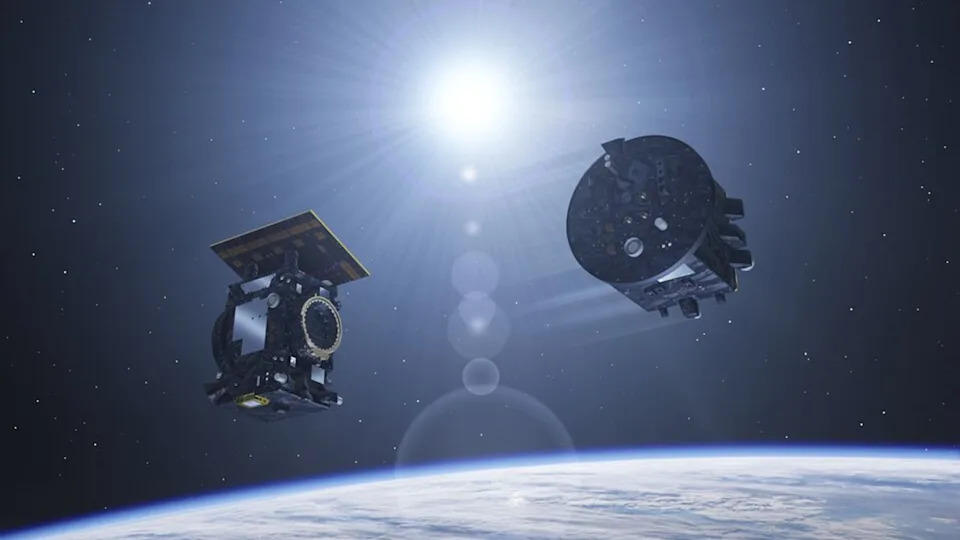
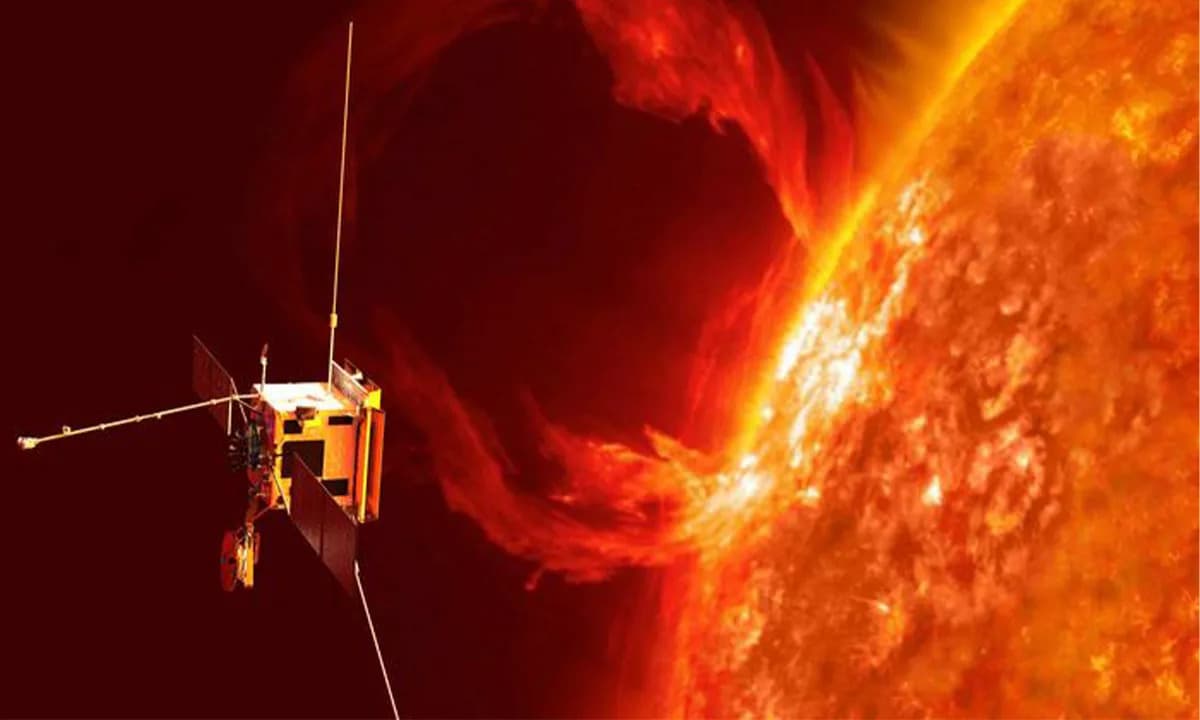
ESA's Proba-3 mission consists of twin spacecraft, the coronagraph (left) and the occulter(right), which align to create artificial eclipses in space. | Credit: European Space Agency
Three large plumes of plasma erupt in the sequence. Although they might resemble solar flares at first glance, the solar disk shows no bright, flare-like flashes. Instead, researchers identify these events as prominence eruptions—huge, looped structures of relatively cool, dense plasma anchored to the Sun that can extend, break off, and fling ionized gas into space.
“Seeing so many prominence eruptions in such a short timeframe is rare, so I’m very happy we managed to capture them so clearly during our observation window,” said Andrei Zhukov, researcher at the Royal Observatory of Belgium and principal investigator for Proba-3’s coronagraph.
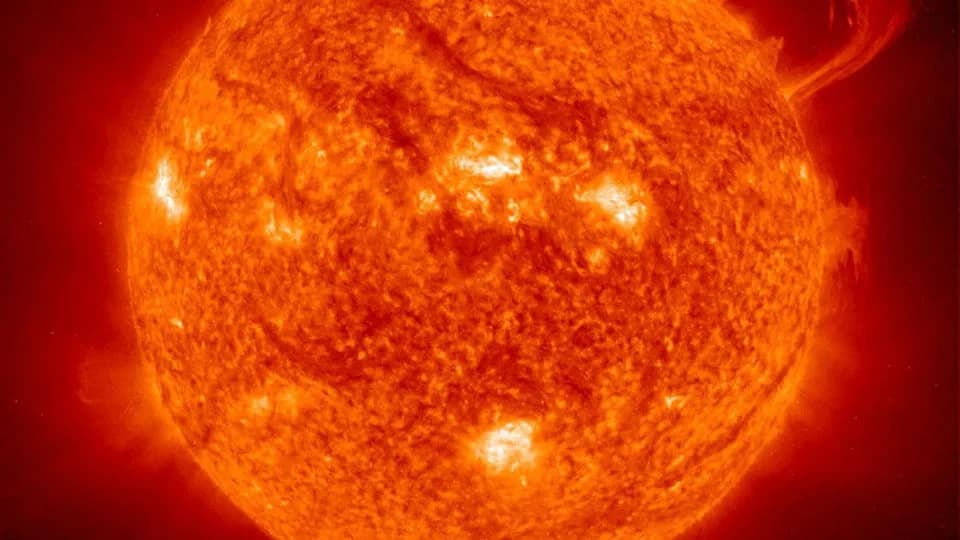
Although the prominence material appears bright in the coronagraph images, it is much cooler than the surrounding corona: prominence plasma is on the order of ~10,000 K (about 9,700°C), while the corona reaches temperatures of millions of kelvin. By comparison, the visible solar surface (the photosphere) is roughly 5,800 K, meaning the corona can be hundreds of times hotter than the surface—a major unsolved problem in solar physics.
Why This Matters
High-quality observations like the Proba-3 time-lapse help scientists study the physical processes that heat the corona and drive eruptions that can evolve into space weather affecting Earth. Since beginning regular operations roughly seven months ago, Proba-3 has observed at least 50 artificial eclipses and is expected to collect many more—building a growing record of coronal behaviour.
These results arrive amid a wave of recent solar advances. In June 2025, NASA’s CODEX instrument on the exterior of the International Space Station produced its first solar images, revealing previously unseen coronal disturbances linked to the solar wind. Other instruments—such as the Daniel K. Inouye Solar Telescope (DKIST), ESA’s Solar Orbiter, and NASA’s Parker Solar Probe—have also returned groundbreaking data and imagery, all while the Sun is in a particularly active phase (solar maximum). Together, these observations improve our understanding of how powerful solar storms form and how they might affect Earth in the coming years.
Help us improve.