Aman Priyadarshi Kumar, a New Mexico State University Ph.D. student, found compact Ca II K brightenings in the Sun's chromosphere that commonly appear 10–45 minutes before solar flares. Published in The Astrophysical Journal Letters, his Dunn Solar Telescope pilot study presents a simple, reproducible detection pipeline. Ground-based monitoring of these brightenings could provide short, actionable warnings to help protect satellites and communications while the team scales and automates the system.
NMSU Study Finds Tiny Ca II K 'Brightenings' That Can Give 10–45 Minute Early Warnings Of Solar Flares
NMSU student links solar brightenings as precursor to flares
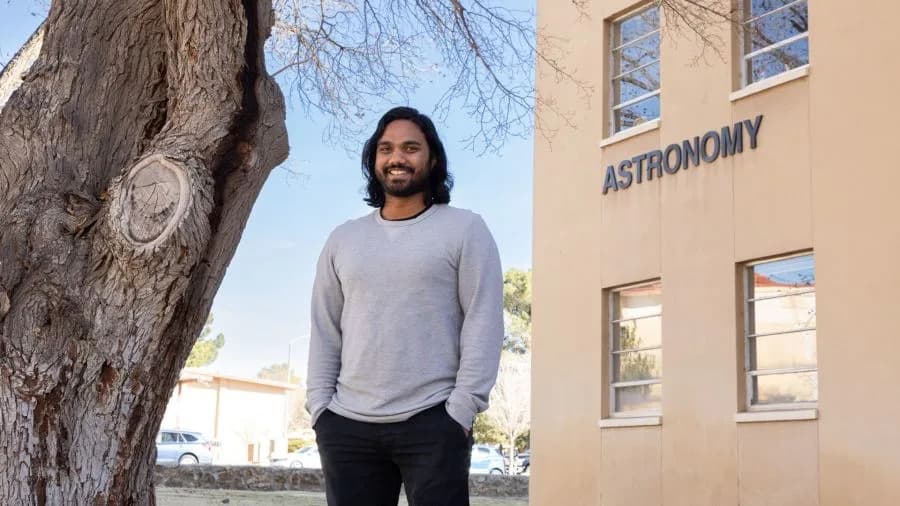
EL PASO, Texas — A New Mexico State University (NMSU) astronomy Ph.D. student has identified brief brightening events in the Sun's chromosphere that appear 10–45 minutes before some solar flares, potentially providing a short but actionable early-warning window for satellite and communications operators.
Aman Priyadarshi Kumar is lead author of the paper "Compact Ca II K brightenings precede solar flares: A Dunn Solar Telescope Pilot Study," now published in The Astrophysical Journal Letters. The results come from analysis of Ca II K observations taken with the Richard B. Dunn Solar Telescope (DST), operated by NMSU's astronomy department in Sunspot, New Mexico.
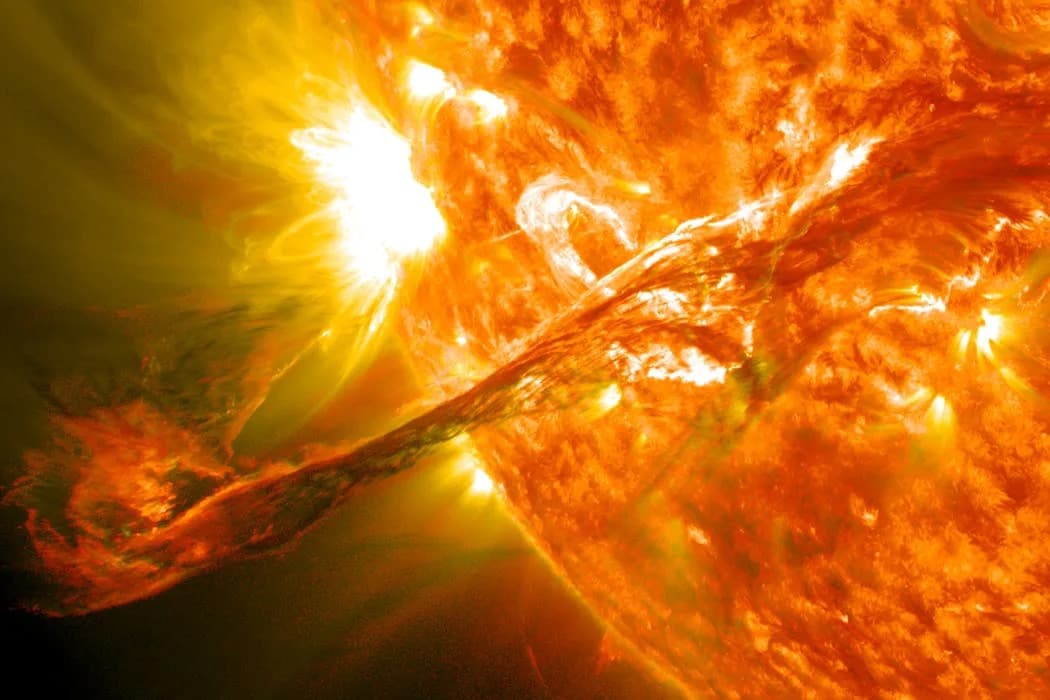
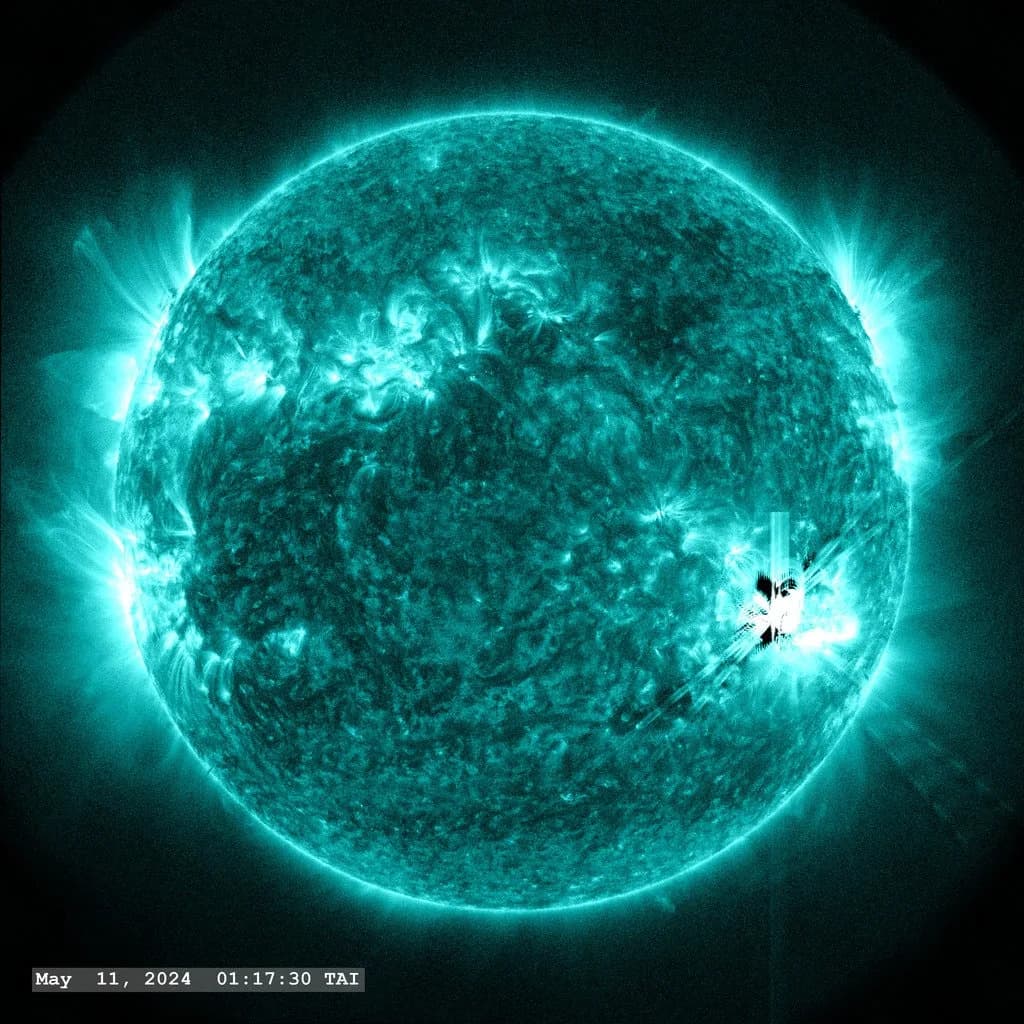
The chromosphere is a highly dynamic layer of the Sun where flares and other energetic phenomena originate. Observers isolate this layer using a narrowband filter tuned to the ionized calcium K spectral line (Ca II K) and convert the measured intensity over time into a light curve; a solar flare typically appears as a large, sharp peak in that curve.
While cataloging DST flare observations at the request of NMSU Assistant Professor Juie Shetye, Kumar and Shetye noticed smaller, earlier peaks in many Ca II K light curves. They labeled these features "brightenings" and found they often occurred roughly 10 to 45 minutes before the main flare. These compact brightenings are distinct from the flare peak and can be detected with ground-based facilities.
"That’s exciting because these 'early-warning' brightenings could be a signal for an elevated likelihood of a flare, giving operations teams extra minutes of lead time," Kumar said.
The study not only documents the brightenings but also describes a simple, reproducible data pipeline to detect them in Ca II K time series. Because ground-based telescopes such as DST can routinely monitor the chromosphere, the technique could be used to flag regions with an increased short-term probability of flaring. Operators could use the 10–45 minute window to take protective actions for satellites, communication networks, and navigation systems.
"Aman was thoughtful and methodical," Shetye said. "He built a workflow we can trust so our results are reproducible and scalable. This paper gives him a strong research identity at the intersection of ground-based solar observations and space-weather relevance."
Kumar described the project as formative: it taught him how to build a clean, reproducible pipeline, to acknowledge ambiguity, and to convert an unexpected pattern into a testable scientific result without overstating conclusions. As a second-year Ph.D. student, this work marks several milestones: his first lead-author paper and invitations to present at major conferences, including the American Geophysical Union (AGU) 2025 Annual Meeting and the American Astronomical Society (AAS) 247th Meeting.
Looking ahead, Kumar plans to expand the pilot study to a much larger dataset, improve the forecasting performance, address complex or ambiguous cases, and develop an automated, operational "nowcasting" pipeline that delivers concise, actionable alerts to stakeholders. While the early results are promising, the team emphasizes that more data and testing are needed before the method can be deployed in routine operational systems.
For readers interested in the technical details, the paper documents the detection criteria used for brightenings, the data-processing workflow, and statistical checks used to assess the temporal association between brightenings and subsequent flares.
The discovery highlights how careful analysis of ground-based chromospheric observations can contribute to space-weather forecasting and infrastructure protection. As Kumar and collaborators scale up the effort, the approach could become a complementary short-term alert tool for operators monitoring solar activity.
Help us improve.