AR4366, a sunspot region about 15 Earths across, is currently facing Earth after rotating into view on Jan. 30. It has produced more than 20 M- and X-class flares, some of which caused radio blackouts. Observers must use ISO 12312-2 solar eclipse glasses or certified solar filters for binoculars, telescopes, and cameras — ordinary sunglasses are not safe. The region should remain visible for several days and could produce further flares or CMEs that may trigger geomagnetic storms and auroras at high latitudes.
Giant Sunspot AR4366 — 15 Earths Wide — Facing Earth Now (How To See It Safely)
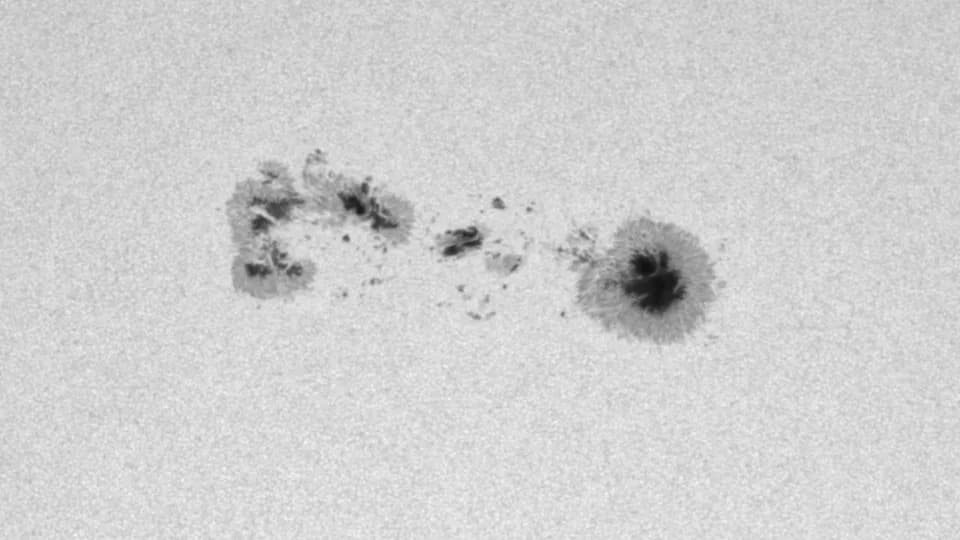
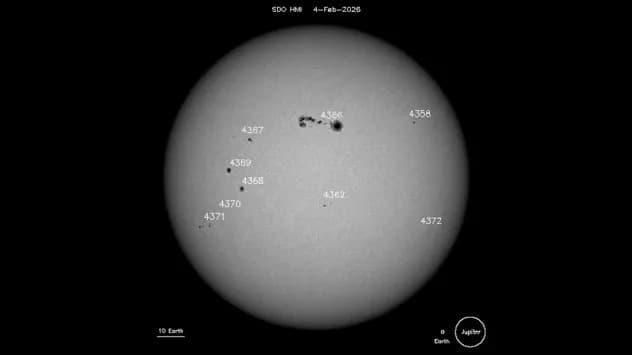
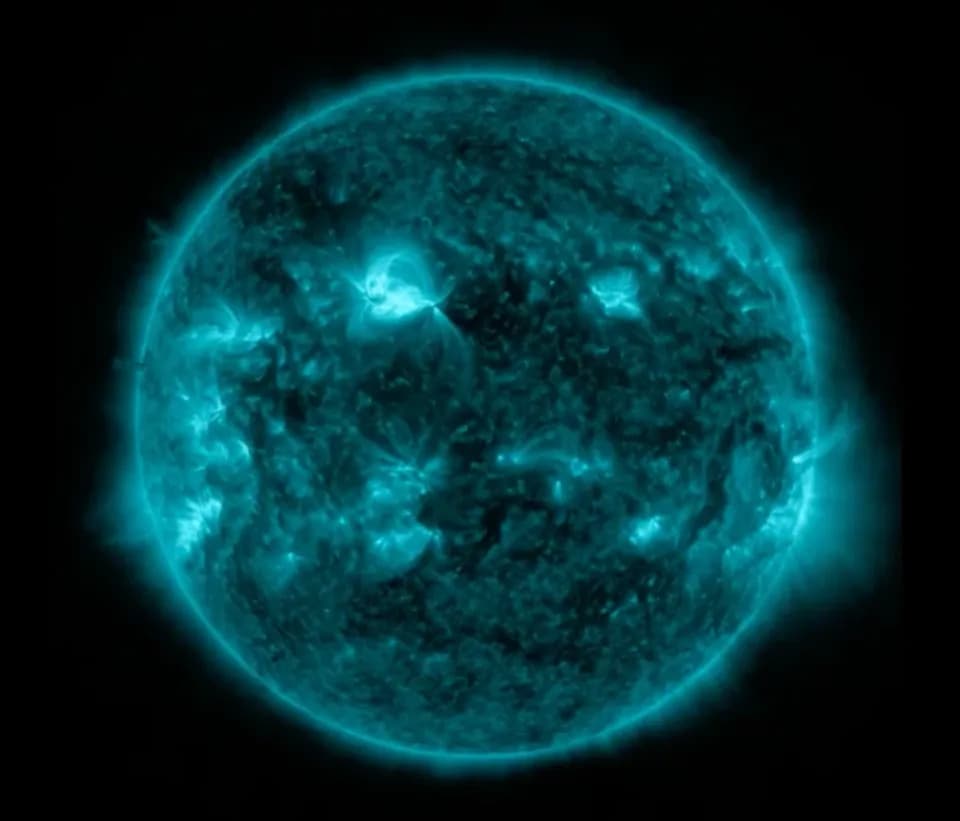
Sunspot region 4366 pictured on Feb.4, 2026 by NASA's Solar Dynamics Observatory. | Credit: NASA Solar Dynamic Observatory via Helioviewer.org
A massive sunspot region, labeled AR4366 and roughly the width of 15 Earths, is currently rotated toward our planet. The feature is large enough to be seen without magnification, but only when you use certified solar-protection — looking at the Sun with the naked eye or ordinary sunglasses can cause permanent eye damage.
What Is AR4366?
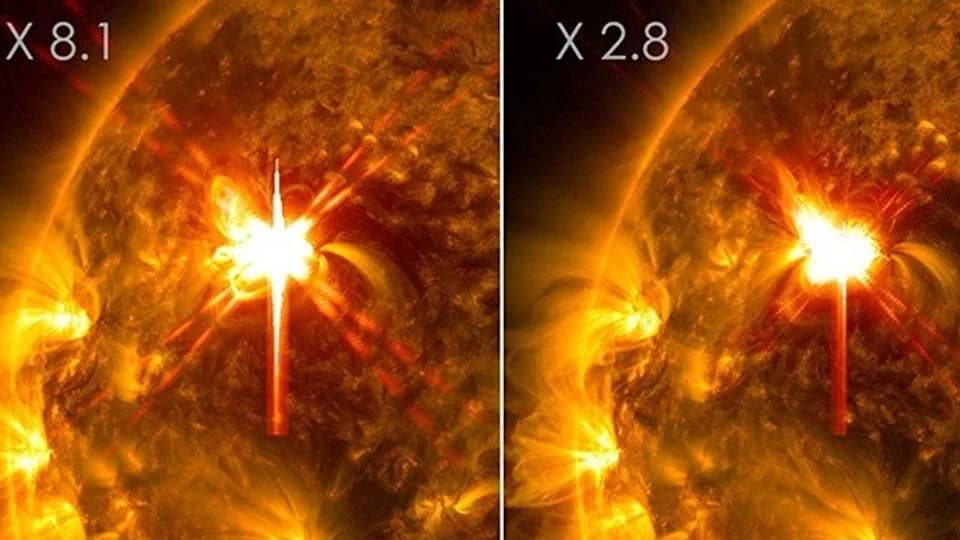
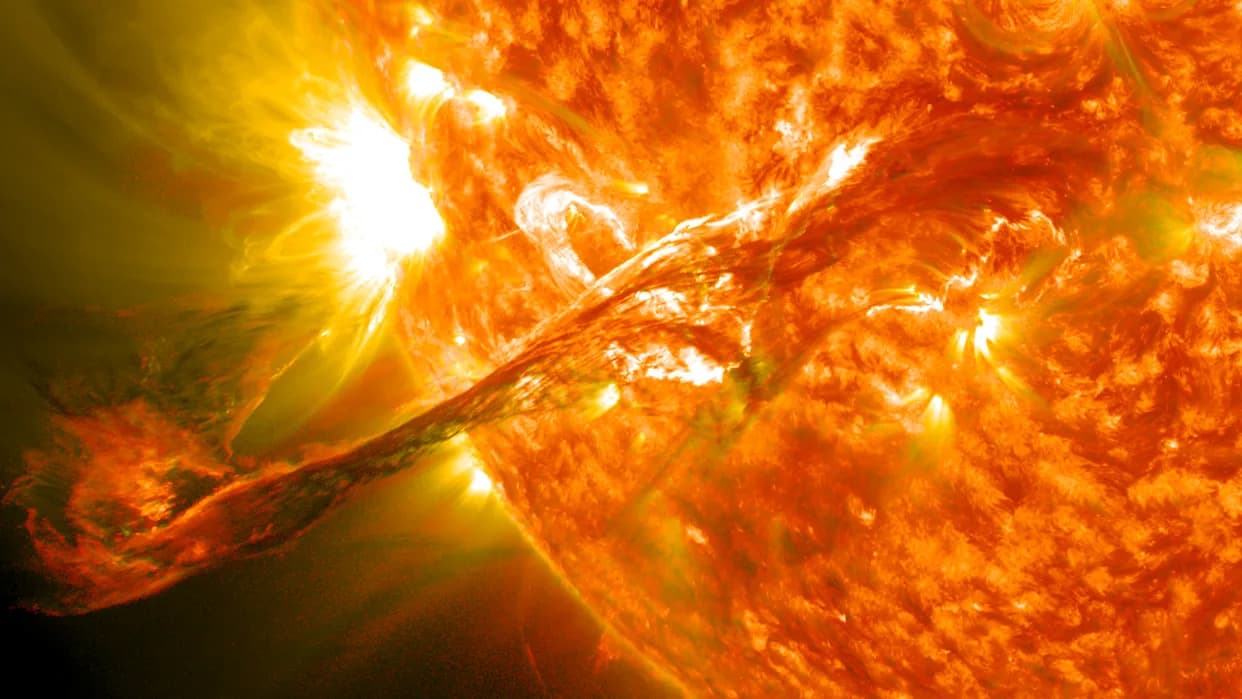
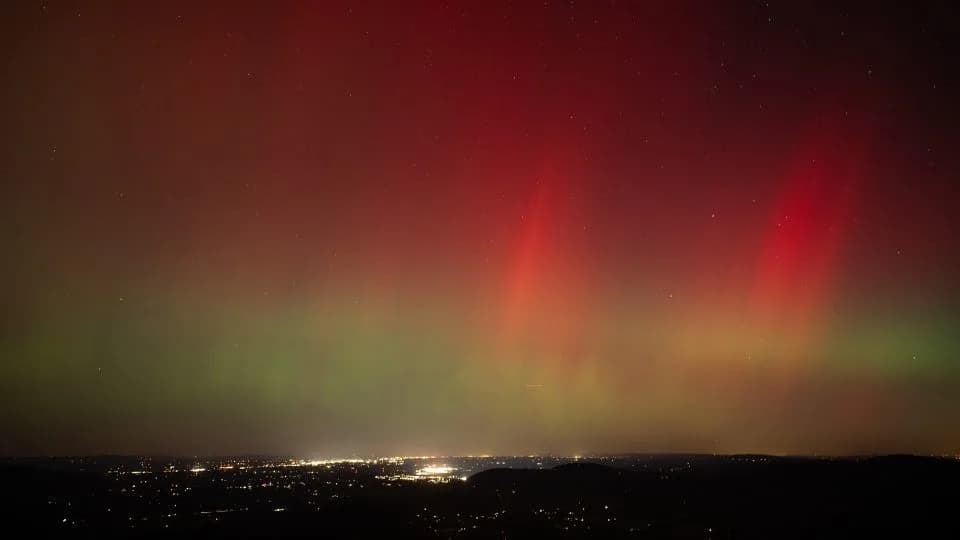
Sunspots are comparatively cool patches on the Sun's surface that form where magnetic fields are strongest. AR4366 stood out after rotating into view on Jan. 30 and has since produced more than 20 M- and X-class solar flares — the most powerful flare categories. Some of those eruptions produced radio blackouts on Earth, and further strong flares or coronal mass ejections (CMEs) from this region could cause geomagnetic storms and auroras at high latitudes.
Safety First: How To Observe Without Risk
Always use certified solar-protective eyewear when observing the Sun. Look only through ISO 12312-2-compliant solar eclipse glasses or properly rated solar filters designed for telescopes and cameras. Ordinary sunglasses, smoked glass, or improvised filters do not block harmful ultraviolet and infrared radiation and are unsafe.
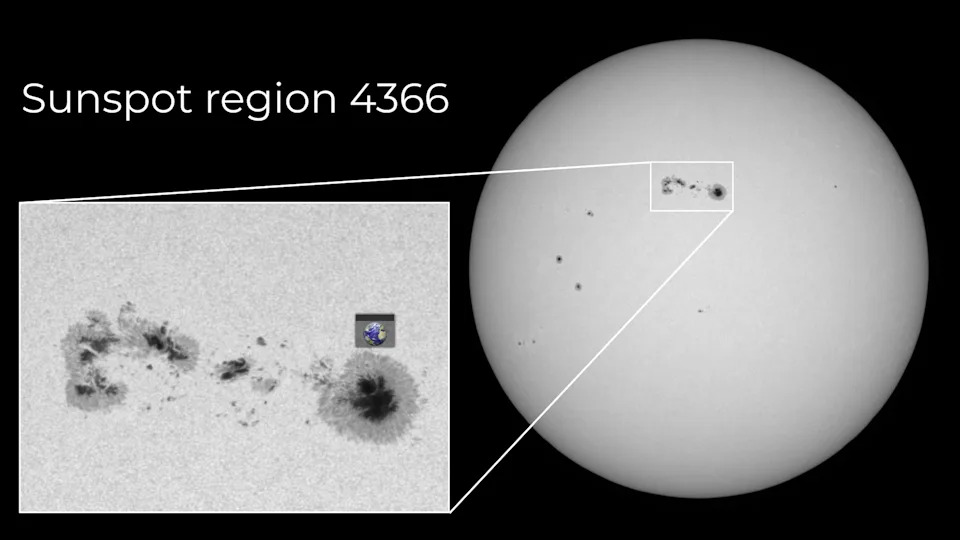
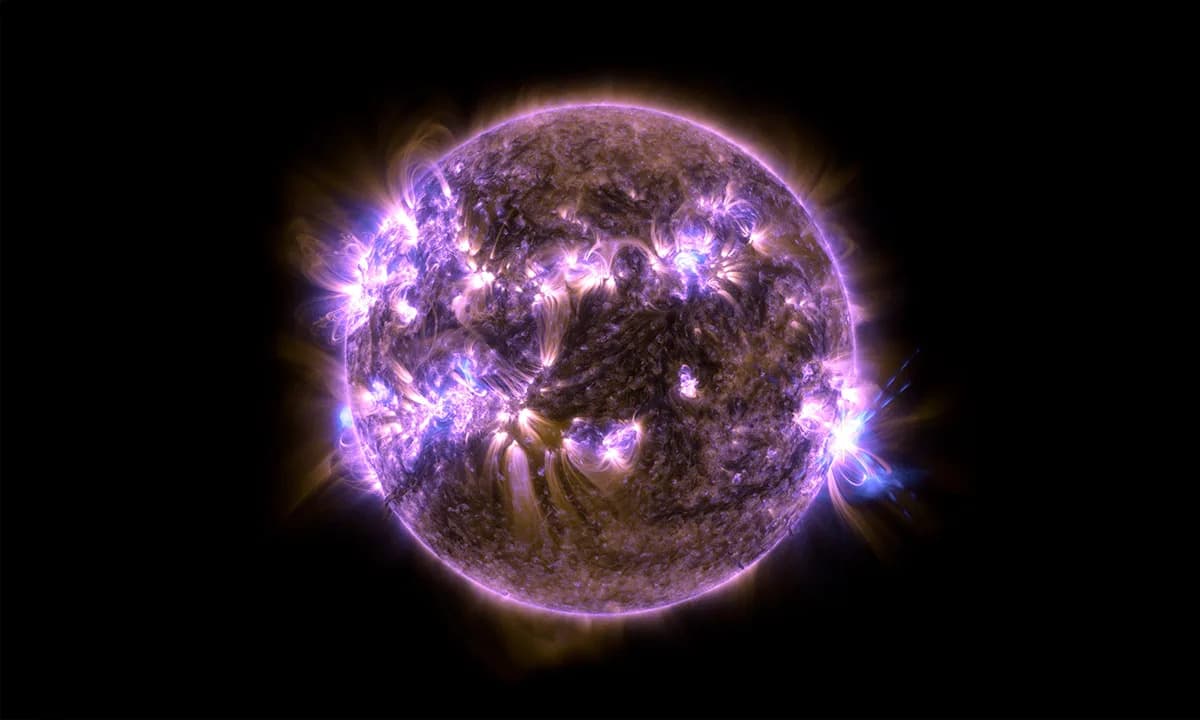
Sunspot region 4366 pictured on Feb.4, 2026 by NASA's Solar Dynamics Observatory. Earth inset for scale. | Credit: NASA Solar Dynamic Observatory via Helioviewer.org
- For unaided viewing: Use ISO 12312-2 solar eclipse glasses. With these, AR4366 will look like a small dark spot near the center of the solar disk, slightly above the Sun's equator.
- For a clearer view: Dedicated sungazing optics such as Lunt SUNoculars or the Celestron Eclipsmart binoculars give an improved, safe view.
- For detailed close-ups: Use a telescope fitted with a reputable full-aperture solar filter or a certified solar eyepiece filter. Never look through unfiltered binoculars or a telescope, even while wearing eclipse glasses.
- Projection and imaging: The solar projection method (projecting the Sun's image onto a white card) is a safe alternative for group viewing, and photography requires proper solar filters on lenses — never point an unfiltered camera or phone at the Sun.
What To Expect From AR4366
AR4366 is expected to remain visible for several days as it crosses the solar disk. Given its recent activity, it may produce more powerful flares and CMEs before it decays. Those eruptions can briefly disrupt radio communications and, if directed toward Earth, may spark visible auroras at high latitudes.
Planning Ahead
If you want to be ready for future events, note that a total solar eclipse will cross parts of Spain, Greenland, and western Iceland on August 12 this year; certified solar eclipse glasses and proper solar filters will be essential for safe viewing. Photographers should consult expert guides on solar imaging and use only certified solar filters for cameras and telescopes.
Share Your Photos: If you capture images of AR4366 and would like to share them with Space.com readers, send photos, your name, location, and any comments to spacephotos@space.com.
Help us improve.