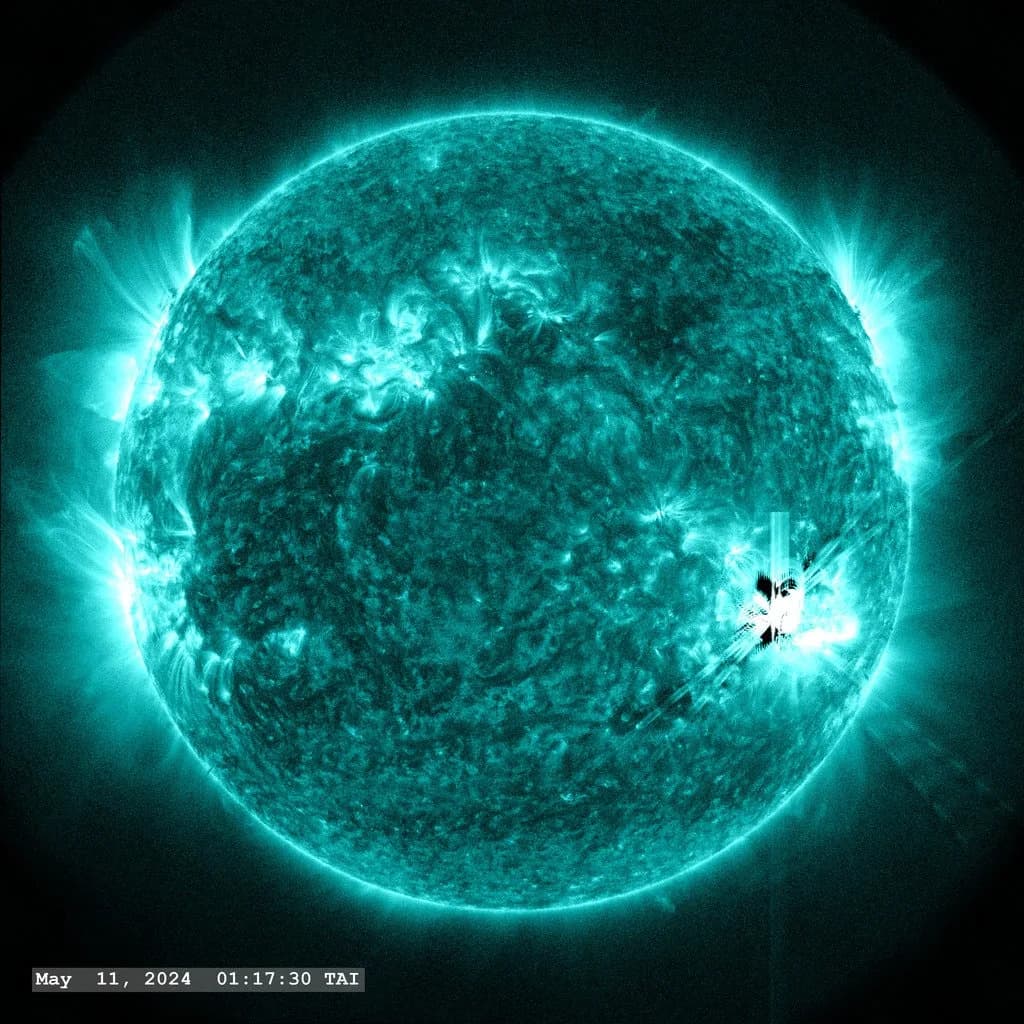
Researchers using ESA’s Solar Orbiter together with Earth‑based observatories tracked the strongest solar storm in over 20 years continuously for 94 days, producing the longest image series yet for a single active region. The dual vantage allowed scientists to watch the region form, grow more complex, erupt as flares and then decay. Published in Astronomy & Astrophysics, the findings should improve space‑weather forecasting as ESA prepares the dedicated Vigil mission for launch in 2031.
Scientists Track a Massive Solar Storm for 94 Days — The Longest Continuous View Yet
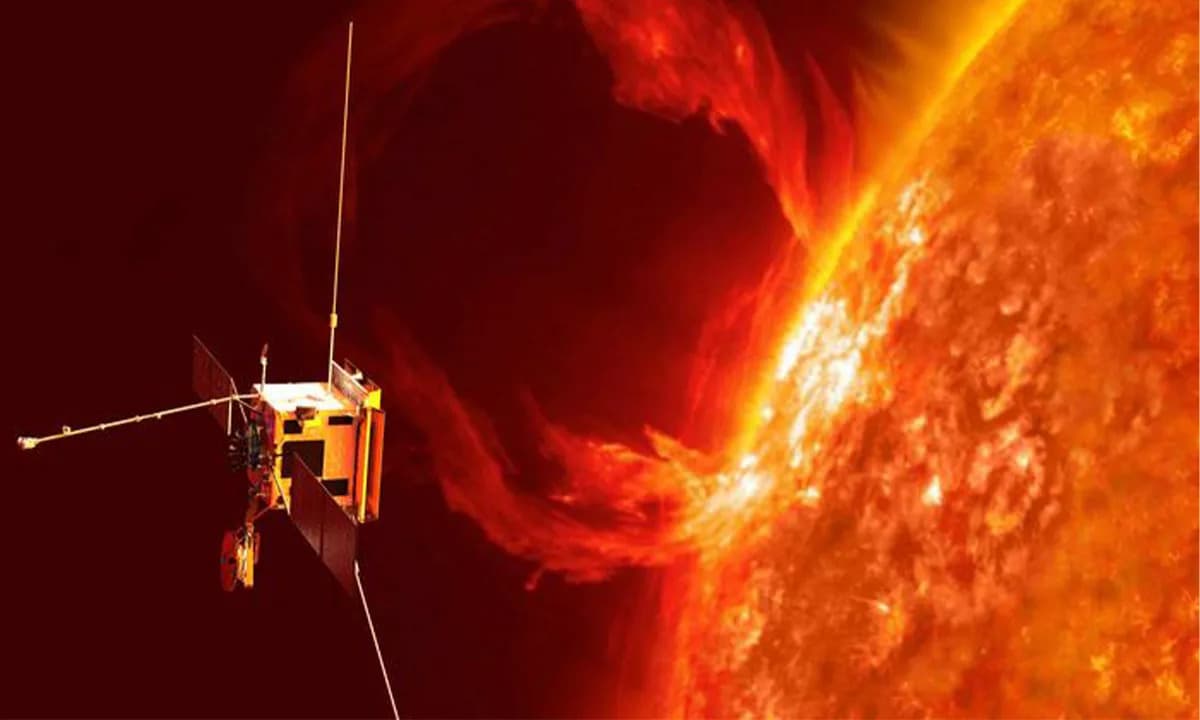
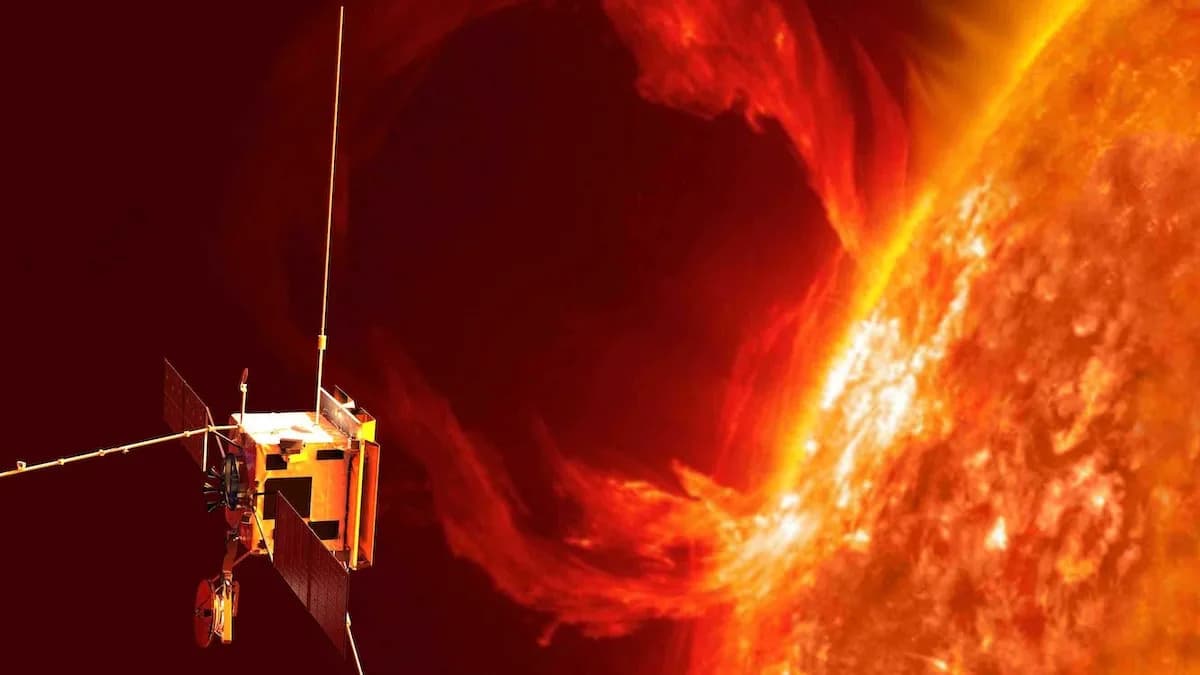
The European space probe Solar Orbiter delivers images of the sun, including observations of what is, from our perspective, its far side. Credit: ESA / AOES.
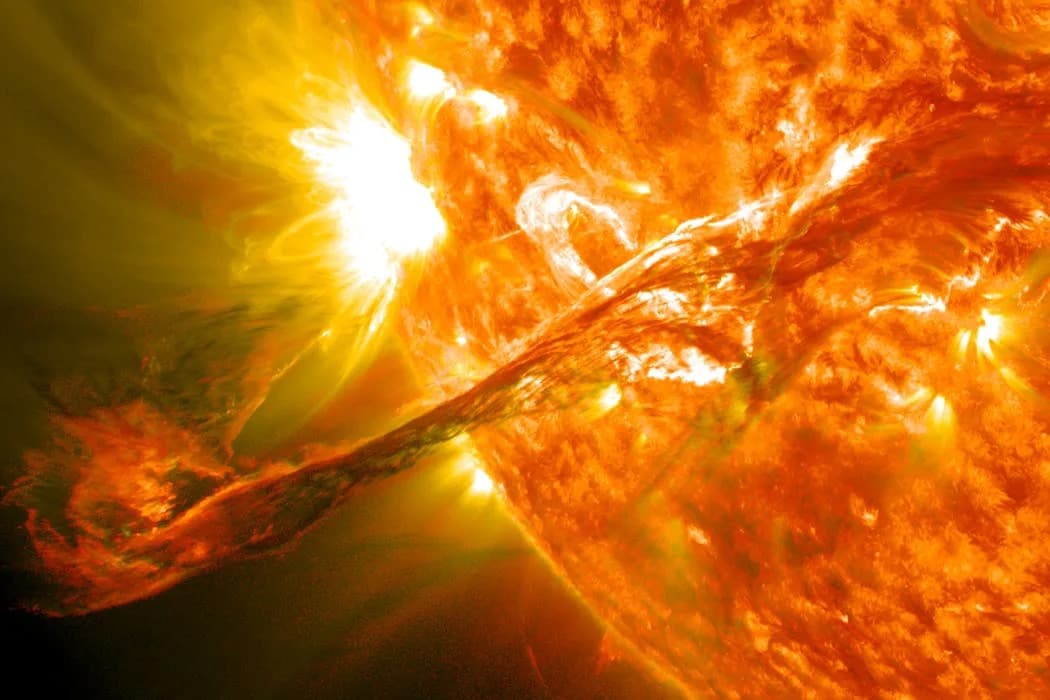
Solar flares can wreak havoc on Earth, disrupting radio communications, triggering power outages and even damaging satellites. "Even signals on railway lines can be affected and switch from red to green or vice versa," warned Louise Harra of the Davos Physical‑Meteorological Observatory. "That’s really scary."
Forecasting these eruptions has long been difficult in part because the Sun rotates once every ~28 days, so active regions on the solar surface rotate out of view for observers on Earth after roughly two weeks. That limitation changed with the European Space Agency’s Solar Orbiter mission, launched in 2020. From an off‑Sun vantage and an orbital period of months, Solar Orbiter can see areas of the Sun that are hidden from Earth‑based telescopes.
Using simultaneous observations from Solar Orbiter and Earth‑based instruments, Louise Harra and Ioannis Kontogiannis (ETH Zurich) followed a powerful active region as it formed, grew more complex, erupted and then decayed — continuously for 94 days. According to the team, this is the longest continuous series of images ever produced for a single active region. Their results were published in Astronomy & Astrophysics.
Why This Matters
These continuous, dual‑vantage observations let scientists watch the full lifecycle of a major magnetic storm on the Sun, improving understanding of how complexity builds and leads to flares and coronal mass ejections. Better physical models built from such long records should help improve space‑weather forecasting — critical for protecting power grids, communications, navigation systems and satellites on Earth.
While Solar Orbiter has proven indispensable for long‑duration monitoring, predicting the precise severity of individual flares remains a challenge. To address this, ESA is developing a dedicated space weather mission, Vigil, aimed at improving real‑time forecasts; Vigil is scheduled for launch in 2031.
"This is the longest continuous series of images ever created for a single active region: it’s a milestone in solar physics," said Ioannis Kontogiannis.
Lead image: ESA / AOES
This story was originally featured on Nautilus and has been adapted for clarity and context.
Help us improve.