Japan's likely snap election has raised the prospect of temporarily scrapping the 8% consumption tax on food to ease household cost pressures. The ruling LDP and coalition partner Ishin have a pact to suspend the levy for two years, and the main opposition CDP also backs a temporary cut. Officials warn the move could cost about 5 trillion yen ($31.7 billion) a year and strain public finances, potentially unsettling bond markets.
Japan Snap Election Raises Prospect Of Temporary 8% Food Tax Cut — Risks To Public Finances Loom
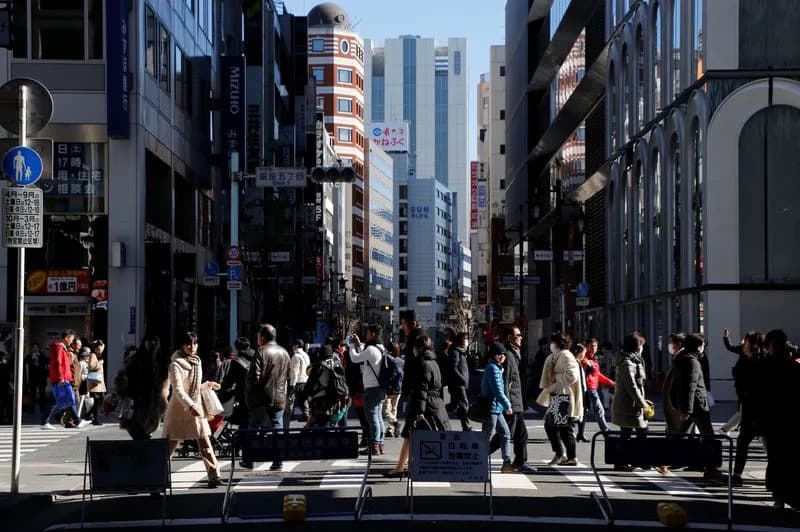
People walk on a street at Tokyo's Ginza shopping district, Japan, February 12, 2017. Picture taken February 12, 2017. REUTERS/Toru Hanai
TOKYO, Jan 19 (Reuters) - Japan's expected snap general election has increased the likelihood of a temporary cut to the consumption tax on food, as senior figures from both the ruling and opposition parties urged relief for households squeezed by rising living costs.
Japan currently levies an 8% consumption tax on most food items and a 10% rate on other goods and services. These tax receipts are a major funding source for expanding social welfare programs in a rapidly ageing society.
Political Push For A Temporary Cut
Shunichi Suzuki, secretary-general of the ruling Liberal Democratic Party (LDP), highlighted a prior agreement with coalition partner Ishin to target scrapping the 8% food levy for two years. Suzuki told a television programme that the party's stance was to "sincerely achieve what's written in the agreement."
"It's our basic stance to sincerely achieve what's written in the agreement," Suzuki said.
The Mainichi newspaper reported that Prime Minister Sanae Takaichi, if she calls a general election next month, may pledge to temporarily abolish the 8% food sales levy. Takaichi is widely expected to hold a news conference to announce plans to dissolve parliament and call a February snap election, aiming to capitalise on relatively strong approval ratings for her administration.
The main opposition Constitutional Democratic Party of Japan (CDP), which has agreed to form a new political party with Komeito, also supports a temporary cut, CDP Secretary-General Jun Azumi said on the same programme.
Fiscal And Market Implications
Government estimates suggest eliminating the 8% food sales levy would reduce revenue by about 5 trillion yen a year (roughly $31.7 billion at ¥157.69 = $1). Such a move would further strain Japan's fragile public finances and could increase the risk of a bond sell-off if investors view the pledge as part of a more expansionary fiscal policy.
Analysts say a temporary tax suspension would offer immediate relief to households but would force the government to weigh short-term political gains against long-term fiscal sustainability and the funding of social services for an ageing population.
($1 = 157.6900 yen)
(Reporting by Leika Kihara; Editing by Paul Simao)
Help us improve.