Dress warmly and plan to observe about 90 minutes after sunset. Five winter highlights to look for are: Messier 35 in Gemini, the Double Cluster (NGC 869/884), the Hyades and Pleiades in Taurus, and the Orion Nebula (M42). Use 7× binoculars or a small telescope (15–20×) and low magnification for wide clusters; each target offers distinctive views ranging from nearby open clusters (~150 light-years) to the Orion Nebula, a stellar nursery ~1,500 light-years away.
Bundle Up and Look Up: 5 Winter Sky Wonders Every Stargazer Should See
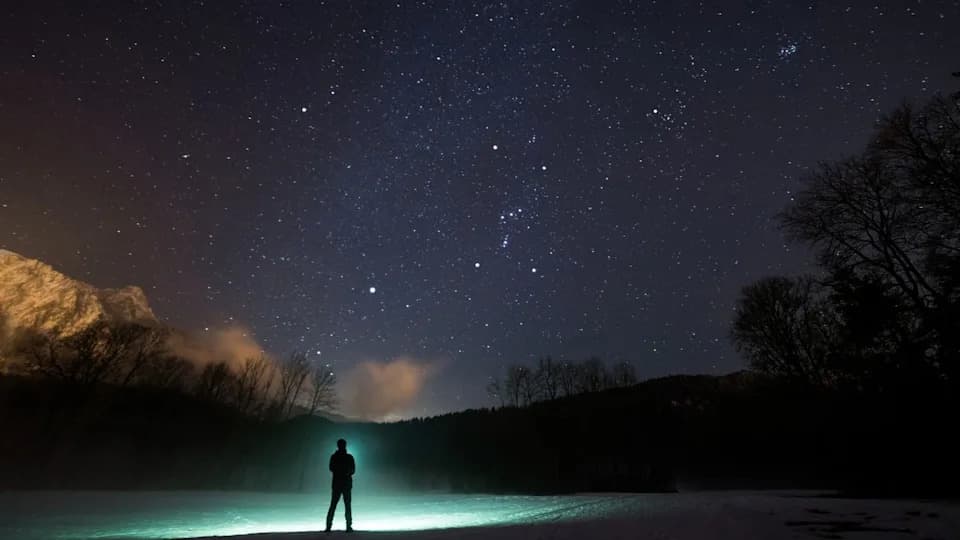
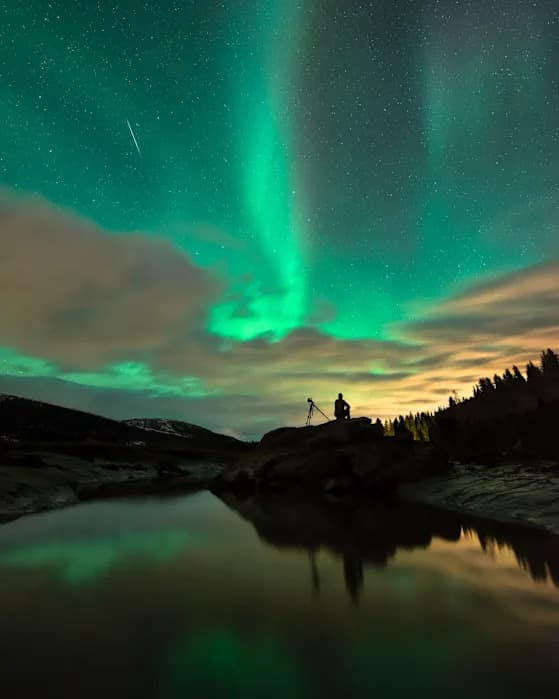
Long dark winter nights provide the perfect opportunity to explore the night sky. | Credit: Dneutral Han/Getty Images
Clear, cold winter nights in the northern United States reward skywatchers with some of the season's best celestial sights — but comfort matters. Layer sensibly, choose the right optics, and plan to observe once twilight has fully faded (roughly 90 minutes after sunset). Below are five winter highlights you can enjoy with the naked eye, binoculars, or a small telescope.
Dress For Winter Observing
Keep warm to make your session enjoyable: a lightweight hooded ski parka offers good insulation without bulk, ski pants are preferable to ordinary trousers, and warm feet are essential. For short sessions, two pairs of warm socks inside roomy shoes often suffice; for extended observing in extreme cold, insulated boots are recommended.
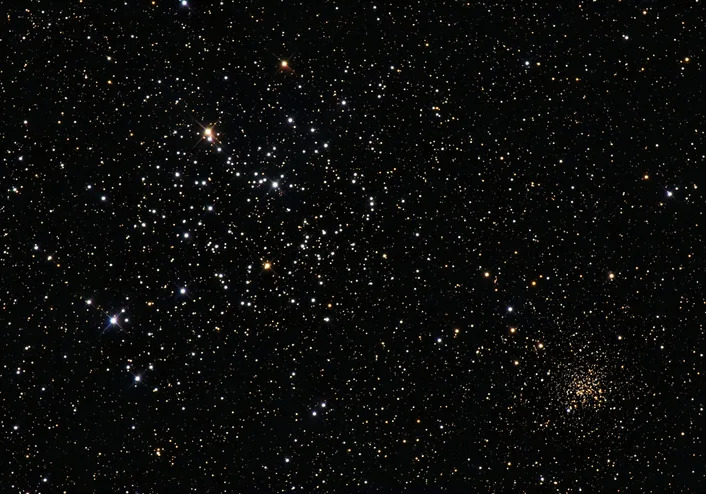
Messier 35 open star cluster to the left and the open star cluster NGC2158 to the lower right. | Credit: knickohr/Getty Images
How To Use This Guide
We assume you begin observing after full darkness arrives — about 90 minutes after sunset — and that you may be using nothing more than your eyes, a pair of 7x binoculars, or a small telescope (15–20×). Viewing tips are included for each object.
1. Gemini and Messier 35 (M35)
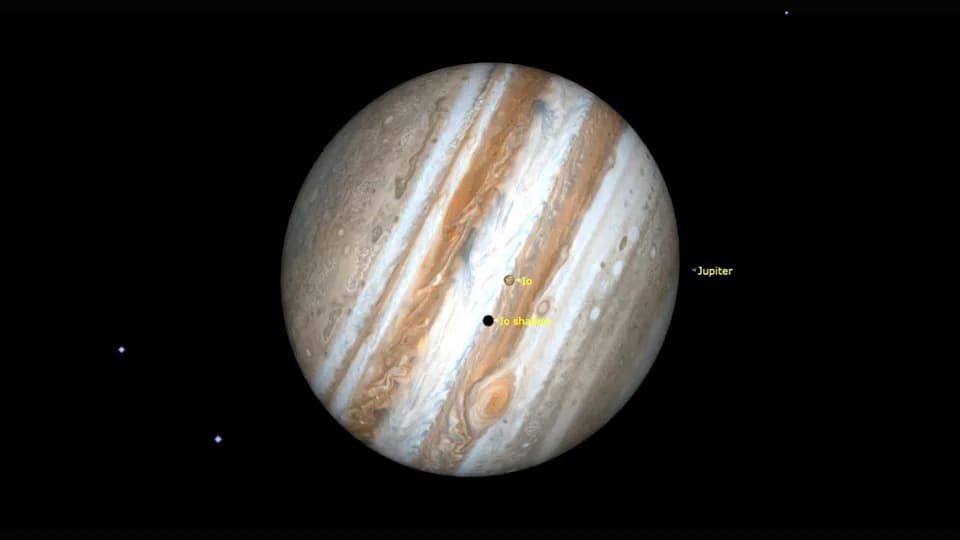
Look about halfway up in the eastern sky for the Gemini twins, Castor and Pollux, which appear like two stick figures. In winter 2026, brilliant Jupiter sits near Gemini's center and can help you locate the constellation.
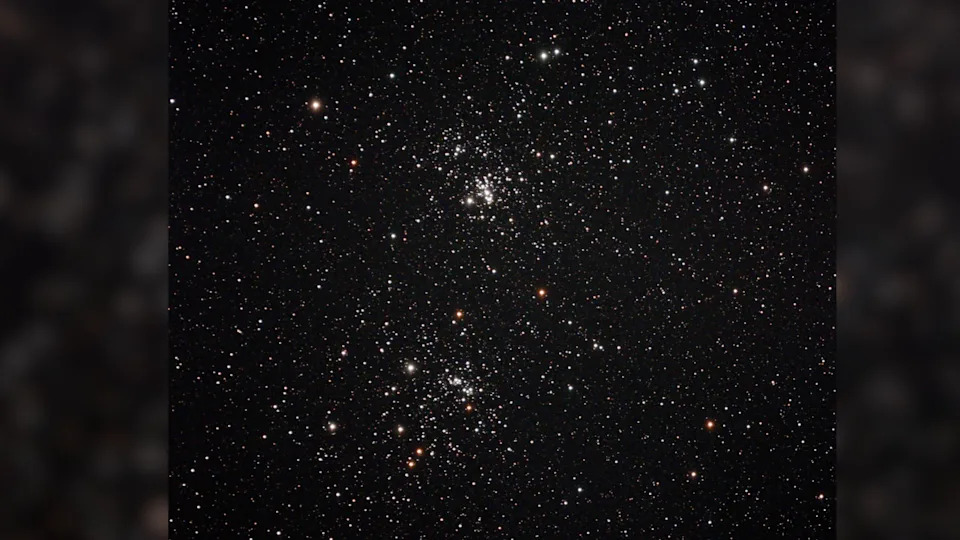
Double Cluster in Perseus captured with the Vaonis Vespera Pro from Nottingham, U.K. | Credit: Daisy Dobrijevic/Future
Sweep westward from the star Alhena toward the fainter stars Tejat and Propus. Just above and slightly to the right of Propus is the open cluster Messier 35 near Castor's trailing foot. On very dark nights M35 is faintly visible to the unaided eye; with 7× binoculars it shows a handful of bright stars set in a pale glow formed by roughly 200 fainter members. A small telescope will resolve many more stars and reveal curving rows that observers liken to a bursting skyrocket.
2. The Double Cluster (NGC 869 & NGC 884)
High toward the northwest, the W-shaped pattern of Cassiopeia helps you find the Double Cluster. Project a line from Gamma Cassiopeiae through Delta (Ruchbah) and about 1.5× that distance to find a faint, inviting smudge.
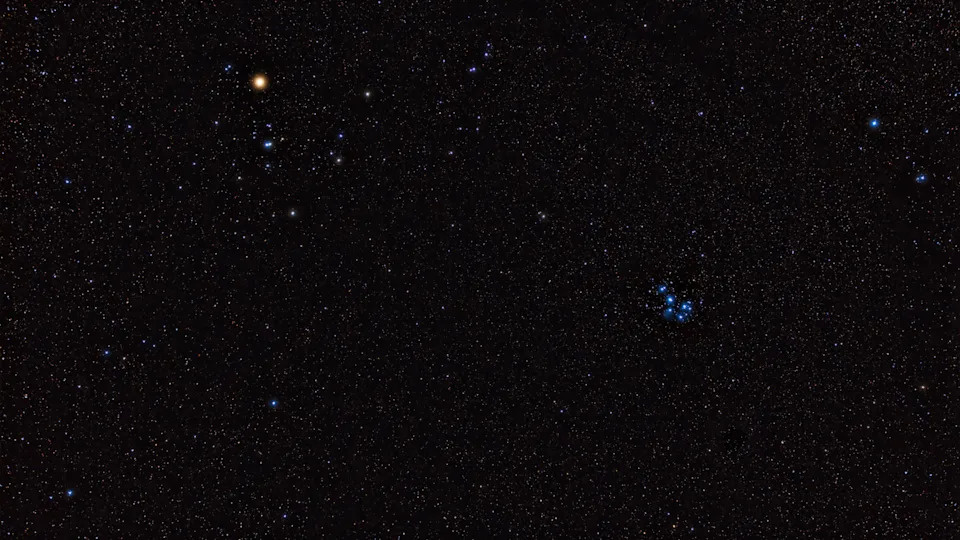
Hyades star cluster to the left and the Pleiades to the right. The bright orange star Aldebaran is prominent in the upper left of the image. | Credit: m-gucci/Getty Images
Through binoculars the smudge resolves into two magnificent open clusters, NGC 869 and NGC 884, spanning roughly 45 arc minutes each (about one-third larger than the Moon). Use very low magnification to capture both clusters in the same field — higher power spreads the stars and reduces the visual impact. With a good telescope you may spot a fine ruby-colored star near the center of NGC 884.
3. Taurus: The Hyades and the Pleiades
Taurus dominates the southern winter sky and hosts two famous clusters. The Hyades, about 150 light-years away, form a distinctive V that outlines the bull's face. The orange star Aldebaran appears to complete the V but is a foreground star only ~65 light-years away — a chance alignment.
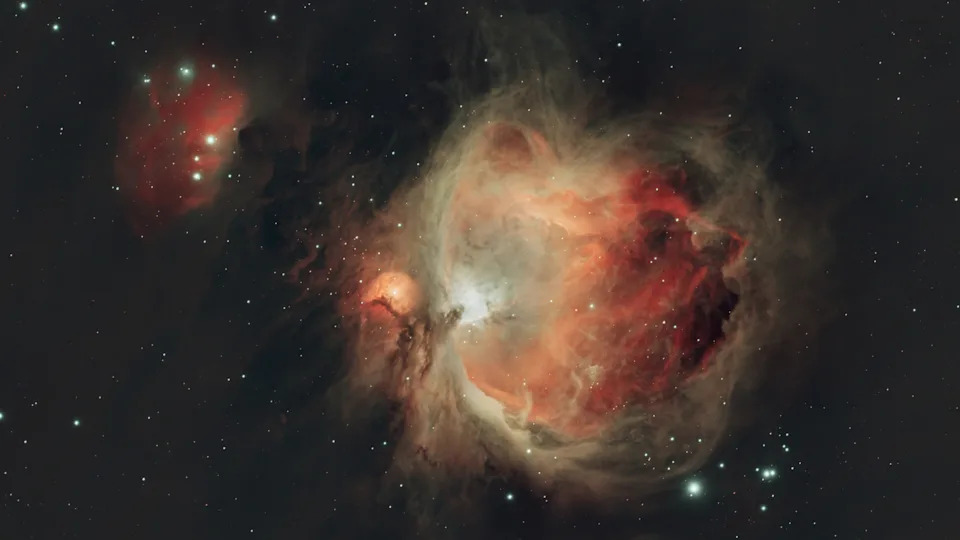
The Orion Nebula captured with the ASKAR 107PHQ telescope. | Credit: James Yu/Getty Images
The Pleiades (the Seven Sisters), located around 440 light-years away, resemble a tiny dipper and are often mistaken for the Little Dipper by beginners. With 7× binoculars or a small telescope at ~15–20× and a wide field, the brightest members resolve into icy blue-white gems against dark sky. Modern studies describe a much larger "Greater Pleiades Complex" of more than 3,000 stars, with roughly 1,000 in the bright core.
4. Orion and the Orion Nebula (M42)
Orion the Hunter rises high by nightfall. Below his three-star belt hangs his sword — there the bright, diffuse object Messier 42 (the Orion Nebula) marks a spectacular stellar nursery. The nebula itself is usually invisible as a mist to the unaided eye, though the embedded stars may look slightly fuzzy.
Binoculars and small telescopes reveal a gray-green cloud around the central star, and larger telescopes show complex nebulosity and structure. Much of the glow comes from fluorescence driven by ultraviolet radiation from the hot stars of the Trapezium (Theta-1 Orionis). The Orion Nebula lies roughly 1,500 light-years away and spans on the order of ~30 light-years; it is an active region of star formation and one of the most rewarding deep-sky targets.
Viewing Tips and Gear Recommendations
- Start when full darkness has set (about 90 minutes after sunset) for best contrast.
- 7× binoculars are a versatile, portable choice for most winter targets.
- Use low magnification to admire wide clusters (Double Cluster, Pleiades); use ~15–20× for richer detail in compact targets.
- Bring a red flashlight, a comfortable folding chair, and dress in layers to extend your observing time.
Credits: This guide is adapted and improved from an article by Joe Rao, an instructor and guest lecturer at New York's Hayden Planetarium, who writes for Natural History, Sky & Telescope, and other publications.
Help us improve.