The 2026 meteor season offers many great viewing opportunities from spring into winter. Highlights include the Perseids on Aug. 12–13 under a new moon (50–75 meteors/hour), the potentially active Draconids on Oct. 9, and the bright, reliable Geminids on Dec. 13–14 (possibly 100–120 meteors/hour). Moon phase and local sky conditions will strongly affect visibility — plan for dark, clear skies and check moonset times to catch the best windows.
The Best Meteor Showers of 2026 — When to Watch, What to Expect, and Moon Effects
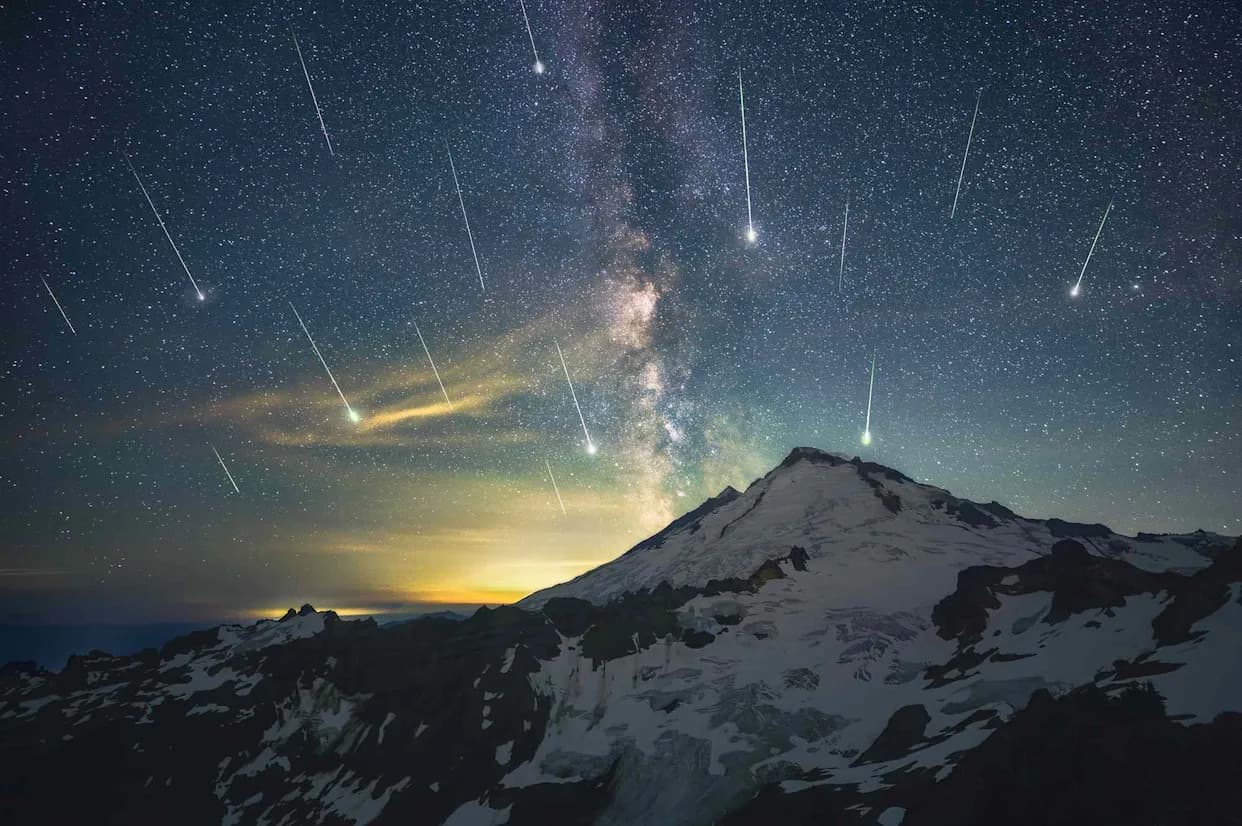
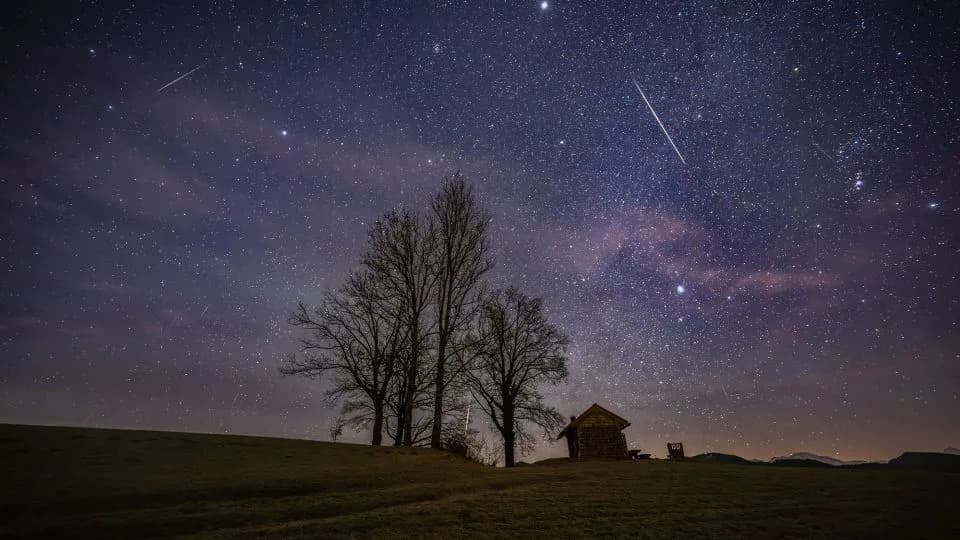
Liang Li/Getty ImagesA perseid meteor shower over Mt. Baker.
Most spectacular natural displays demand travel and planning, but the 2026 meteor season needs little more than patience, a dark sky and a warm chair. Below are the meteor showers worth marking on your calendar — nearly a dozen events that offer low-effort, high-reward opportunities to see bright streaks and occasional fireballs. Each entry notes peak dates, lunar interference and viewing tips to help you get the most from the night sky.
Lyrids — Peak: April 21–22 • Moon Impact: None
Produced from debris left by Comet Thatcher (last near the Sun in 1861), the Lyrids typically yield about 10–20 meteors per hour. The shower favors Northern Hemisphere observers, though dark-sky sites in the Southern Hemisphere can still catch several meteors. A waxing crescent moon will set just after midnight on April 22, leaving the predawn hours especially favorable.
Where to look: Find Vega in the constellation Lyra — the Lyrids’ radiant — and allow your eyes to adapt to the dark for 20–30 minutes. The Lyrids sometimes produce surprising outbursts (historically up to ~100 meteors/hour), so it's worth watching.
Eta Aquariids — Peak: May 5–6 • Moon Impact: High
Fed by Halley’s Comet, the eta Aquariids are fast and can produce bright fireballs. Southern Hemisphere viewers see the best rates (roughly 50 meteors/hour); Northern viewers may see about 10/hour. The 2026 peak falls just five days after a full moon, so only the brightest meteors will be visible.
Where to look: Face the constellation Aquarius near the star Eta Aquarii in the predawn hours.
Alpha Capricornids — Peak: July 31 • Moon Impact: High
From Comet 169P/NEAT, the Alpha Capricornids are notable for infrequent but spectacular slow-moving fireballs rather than high hourly counts. A waning gibbous moon (near 98% illumination) will wash out faint meteors during the July 31 peak, so only dramatic fireballs are likely to be seen.
Where to look: Watch near Capricornus in the early morning; wrap up warm and choose a dark location.
Southern Delta Aquariids — Peak: July 30 • Moon Impact: High
Best viewed from the Southern Hemisphere, the Southern Delta Aquariids can reach up to ~25 meteors/hour at peak but tend to be faint. The nearly full moon on July 30 will reduce visibility. Note that bright streaks seen around this time could belong to the Alpha Capricornids, which peak almost simultaneously.
Where to look: Aim low toward the southern sky after midnight toward Aquarius.
Perseids — Peak: Aug. 12–13 • Moon Impact: None
The Perseids are one of the year's marquee showers and return in 2026 under a new moon, offering exceptionally dark conditions. Barring clouds, observers away from light pollution should see about 50–75 meteors/hour, including many bright events.
Special note: A total solar eclipse on Aug. 12 (visible from parts of Iceland, Greenland and Spain) could allow some Perseids to be visible in daylight along the path of totality, though most viewers will watch in the predawn hours facing Perseus.
Draconids — Peak: Oct. 9 • Moon Impact: Low
Unlike most showers that favor pre-dawn hours, the Draconids are best viewed soon after nightfall because the radiant in Draco climbs high early. Typical activity is modest (about 8–10 meteors/hour), and 2026's peak occurs under a thin waning crescent moon, providing dark skies.
Why watch: The Draconids are famously unpredictable; some years produce brief meteor storms. Some forecasts suggest the 2026 encounter could be stronger than average, so it’s worth observing after nightfall.
Orionids — Peak: Oct. 23 • Moon Impact: Variable
Another Halley’s Comet shower, the Orionids often deliver 10–20 meteors/hour, many with long, glowing trains and occasional fireballs. A waxing gibbous moon (~93% illuminated) will interfere early on Oct. 23 but will set a few hours before dawn, yielding a short window of darker skies.
Where to look: Face Orion and let your gaze wander; meteors can appear anywhere above you.
Taurids — Peak: Nov. 5–9 • Moon Impact: None
The Taurids are a long-duration event composed of two streams (North and South Taurids). Their meteors are generally slow and sometimes very bright, prompting the nickname “Halloween fireballs” for late-October activity. Early November peaks should offer up to about 10 meteors/hour, and a new moon on Nov. 9 will favor visibility of the brighter Taurids.
Where to look: Watch toward Taurus in the early morning hours.
Leonids — Peak: Nov. 17–18 • Moon Impact: Low
Famous for fast, brilliant meteors, the Leonids typically produce about 14–20 meteors/hour at peak. Their parent comet, 55P/Tempel–Tuttle, refreshes the stream roughly every 33 years. While historic storms (for example, 1833) produced extraordinary rates, modern displays are usually more modest. A first-quarter moon (~53%) will set after midnight, improving conditions later in the night.
Where to look: Aim toward Leo after moonset for the best contrast.
Geminids — Peak: Dec. 13–14 • Moon Impact: Low
The Geminids are often the year's most reliable and colorful shower. In 2026, a waxing crescent moon will leave dark skies for the peak night; under dark conditions, rates away from light pollution can reach 100–120 meteors/hour. Geminid meteors often show vivid colors and tend not to leave long trains.
Where to look: The radiant is in Gemini, but meteors can appear anywhere overhead — spread out and enjoy the full sky.
Ursids — Peak: Dec. 21–22 • Moon Impact: High
The Ursids are a modest shower (about 10 meteors/hour on average) peaking near the winter solstice. Their appeal is unpredictability: some years have produced near-100-per-hour bursts. A nearly full moon in 2026 will limit visibility to the brightest Ursids, but observers willing to brave the cold after midnight can watch toward Ursa Minor.
Viewing tips: Choose a dark site away from city lights, give your eyes 20–30 minutes to adapt, lie back to maximize sky coverage, and dress warmly. Check local weather and moonrise/set times for the best windows.
Help us improve.