CRBC News
Politics

Canada Resets With China: Trudeau Announces 'Strategic Partnership' and Major Trade Concessions

Canada Resets With China: Trudeau Announces 'Strategic Partnership' and Major Trade Concessions
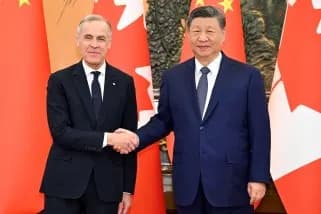
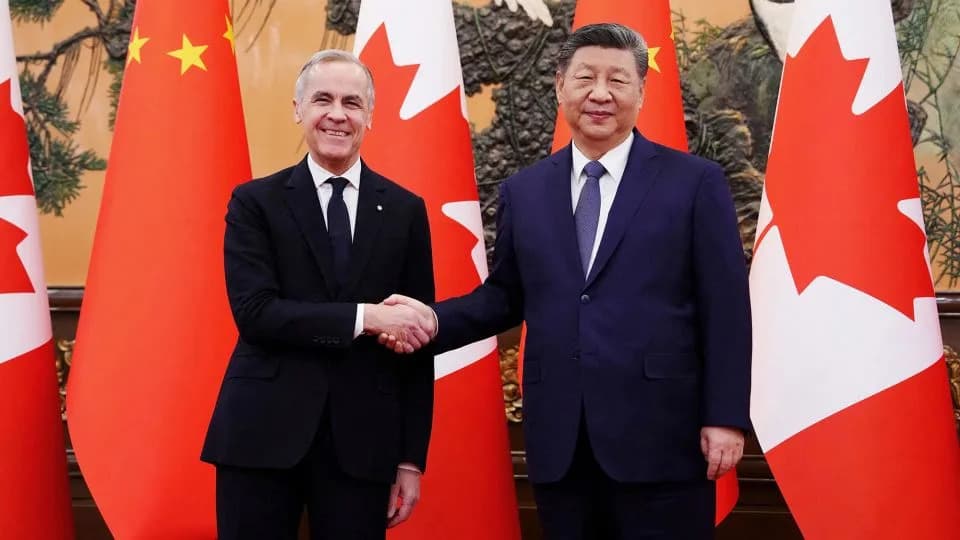
Canadian Prime Minister Mark Carney meets Chinese leader Xi Jinping at the Great Hall of the People in Beijing on Friday. - Sean Kilpatrick/Reuters

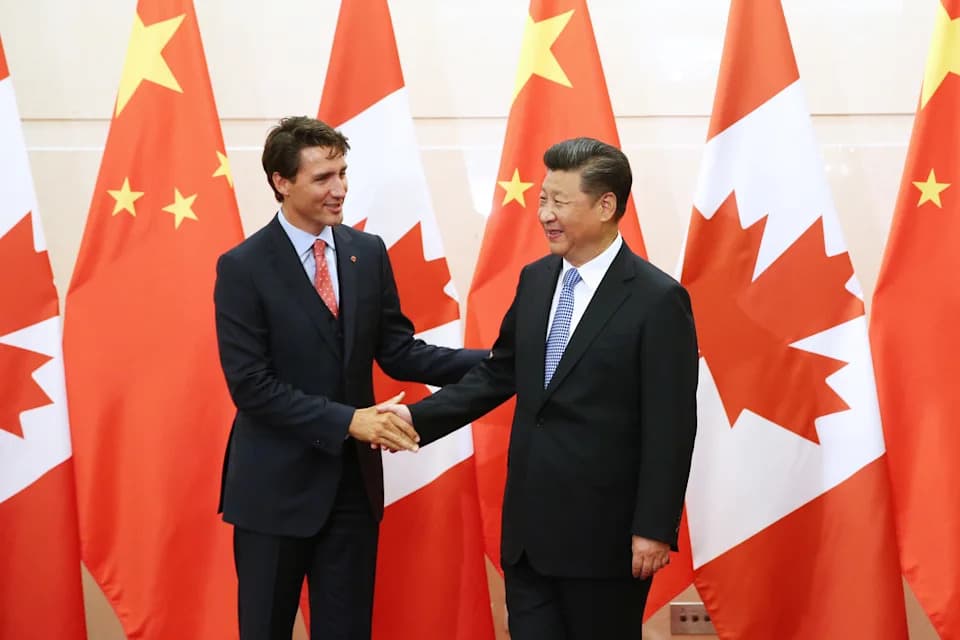
Prime Minister Justin Trudeau met Xi Jinping in Beijing to announce a renewed "strategic partnership" between Canada and China, accompanied by concrete trade steps to ease longstanding tensions.

Ottawa will allow up to 49,000 Chinese EVs at a 6.1% MFN tariff and expects China to cut canola seed duties to about 15% by March 1, with other agricultural duties also set to be lifted.

The leaders also pledged to boost two-way investment across clean energy, technology and agri-food, aiming to raise Canadian exports to China by 50% by 2030 amid lingering distrust rooted in the 2018 Huawei arrest and subsequent detentions.
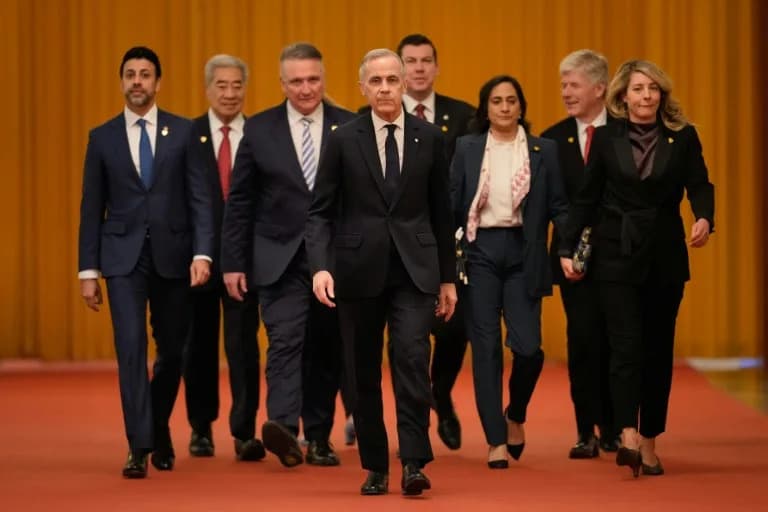
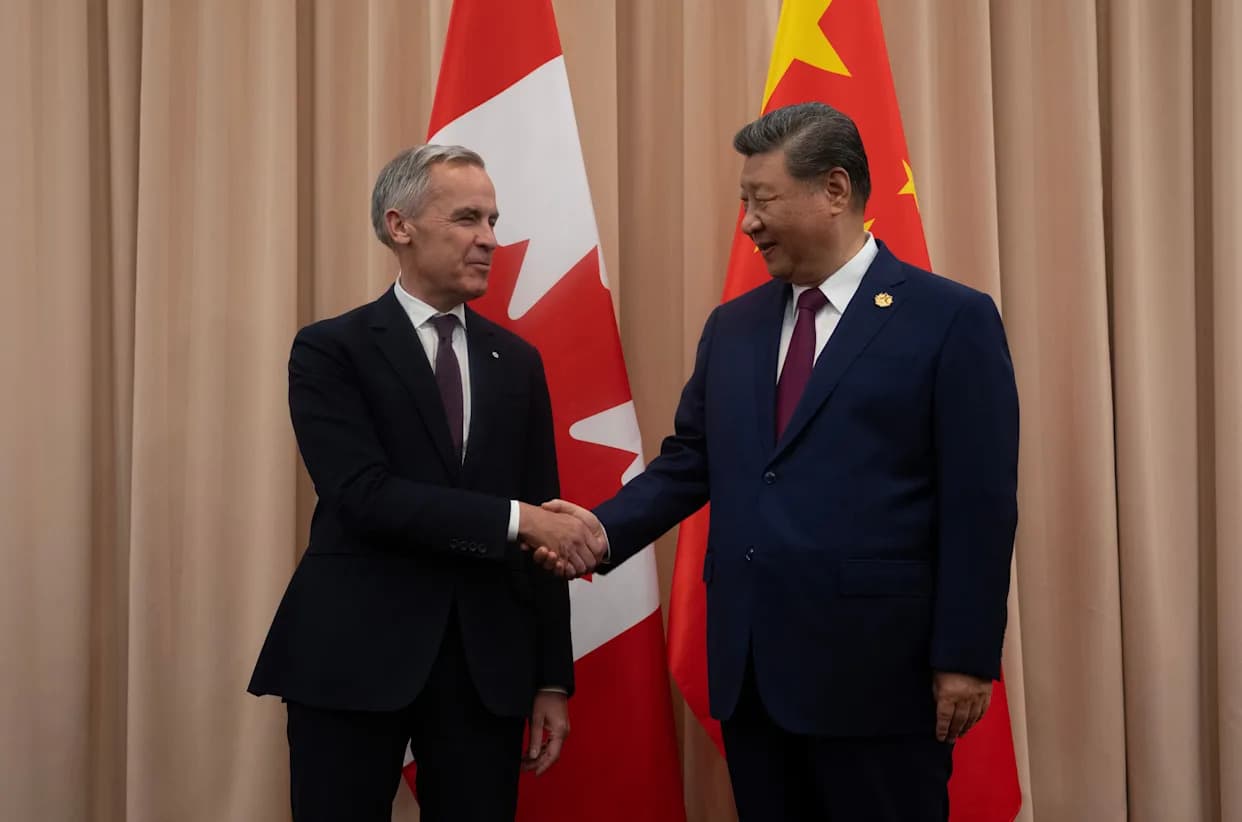
Canadian Prime Minister Justin Trudeau met Chinese leader Xi Jinping in Beijing to announce a renewed "strategic partnership" and a series of trade measures designed to reset ties between the two countries.

After the talks, Ottawa said it will permit up to 49,000 Chinese electric vehicles (EVs) to enter the Canadian market at the most-favoured-nation tariff rate of 6.1%, reversing a previously applied 100% tariff that had been imposed in tandem with the United States. Canada also said it expects China to sharply reduce tariffs on Canadian agricultural goods — notably cutting canola seed duties to about 15% by March 1 — and to lift duties on other products such as lobster and peas on the same timeline.

"Together we can build on the best of what this relationship has been in the past to create a new one adapted to new global realities," the prime minister said, framing the pact as an effort to strengthen a strained multilateral system and pursue practical cooperation.

The leaders discussed increasing two-way investment across clean energy, technology, agri-food and wood products. Ottawa announced an ambition to grow Canadian exports to China by 50% by 2030, and said the EV agreement could spur Chinese joint-venture investment into Canada’s auto sector.

These developments come against a backdrop of recent strains: relations deteriorated after Canada’s 2018 arrest of Huawei executive Meng Wanzhou on a U.S. warrant and the subsequent detention in China of two Canadians, Michael Kovrig and Michael Spavor, who were later released. In recent years Beijing imposed steep duties on some Canadian agricultural products — including canola seed tariffs that rose to roughly 85% — significantly limiting market access for affected exporters.

Ottawa framed the reset as part of a broader strategy to diversify partnerships amid periodic friction with the United States. The move signals Canada’s willingness to repair and deepen economic ties with its second-largest trading partner while pursuing new commercial and investment opportunities.

What To Watch

Key implementation details — including the timetable for tariff reductions, mechanisms to oversee joint ventures and protections for sensitive technologies — will determine how quickly business and market access follow the political announcement.

Help us improve.

Related Articles

Trending