2025 may be remembered as the year economic coercion reshaped U.S.–China relations. Washington tightened chip-export rules and imposed unilateral tariffs that roiled markets; Beijing responded with its own tariffs, soybean bans and temporary rare-earth export controls that exposed critical supply-chain vulnerabilities. After a late-October Trump–Xi meeting some measures were rolled back, but analysts warn the episode revealed durable strategic tools — and vulnerabilities — that will define future competition.
2025: The Year Economic Warfare Rewrote US–China Power Dynamics

A screen shows news coverage of the meeting between US President Donald Trump and China's President Xi Jinping in South Korea, outside a shopping mall in Beijing on October 30, 2025. | Adek Berry/AFP via Getty Images
When the headlines from a tumultuous year finally settled — a Gaza ceasefire, failed efforts to end the war in Ukraine, and rising tensions around Venezuela — one of the most consequential stories involved no battlefield: it was an economic showdown between the United States and China. In 2025 Washington tightened export rules on advanced semiconductor chips and imposed sweeping tariffs; Beijing answered with its own tariffs, a temporary soybean ban and a rare-earths export squeeze that exposed deep supply-chain vulnerabilities.
From Chip Controls to Tariff Warfare
In the final weeks of the Biden administration, U.S. regulators issued the most expansive controls yet on semiconductor chips used to train and run advanced artificial intelligence models. Although the rules applied globally, their primary target was to limit China’s access to the most capable AI chips.
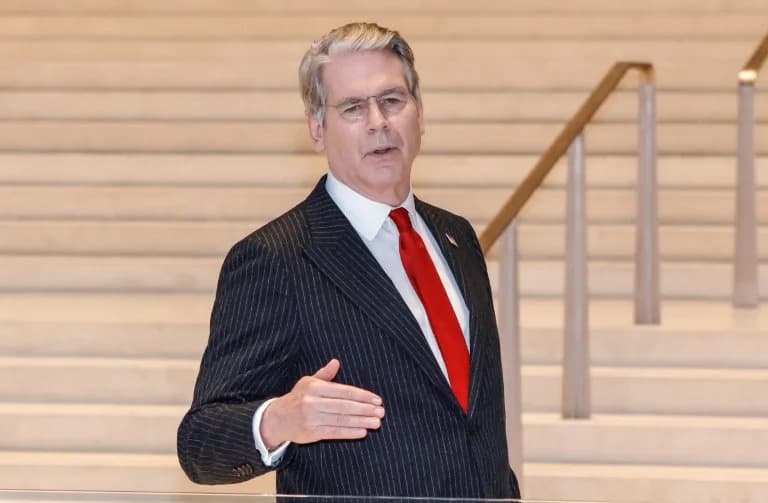
That technology competition reflects bipartisan concerns in Washington that advanced AI capacity will be decisive in 21st-century power dynamics. The policy posture seemed likely to continue after Donald Trump returned to the White House. In the administration’s opening month it imposed tariffs on China — starting at 10% and then quickly increasing — and by April the administration raised levies to a headline-grabbing 145% while declaring a "national emergency" over unfair trade practices. Treasury Secretary Scott Bessent described the measures as, in effect, an "embargo."
A Swift U.S. Rollback and Beijing’s Counterpunch
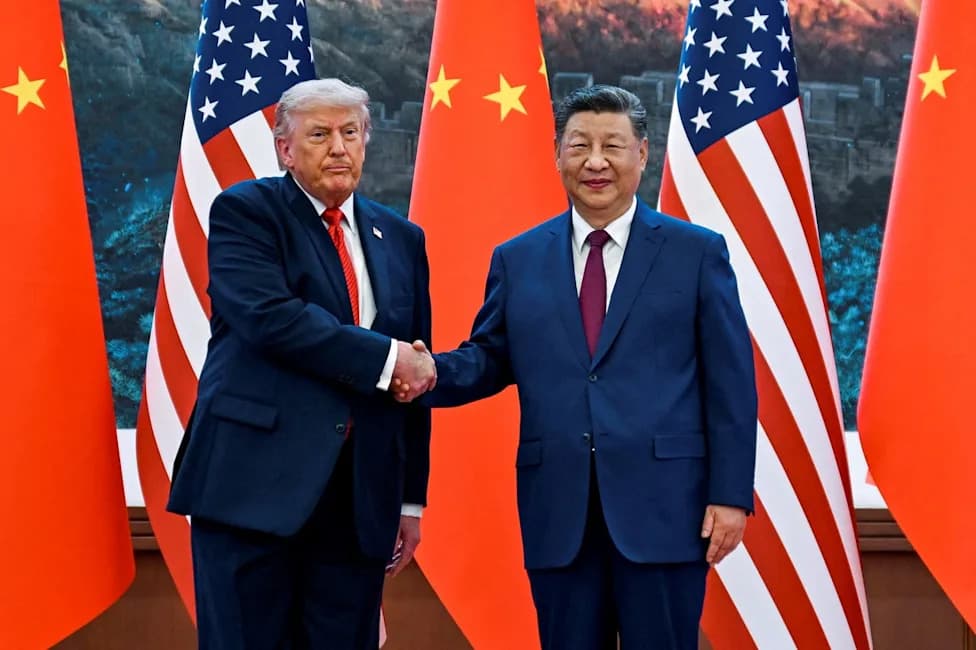
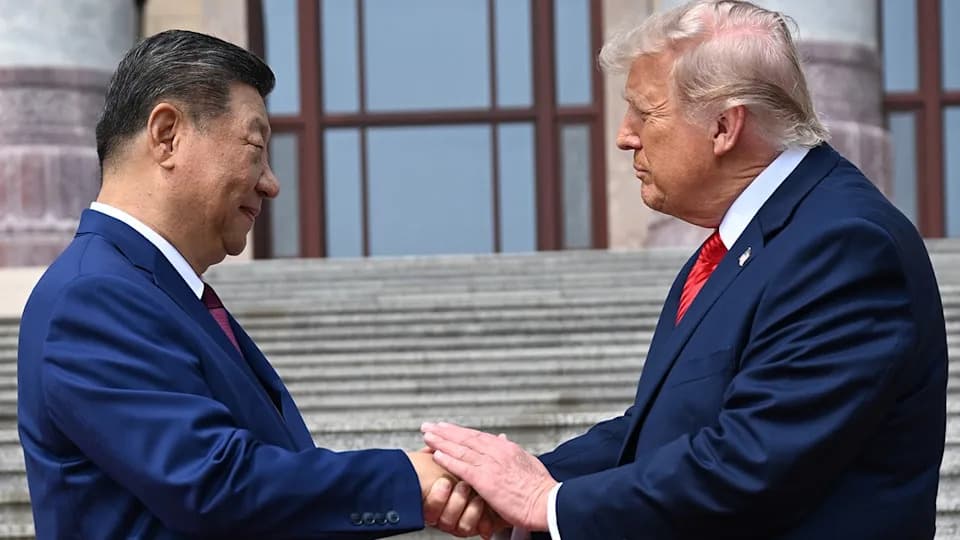
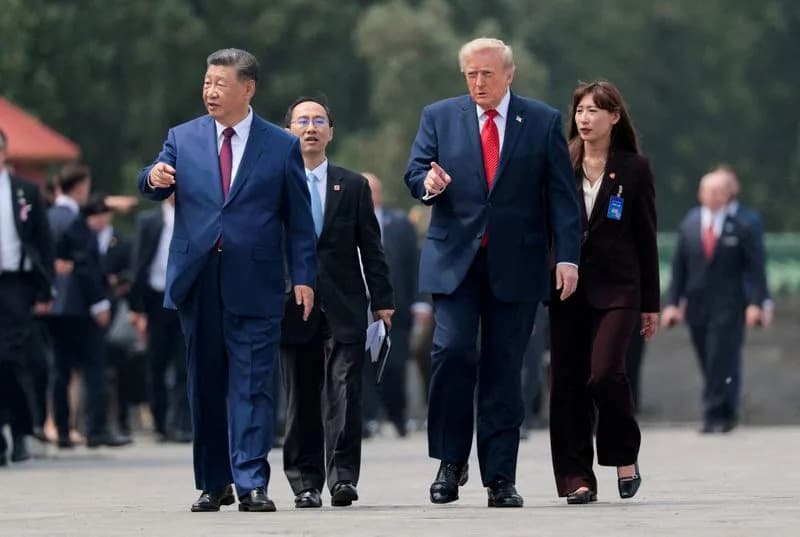
By year’s end the dynamic shifted. Markets fell, recession fears rose, and the administration began unwinding its steepest tariffs within weeks. After a late-October meeting between Presidents Trump and Xi, the tariff rate was cut to 20%. In December the administration approved sales of Nvidia’s advanced H200 chips to China — a decision that surprised and angered hawks on Capitol Hill. "President Xi responded very positively!" the president proclaimed.
"It’s been a landmark year in the US–China relationship," said Eddie Fishman, a former State Department sanctions official now at Columbia University. "It’s made the U.S. much more gun-shy about taking aggressive steps against China."
China did not simply absorb U.S. pressure. Beijing retaliated with its own 125% tariffs, halted purchases of U.S. soybeans, and — most consequentially — announced in April a suspension of exports for a range of rare-earth metals and magnets. Roughly 90% of some of these materials are produced in China, and many U.S. automakers, electronics firms and defense contractors discovered they had only weeks of stock for critical components.
Why Rare Earths Mattered
The rare-earth announcement triggered immediate concern in industry and government. According to press reports, the move "provoked deep consternation at high levels of the administration" and helped prompt Washington to soften its posture. Senator Mark Warner called it a "holy shit" moment, warning that the U.S. had long underestimated its reliance on Chinese critical minerals.
After the October Trump–Xi meeting, Beijing agreed to suspend its rare-earth curbs for a year and resumed soybean purchases. But it did not cancel the measures outright, and the option to tighten them remains on the table — a fact that analysts say has strategic implications far beyond the immediate trade spat.
Learning From Each Other’s Playbook
Analysts note that China has been building legal and policy tools to counter U.S. economic coercion for years. Beijing’s recent measures borrow elements of Western playbooks: its "unreliable entities" list resembles the U.S. Commerce Department’s entity list, and new licensing rules for equipment tied to rare-earth production parallel export-control frameworks used against Chinese tech. Experts say Beijing studied how rivals weaponized chokepoints and crafted reciprocal instruments of economic influence.
That learning matters because it gives Beijing a credible set of levers to apply pressure in future crises — for example, in response to U.S. arms sales to Taiwan, high-level visits, or renewed chip restrictions.
Responses and the Long Road Ahead
Washington is now scrambling to blunt China’s advantages in critical minerals. The Pentagon has taken an ownership stake in the only operating U.S. rare-earths mine, and the administration has struck deals with Australia and Saudi Arabia to diversify supplies. But experts warn that building China-free supply chains will take years — possibly a decade or more. Japan, despite its post-2010 diversification drive, still sources about 60% of its rare earths from China.
On the chip front, China continues to develop its domestic capacity, though onshoring advanced semiconductor manufacturing and design away from U.S. and allied ecosystems will also take significant time and investment.
Two Readings Of 2025
The optimistic interpretation is that mutual economic interdependence — an economic form of mutual assured destruction — will deter either side from escalating into open conflict. The bleaker interpretation, supported by the events of 2025, is that China has demonstrated a higher tolerance for escalation in economic warfare and now possesses effective tools to retaliate in kind. Either way, 2025 marked a turning point in how Washington and Beijing will wage rivalry going forward.
Key Quote: "The cat is out of the bag," Fishman said. "This is going to be part of China’s strategy from here forward."
Help us improve.