Canada and China have experienced five decades of shifting ties — from early diplomatic recognition under Pierre Trudeau to heightened tensions over security and human rights. Key episodes include the 2018 detention of Huawei executive Meng Wanzhou and the retaliatory detention of two Canadians, Canada’s 2022 ban on certain Chinese telecom equipment, reciprocal tariffs in 2024–25, and Prime Minister Mark Carney’s 2025 visit to Beijing seeking a diplomatic reset. The relationship now balances strong trade links with persistent political and security frictions.
Canada and China: 50 Years of Diplomacy, Trade and Tension — From Pierre Trudeau to Mark Carney
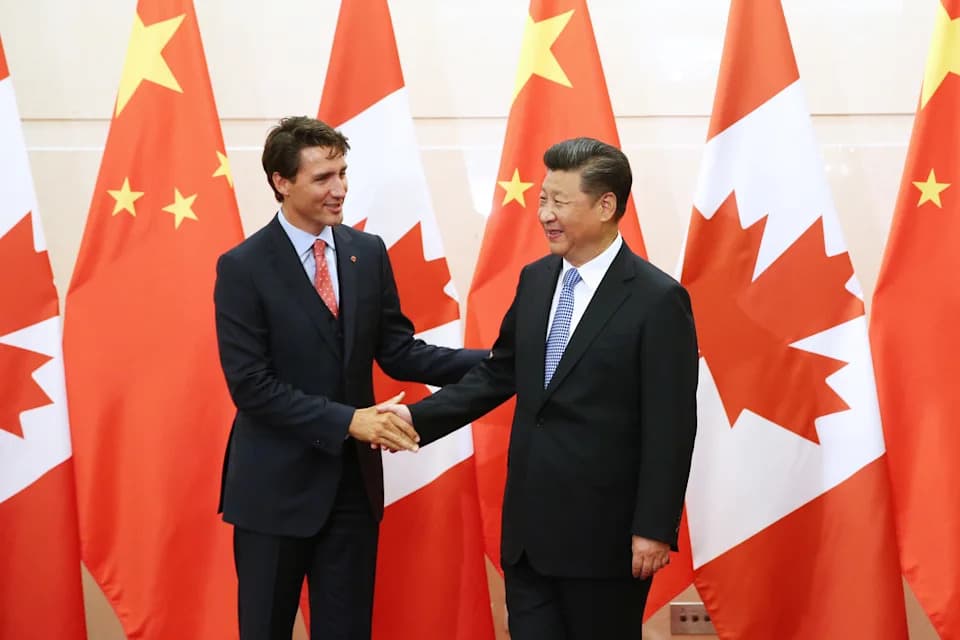
FILE - China's President Xi Jinping, right, shakes hands with Canada's Prime Minister Justin Trudeau before their meeting at the Diaoyutai State Guesthouse in Beijing, China, Wednesday, Aug. 31, 2016. (Wu Hong/Pool Photo via AP, File)(ASSOCIATED PRESS)
Over the past half-century Canada’s relationship with China has swung between early outreach, expanding trade ties and sharp confrontations. From Prime Minister Pierre Trudeau’s decision to recognize the People’s Republic of China in the early 1970s to Prime Minister Mark Carney’s 2025 trip to Beijing, the bilateral relationship has been shaped by diplomacy, commercial interests and recurring disputes over human rights and national security.
A Chronological Look
1970 — Diplomatic Recognition
Canada switched diplomatic recognition from Taiwan to the People’s Republic of China, establishing formal ties with Beijing more than a year before U.S. President Richard Nixon’s 1972 visit and nearly a decade before the United States formally recognized the PRC in 1979.
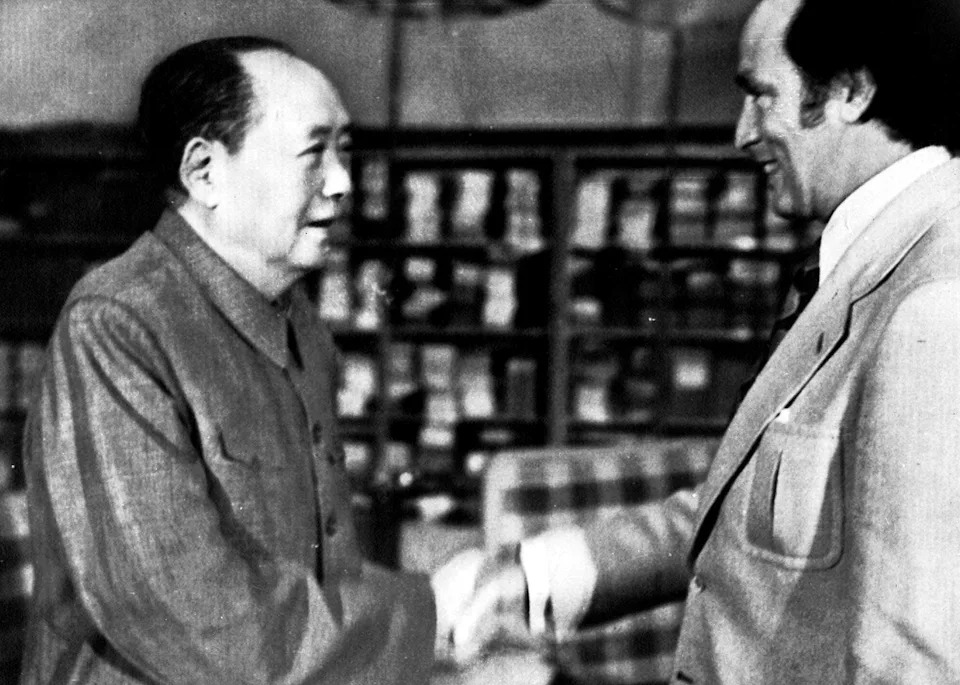
FILE - Canada's Prime Minister Pierre E. Trudeau, right, shakes hands with Mao Tse-tung, party chief of the People's Republic of China Oct. 13, 1973. (AP Photo, File)(ASSOCIATED PRESS)
1973 — Trudeau Meets Mao
Pierre Trudeau, who had championed recognition of the PRC, visited China and met Mao Zedong. It was the first trip by a Canadian head of government to China since the Communist Party took power in 1949.
1984 — Premier Zhao Visits Ottawa
Chinese Premier Zhao Ziyang became the first Chinese premier to visit Canada since ties were established. He and Trudeau held talks and signed an investment agreement; Zhao also visited the United States on the same trip.
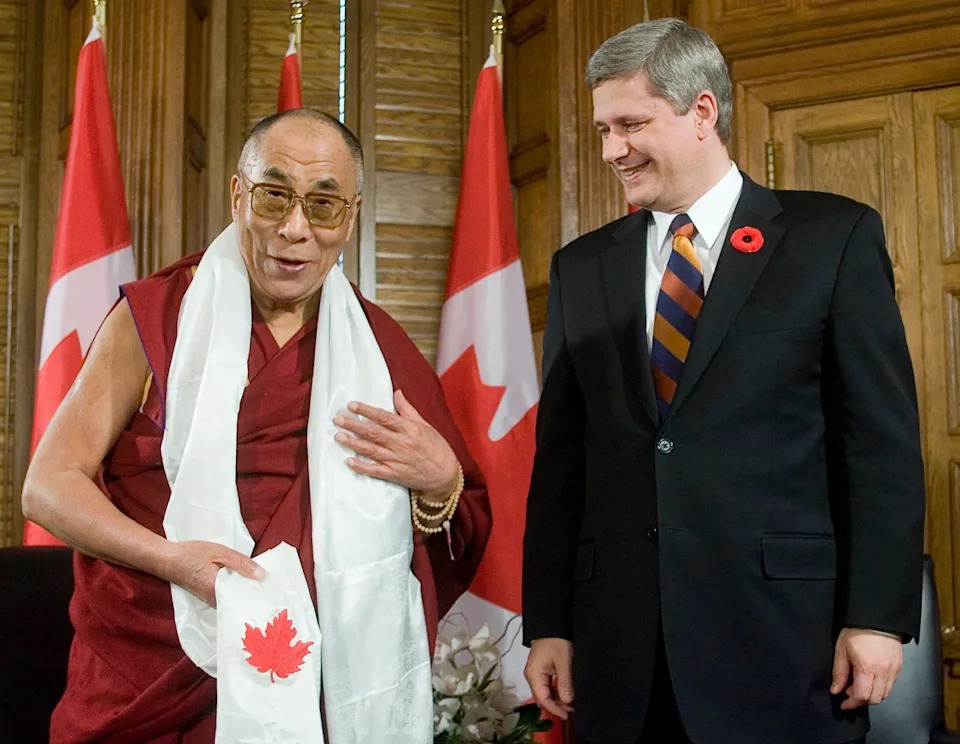
FILE - Tibetan spiritual leader the Dalai Lama shows off a Kata with a Canadian Maple Leaf given to him by Canadian Prime Minister Stephen Harper prior to their meeting on Parliament Hill in Ottawa Monday, Oct. 29, 2007. (Tom Hanson/Canadian Press via AP, File)(ASSOCIATED PRESS)
1994 — Trade Push Under Chrétien
Prime Minister Jean Chrétien led business delegations to China to expand trade ties despite ongoing international criticism of Beijing’s 1989 Tiananmen crackdown. Chrétien later returned to Beijing in 2024 ahead of Prime Minister Carney’s visit.
2006–2007 — Harper’s Tougher Stance
Stephen Harper initially took a firmer line on China’s human rights record and angered Beijing by meeting the Dalai Lama in 2007. Over time Harper moderated his approach and made several trade-focused visits to China.
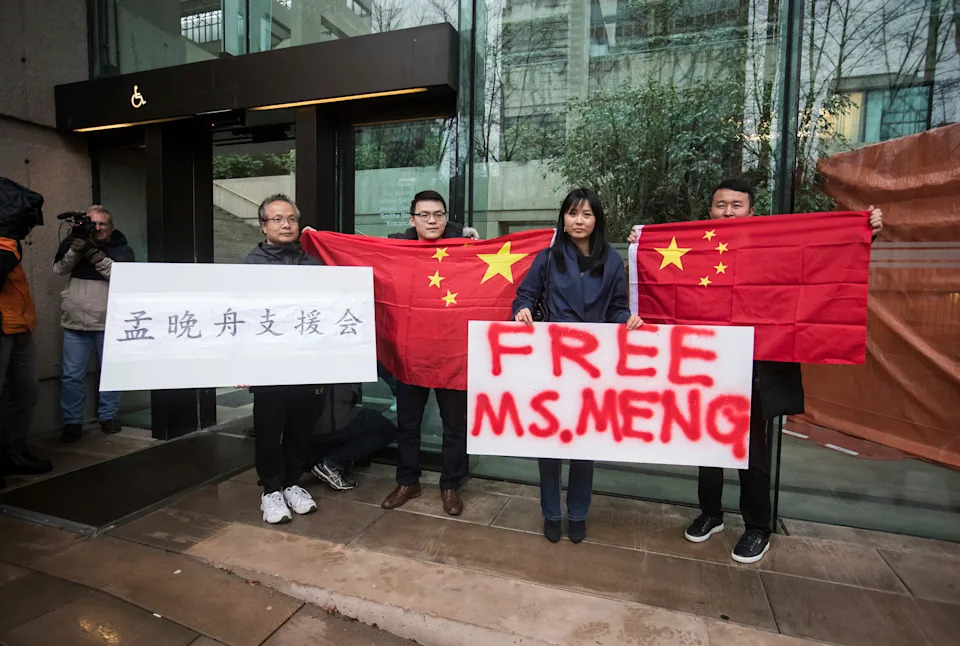
FILE - Supporters hold signs and Chinese flags outside British Columbia Supreme Court during the third day of a bail hearing for Meng Wanzhou, the chief financial officer of Huawei Technologies, in Vancouver, on Tuesday December 11, 2018. (Darryl Dyck/The Canadian Press via AP, File)(ASSOCIATED PRESS)
2016–2017 — A Renewed Engagement
Justin Trudeau declared a renewed era in relations during a 2016 visit to Beijing, noting the relationship had lacked stability and regular engagement. He met Chinese leader Xi Jinping again during a 2017 return visit.
2018–2021 — The Huawei Case and Diplomatic Fallout
Relations sharply deteriorated after Canadian authorities detained Huawei executive Meng Wanzhou in 2018 at the request of the United States. China responded by detaining two Canadians, Michael Kovrig and Michael Spavor, on espionage charges. All three were released in 2021 under a tripartite arrangement involving Canada, China and the U.S.
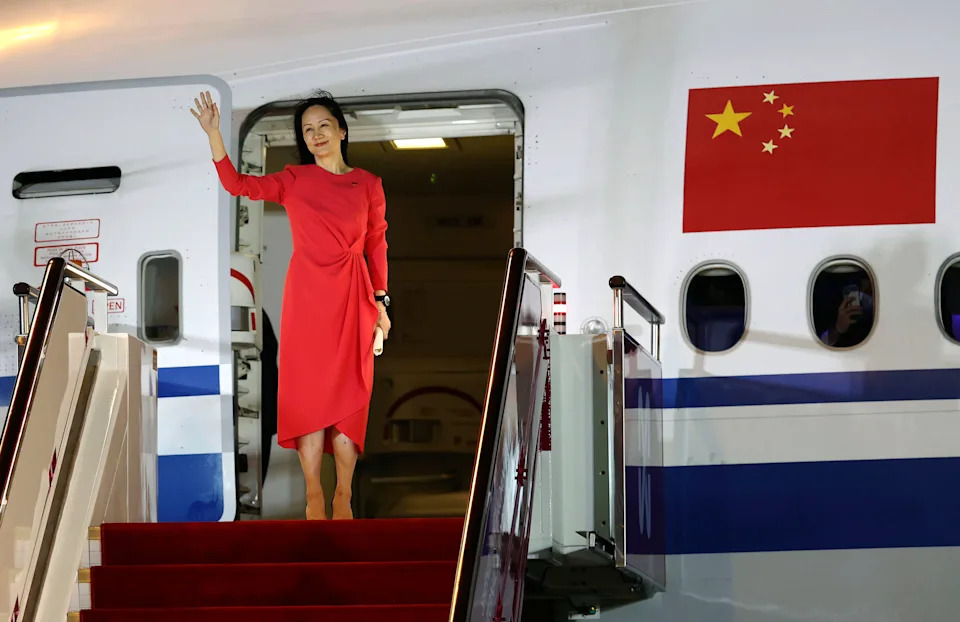
FILE - In this photo released by China's Xinhua News Agency, Huawei CFO Meng Wanzhou waves as she steps out of an airplane after arriving from Canada at Shenzhen Bao'an International Airport in Shenzhen in southern China's Guangdong Province, Saturday, Sept. 25, 2021. (Jin Liwang/Xinhua via AP, File)(ASSOCIATED PRESS)
2022 — Tech Security Measures
Canada moved to exclude Huawei equipment from its 5G networks and barred ZTE from national telecommunications systems amid concerns about cyberespionage. Beijing accused Canada of acting with the United States to unfairly target Chinese firms.
2023 — Diplomatic Expulsions and Interference Inquiry
Ottawa expelled a Chinese diplomat in Toronto accused of participating in a plot to intimidate MP Michael Chong and his relatives in Hong Kong; Beijing reciprocated by expelling a Canadian diplomat in Shanghai. Canada also launched an inquiry into possible Chinese interference in the 2019 and 2021 federal elections.
2024–2025 — Tariffs and a Diplomatic Reset
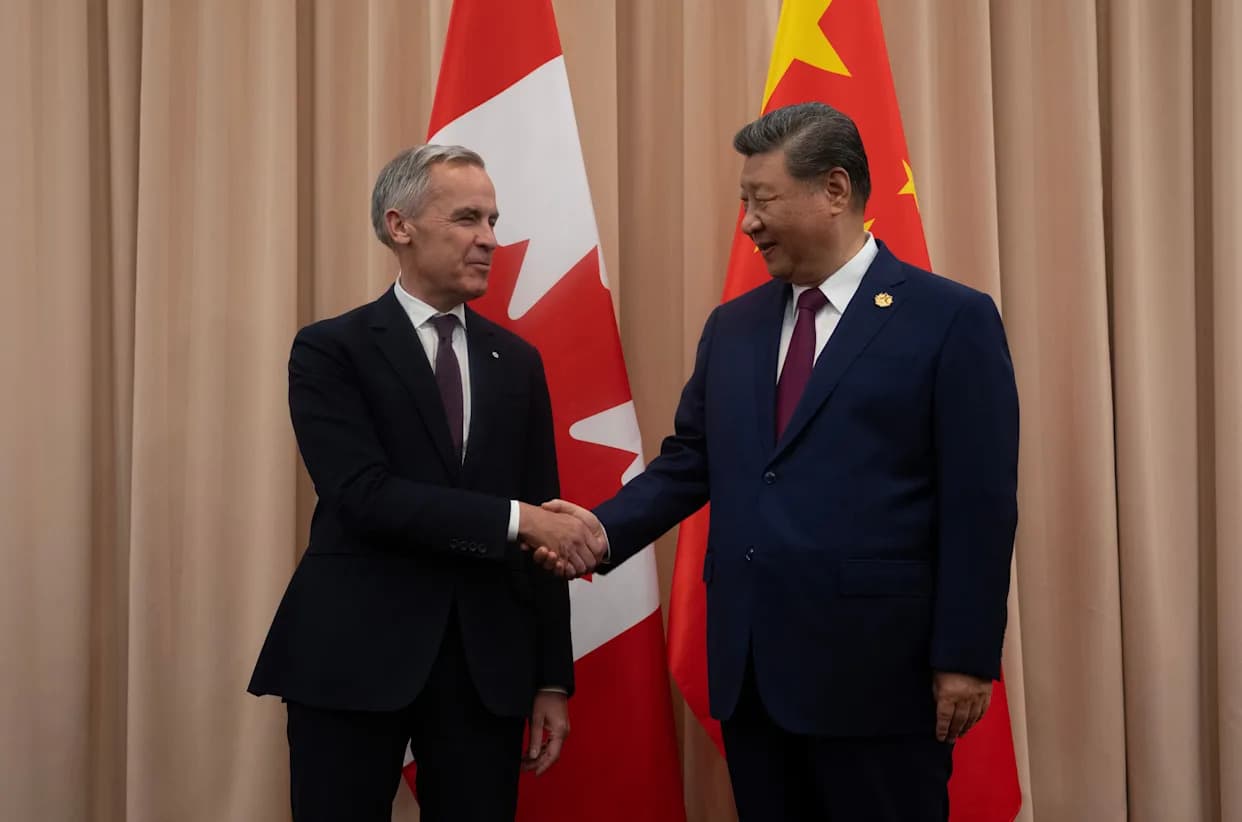
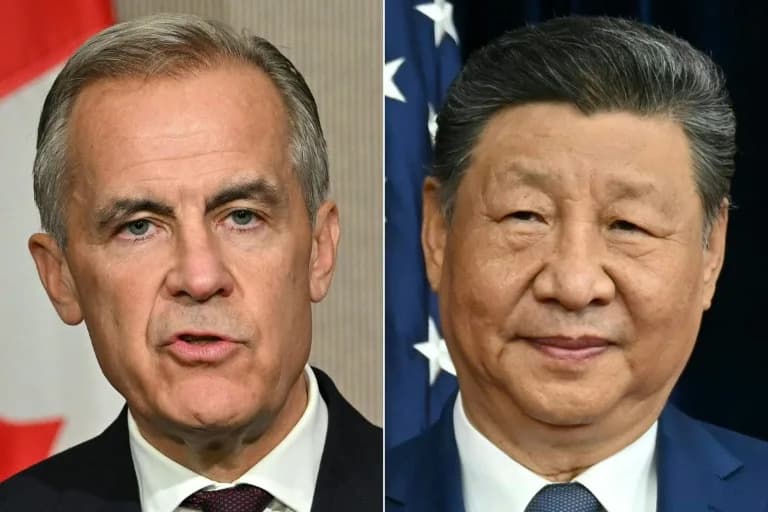
In 2024 Canada announced plans to impose a 100% tariff on China-made electric vehicles and a 25% tariff on Chinese steel and aluminum. China retaliated in March 2025 with tariffs — including a 100% duty on canola and 25% on some seafood and pork exports. In 2025 Mark Carney succeeded Justin Trudeau as prime minister and traveled to Beijing; he met Xi Jinping in October at the Asia-Pacific Economic Cooperation summit and both leaders described the meeting as a step toward resetting ties.
Looking Ahead: The Canada–China relationship remains a complex mix of shared economic interests and strategic disagreements. Trade and investment are balanced against concerns about human rights, national security and foreign interference — issues likely to shape bilateral engagement for years to come.
Help us improve.