In May 2024 a major solar eruption highlighted how solar flares and coronal mass ejections (CMEs) can send vast clouds of plasma toward Earth, producing auroras and inducing powerful electrical currents. Historic episodes — the 1859 Carrington Event, a 1967 radar blackout that nearly provoked nuclear retaliation, and the 1989 Quebec power collapse — show how modern technologies are vulnerable to space weather. Scientists now know even larger storms have occurred in the past, and continuous solar monitoring plus investments in resilient infrastructure can substantially reduce the risk.
Solar Storms: How Past Near-Misses Reveal a Growing Threat to Modern Civilization
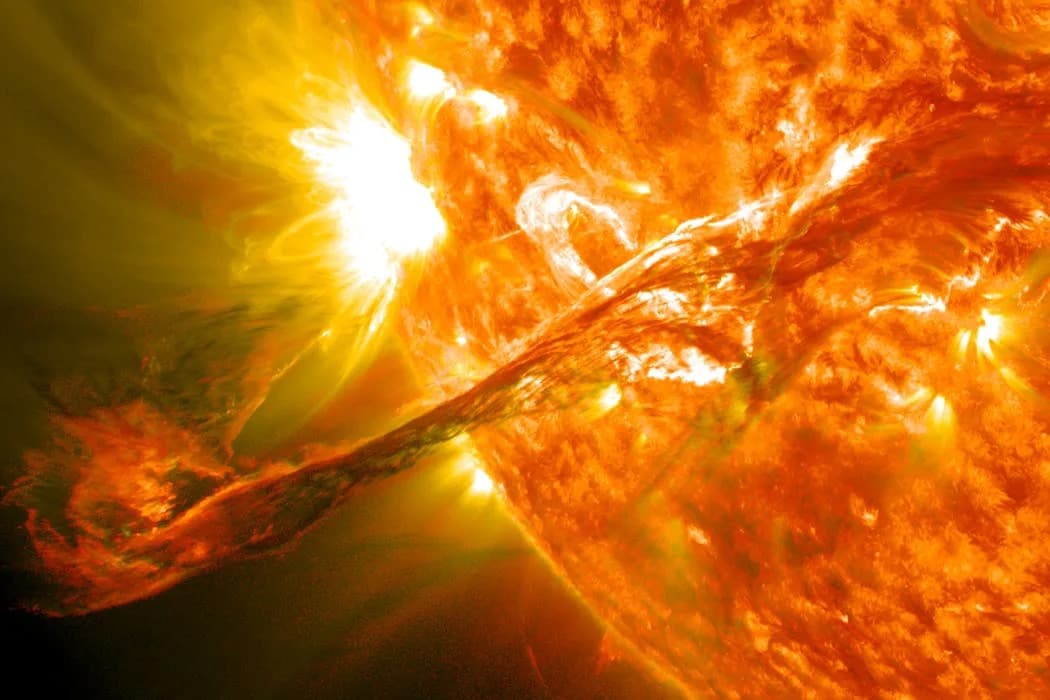
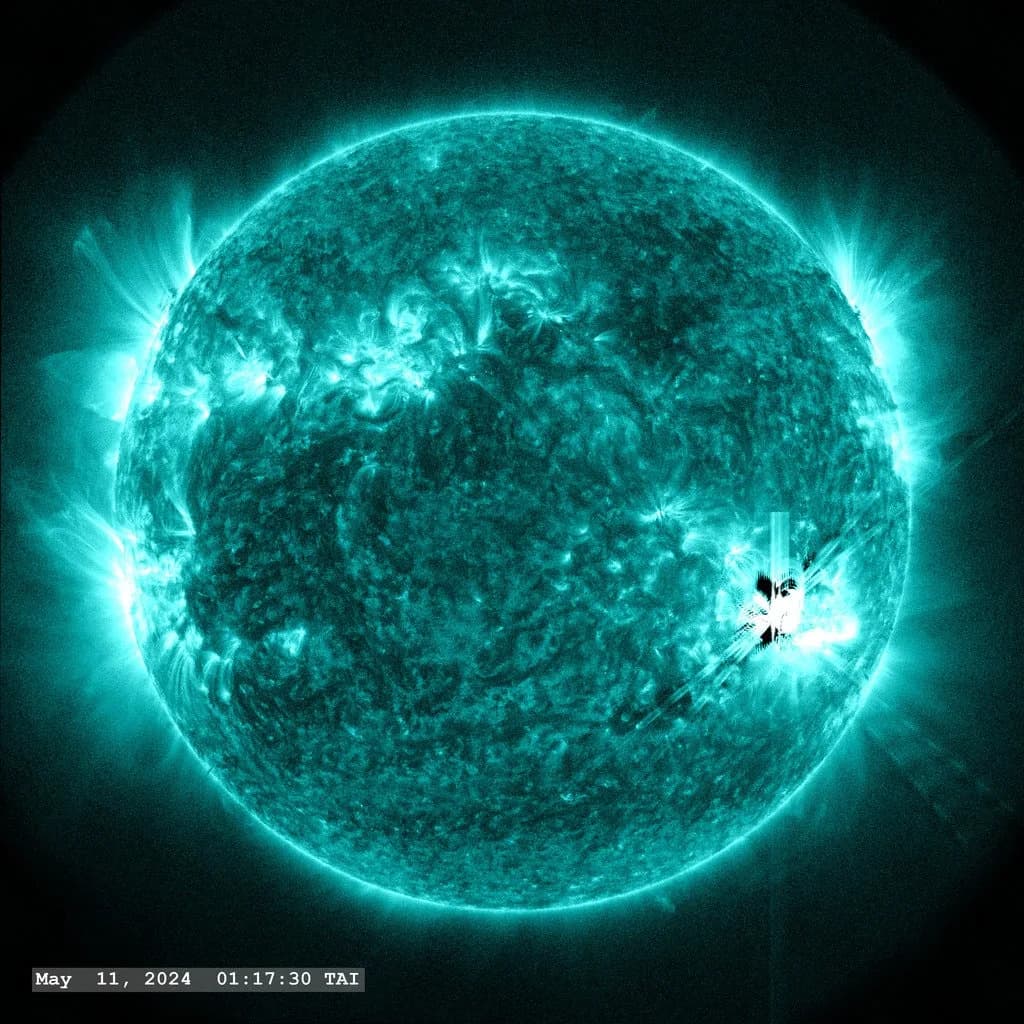
Coronal mass ejections from the Sun can cause geomagnetic storms that may damage technology on Earth.NASA/GSFC/SDO
In May 2024 a portion of the Sun violently erupted, sending powerful plasma and magnetic structures into space. The event underscored a growing risk: our increasingly interconnected, electricity-dependent societies are vulnerable to extreme solar activity.
How Solar Eruptions Work
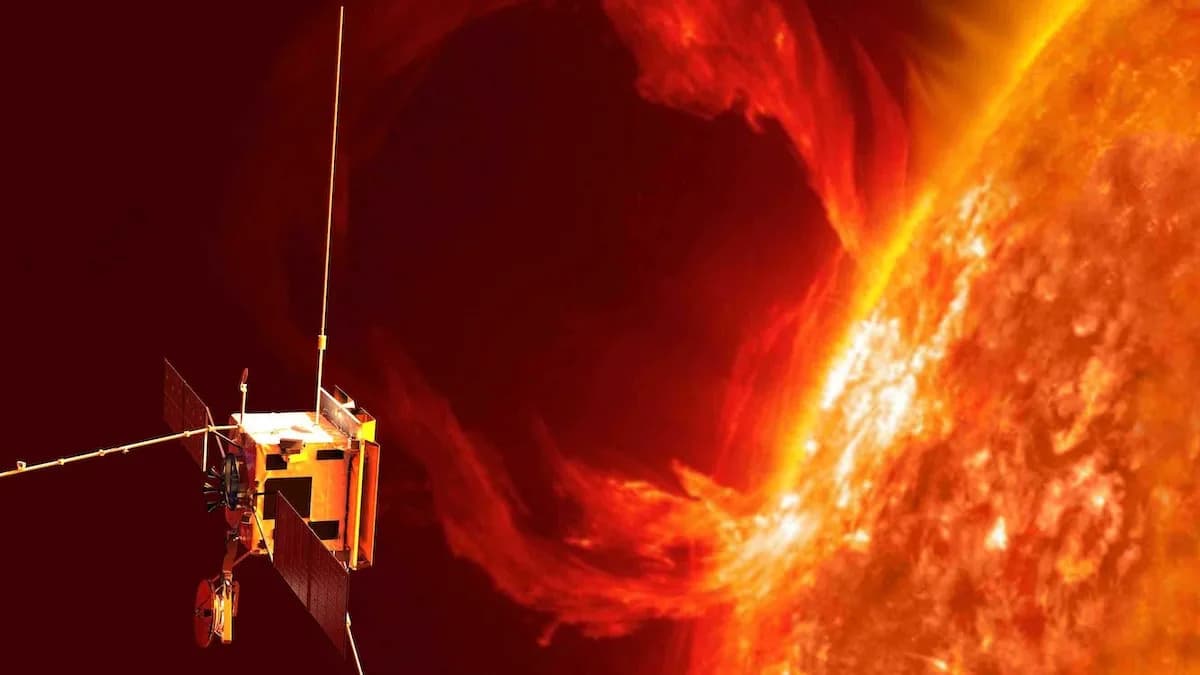
The Sun is an immense ball of superheated gas called plasma. Because plasma conducts electricity, magnetic field lines arch above the solar surface and become twisted as different regions of the Sun rotate at different rates. When those magnetic fields snap, they release enormous bursts of energy as solar flares and sometimes fling magnetic bubbles of plasma called coronal mass ejections (CMEs) into space.
CMEs can travel for days at speeds comparable to thousands of times a commercial airliner. If the orientation of a CME's magnetic field aligns unfavorably with Earth's magnetic field, the CME can couple strongly to near-Earth space, producing vivid auroras and inducing powerful electrical currents in the ground and in infrastructure.
Historic Events That Changed Our Understanding
The Carrington Event (1859): On 1 September 1859 amateur astronomers Richard Carrington and Richard Hodgson observed a flare so bright it briefly outshone the Sun. About 18 hours later, auroras appeared as far south as the equator and telegraph systems across Europe and the Americas failed or produced shocks and fires. The Carrington Event revealed that solar activity could directly disrupt emerging electrical technologies.
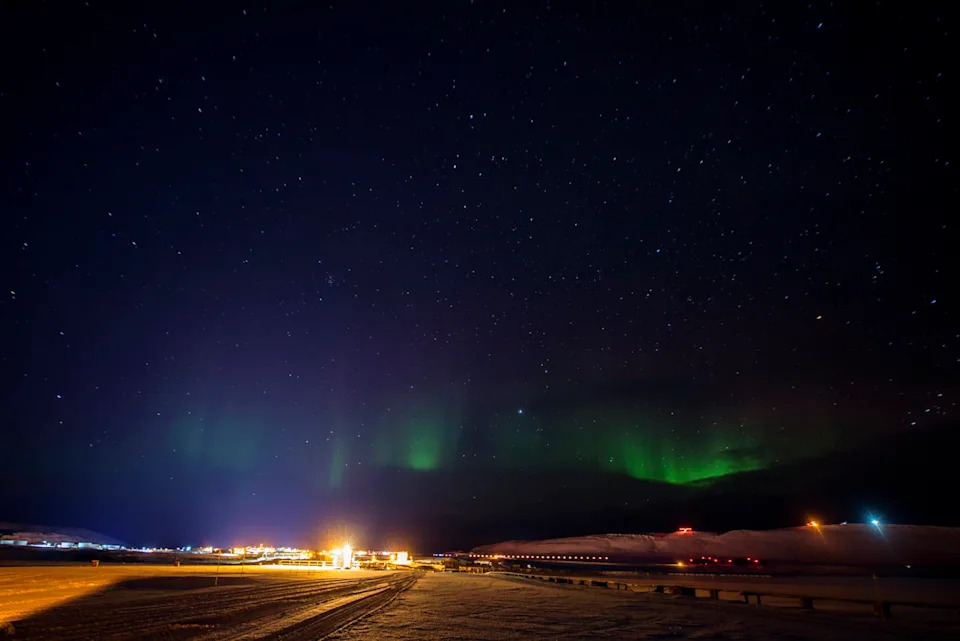
An aurora – an event created by a solar storm – over Pituffik Space Base, formerly Thule Air Base, in Greenland in 2017. In 1967, nuclear-armed bombers prepared to take off from this base.Air Force Space Command
The 1967 Radar Blackout (Near Nuclear Crisis): On 23 May 1967 violent solar flares generated intense radio noise that disabled radar stations in Alaska, Greenland, and the UK. The resulting confusion nearly prompted U.S. military commanders to assume a Soviet attack; only timely solar observations prevented a catastrophic escalation.
The Quebec Blackout (1989): A series of CMEs in March 1989 induced currents that overwhelmed Quebec's transmission system, leaving millions without power in subzero temperatures. Repairs revealed severe damage to large, custom-built transformers — components that can take months to replace. Had the storm matched Carrington in intensity, the damage to transformers across North America could have prolonged outages for years.
How Frequent Are Extreme Solar Storms?
For many years scientists considered the Carrington Event an extreme outlier. But in 2012 researchers analyzing tree rings identified a large burst of high-energy particles in the eighth century CE — a so-called "Miyake Event" — implying storms far larger than Carrington occur on multi-century timescales. Astronomers also observe "super flares" on Sun-like stars that can be orders of magnitude stronger than modern flares; while the Sun's age and rotation suggest such super flares are rarer (perhaps millennia between events), the possibility remains and the potential consequences are large.
Why Modern Society Is More Vulnerable
Unlike past societies, we now rely on complex, tightly coupled systems: continental power grids, satellite constellations for communication and navigation, pipelines, transportation networks, and internet infrastructure. Geomagnetically induced currents can damage transformers, disable satellites, and degrade communications. A sufficiently powerful event could cause prolonged, wide-area outages with cascading impacts on water, food distribution, healthcare, and emergency services.
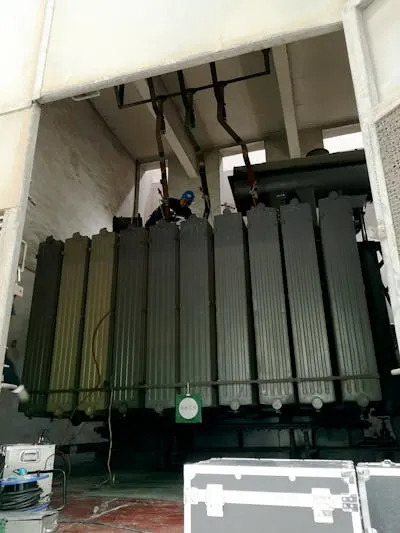
An engineer performs tests on a substation transformer.Ptrump16/Wikimedia Commons,CC BY-SA
Mitigation: Monitoring, Preparedness, and Investment
One effective defense is continuous, real-time solar monitoring. Early detection of flares and CMEs gives grid operators and satellite controllers valuable time to reduce loads, reconfigure systems, or place assets in safe modes — measures that substantially reduce damage. Maintaining and replacing aging solar-observing satellites, and supporting ground-based facilities like the Daniel K. Inouye Solar Telescope, are practical steps that lower risk.
However, proposed cuts to science budgets and uncertainty about replacing critical space-weather assets threaten long-term preparedness. These budgetary choices reflect a broader tendency to discount low-probability but high-consequence risks until after a disaster occurs.
Conclusion
Historical episodes — from the Carrington Event to the 1967 near-miss and the 1989 Quebec blackout — show that solar storms can disrupt technology and, in extreme cases, threaten civilization's functioning. Sustained investment in solar monitoring, infrastructure resilience, and emergency planning is an affordable and practical way to reduce that risk.
Dagomar Degroot is an environmental historian at Georgetown University and the author of the book Ripples on the Cosmic Ocean. He has received research funding from NASA. This article is adapted from reporting originally published by The Conversation.
Help us improve.