Space.com readers and contributors produced some of 2025’s most striking astronomical images, from detailed solar plasma and dramatic comet displays to a rare elve and high‑altitude auroras. The gallery highlights include Mark Johnston’s detailed solar plasma (Oct. 20), Dan Bartlett’s Sept. 26 image of comet C/2025 A6 (LEMMON), and Valter Binotto’s Nov. 17 capture of an elve over the Italian Alps. These photos showcase the power of specialized equipment and techniques to reveal the hidden beauty of the cosmos.
Our 10 Favorite Space.com Reader Astronomy Photos of 2025 — Stunning Views From Sun to Deep Space
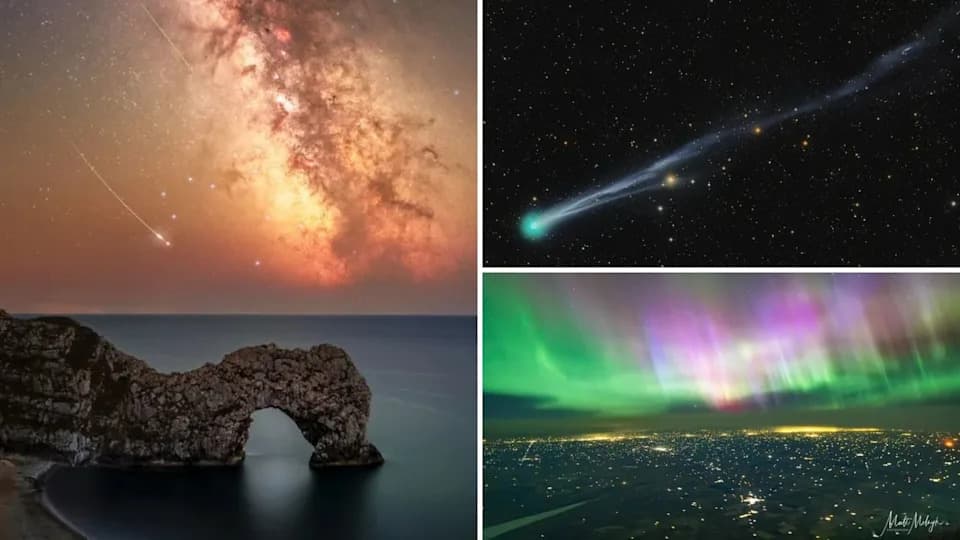
From auroras at 36,000 feet to comet flybys and eclipses, these are the standout images our readers shared with Space.com in 2025. | Credit: Left: Josh Dury, top: Dan Bartlett, bottom: Matt Melnyk.
The sky delivered a wealth of unforgettable sights in 2025 — from delicate solar prominences and dramatic lunar eclipses to cometary shows, rare upper‑atmosphere lightning and glowing nebulae. Skilled members of the Space.com community used telescopes, specialized filters, long exposures and high‑altitude vantage points to reveal wonders our eyes alone cannot see.
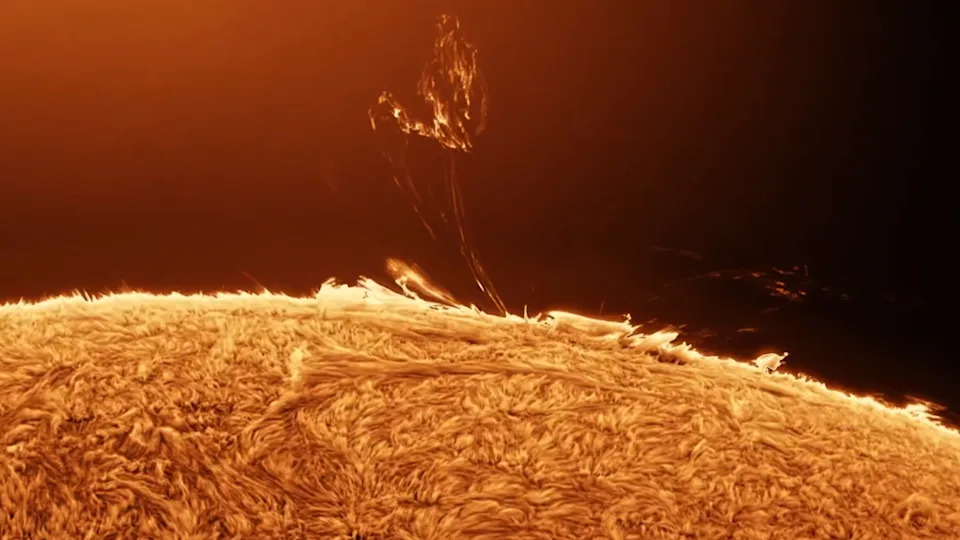
A solar prominence extends out from the sun | Credit: Mark Johnston
Gallery Highlights
Mark Johnston — Oct. 20, Willow Springs, Arizona. Johnston recorded an astonishingly detailed view of hydrogen plasma dancing in the Sun’s intense magnetic field. He used a TEC160FL refractor fitted with narrowband filters to reveal fine filamentary structure and dramatic solar detail.
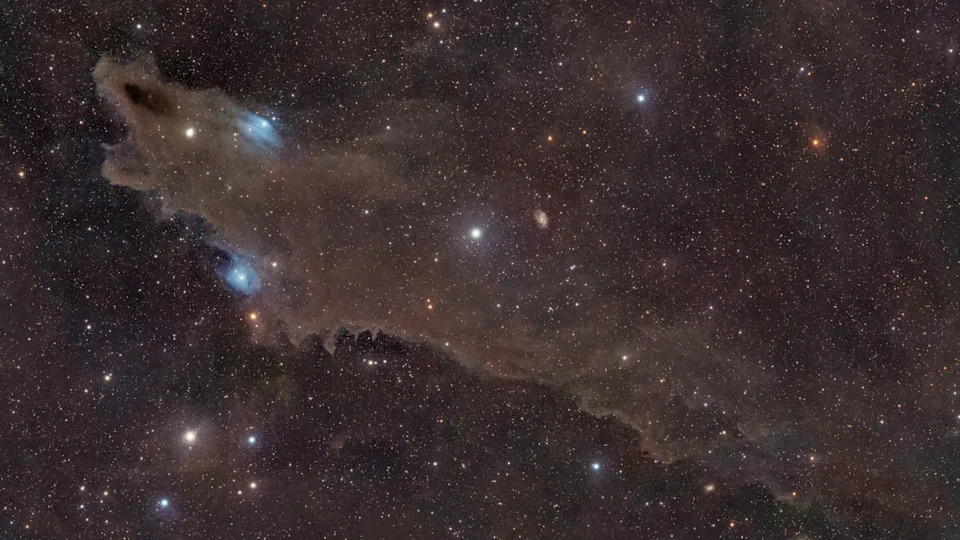
A cosmic shark hunts through deep space. | Credit: Ronald Brecher
Ronald Brecher — Cepheus (≈650 light‑years). Brecher’s deep‑space image of a nebula in Cepheus evokes massive, shark‑like formations drifting through interstellar gas and dust, showcasing the sculpted shapes that emerge in star‑forming regions.
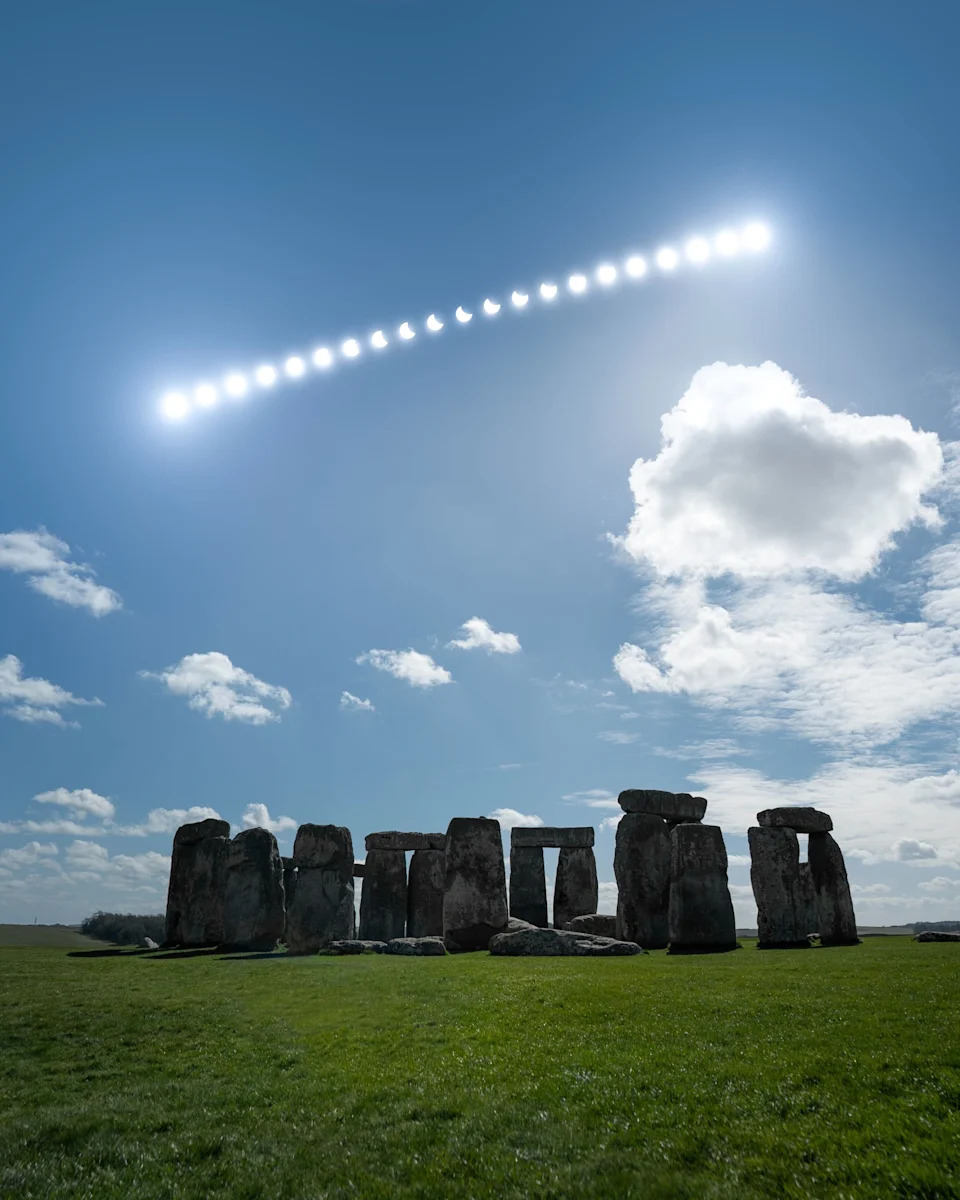
Partial solar eclipse sequence over Stonehenge, U.K. | Credit: Josh Dury
Josh Dury — March 29, Stonehenge, U.K. Dury produced a gorgeous composite of a partial solar eclipse above the ancient stones, documenting the Moon as it slid between Earth and the Sun with careful timing and layered exposures.
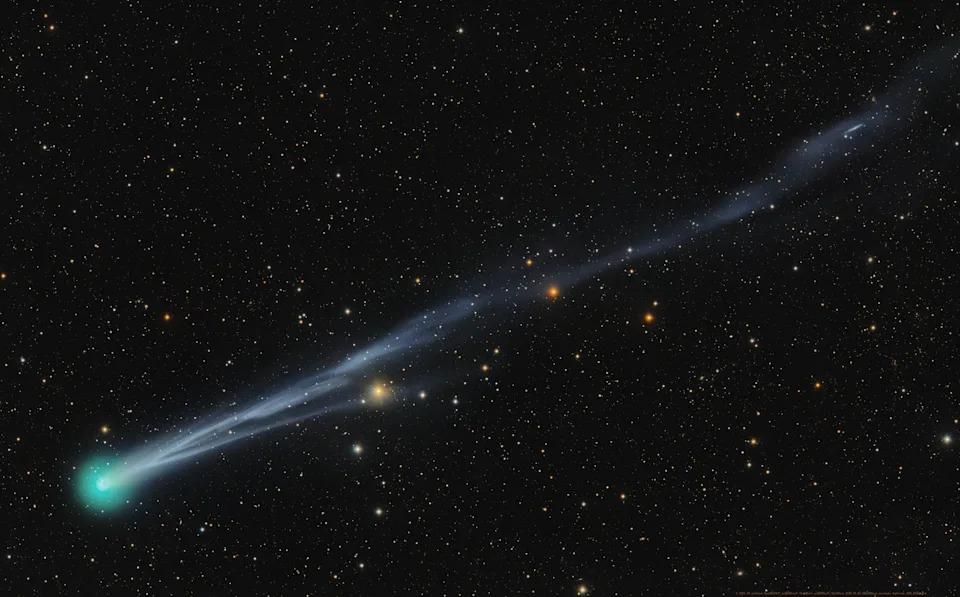
Astrophotographer Dan Bartlett captured this view of comet Lemmon | Credit: Dan Bartlett
Dan Bartlett — Sept. 26, June Lake, California. Bartlett photographed comet C/2025 A6 (LEMMON) at peak brightness, capturing a twisting tail shaped by the steady pressure of the solar wind.
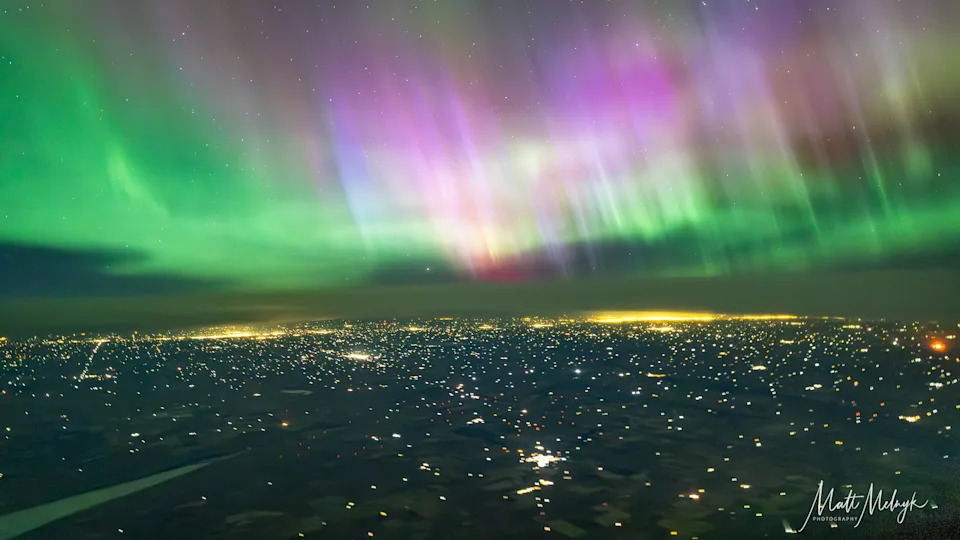
When a severe G4 geomagnetic storm hit, this Dreamliner pilot had the perfect front-row seat. | Credit: Matt Melnyk
Matt Melnyk — Nov. 12, Aboard a Boeing 787 (36,000 ft / ~11 km). Piloting a transatlantic flight during a geomagnetic storm, Melnyk snapped an impressive view of the northern lights from cruising altitude, a rare passenger‑pilot perspective on auroral displays.
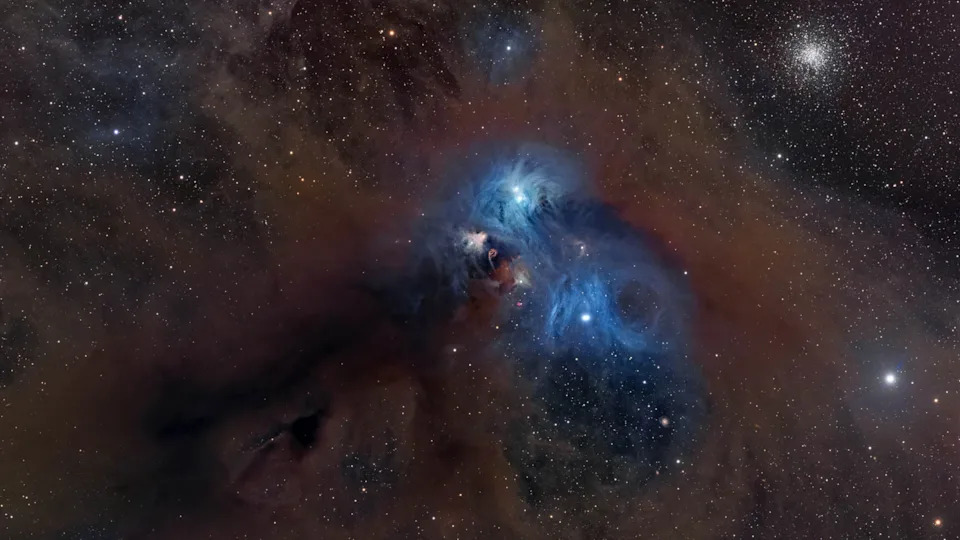
The Raging Baboon Nebula, as captured by astrophotographer Greg Meyer in 2025. | Credit: Greg Meyer
Greg Meyer — Corona Australis (~500 light‑years). Long exposures of a compact nebula in Corona Australis reveal structures that, in the image, resemble a mandrill with glowing blue 'eyes' — an evocative example of how deep‑sky imaging can transform diffuse clouds into identifiable shapes.
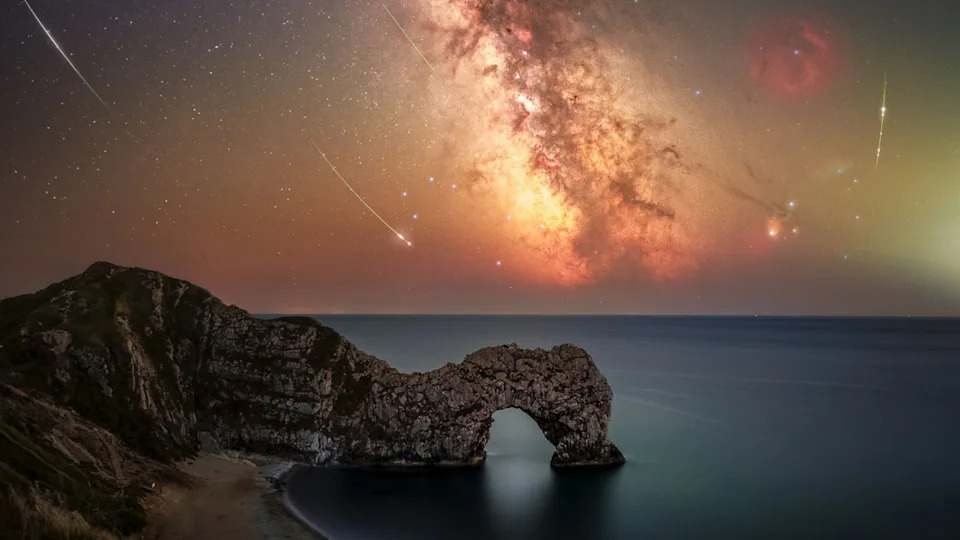
Perseid meteors streak towards Durdle Door in this 2025 image from photographer Josh Dury. | Credit: Josh Dury
Josh Dury — Perseid Meteor Composite, Durdle Door, Dorset, U.K. Another of Dury’s composites shows Perseid meteors streaking toward the horizon beside the luminous band of the Milky Way above the iconic Durdle Door rock formation.
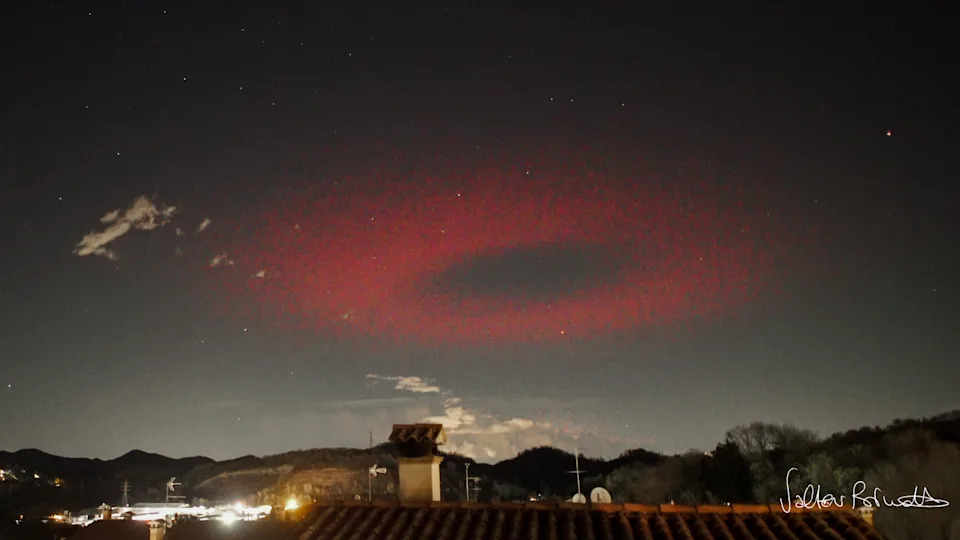
An "elve" lasts for less than a thousandth of a second. | Credit:Valter Binotto
Valter Binotto — Nov. 17, Italian Alps. Binotto captured a rare red ring known as an elve, a fleeting upper‑atmosphere lightning event that lasts less than a millisecond and can span hundreds of miles, according to NOAA.
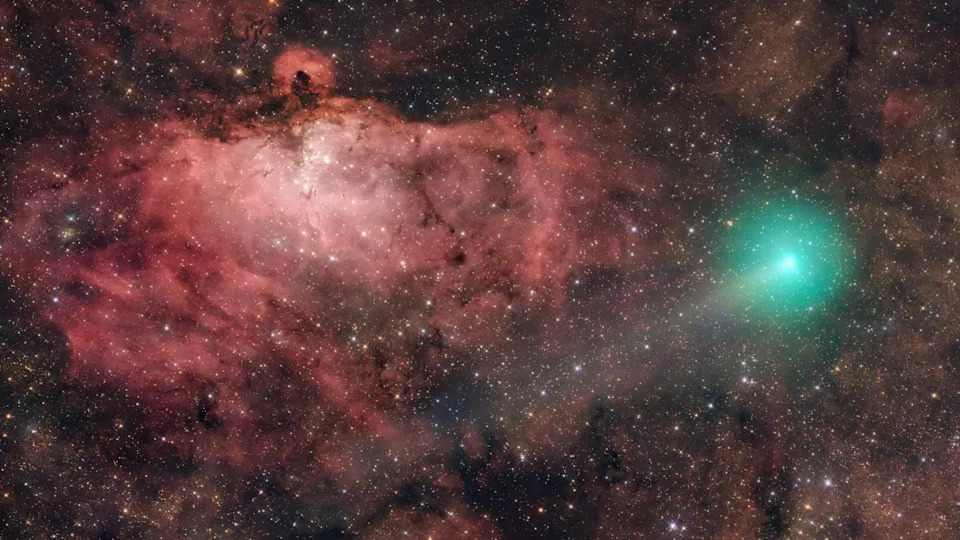
Comet C/2025 R2 (SWAN) glows alongside the Eagle Nebula. | Credit: Daniele Gasparri
Daniele Gasparri — Oct. 17, Constellation Serpens. Gasparri imaged comet C/2025 R2 (SWAN) as its green coma and diffuse tail passed in front of the Eagle Nebula. The frame includes, to the left of the comet, the famed Pillars of Creation set against the nebula’s glowing core.
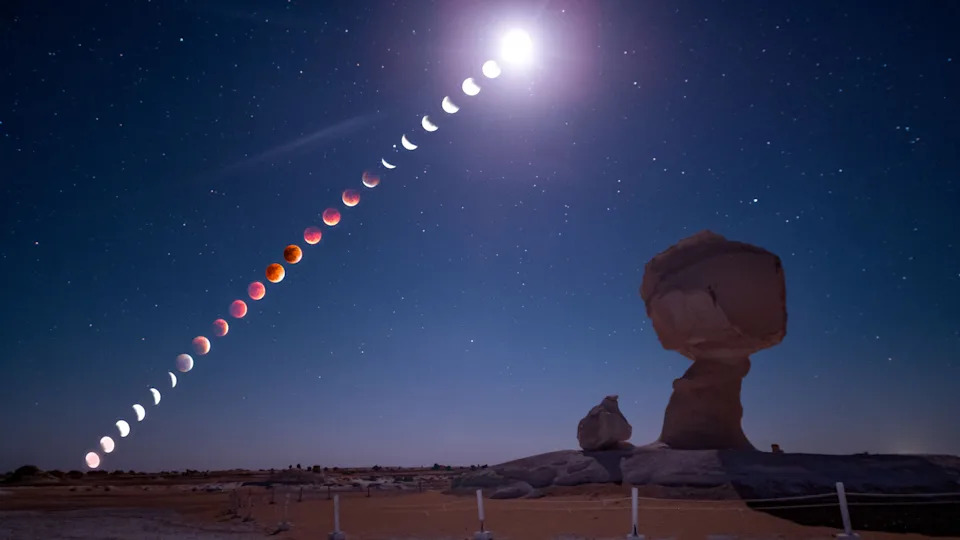
The phases of the Sept. 7 blood moon arrayed over the White Desert in Egypt. | Credit: © Osama Fathi / Night Sky Watcher.
Osama Fathi — Sept. 7, Egypt’s White Desert. Fathi produced a striking composite of the rising "Blood Moon" lunar eclipse over the chalk formations of the White Desert, battling shifting light and gusting winds to record the eclipse’s dramatic ascent.
Get Involved
If these images inspire you to try astrophotography, Space.com’s guides to the best cameras and lenses for night‑sky imaging are a great starting point to prepare for 2026. To share your own work with Space.com readers, send photos, comments, and your name and location to spacephotos@space.com.
Editor's Note: All images featured were submitted by Space.com readers and contributors during 2025. Captions and dates are provided by the photographers.
Help us improve.