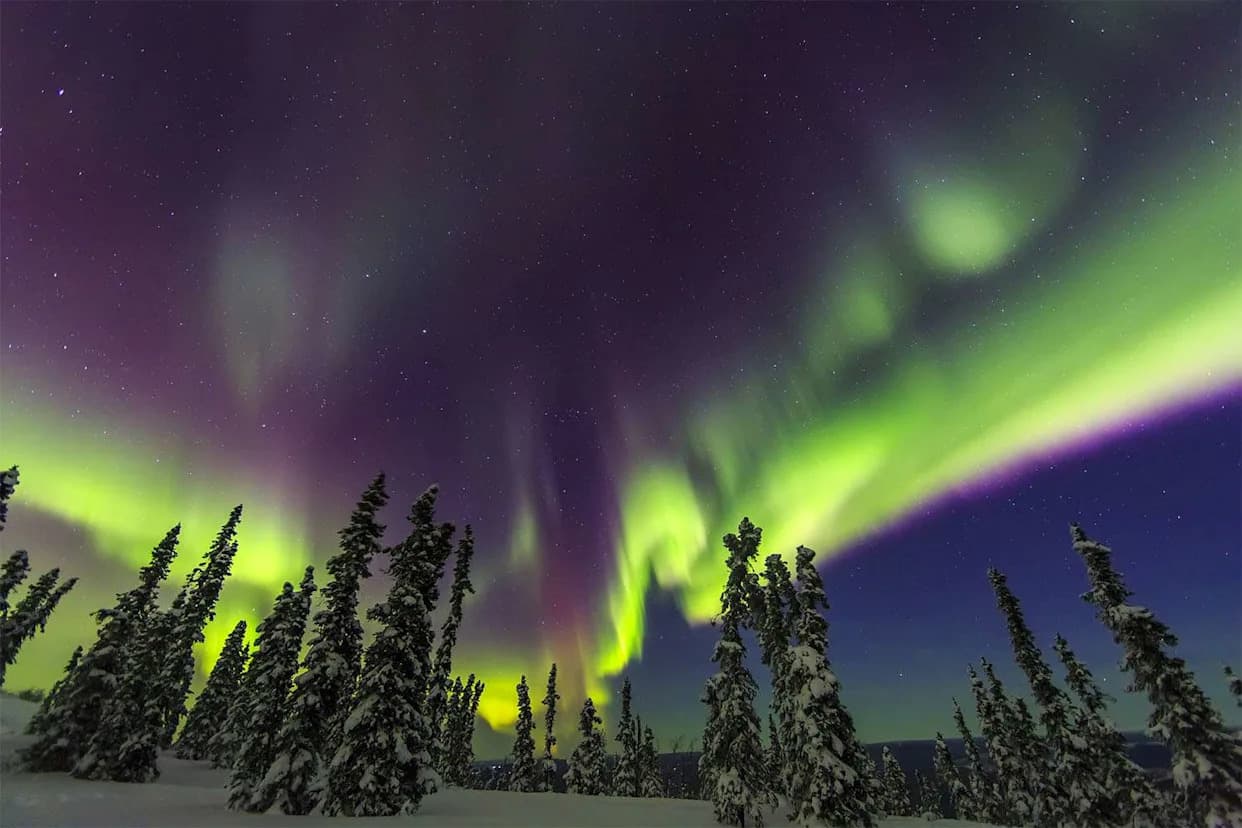
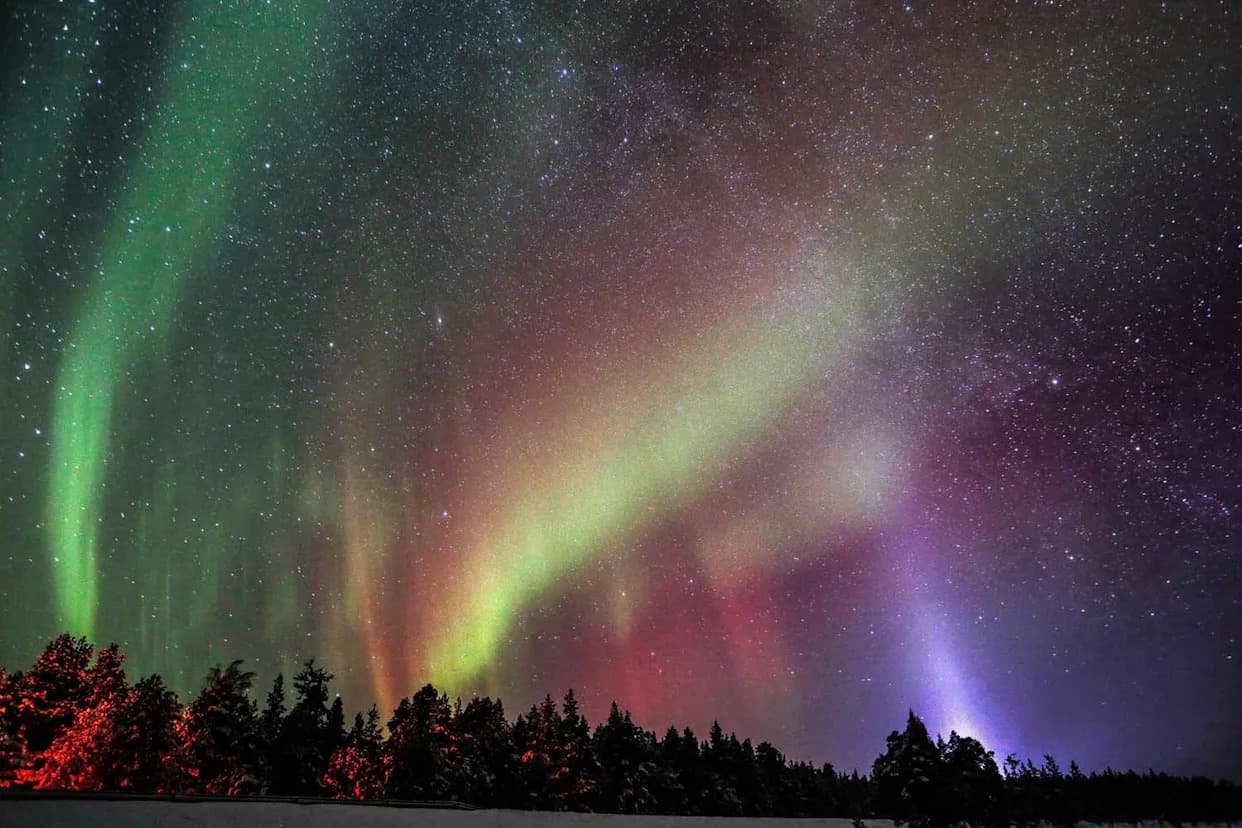
The aurora borealis could remain visible from late on Jan. 13 into the early hours of Jan. 14, driven by fast solar winds from a coronal hole on the Sun. NOAA and the U.K. Met Office say elevated solar wind speeds may occasionally trigger minor (G1) geomagnetic storms, though displays are expected to be weaker and more sporadic than recent activity. Visibility will be strongest at high latitudes—including Alaska and northern Canada—while viewers farther south should watch real-time alerts. For best results, find dark skies, let your eyes adapt for ~30 minutes, and use Night Mode or a tripod for photos.
How to See Back-to-Back Northern Lights Tonight — What to Know for Jan. 13–14
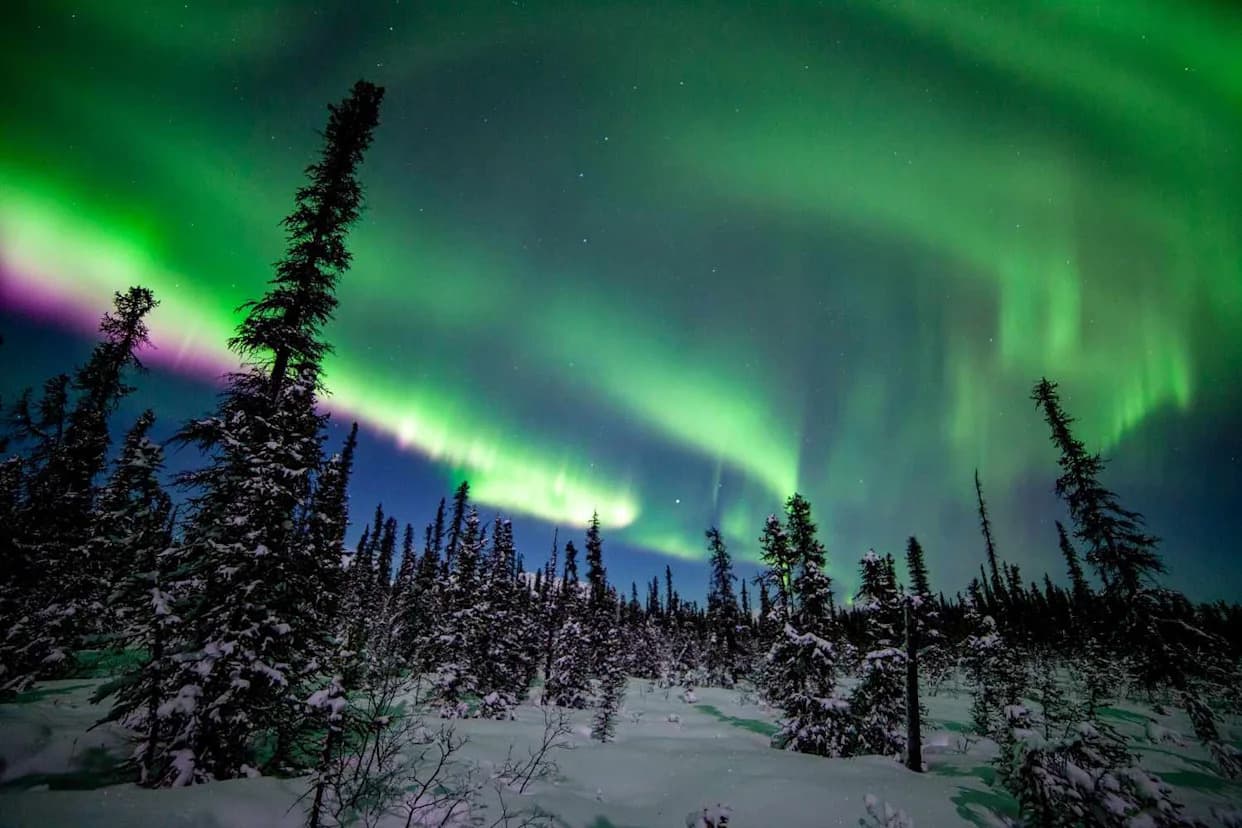
GettyNorthern Lights
The northern lights may remain visible across far-northern skies overnight, with the best window from late on Jan. 13 into the early hours of Jan. 14. Fast solar wind streams from a coronal hole on the Sun are keeping geomagnetic conditions unsettled enough for displays, especially at high latitudes.
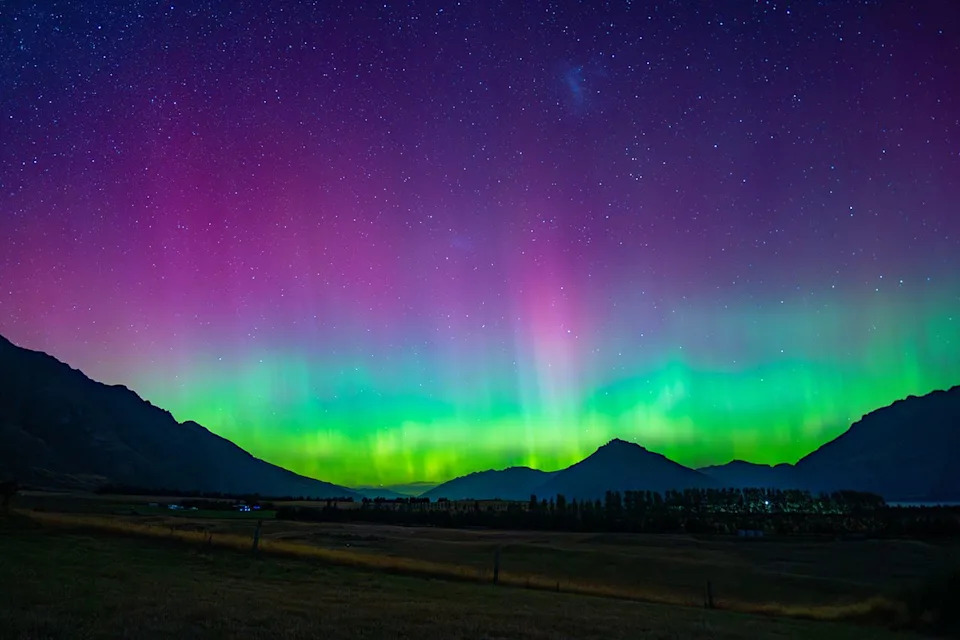
GettyAurora borealis displaying vibrant lights over a mountain landscape at night
What’s Happening
Charged particles carried by elevated solar wind speeds are interacting with Earth’s magnetic field and upper atmosphere, producing auroral light (the aurora borealis). According to the NOAA Space Weather Prediction Center and the U.K. Met Office, these fast winds could occasionally spark minor (G1-level) geomagnetic storm activity. Any displays tonight are likely to be weaker and more sporadic than the strong storms earlier this month.
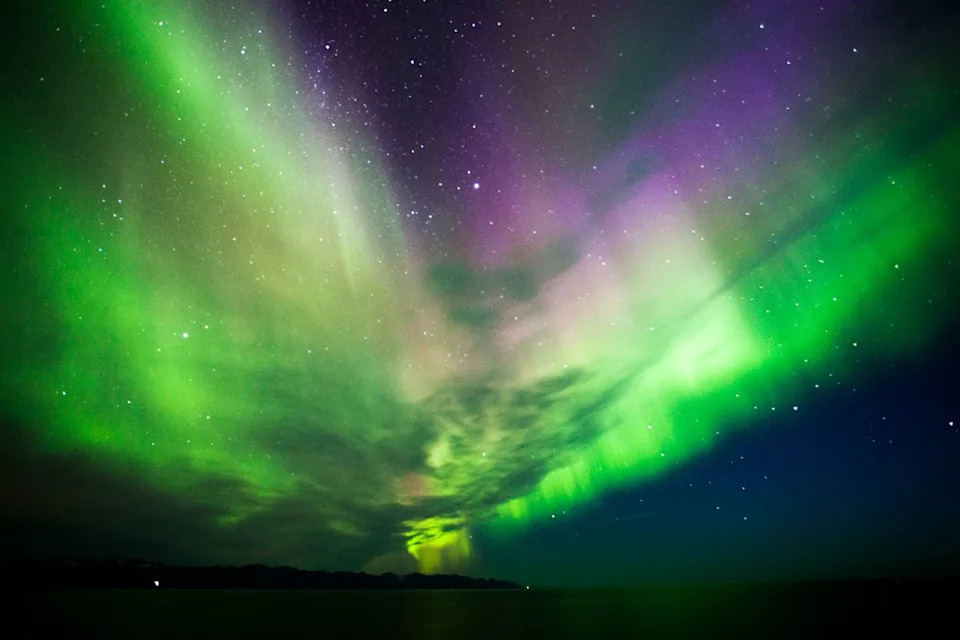
GettyNorthern Lights
When To Look
Aurora activity is most probable from late evening on Jan. 13 through the early morning hours of Jan. 14, when skies are darkest and brief intensifications in geomagnetic activity are most likely to produce visible light.
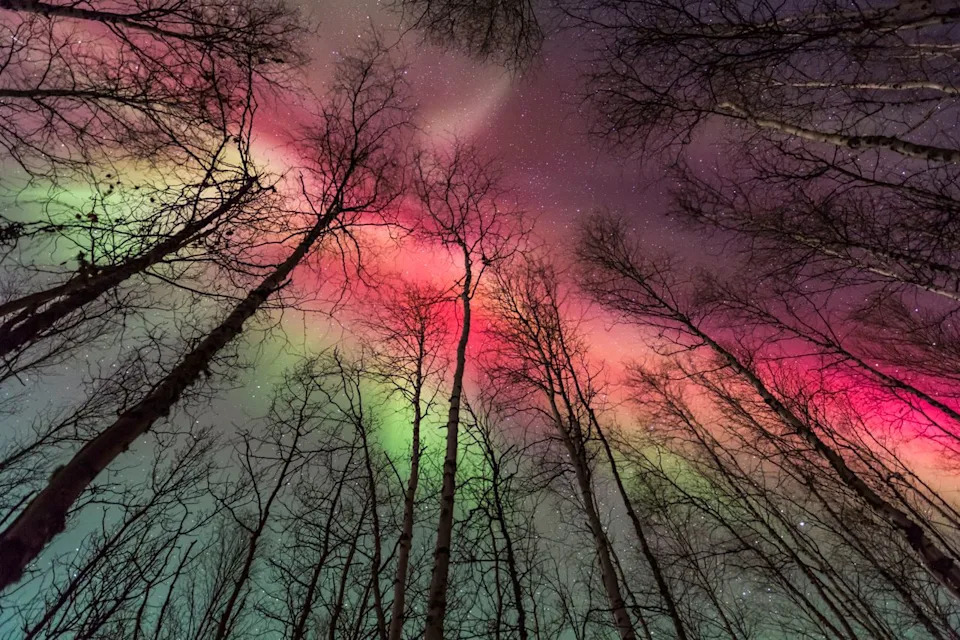
GettyAuroras in Fairbanks, Alaska
Where You'll Have The Best Chance
Visibility is expected primarily across high-latitude regions. Prime viewing areas include Alaska and northern Canada and other parts of the Arctic. The northern tier of U.S. states may occasionally see faint displays if conditions briefly strengthen, but chances decline rapidly farther south.
How To Watch And Photograph The Aurora
Viewing tips:
- Move well away from city lights and other sources of light pollution.
- Choose a location with a clear view of the northern horizon and minimal obstructions.
- Give your eyes time to adapt to the dark—about 30 minutes—before expecting to see faint aurora.
Photography tips:
- Most modern smartphones offer a Night Mode or long-exposure setting—use it and steady your phone (a tripod or stable surface helps).
- Experiment with several shots and slightly different compositions; auroras can be faint and intermittent.
- If using a camera, try ISO 800–3200 (depending on the lens), a wide aperture, and exposures of several seconds to capture faint glow.
Stay Updated
Auroras are inherently unpredictable. Check real-time alerts from NOAA’s Space Weather Prediction Center, the U.K. Met Office, or your national meteorological service for the latest forecasts. If you plan to go out tonight, monitor live updates so you can react quickly if geomagnetic activity intensifies.
Bottom line: Conditions are favorable enough for possible auroral displays at high latitudes late Jan. 13 into early Jan. 14. Head to dark skies, be patient, and keep an eye on live space-weather alerts for the best chance to see the lights.
Help us improve.