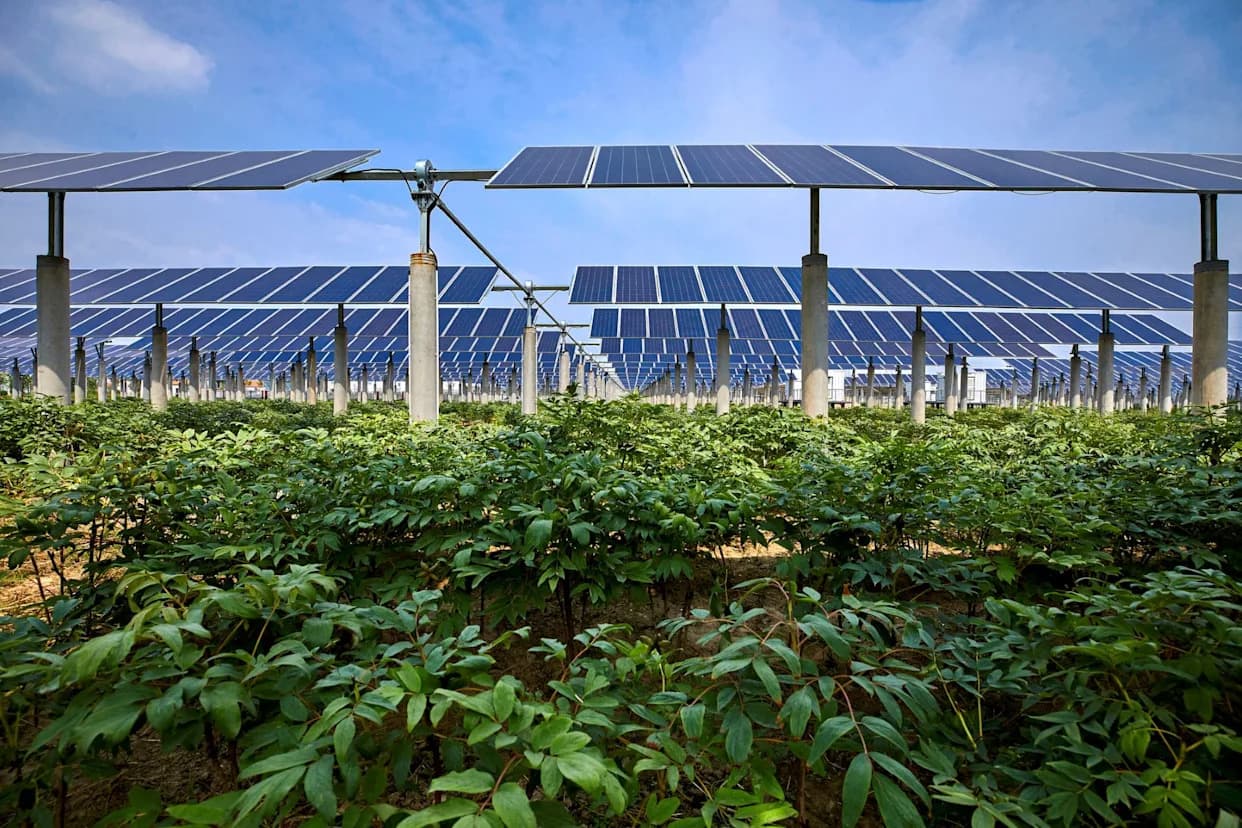
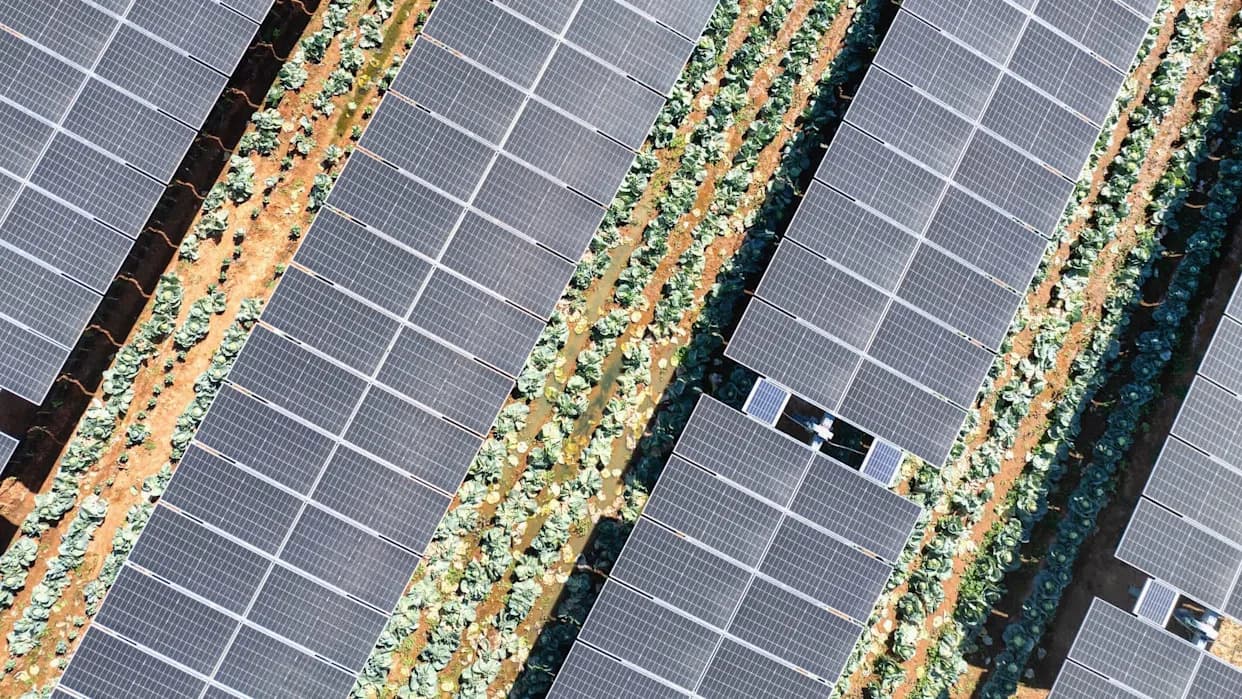
Researchers from the Institute of Desert Meteorology report in Scientific Reports that agrivoltaics — combining solar panels with crops — greatly improved soil health in China’s Hobq Desert (≈300 mm annual rainfall). The integrated PV‑agriculture model delivered SQI gains of 810–1,185× versus shifting dunes, increased nutrient density by roughly 390–550%, and raised microbial biomass more than tenfold. Panels reduced soil temperature and evaporation and acted as windbreaks, helping stabilize dunes and support vegetation recovery.
Agrivoltaics Transforms Hobq Desert Soil: Study Shows Solar Panels Plus Crops Boost Soil Health Dramatically
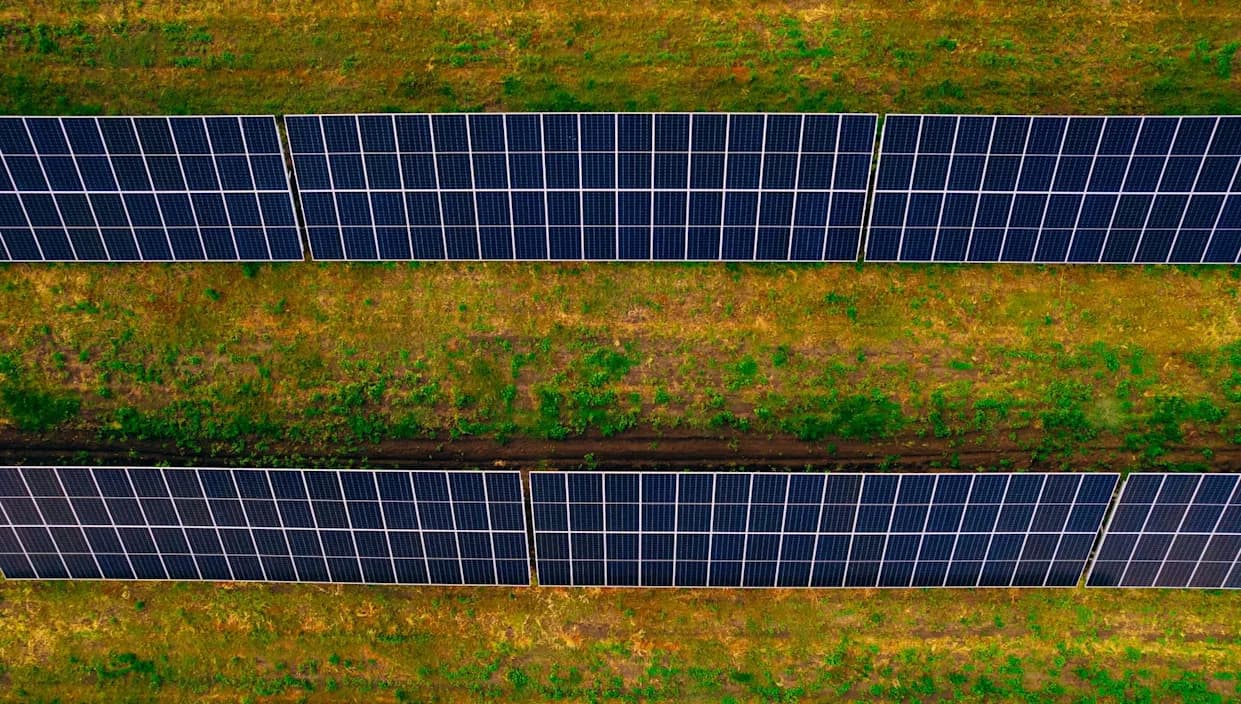
Photo Credit: iStock
Scientists report that pairing solar panels with vegetation — an approach known as agrivoltaics — can dramatically improve soil health in China's Hobq Desert, a region that receives just over 12 inches (≈300 mm) of rain per year. The findings, published in Scientific Reports by researchers at the Institute of Desert Meteorology, compare three desert-rejuvenation strategies and show clear advantages for integrated photovoltaic-agriculture systems.
Study Design and Methods
The team evaluated three restoration models across comparable desert plots:
- Integrated PV-Agriculture (PV‑Ag): Solar panels installed together with agricultural planting beneath and between arrays.
- Artificial Shrub Aerial Seeding (ASS): AI-powered drones dispersing seed pods to establish vegetation.
- Bare-Solar (BS‑PV): Conventional solar arrays installed without intentional agricultural production.
Key Findings
The integrated PV‑Ag system outperformed the other approaches across physical, chemical and microbial soil metrics. Highlights include:
- Soil Quality Index (SQI): SQI values under the PV‑Ag model were reported to be 810–1,185 times higher than those measured in shifting sand dunes, and substantially higher than values under the ASS (2.5–3.9×) and BS‑PV (11.3×) models.
- Nutrient Density: Soil under agrivoltaics showed roughly 390–550% higher nutrient density compared with shifting sand dunes, reflecting large gains in organic matter and fertility.
- Microbial Gains: Total microbial counts and microbial biomass carbon and nitrogen increased more than tenfold under the PV‑Ag configuration.
- Microclimate Benefits: Partial shading from panels lowered surface soil temperatures and reduced evaporation, producing steadier moisture conditions that help retain nutrients and support plant establishment.
- Wind and Erosion Control: Panel arrays acted as windbreaks that limited sand movement, protected plants from burial and helped stabilize dunes.
"The integrated photovoltaic-agriculture model can significantly improve desert soil quality and ecological function, offering an effective pathway for synergizing ecological restoration and renewable energy development in arid regions of the Hobq Desert," the authors conclude.
Implications
These results suggest agrivoltaics can be a dual-benefit strategy: producing clean energy while restoring soil, increasing biodiversity and improving the potential for vegetation recovery even in low-precipitation deserts. The approach may also have broader applications — from rooftop gardens in cities to managed grazing systems where livestock contribute to soil fertility and land management.
Study Source: Institute of Desert Meteorology; published in Scientific Reports.
Help us improve.