Tropical trees in Panama responded to experimentally reduced rainfall by growing more fine roots deeper in the soil and increasing mycorrhizal colonization of remaining surface roots, a five-year study found. The PARCHED experiment used rainfall-excluding roofs, plastic-lined trenches, soil cores, root traps and camera-equipped tubes across 32 plots in four forest sites. While deeper rooting helped maintain water uptake, researchers warn it does not fully offset biomass or carbon losses and may not protect forests from long-term climate-driven droughts.
Panama's Rainforest Trees Grow Deeper Roots to Survive Drought — But It May Not Be Enough
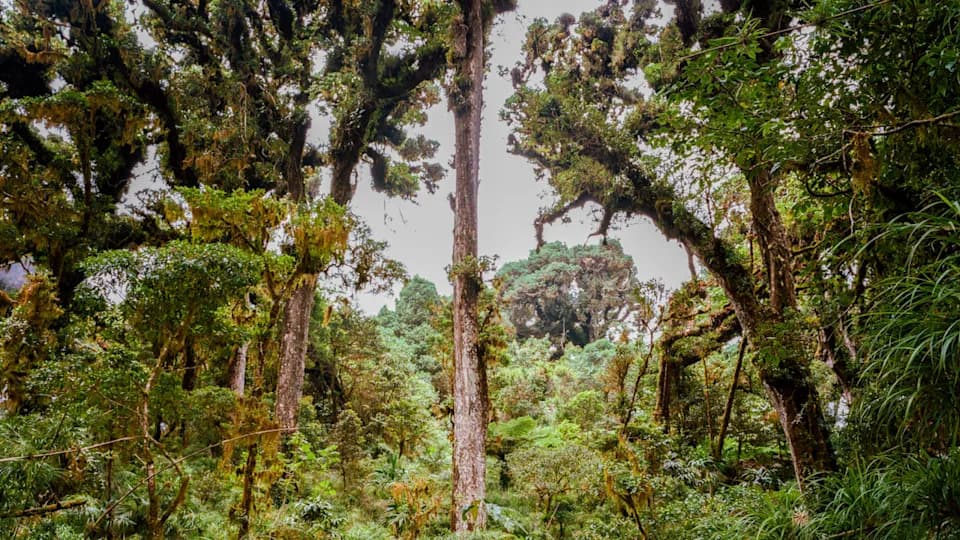
Credit: Michael Hall/Getty Images
Tropical forests in Panama appear to use a short-term "rescue strategy" when rainfall declines: many trees produce more fine roots at greater soil depths to access remaining moisture, a multi-year experiment shows. While deeper rooting and increased fungal partnerships help maintain water uptake, researchers warn these responses probably cannot fully offset biomass and carbon losses from chronic drought driven by climate change.
What the Study Did
The findings come from the Panama Rainforest Changes with Experimental Drying (PARCHED) experiment and were published Nov. 21 in New Phytologist. Scientists established 32 experimental plots across four distinct tropical forest sites in Panama—each differing in tree species composition, soil nutrients and rainfall patterns. To simulate prolonged drying, the team built transparent shelters over plots that excluded 50–70% of incoming rainfall and dug plastic-lined trenches to prevent roots from accessing outside water.
How Roots Were Tracked
Researchers used three complementary methods over five years:
- Soil cores sampled four times a year to about 20 cm (8 inches) depth.
- Root traps (mesh columns filled with soil) inspected quarterly to count newly grown roots.
- Camera-inspected acrylic tubes installed ~1.2 m (4 ft) deep, with viewing windows to monitor root growth in situ.
Key Results
Across all four forest sites, chronic drying produced a consistent pattern: a pronounced decline in fine surface roots and a compensatory increase in fine-root production at depth. Surface-root loss reduced near-surface water and nutrient uptake, while deeper roots appeared to help maintain tree water transport and physiological function.
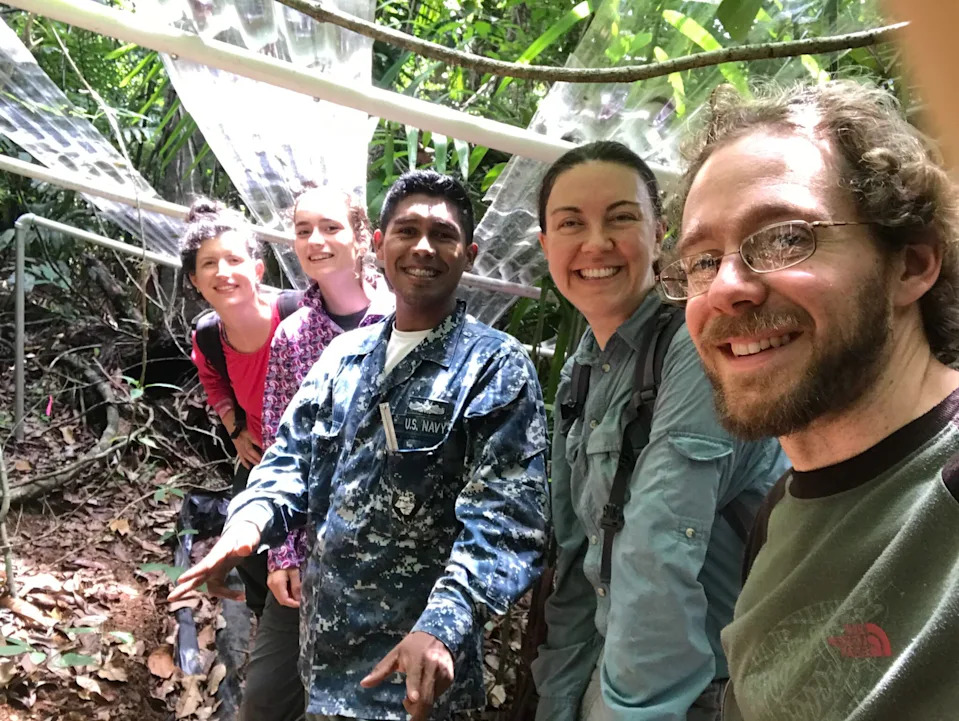
Credit: Colorado State University, Warner College of Natural Resources
"It's not enough root growth to compensate for the carbon or biomass loss," said Daniela Cusack, co-author and ecosystem ecologist at Colorado State University, describing the change as a temporary rescue strategy rather than a full recovery.
The study also found increased colonization of the remaining surface roots by arbuscular mycorrhizal fungi, symbionts that can enhance water and nutrient acquisition—suggesting a microbial-assisted response at the soil surface even as many shallow roots decline.
Implications and Next Steps
Independent root ecologist Daniela Yaffar (Oak Ridge National Laboratory) praised the experiment's scale and methods but cautioned that evolutionary adaptations to drier conditions usually take long periods to develop. Species that cannot adjust quickly may decline, potentially altering biodiversity and carbon storage.
Lead author Amanda Cordeiro (University of Minnesota) and colleagues plan to assess the long-term consequences of deeper rooting for ecosystem carbon storage and plant fitness. The central question remains whether increased deep-root production can sustain forests under sustained or intensifying drought beyond a few years.
Bottom line: Deeper roots and greater fungal colonization help trees cope with short-term drying, but these strategies likely fall short as a durable defense against the prolonged, severe droughts expected under climate change.
Help us improve.