The Homokhátság region of Hungary is undergoing rapid aridification, with falling groundwater and advancing sand threatening farmland. Farmer Oszkár Nagyapáti and a volunteer group are redirecting cooled, purified overflow from a local thermal spa to flood a 2½-hectare (6-acre) basin, aiming to raise groundwater and create a local microclimate. Early results show higher groundwater readings and returning flora and fauna; volunteers hope to expand the effort and inspire similar water-retention projects elsewhere.
Hungarian Farmers Use Thermal Spa Overflow to Rebuild Wetlands and Fight Desertification

Oszkár Nagyapáti, farmer and member of the volunteer water guardians, stands in a hole in Kiskunmajsa, Hungary, Tuesday, July 29, 2025. (AP Photo/Denes Erdos)(ASSOCIATED PRESS)
Oszkár Nagyapáti crouched in a sandy hollow on his land in Kiskunmajsa on Hungary's Great Plain and dug into the parched soil, searching for signs of groundwater that have been steadily retreating in recent years. The cloudy seepage that rose into his hand was a stark reminder of a landscape changing faster than many expected.
Local Action Against a Growing Threat
The Homokhátság region south of Budapest is experiencing accelerating aridification: wide cracks split the earth, sand drifts advance across former fields, wells run dry and the water table keeps dropping. Some researchers now classify the area as semiarid — a label more commonly applied to parts of the American Southwest, Australia or Africa. A 2017 paper in the journal European Countryside attributed the trend to the combined effects of climate change, improper land use and inadequate environmental management.
In response, Nagyapáti and a growing group of volunteers calling themselves the "water guardians" launched a pragmatic local experiment: they negotiated with authorities and a nearby thermal spa to redirect the spa's cooled and purified overflow water onto low-lying farmland to recreate periodic flooding that once kept the plain wetter.
How the Project Works
The plan inundated a 2½-hectare (6-acre) basin with thermal water that otherwise would have been discharged into a canal. Volunteers closed a sequence of sluices so the repurposed water could slowly accumulate, forming a shallow marsh intended to store surface water, raise groundwater and trigger surface evaporation that could moderate local temperature, increase humidity and reduce dust.
'It may seem very small to look at, but it brings us immense happiness here in the desert,' Nagyapáti said, describing the emerging wetland.
A 2024 study by Eötvös Loránd University found unusually dry layers of air near the surface in this part of Hungary have been preventing storm fronts from producing rain; fronts pass through without precipitation and then generate strong winds that further desiccate topsoil. Meteorologist Tamás Tóth stresses that water retention will be a central adaptation strategy as a warming atmosphere makes rainfall patterns more erratic.
Early Results and Local Impact
After a few months the chosen basin was nearly full. The volunteers reported measurable improvements: higher local groundwater readings and a rapid return of plants and wildlife near the flooded area. Nagyapáti estimated the wetland could affect conditions within roughly a 4-kilometer (2½-mile) radius, improving vegetation and soil water balance and, they hope, contributing to a lasting rise in groundwater levels.
The volunteer group has grown to more than 30 people and plans to expand by flooding additional basins. Their work comes as Hungary faces broader drought pressures: weather-related crop losses have dented GDP, and Prime Minister Viktor Orbán announced a national drought task force this year to coordinate responses.
While this community-led approach is not a silver bullet, it demonstrates a scalable, low-cost method to retain water on the landscape and create micro-wetlands that can provide ecological and climatic benefits. The water guardians say their model could be replicated in other villages and towns that have access to discharged water sources, whether from spas, treated effluent or stormwater capture.
What Comes Next: The group plans to monitor groundwater trends and biodiversity at the site, seek permissions to expand the flooded areas, and encourage other communities to adopt similar retention strategies as part of broader adaptation efforts.
The Associated Press contributed reporting. The AP's climate and environmental coverage receives private foundation support but remains editorially independent.
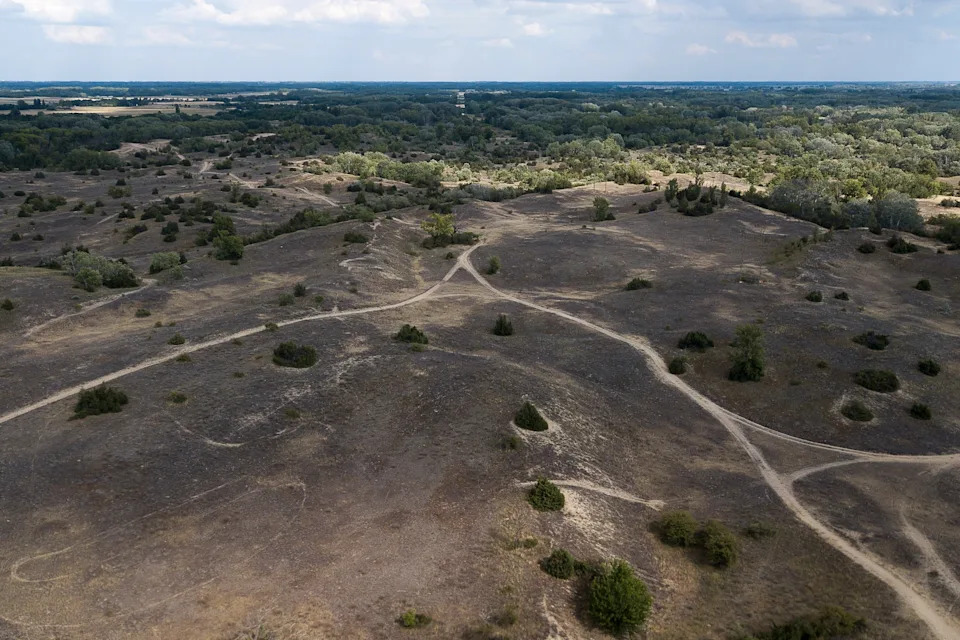
Hills of sandy terrain are visible in the Kiskunsag region of Hungary, Wednesday, July 30, 2025. (AP Photo/Denes Erdos)(ASSOCIATED PRESS)
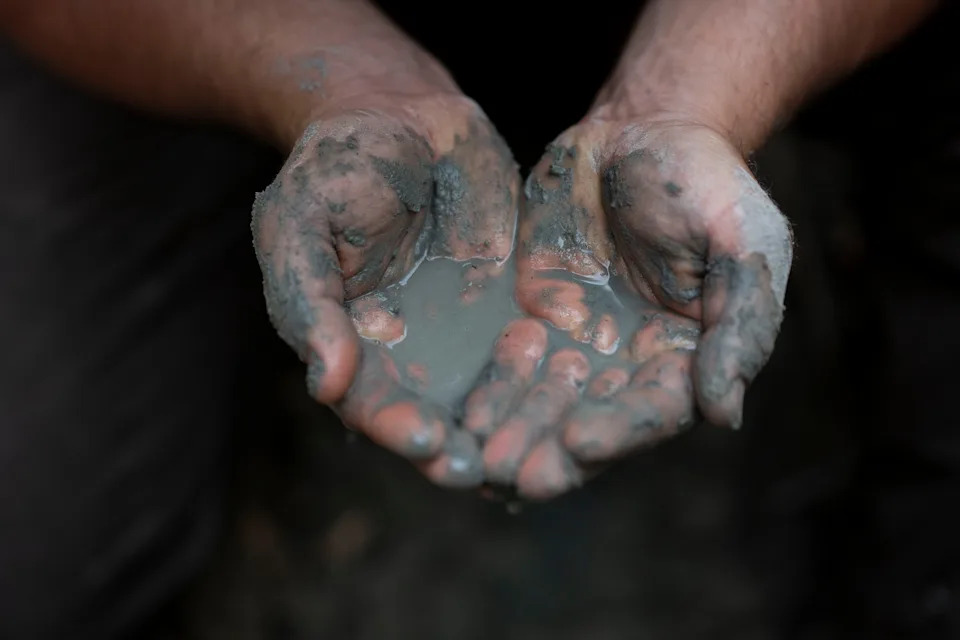
Oszkár Nagyapáti, farmer and member of the volunteer water guardians group, holds water in his hands in Kiskunmajsa, Hungary, Tuesday, July 29, 2025. (AP Photo/Denes Erdos)(ASSOCIATED PRESS)
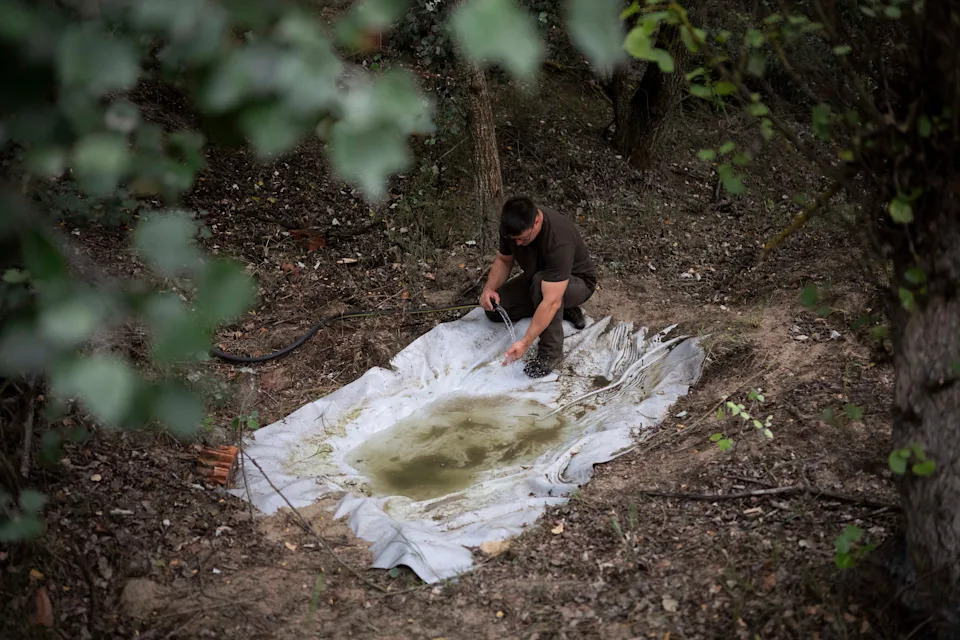
Oszkár Nagyapáti, farmer and member of the volunteer water guardians group, fills up a wildlife water trough in Kiskunmajsa, Hungary, Tuesday, July 29, 2025. (AP Photo/Denes Erdos)(ASSOCIATED PRESS)
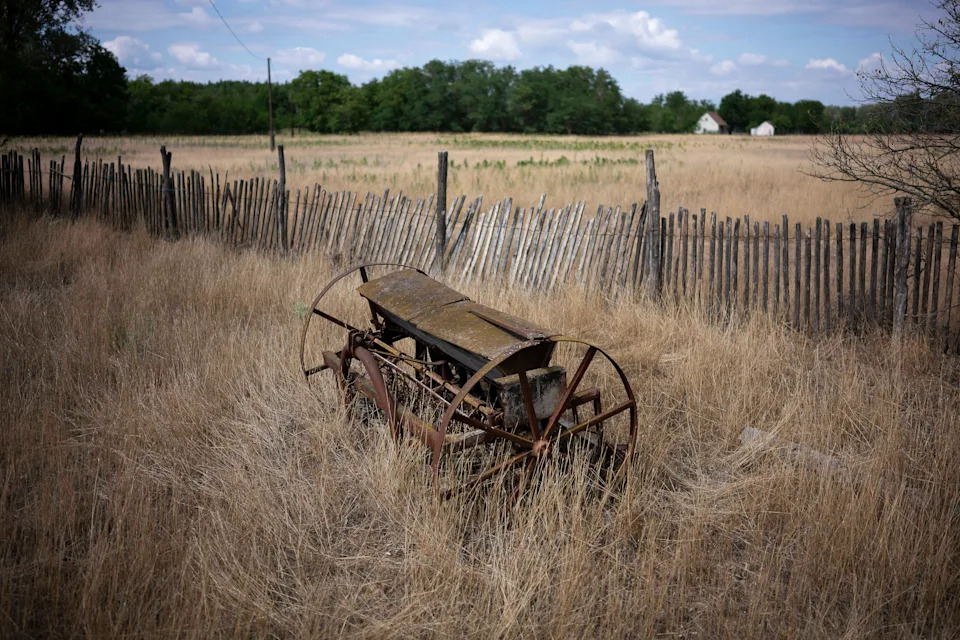
An abandoned plow sits on parched land in Kiskunmajsa, Hungary, Monday, July 28, 2025. (AP Photo/Denes Erdos)(ASSOCIATED PRESS)
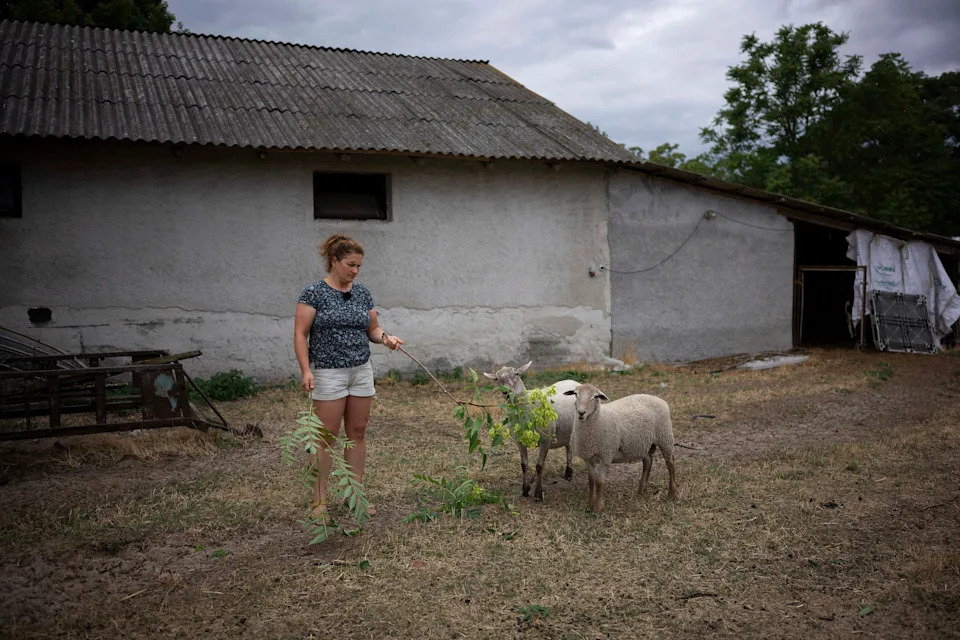
Kata Hunyadi, a farmer, feeds her sheep with a tree branch in Kiskunmajsa, Hungary, Tuesday, July 29, 2025. (AP Photo/Denes Erdos)(ASSOCIATED PRESS)
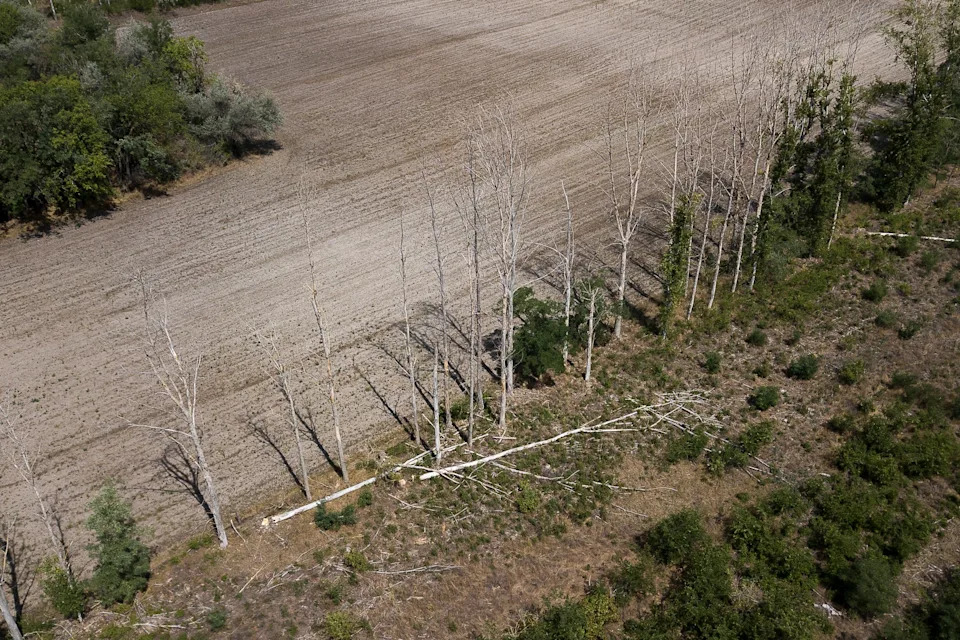
Dry trees stand in Kiskunmajsa, Hungary, Wednesday, July 30, 2025. (AP Photo/Denes Erdos)(ASSOCIATED PRESS)
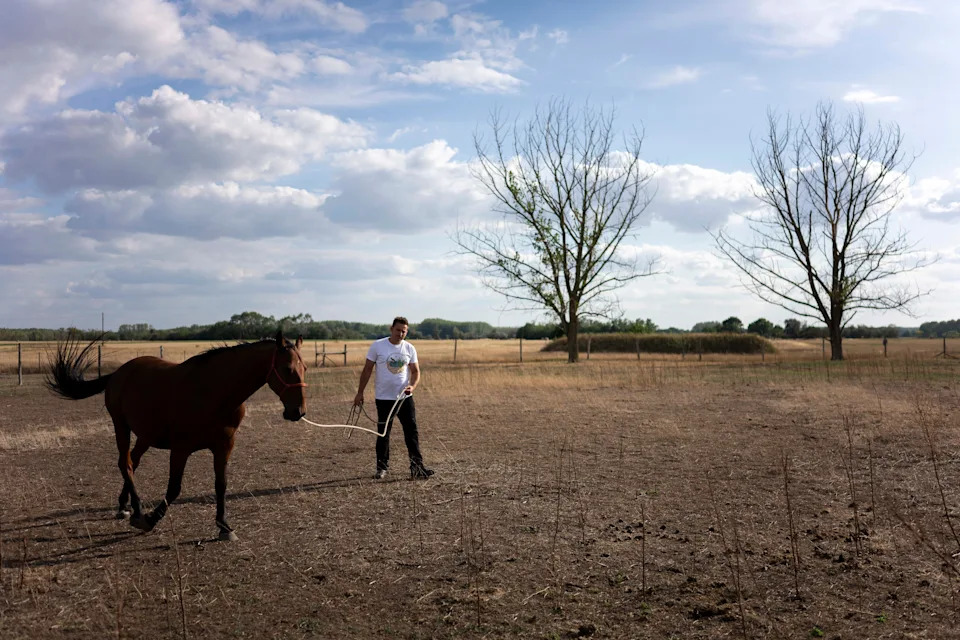
Szilárd Zerinváry member of the volunteer water guardians group walks his horse in his parched backyard in Kiskunmajsa, Hungary, Monday, July 28, 2025. (AP Photo/Denes Erdos)(ASSOCIATED PRESS)
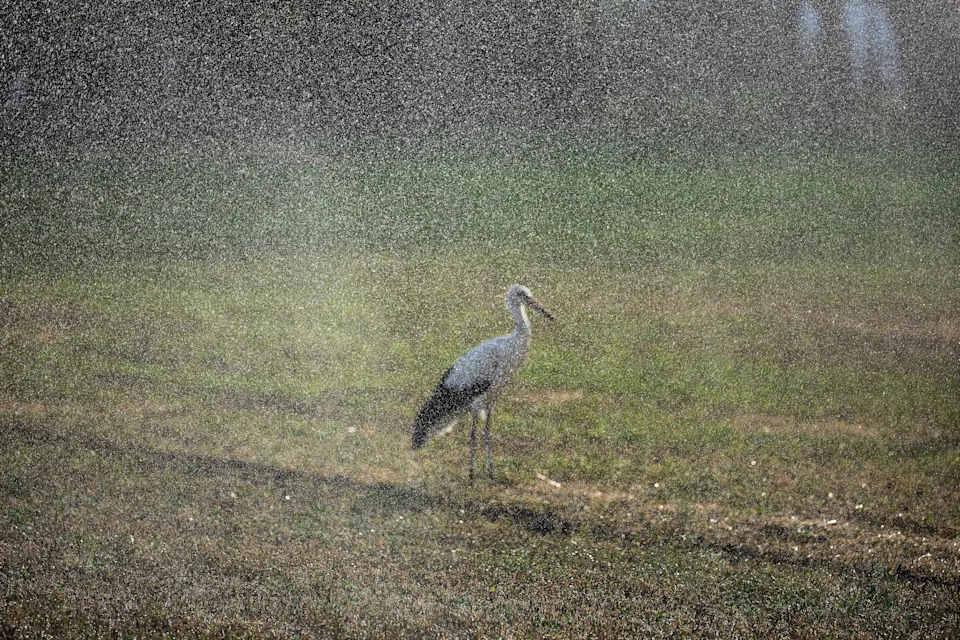
A stork stands behind a sprinkler on a dried-out field in Kiskunmajsa, Hungary, Tuesday, July 29, 2025. (AP Photo/Denes Erdos)(ASSOCIATED PRESS)
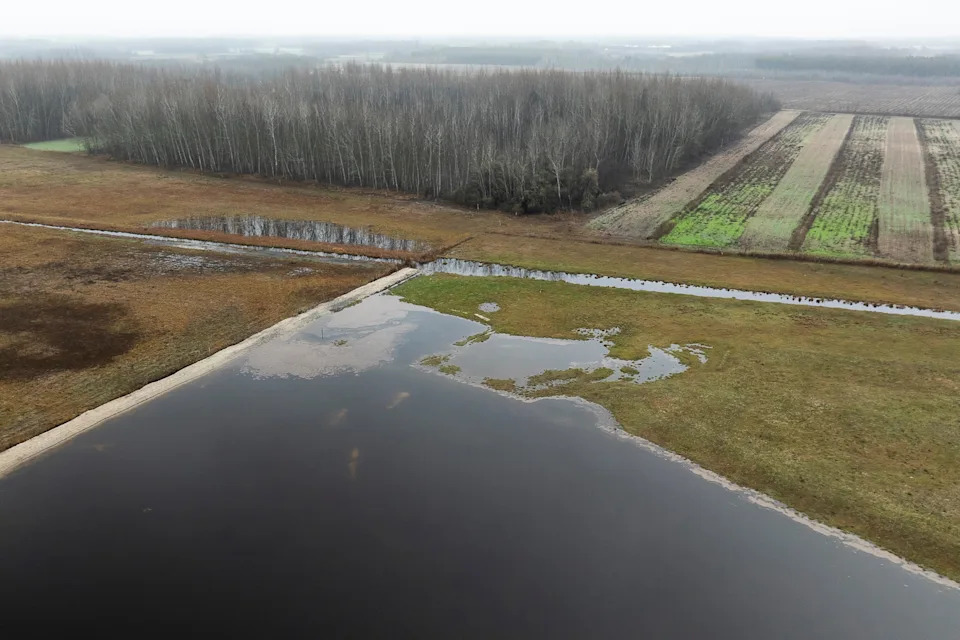
Water floods an area and an artificial lake in Kiskunmajsa, Hungary, Tuesday, July 29, 2025. (AP Photo/Denes Erdos)(ASSOCIATED PRESS)
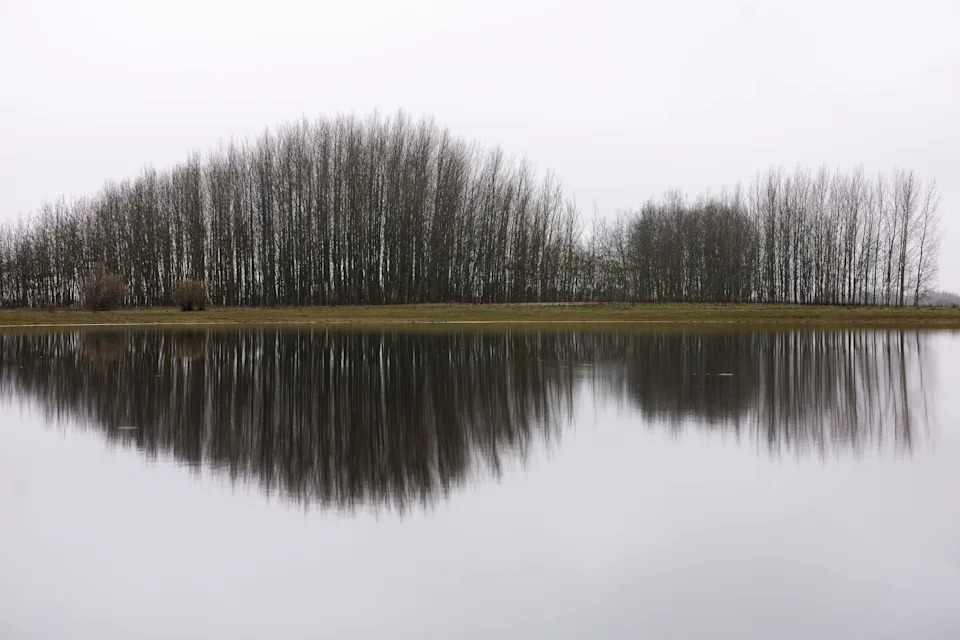
Trees are reflected in the water of an artificial lake in Kiskunmajsa, Hungary, Friday, Dec. 12, 2025. (AP Photo/Denes Erdos)(ASSOCIATED PRESS)
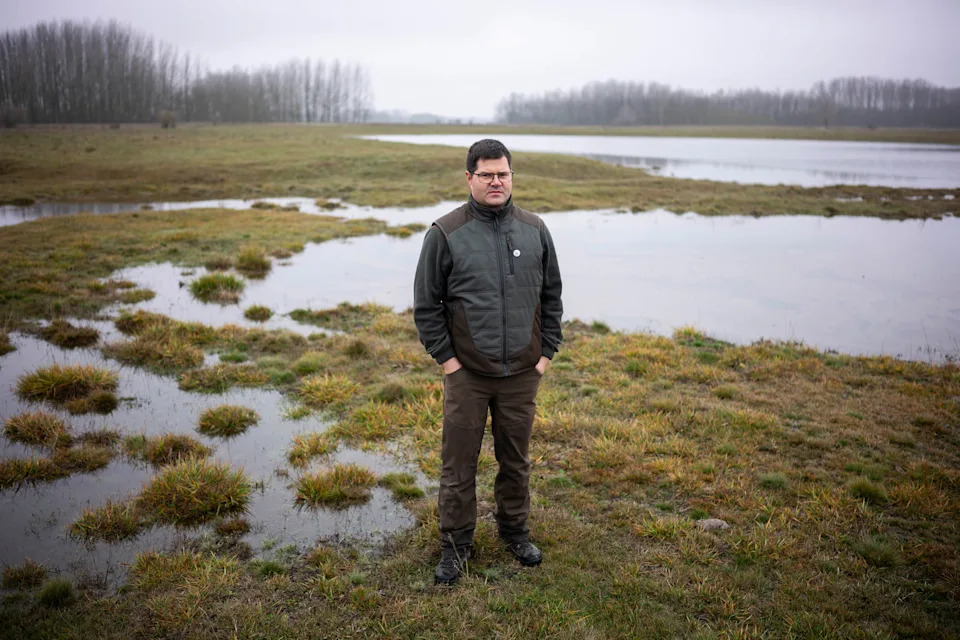
Oszkár Nagyapáti, farmer and member of the volunteer water guardians group, poses for a photo with an artificial lake in Kiskunmajsa, Hungary, Tuesday, July 29, 2025. (AP Photo/Denes Erdos)(ASSOCIATED PRESS)
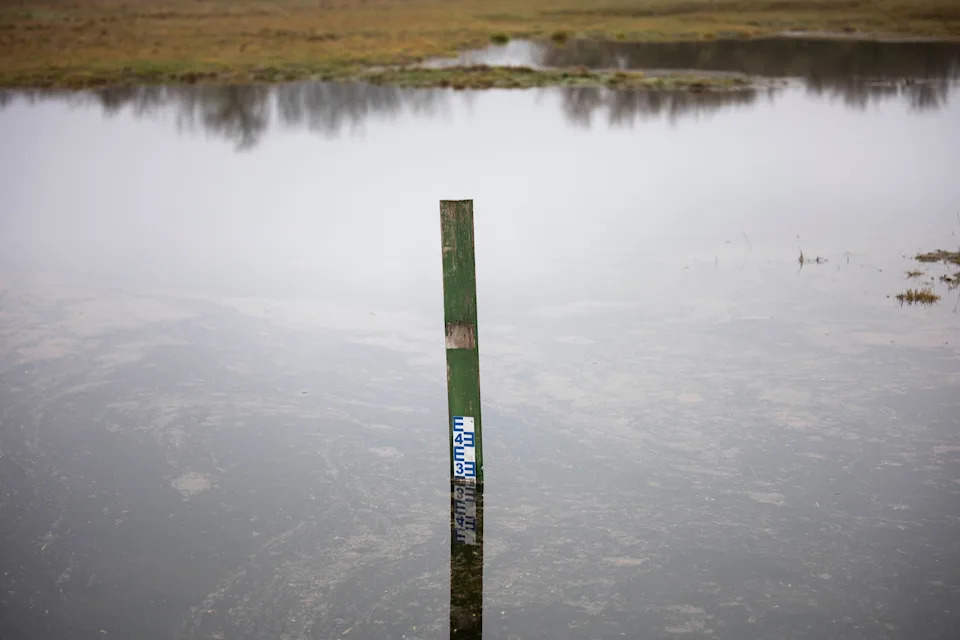
A water gauge is visible in an artificial lake in Kiskunmajsa, Hungary, Tuesday, July 29, 2025. (AP Photo/Denes Erdos)(ASSOCIATED PRESS)
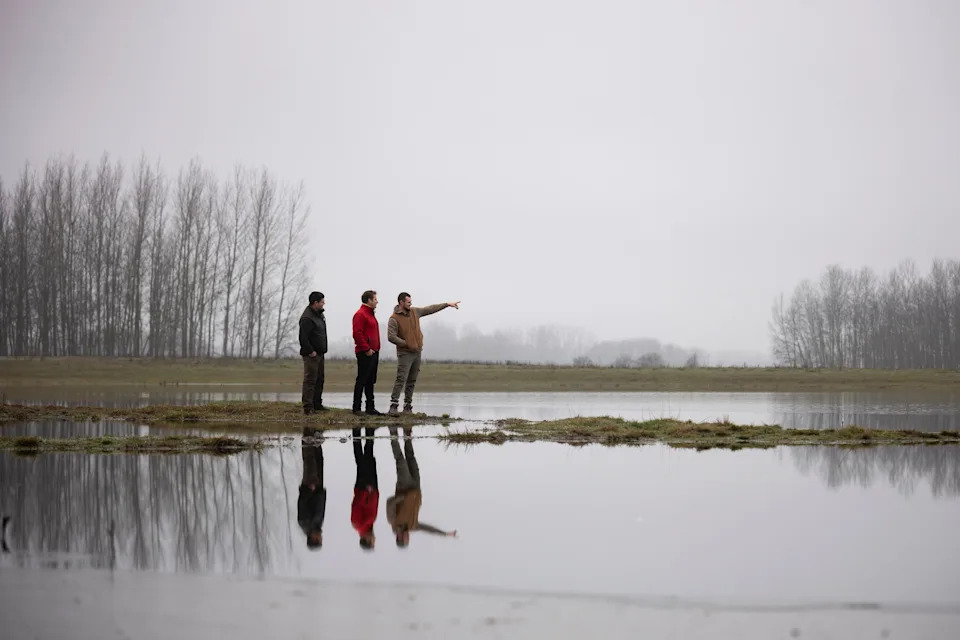
Members of the water guardians group talk next to an artificial lake in Kiskunmajsa, Hungary, Friday, Dec. 12, 2025. (AP Photo/Denes Erdos)(ASSOCIATED PRESS)
Help us improve.