OceanWell proposes placing reverse-osmosis pods about 1,300 feet below the ocean surface to exploit natural pressure and produce up to 60 million gallons of freshwater per day, claiming roughly 40% energy savings versus onshore plants. The subsea approach aims to reduce brine concentration and protect marine life from intake entrainment, and prototypes are being tested in California with a planned trial in Nice, France. Experts say the technology is promising but emphasize that cost, permitting and long-term ecosystem monitoring will determine whether it can be viable at scale. Conservation and wastewater recycling remain top-priority, lower-impact strategies.
Subsea Desalination: Can Deep-Ocean 'Water Farms' Deliver Cleaner, Cheaper Freshwater?
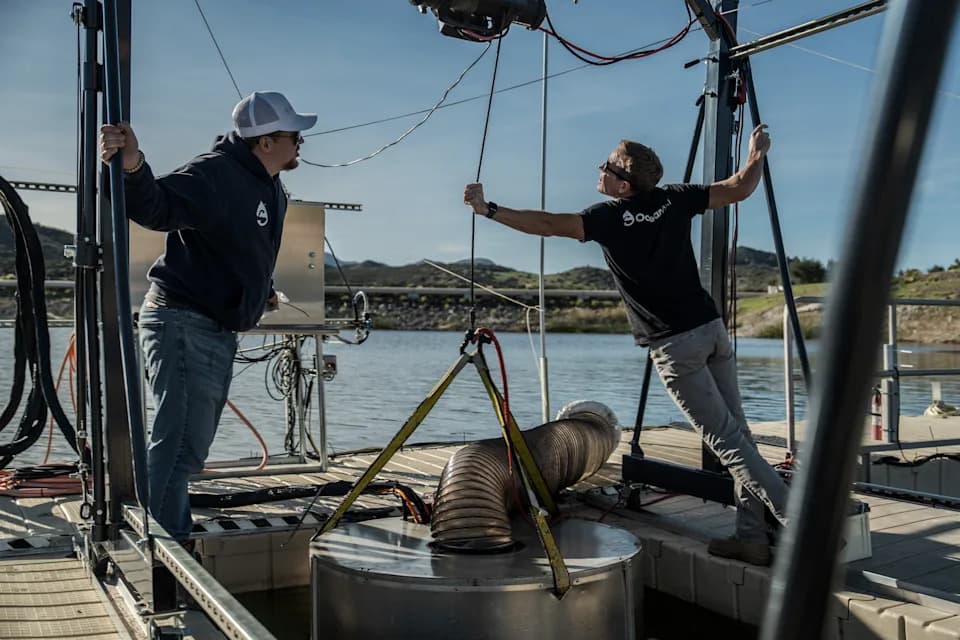
Jaden Gilliam, OceanWell project engineer, left, and Mark Golay, director of engineering projects, lower a prototype reverse osmosis pod into Las Virgenes Reservoir in Westlake Village, Calif., Monday, Dec. 1, 2025. (AP Photo/Annika Hammerschlag)(ASSOCIATED PRESS)
Off the Southern California coast, about four miles from shore, OceanWell proposes a bold alternative to traditional desalination: move reverse-osmosis operations roughly 1,300 feet (400 meters) below the surface to harness natural ocean pressure. The company says its planned Water Farm 1 could produce up to 60 million gallons (nearly 225 million liters) of freshwater per day while cutting energy use by roughly 40% compared with typical onshore plants.
How the Subsea System Would Work
OceanWell's design places reverse-osmosis pods that float just above the seafloor and use ambient ocean pressure to help push seawater through membranes. An underwater pipeline would convey the freshwater to shore. The company says the subsea approach can reduce the energy-intensive portion of desalination, lower the concentration of brine effluent, and prevent many marine organisms from being drawn into intake systems.
Prototype Tests and Planned Trials
Currently, OceanWell operates a prototype at the Las Virgenes Reservoir in Los Angeles County, where the local water district is testing the technology as a supply diversification strategy. OceanWell also has an agreement to test the system in Nice, France. Commercial deployment would require scaling the pods, securing permits, and proving long-term reliability and cost-effectiveness.
“The freshwater future of the world is going to come from the ocean,”
— Robert Bergstrom, CEO, OceanWell
Environmental Promise and Concerns
Traditional desalination raises two main environmental concerns: highly concentrated brine discharged back to the ocean, which can harm seafloor habitats and coral, and large intakes that trap larvae, plankton and other organisms. OceanWell says its subsea screens will exclude even microscopic plankton and that its outflow will be less concentrated than many onshore plants.
Experts welcome innovation but warn that scaling desalination could increase cumulative impacts on already stressed coastal ecosystems. Gregory Pierce, director of UCLA’s Water Resources Group, called deep-sea desalination "promising" environmentally and technically but cautioned that the ultimate test will be whether the technology is economically viable.
California Case Study: Carlsbad
The Carlsbad Desalination Plant, online since 2015, is North America’s largest seawater desalination facility. It can produce up to 54 million gallons (204 million liters) per day and supplies about 10% of San Diego County’s water—roughly 400,000 households. The plant has been controversial: environmental groups challenged its intake and brine-discharge permits, citing impacts on marine life and coastal habitats.
Regulators estimated the facility might entrain small amounts of sea life daily and required mitigation such as wetland restoration. Studies have reported elevated salinity near the discharge but no clear, large-scale biological changes—possibly because the area was already heavily altered by industrial activity. Still, critics emphasize that in California—where an estimated 95% of coastal wetlands have been lost—any additional stress on remaining habitats can be significant.
Energy, Emissions and Alternatives
Desalination is energy intensive: plants worldwide are estimated to produce 500–850 million tons of carbon emissions annually, a scale approaching global aviation. OceanWell’s claimed ~40% energy savings could materially reduce that footprint if validated. Many operators are also pairing desalination with renewable energy or improving membrane efficiency to lower energy demand.
Most experts agree conservation and wastewater recycling should be prioritized because purified wastewater generally uses far less energy than seawater desalination and reduces marine impacts. Water districts such as Las Virgenes are pursuing recycling projects alongside desalination trials to build resilient, lower-impact supplies.
Outlook
Subsea desalination is an intriguing option that could reduce some environmental impacts and energy costs, but major hurdles remain: long-term environmental monitoring, permitting, infrastructure costs and proving reliable performance at scale. As droughts intensify and water systems face growing climate pressure, a portfolio of solutions—conservation, recycling and carefully designed desalination—will likely be needed.
The Associated Press receives support from the Walton Family Foundation for coverage of water and environmental policy. The AP is solely responsible for all content.
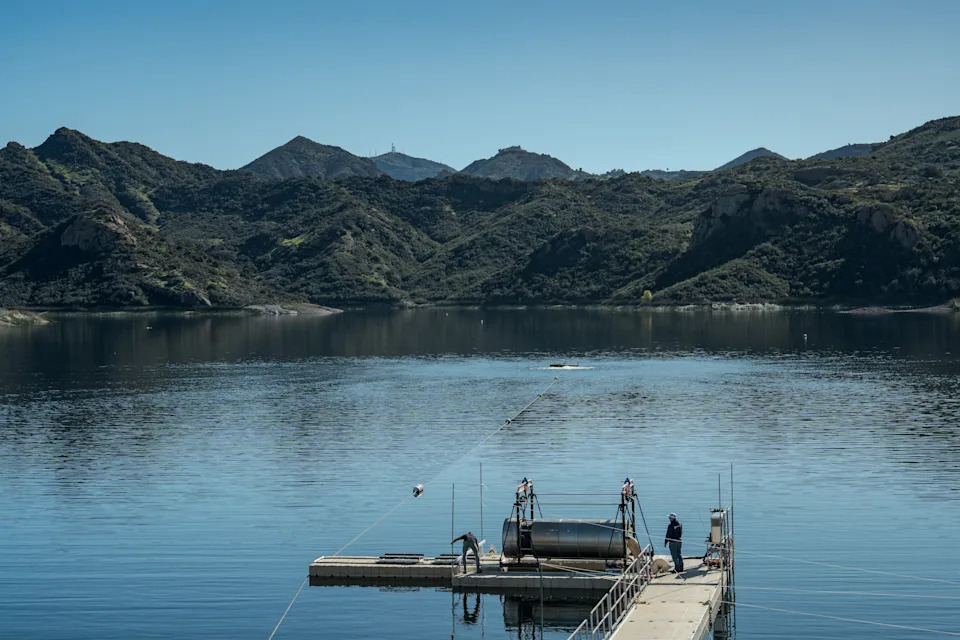
A prototype OceanWell reverse osmosis pod sits on the dock at the Las Virgenes Reservoir in Westlake Village, Calif., Monday, Dec. 1, 2025, where the deep sea desalination technology is being tested. (AP Photo/Annika Hammerschlag)(ASSOCIATED PRESS)
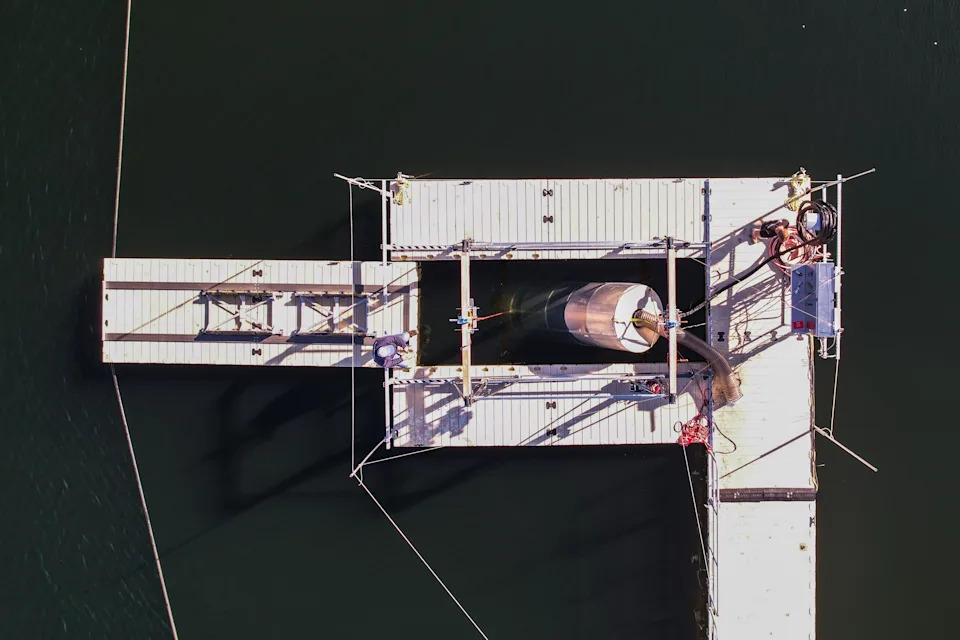
A prototype OceanWell reverse osmosis pod is lowered into Las Virgenes Reservoir in Westlake Village, Calif., Monday, Dec. 1, 2025, where the deep sea desalination technology is being tested. (AP Photo/Annika Hammerschlag)(ASSOCIATED PRESS)

This photo shows the intake screen of OceanWell's prototype reverse osmosis pod that is designed to allow microscopic organisms such as plankton to safely pass through in Westlake Village, Calif., Monday, Dec. 1, 2025. (AP Photo/Annika Hammerschlag)(ASSOCIATED PRESS)

The remains of fire-damaged homes sit in a cleared-out block in the Palisades neighborhood of Los Angeles, Calif., Monday, Dec. 1, 2025. (AP Photo/Annika Hammerschlag)(ASSOCIATED PRESS)
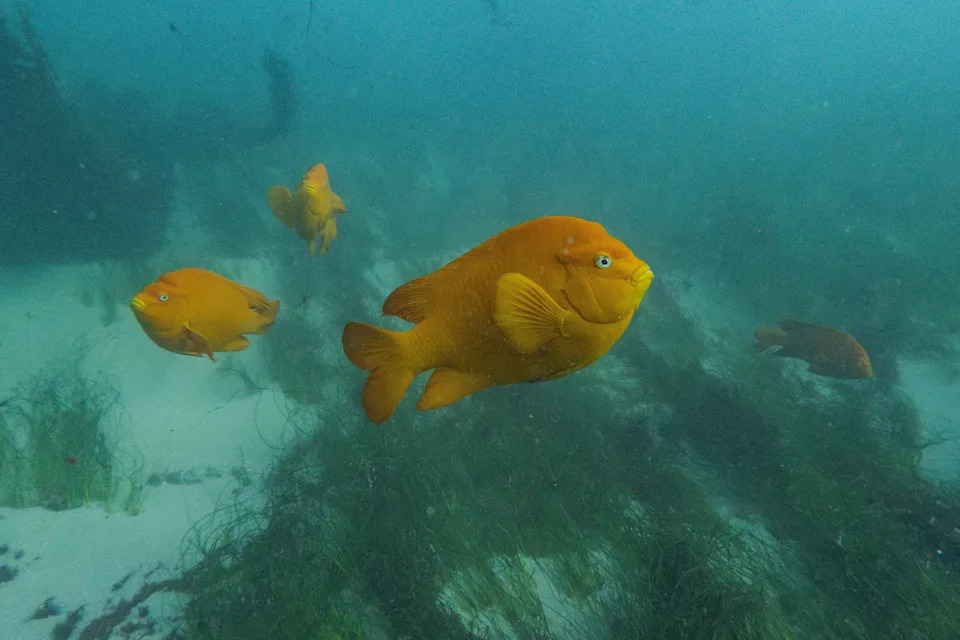
Garibaldi, California’s state fish, which are vulnerable to impingement on desalination intake screens, swim in La Jolla, Calif., Tuesday, Dec. 2, 2025. (AP Photo/Annika Hammerschlag)(ASSOCIATED PRESS)
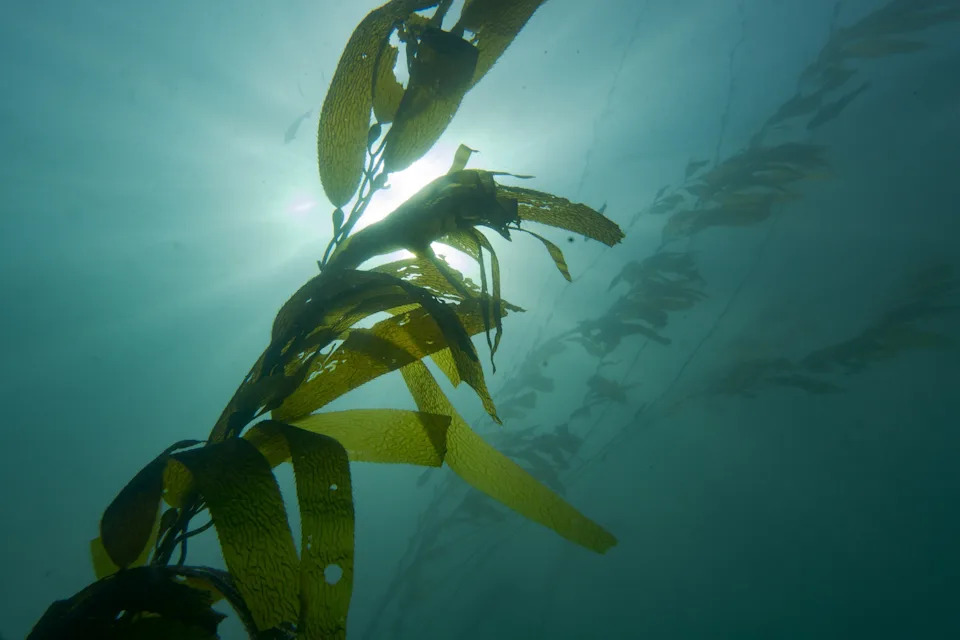
Strands of kelp rise from a thinned kelp forest in La Jolla, Calif., Tuesday, Dec. 2, 2025. (AP Photo/Annika Hammerschlag)(ASSOCIATED PRESS)
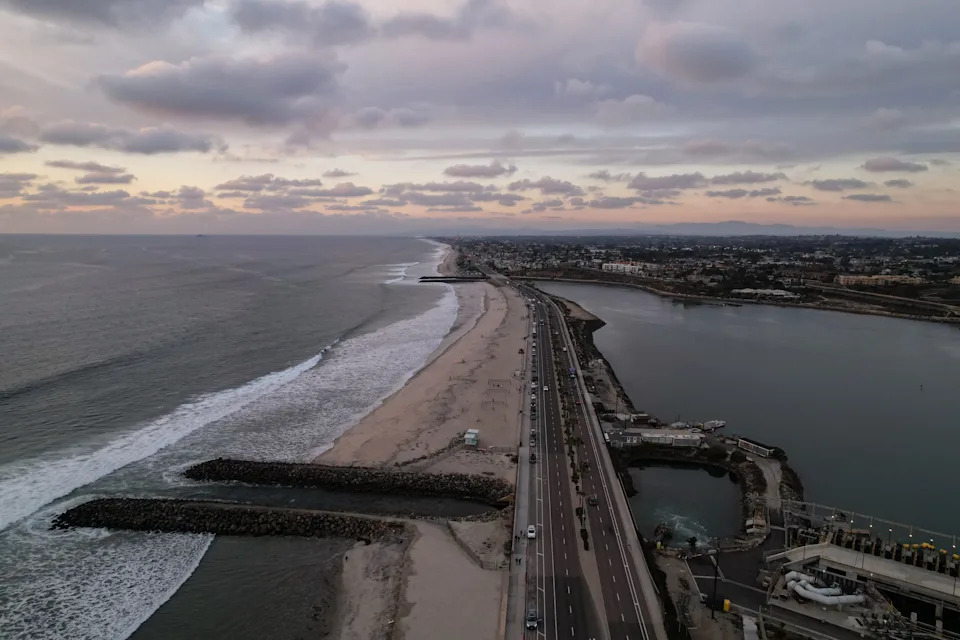
A drone view shows the Carlsbad desalination plant's intake lagoon on the right and the discharge canal on the left, Tuesday, Dec. 2, 2025, in Carlsbad, Calif. (AP Photo/Annika Hammerschlag)(ASSOCIATED PRESS)
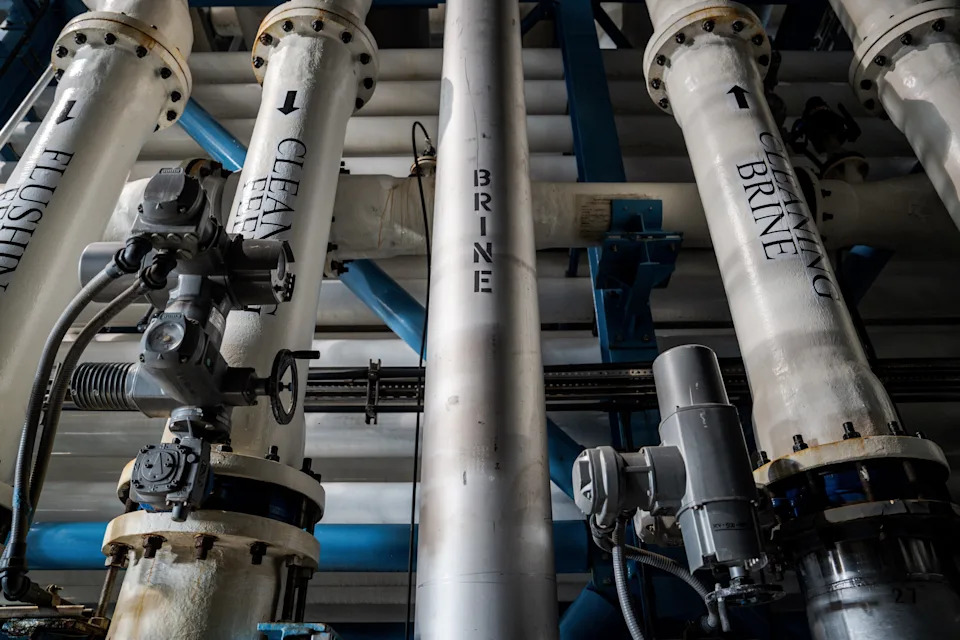
Pipes carrying brine and other substances run through the Carlsbad desalination plant in Carlsbad, Calif., Tuesday, Dec. 2, 2025. (AP Photo/Annika Hammerschlag)(ASSOCIATED PRESS)
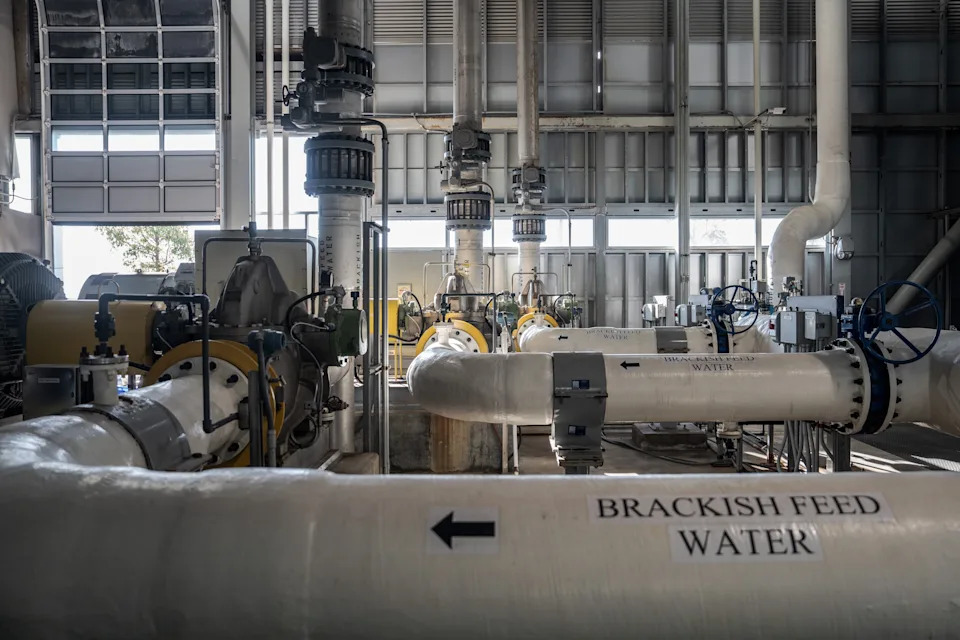
Pipes carrying brackish feed water run through the Carlsbad desalination plant in Carlsbad, Calif., Tuesday, Dec. 2, 2025. (AP Photo/Annika Hammerschlag)(ASSOCIATED PRESS)
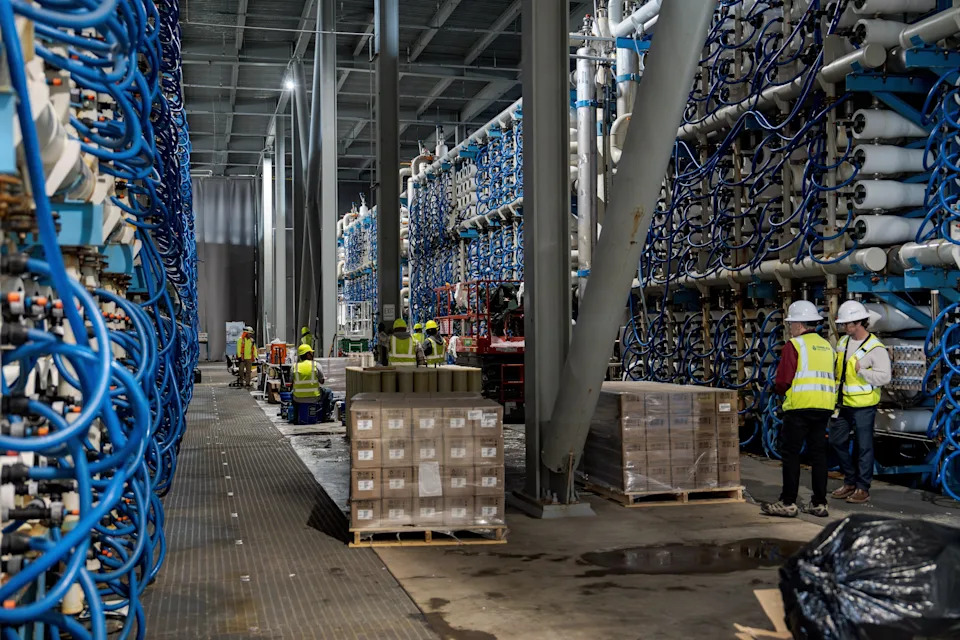
Reverse osmosis machinery operates at the Carlsbad desalination plant in Carlsbad, Calif., Tuesday, Dec. 2, 2025. (AP Photo/Annika Hammerschlag)(ASSOCIATED PRESS)
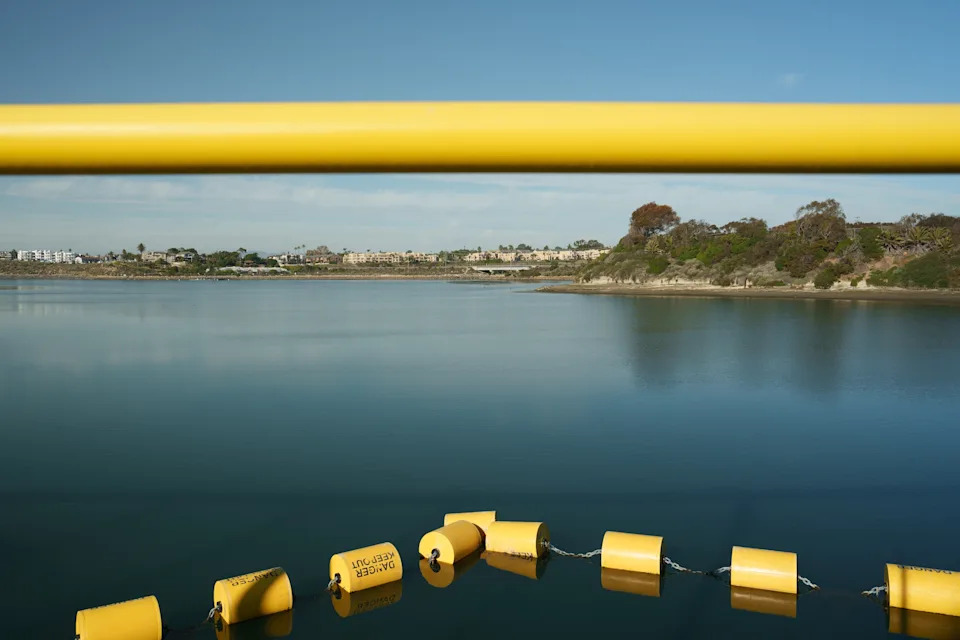
A sectioned-off area of the Agua Hedionda Lagoon marks the seawater intake for the Carlsbad desalination plant in Carlsbad, Calif., Tuesday, Dec. 2, 2025. (AP Photo/Annika Hammerschlag)(ASSOCIATED PRESS)
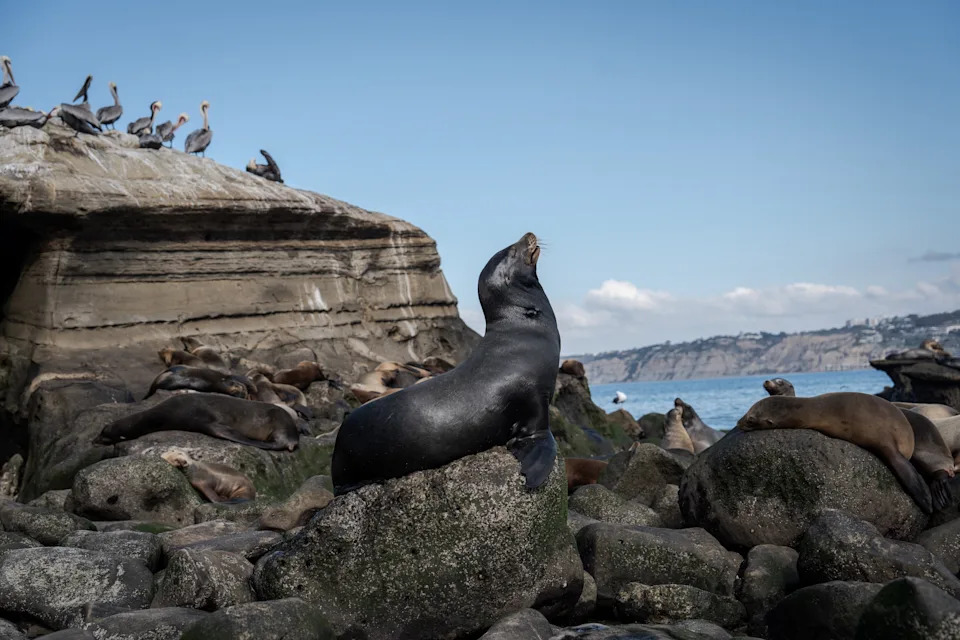
A sea lion basks in the sun in La Jolla, Calif., Wednesday, Dec. 3, 2025. (AP Photo/Annika Hammerschlag)(ASSOCIATED PRESS)
Help us improve.