The recent nationwide protests in Iran have rapidly escalated into a violent crackdown that recalls the disorder around the 1979 Islamic Revolution. Authorities have revived past rhetoric and footage — labeling some detainees "mohareb" (enemies of God) and broadcasting archival unrest tied to the MEK — while imposing internet blackouts and reported live fire. The unrest began Dec. 28 over a collapsing rial (about 1.4 million to $1) and widened despite preliminary reforms by President Masoud Pezeshkian; the parallels with 1979 raise the prospect of prolonged turmoil.
Iran's Surge of Protests Echoes 1979 Revolution: Widespread Demonstrations, Harsh Crackdown
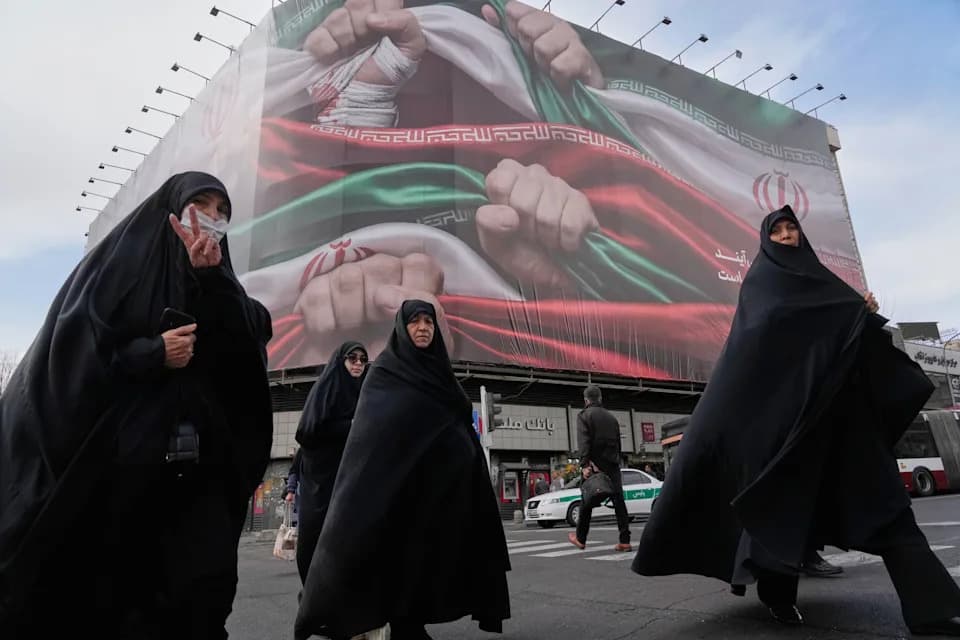
Women cross a street under a huge banner showing hands firmly holding Iranian flags as a sign of patriotism, as one of them flashes the victory sign, in Tehran, Iran, Wednesday, Jan. 14, 2026. (AP Photo/Vahid Salemi)(ASSOCIATED PRESS)
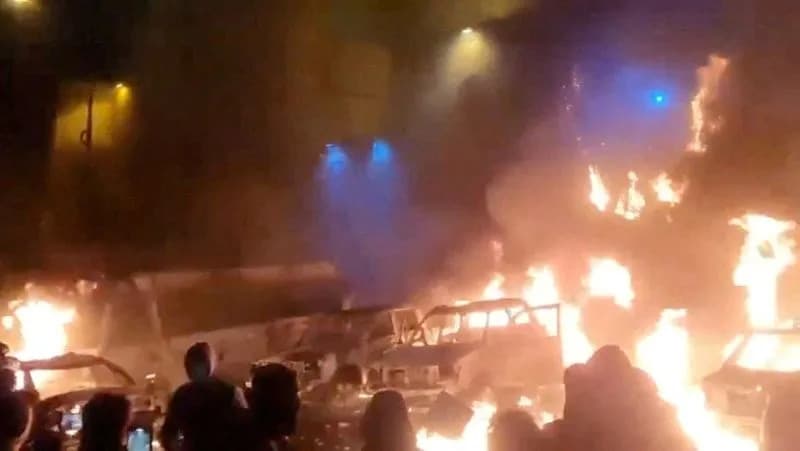
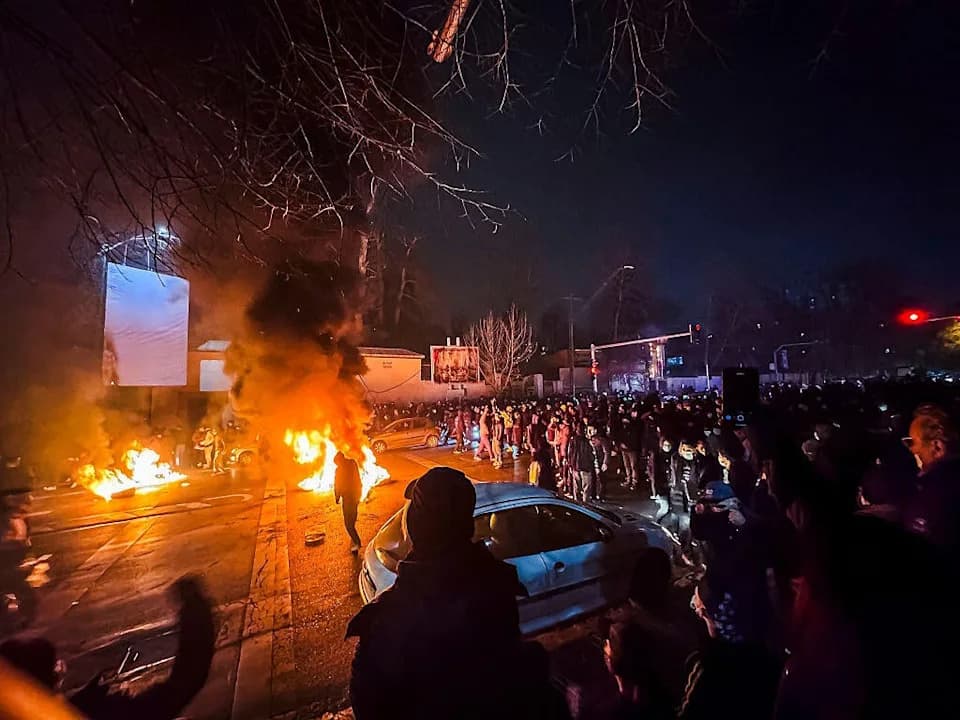
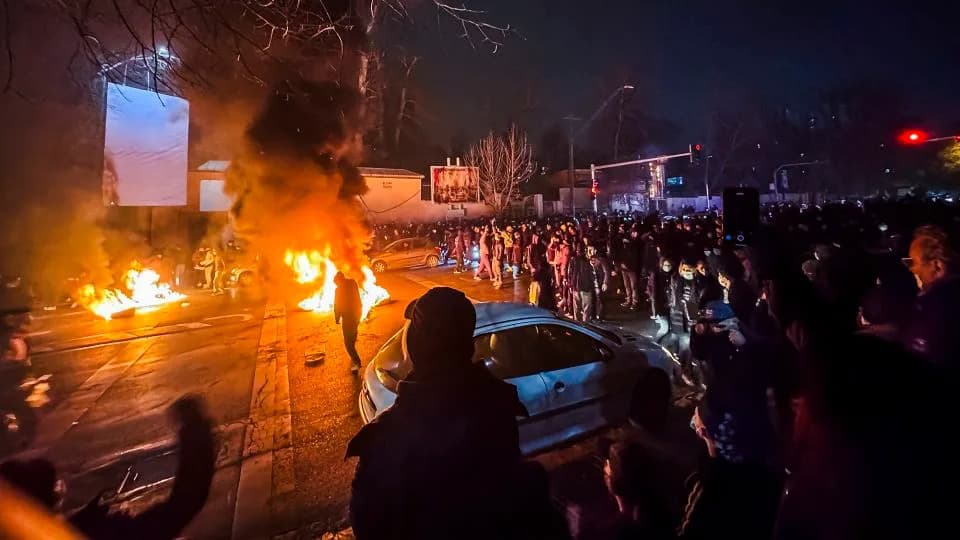
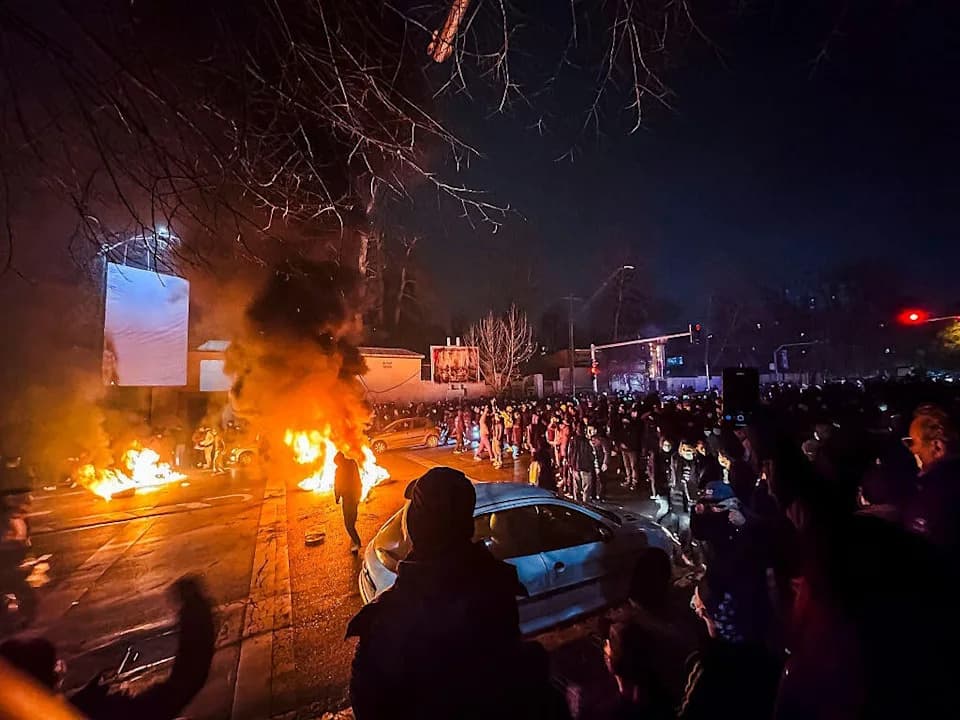
In a matter of days, nationwide demonstrations challenging Iran's theocratic system have escalated into a violent crackdown that, by some accounts, eclipses casualty figures from decades of earlier unrest in the country.
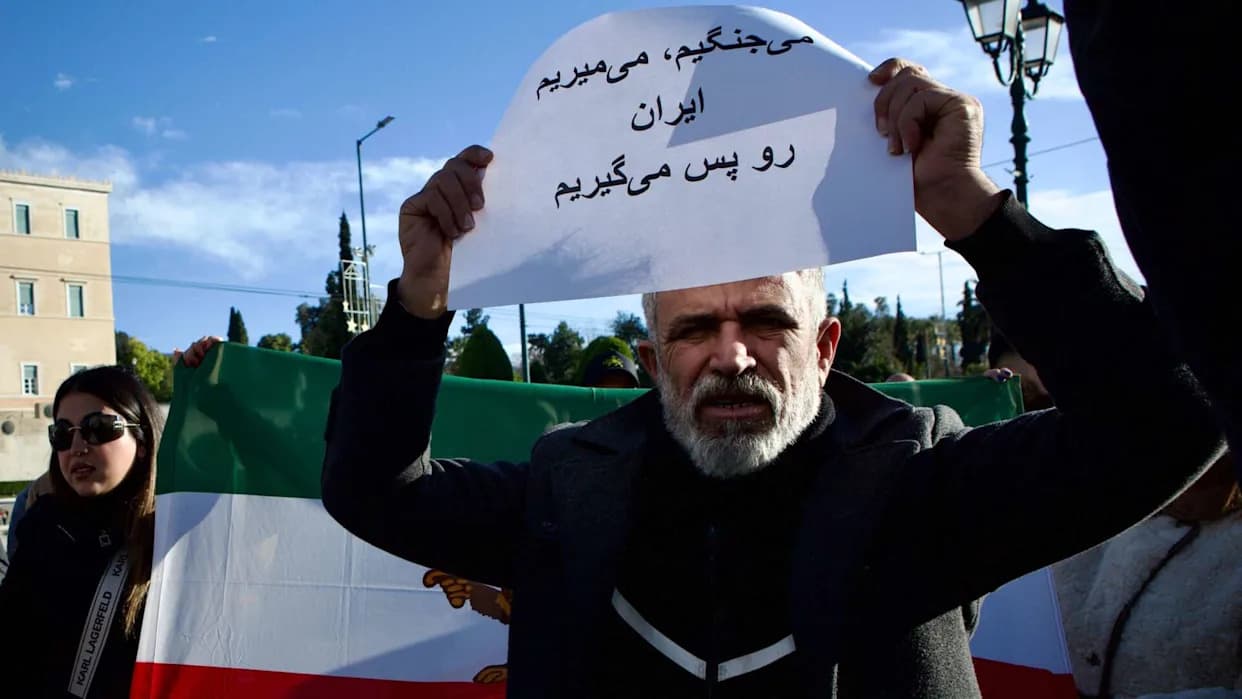
The scale and intensity of the unrest have drawn frequent comparisons to the chaotic months surrounding the 1979 Islamic Revolution, raising questions about the durability of Iran's clerical leadership and its readiness to respond with force.
Historical Resonances
In the months before the 1979 revolution, Iran experienced sustained street battles between forces loyal to the U.S.-backed Shah Mohammad Reza Pahlavi and mass demonstrators. Attacks targeted cinemas, nightclubs, U.S. interests, officials and minority communities. Each new funeral for slain protesters helped expand the movement until millions filled the streets and the ailing Shah fled the country.
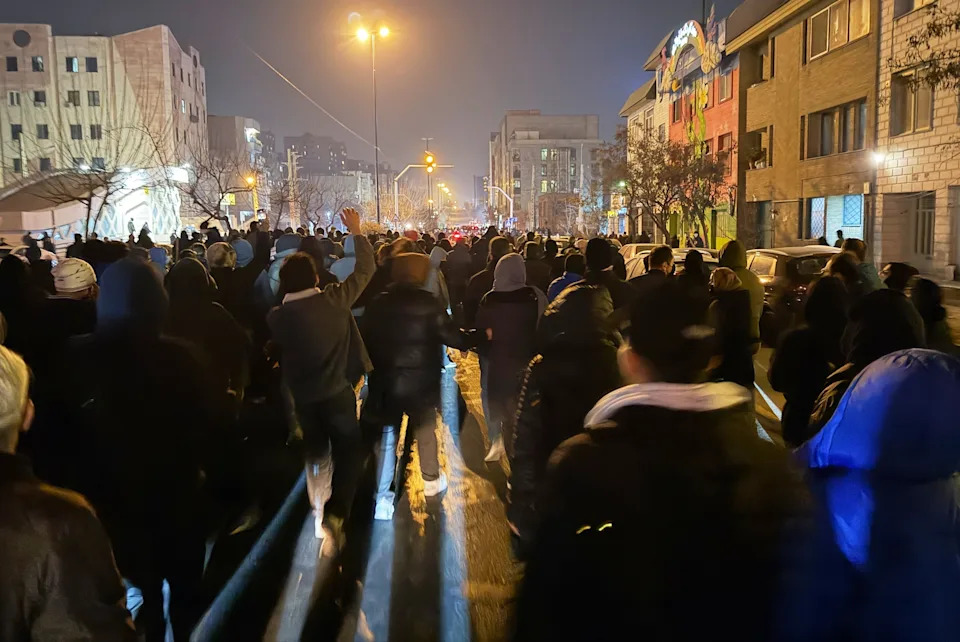
In this photo obtained by The Associated Press, Iranians attend an anti-government protest in Tehran, Iran, Thursday, Jan. 8, 2026. (UGC via AP)(ASSOCIATED PRESS)
Ayatollah Ruhollah Khomeini, then in exile in France, returned and consolidated power under the doctrine of Velayat-e Faqih (Guardianship of the Jurist). What followed were mass executions, a protracted war with Iraq, strict social rules such as the imposition of the mandatory hijab, and decades of fraught relations with the United States — notably the 1979 U.S. Embassy seizure and the 444-day hostage crisis.
Signs from the Present
Officials in Tehran have invoked those earlier years in recent days. State television has aired archival footage from the early 1980s, and authorities have revived legal and rhetorical tools from that era. Some detainees from protests that began Dec. 28 have been described by prosecutors as "mohareb" — literally "enemies of God" — a charge that can carry the death penalty and that was used in the mass executions of 1988.
Pro-government crowds have also chanted slogans from the 1980s such as "Marg bar monafegh!" — "Death to the Hypocrites!" — historically directed at the MEK (Mujahedeen-e-Khalq).
What Sparked the Current Wave?
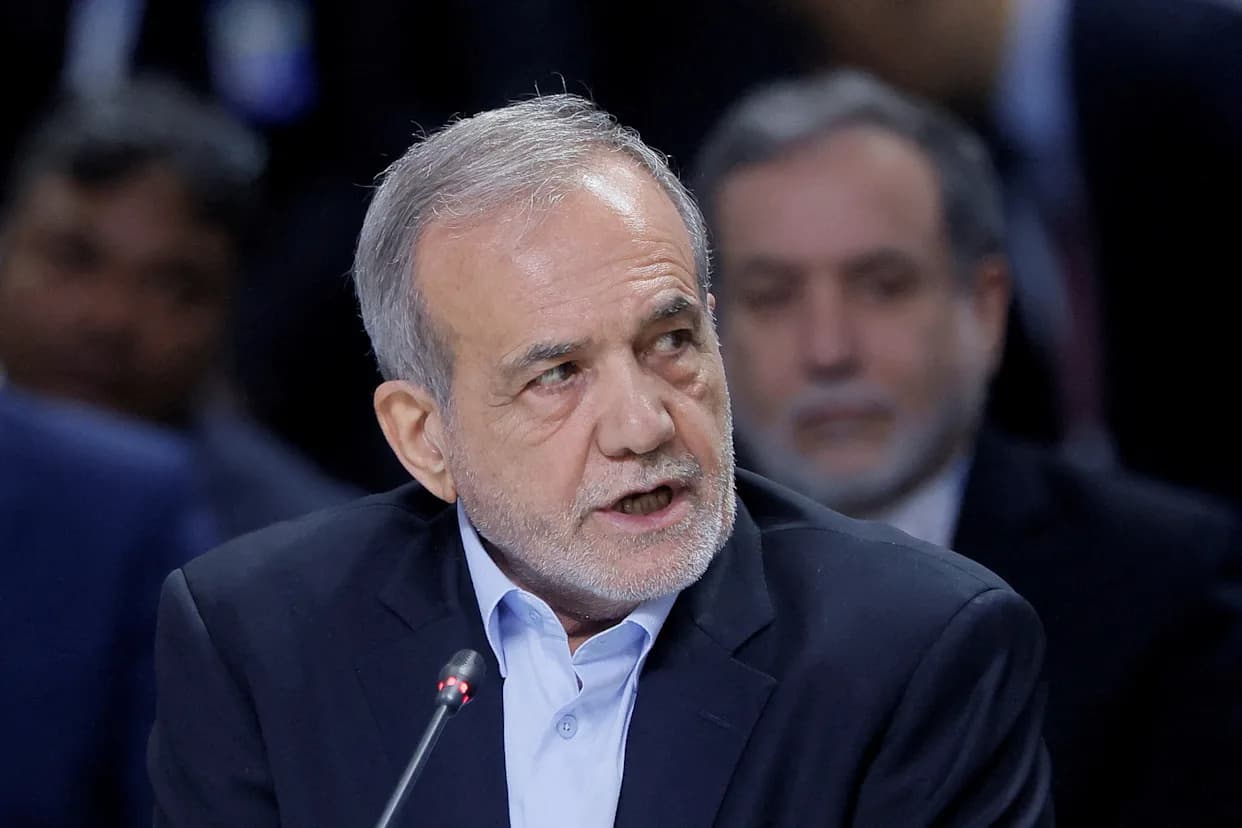
These protests initially centered on economic grievances. Traders and ordinary citizens protested a collapsing rial, which has reportedly fallen to about 1.4 million to $1 — compared with roughly 70 to $1 around the time of the 1979 revolution. Authorities moved briefly to respond: reformist President Masoud Pezeshkian's government revised a subsidized currency-exchange system long plagued by corruption allegations and proposed modest cash assistance to households to offset food price inflation.
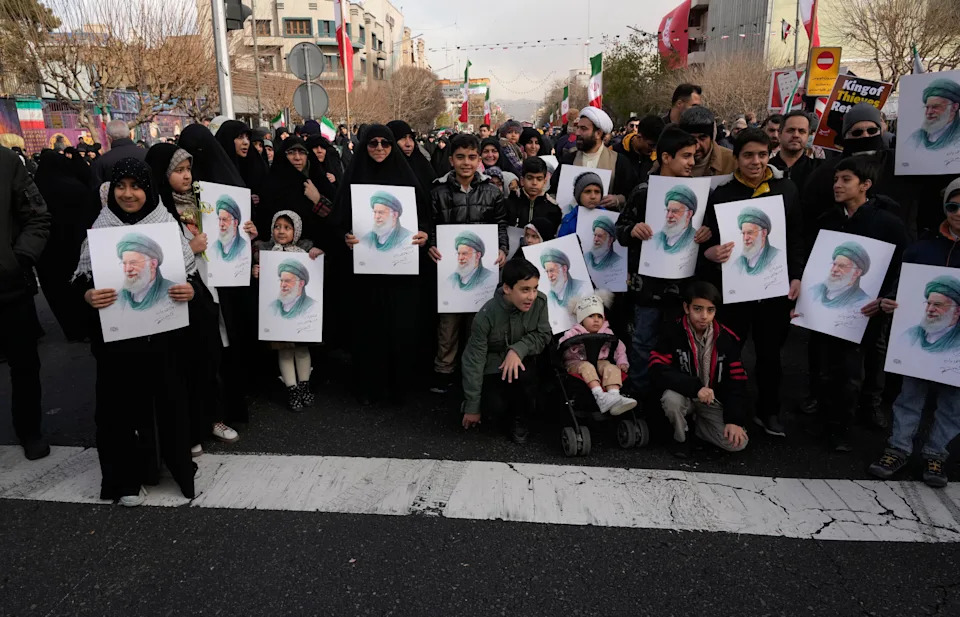
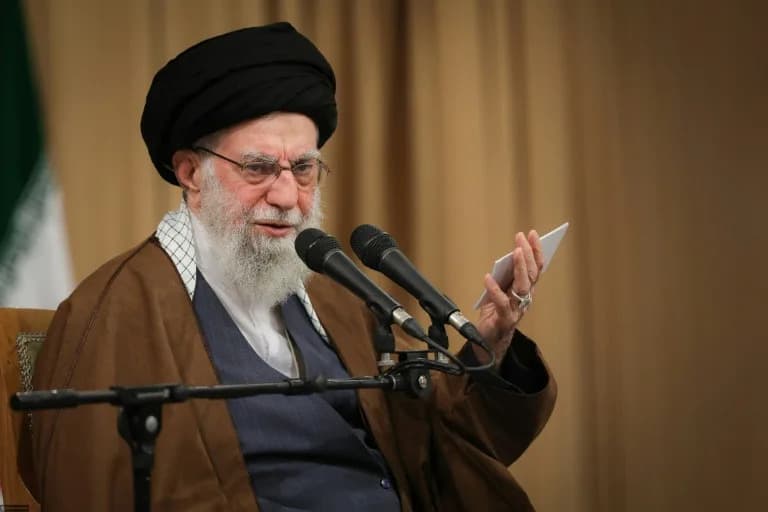
People hold posters of the Iranian Supreme Leader Ayatollah Ali Khamenei during a funeral ceremony for a group of security forces, who were killed during anti-government protests, in Tehran, Iran, Wednesday, Jan. 14, 2026. (AP Photo/Vahid Salemi)(ASSOCIATED PRESS)
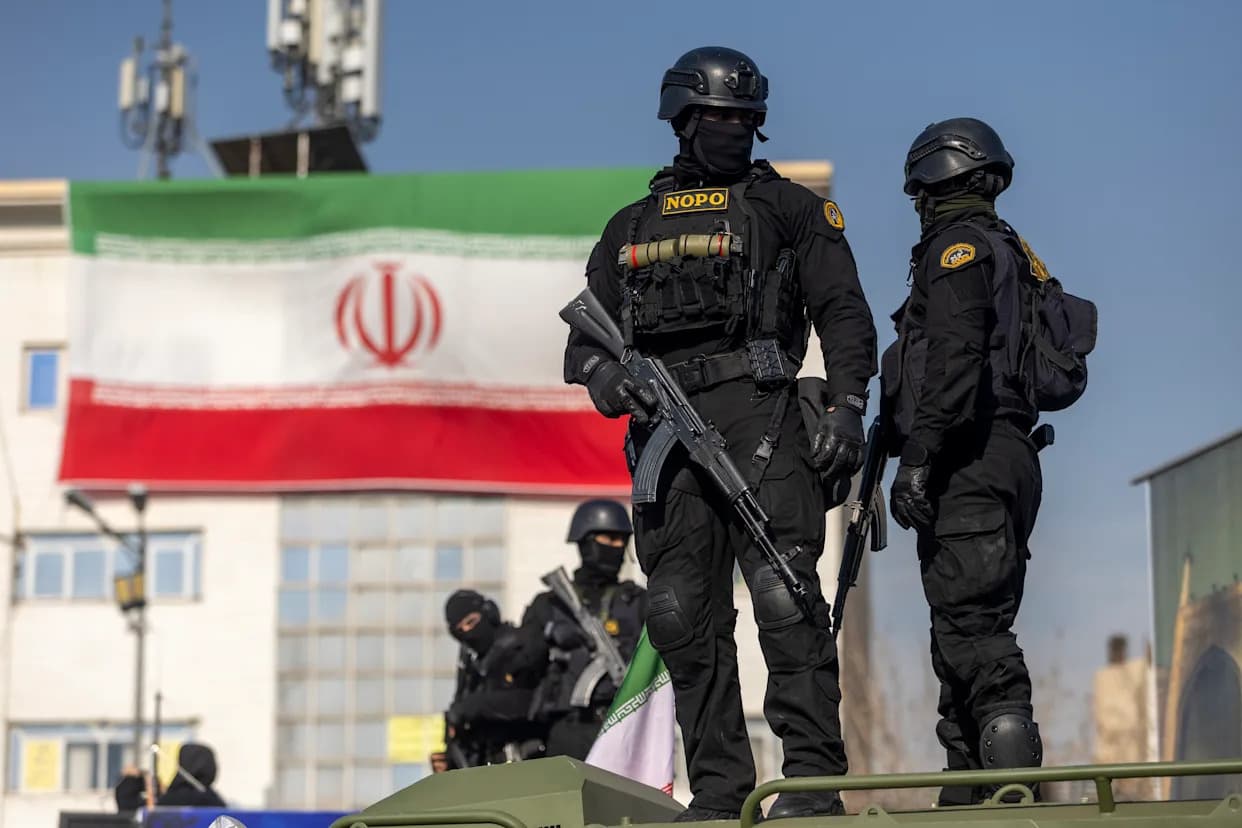
But once demonstrations swelled, the theocratic leadership reverted to a familiar playbook: internet access was restricted, some international telephone links were severed, and security forces — according to activists, survivors and online footage — used live ammunition and other lethal means to disperse crowds.
Scale, Scope and Unanswered Questions
Observers have struggled to independently verify the full scope of the protests and the level of violence because Iran tightly restricts journalists and deliberately throttles communications during unrest. Several factors may help explain why this round of unrest has been particularly bloody: its economic roots cut across political, ethnic and religious lines; reports indicate some actions targeted strategic and security sites; and authorities publicly warned gatherings were illegal and signaled readiness to use force.
There are important differences between today and 1979, including a different international context and tools. Western pressure and sanctions are longstanding, and outside governments have condemned Tehran's response. Still, the parallels with the late 1970s — revived slogans, archival footage and legal language — suggest the leadership views the unrest as an existential threat and is drawing on historical precedents in its response.
Whether the theocracy can contain the unrest without provoking wider upheaval remains uncertain. For now, the echoes of 1979 underscore both the depth of public grievances and the high stakes facing Iran's rulers.
Reporting on the protests and casualties remains constrained by official restrictions and communications blackouts that limit independent verification.
Help us improve.