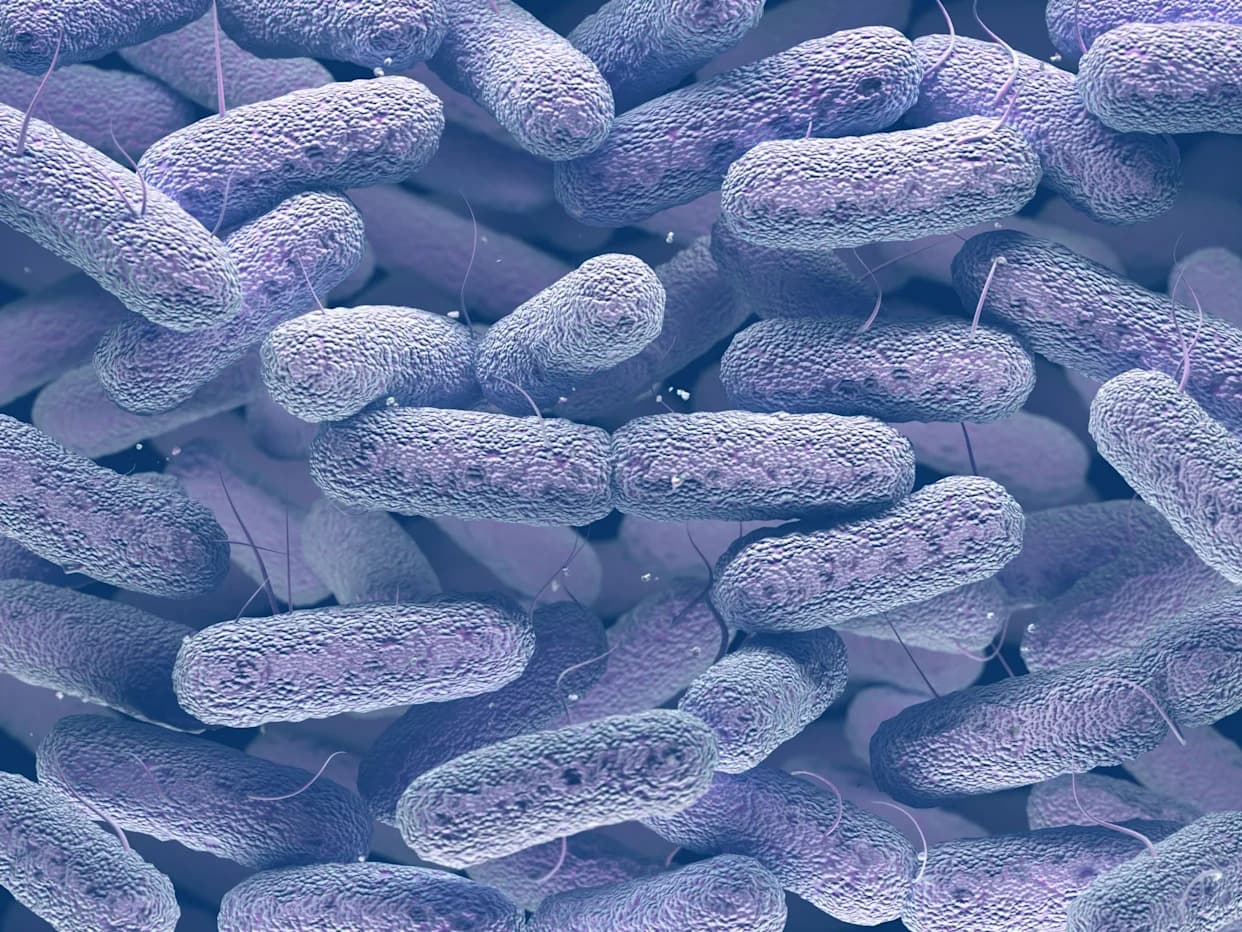
New field research in Nature Communications shows that viral infections of the cyanobacterium Prochlorococcus drive nutrient recycling in a meters-thick, oxygen-rich ribbon in the subtropical Atlantic. Viral lysis releases organic matter that bacteria convert to ammonium, which then stimulates further photosynthesis and growth. This study offers direct evidence of the viral shunt operating at ecosystem scale, with implications for oxygen production, carbon cycling and marine food webs.
How Marine Viruses Power an Ocean Food Web: Field Evidence for the Viral Shunt
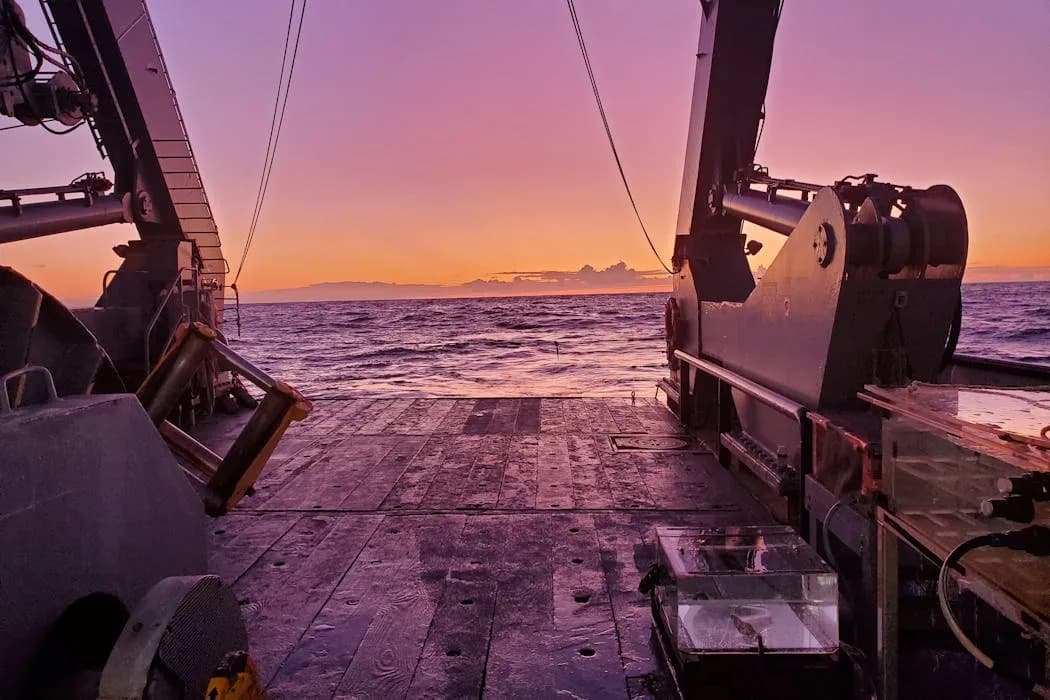
A research ship sails in the Atlantic Ocean, where scientists are studying the roles of marine viruses. SW Wilhelm
Virus often conjures images of disease and outbreaks, but in the open ocean many viruses play vital, constructive roles. A new field study published in Nature Communications reveals how viral infections help recycle nutrients, fuel photosynthesis and sustain a persistent ribbon of oxygen-rich water in the subtropical Atlantic.
Researchers led by Naomi Gilbert and Daniel Muratore, with co-authors Steven Wilhelm (University of Tennessee) and Joshua Weitz (University of Maryland), sampled a meters-thick band of oxygenated surface water in part of the Sargasso Sea. There, the tiny cyanobacterium Prochlorococcus dominates photosynthesis, with densities of roughly 50,000 to over 100,000 cells per millilitre.
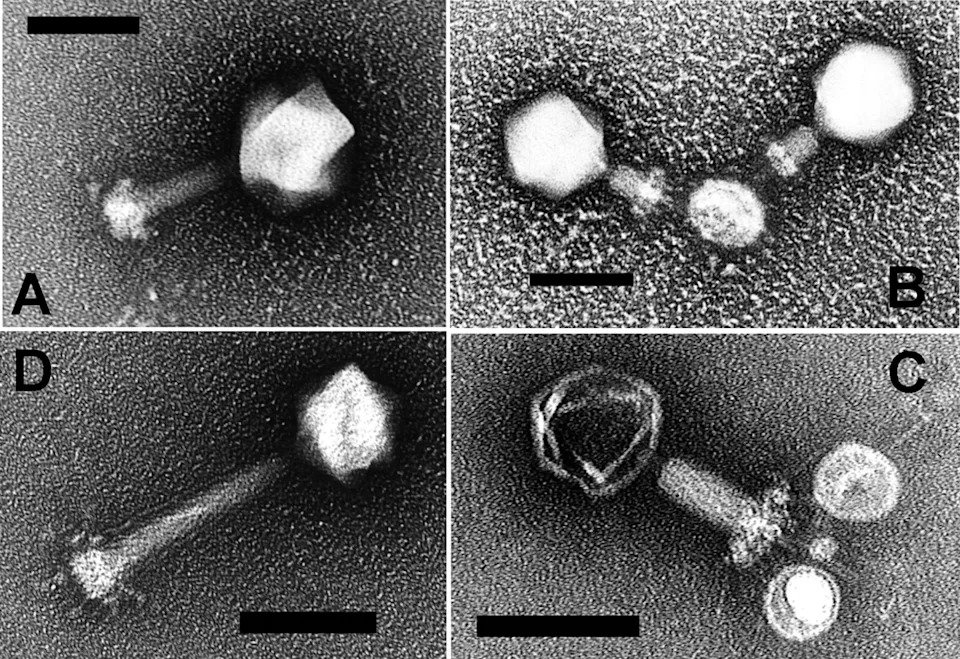
An electron microscope view shows examples ofProchlorococcusmyoviruses. Images A and D show different viruses with their tails. In B and C, the tail is contracted. The black scale bar indicates a length of 100 nanometers.MB Sullivan, et al., 2005, PLOS One,CC BY
Using community RNA sequencing to capture what viruses and microbes were actively doing, the team found that viral infection rates in this oxygen-rich ribbon were about four times higher than in adjacent waters where cyanobacterial growth is slower. Many Prochlorococcus cells were actively infected and lysed (broken open) by viruses, releasing dissolved and particulate organic matter into the surrounding seawater.
Bacteria rapidly took up that released organic material, respired carbon and regenerated nitrogen in the form of ammonium. The regenerated ammonium appeared to stimulate additional Prochlorococcus photosynthesis and growth, creating a positive feedback loop: viral lysis released nutrients that bacteria recycled into forms the cyanobacteria could use, helping to sustain high primary production and the oxygenated band.
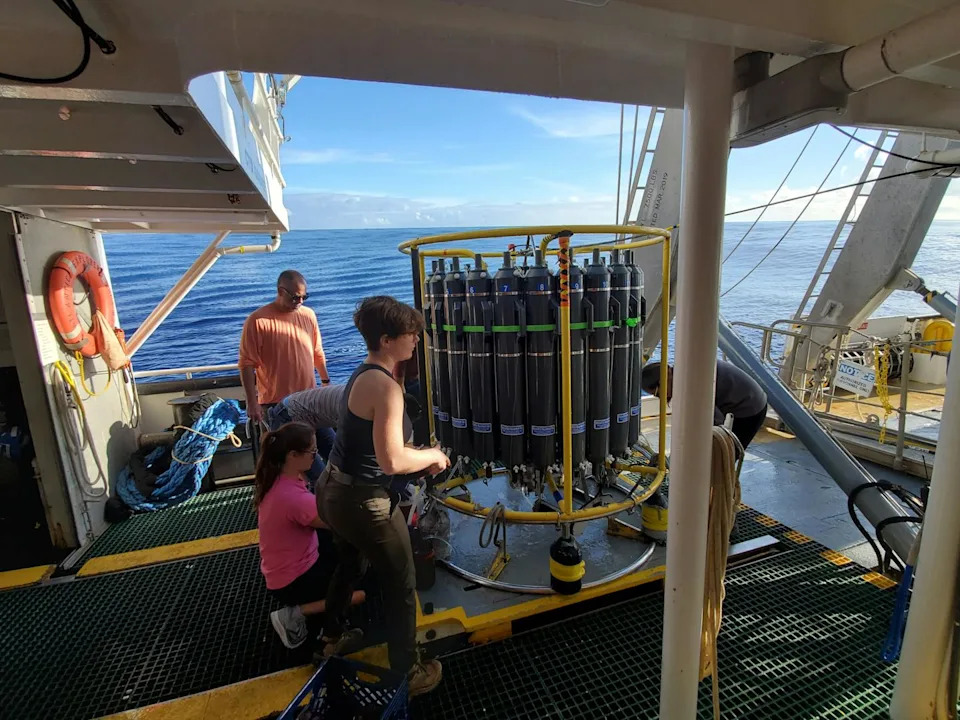
Scientists aboard a National Science Foundation research expedition in the open Atlantic in 2019 prepare equipment to collect water samples at different depths to analyze the activity of marine viruses. SW Wilhelm
This process—known as the viral shunt—diverts carbon and nutrients away from larger consumers and back into microbial and dissolved pools. The new work provides direct, field-based evidence that the viral shunt operates at ecosystem scale and influences oxygen production and carbon and nutrient cycling in the ocean.
The results have broader implications: marine viruses affect biogeochemical cycles, the efficiency of food webs, and pathways for carbon storage in the deep ocean. Understanding these microbial interactions is increasingly important as oceans and climates change.
Study Support and Credits
The study was enabled by an open-ocean expedition supported by the National Science Foundation. Funding acknowledgements include the National Science Foundation, the National Institute of Environmental Health Sciences, the Simons Foundation, the Allen Family Philanthropies, and the Blaise Pascal Chair of the Île-de-Paris Region.
Authors: Naomi Gilbert, Daniel Muratore, Steven Wilhelm (University of Tennessee), Joshua Weitz (University of Maryland), and an international team.
Help us improve.