
The CSIRO deployed an autonomous ocean profiling float toward Totten Glacier but it was swept under the Denman Glacier and Shackleton Ice Shelf and remained trapped for nine months. While unable to transmit during entrapment, the float recorded 195 temperature and salinity profiles and logged ice‑shelf contact points that let researchers reconstruct its path. Results show Shackleton is currently stable in the sampled area, but Denman is experiencing basal warming and melting — a single Denman collapse could raise global sea levels by nearly five feet. The findings, published in Science Advances (Dec 2025), represent the first continuous oceanographic record beneath an East Antarctic ice shelf.
Lost CSIRO Float Resurfaces With Rare Under‑Ice Data — Denman Glacier Found Vulnerable

ice and water in Antarctica - Z-J-C/Shutterstock
An Australian national science agency, CSIRO, deployed a free‑floating ocean profiling instrument toward the Totten Glacier that was unexpectedly diverted and trapped beneath the Denman Glacier and the Shackleton Ice Shelf. What began as a navigational mishap turned into a rare scientific opportunity: after nine months beneath the ice the float resurfaced carrying unique oceanographic measurements from a region scientists rarely sample directly.
The autonomous float records temperature and salinity as it rises and falls through the water column and is programmed to surface every 10 days to transmit data via satellite. While trapped, the instrument could not reliably surface to send data, but it continued logging profiles from the seafloor to the base of the ice shelf. In total the float collected 195 temperature and salinity profiles during its entrapment.
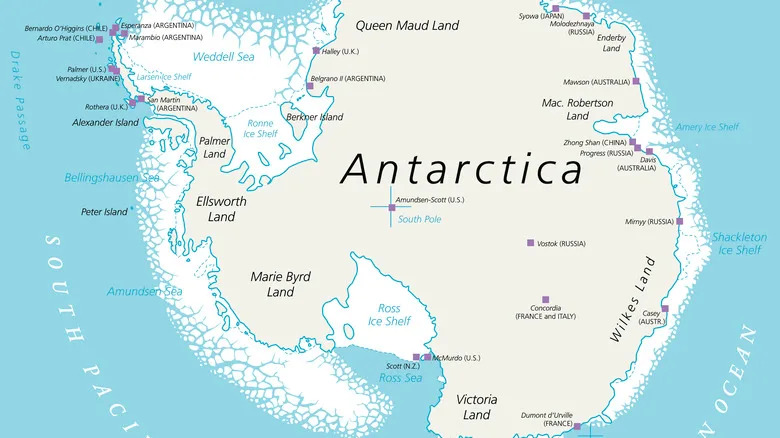
a map of Antarctica - Peterhermesfurian/Getty Images
How Scientists Reconstructed the Float's Path
Although the float could not transmit data while under the ice, it left one crucial clue: each time it attempted to surface it contacted the underside of the ice shelf, recording the ice thickness at that moment. Researchers matched these contact points with satellite measurements of ice‑shelf thickness and used that correlation to reconstruct the float's likely trajectory and assign geographic locations to the collected profiles.
Key Findings
Analysis of the recovered measurements shows contrasting conditions beneath the two ice shelves. The Shackleton Ice Shelf did not exhibit signs of being undermined by unusually warm water in the sampled region. By contrast, the data reveal comparatively warm water reaching the base of the Denman Glacier, driving basal melting. If Denman were to lose a large portion of its ice, it could raise global sea levels by nearly five feet on its own — making identification of such vulnerable sites a high priority.
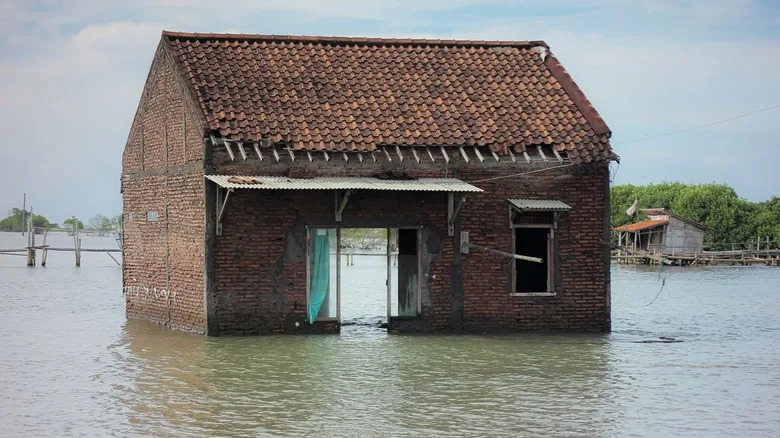
a flooded house due to rising sea levels - Abieza reswara/Shutterstock
This mission produced the first continuous line of oceanographic observations beneath an East Antarctic ice shelf, filling a major data gap. Because East Antarctica contains far more ice than West Antarctica, new measurements from this sector are especially important for improving sea‑level forecasts.
Implications And Next Steps
Scientists say the serendipitous success demonstrates both the potential and the risks of deploying autonomous floats to remote, hard‑to‑reach cavities beneath ice shelves. Expanded, targeted deployments could provide critical baseline data to monitor ongoing changes in ocean circulation, ice‑shelf stability, and the contribution of Antarctic ice to future sea‑level rise.
The results from this mission were published in Science Advances in December 2025 in the paper 'Circulation and ocean–ice shelf interaction beneath the Denman and Shackleton Ice Shelves.' The recovered dataset now strengthens Antarctic research and provides a valuable reference for future monitoring.


