Astronomers observed the Sun-like star J0705+0612 dim by roughly a factor of 40 between Sept 2024 and May 2025. Follow-up spectroscopy with Gemini South’s GHOST instrument revealed a metal-rich cloud (iron, calcium) orbiting an unseen companion at least a few times Jupiter’s mass. The cloud spans about 120 million miles and now lies ≈1.2 billion miles from the star; researchers suggest it may be debris from a planetary collision or part of a circumsecondary/circumplanetary disk.
Astronomers Spot Metal-Rich Wind Cloud Orbiting a Mysterious Companion Near a Sun-Like Star
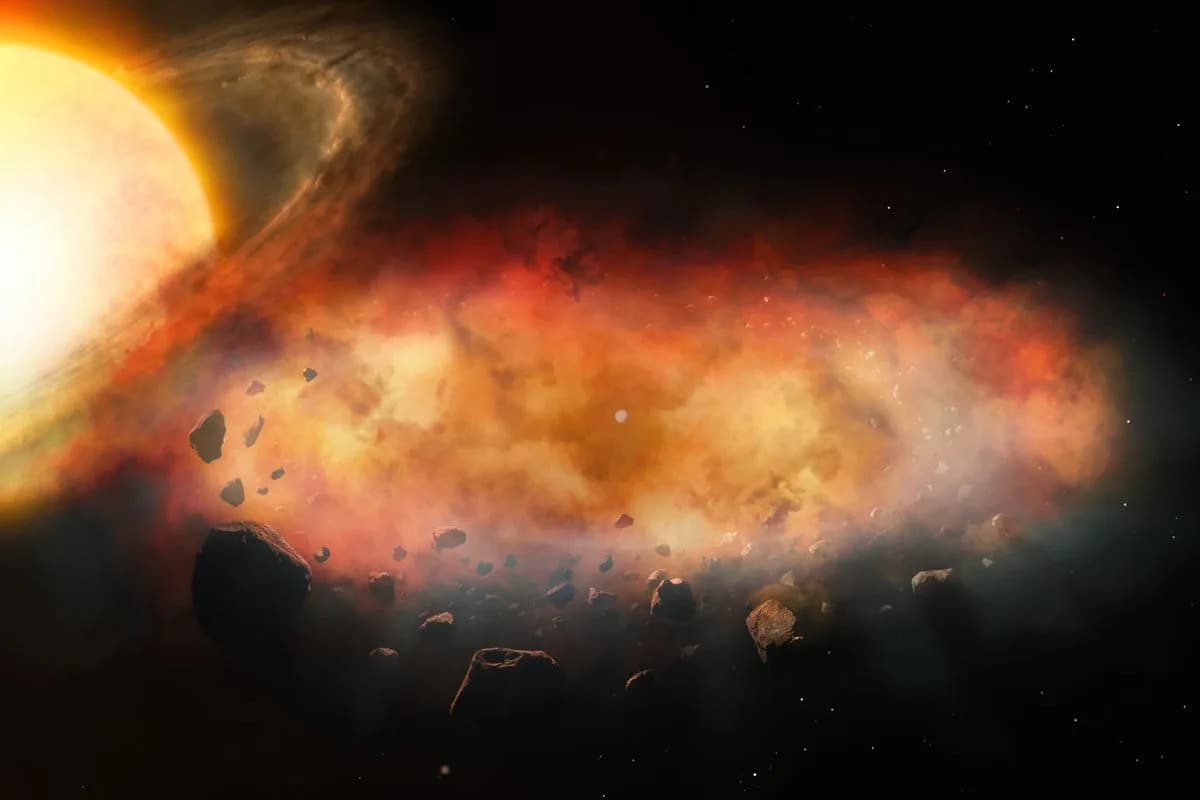
Astronomers just found a ‘mystery object’ surrounded by a metallic wind cloud
A team of astronomers has detected a vast, metal-rich cloud of gas and dust orbiting an unidentified companion object around the Sun-like star J0705+0612, roughly 3,000 light-years from Earth. The discovery followed an extraordinary dimming event: the star’s brightness dropped by about a factor of 40 between September 2024 and May 2025.
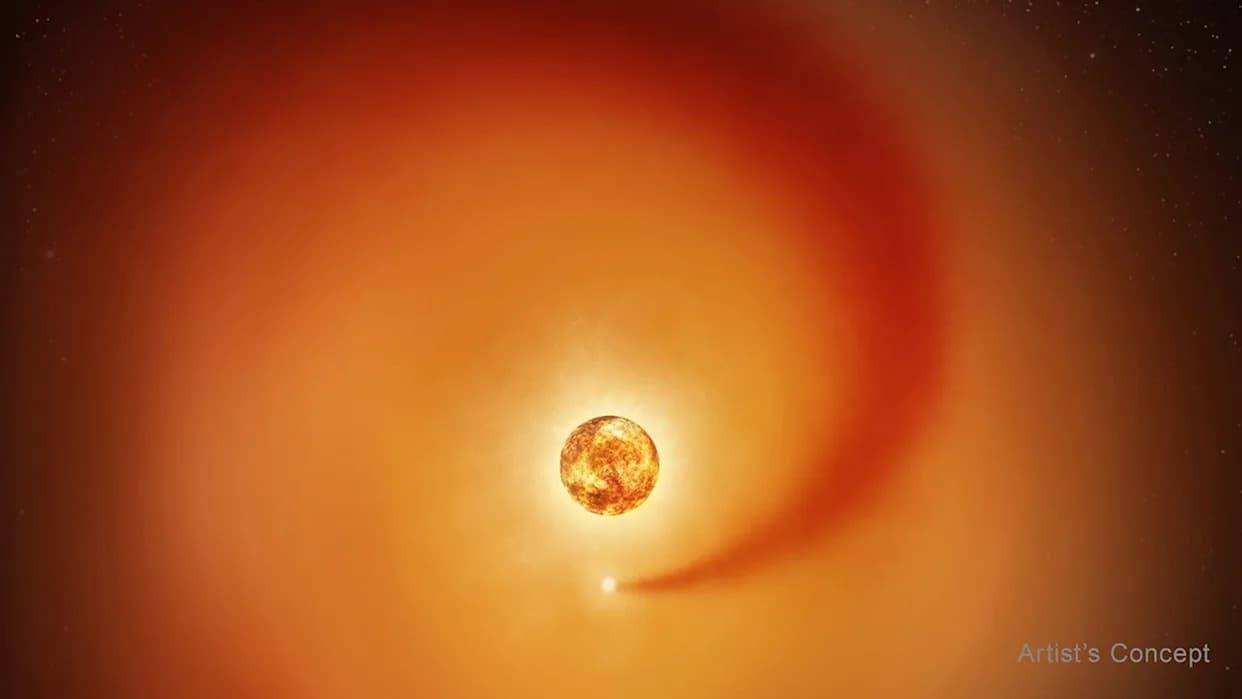
Observations from the Gemini South telescope in Chile (using the high-resolution GHOST spectrograph) were combined with supporting data from Apache Point Observatory and the Magellan Telescopes to characterize the phenomenon. Comparing new measurements with archival data revealed that a wandering, whirling cloud — stretching roughly 120 million miles across — passed between us and the star and is gravitationally bound to a secondary object orbiting J0705+0612.
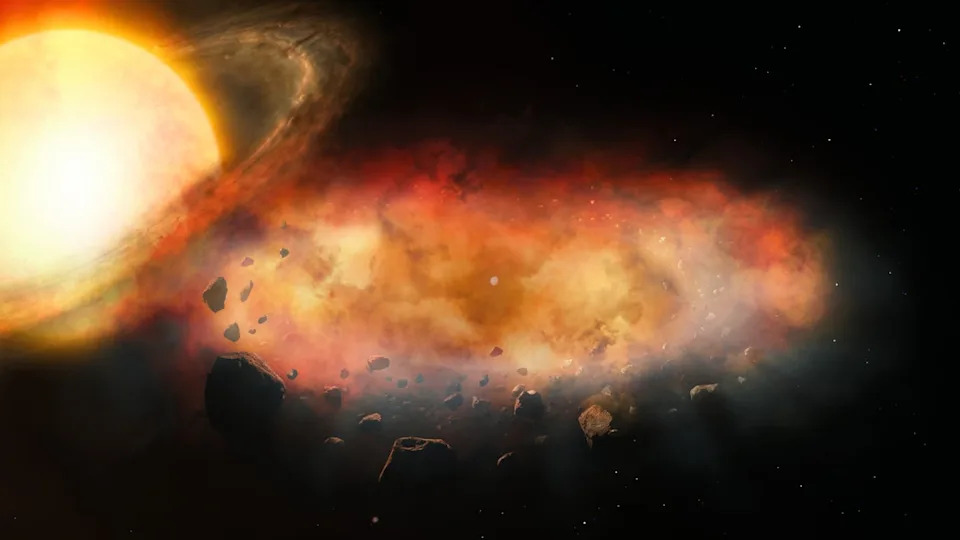
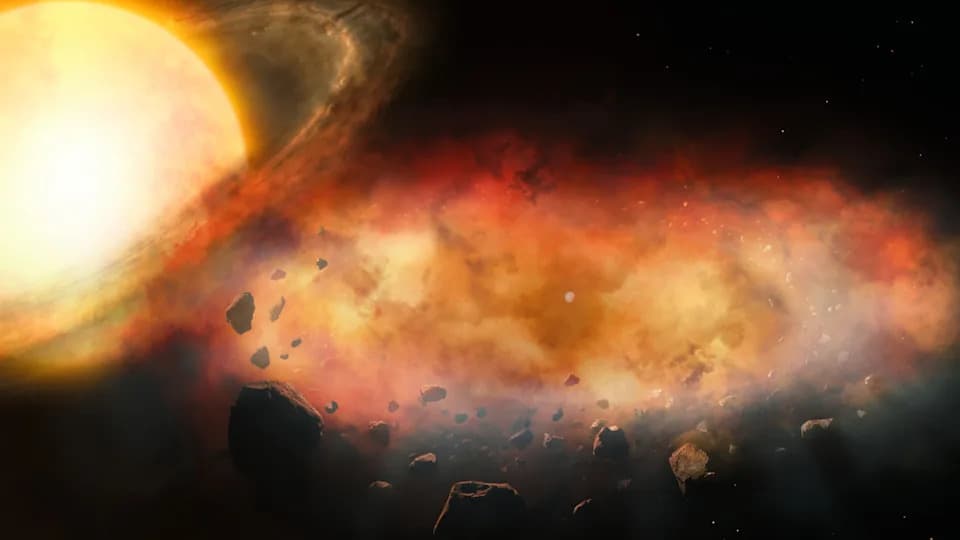
An artist’s illustration shows a large disk of planetary debris shrouded by a thick cloud of dust and gas as it passes in front of a star. Astronomers say a mystery object is surrounded by a metallic cloud like this (International Gemini Observatory/NOIRLab/NSF/AURA/P. Marenfeld & M. Zamani)
What the Data Reveal
Spectroscopic observations with GHOST, taken over more than two hours, show that the cloud is rich in metals such as iron and calcium. The instrument’s sensitivity also allowed researchers to measure the motion of the gas within the cloud — a first for a system of this type. Currently, the cloud is estimated to lie about 1.2 billion miles from the host star.
Measurements indicate the companion has at least a few times the mass of Jupiter. NOIRLab scientists say it could be a brown dwarf or a low-mass star. If the companion is a star, the surrounding material would be described as a circumsecondary disk; if it is a planet, the structure would be a circumplanetary disk. Either configuration is exceptionally rare to observe directly.
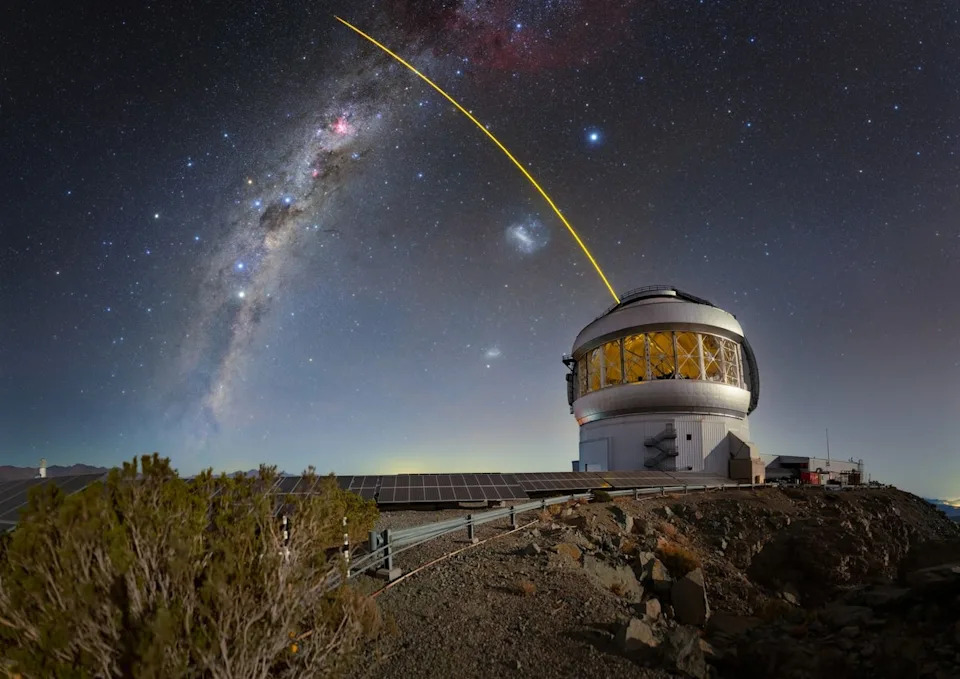
The Gemini South telescope is seen in Chile. The telescope’s GHOST instrument revealed the make up of the cloud (International Gemini Observatory/NOIRLab/NSF/AURA/T. Slovinský)
“Stars like the Sun don’t just stop shining for no reason,” said Nadia Zakamska, professor of astrophysics at Johns Hopkins University. “So dramatic dimming events like this are very rare.”
Possible Origin and Significance
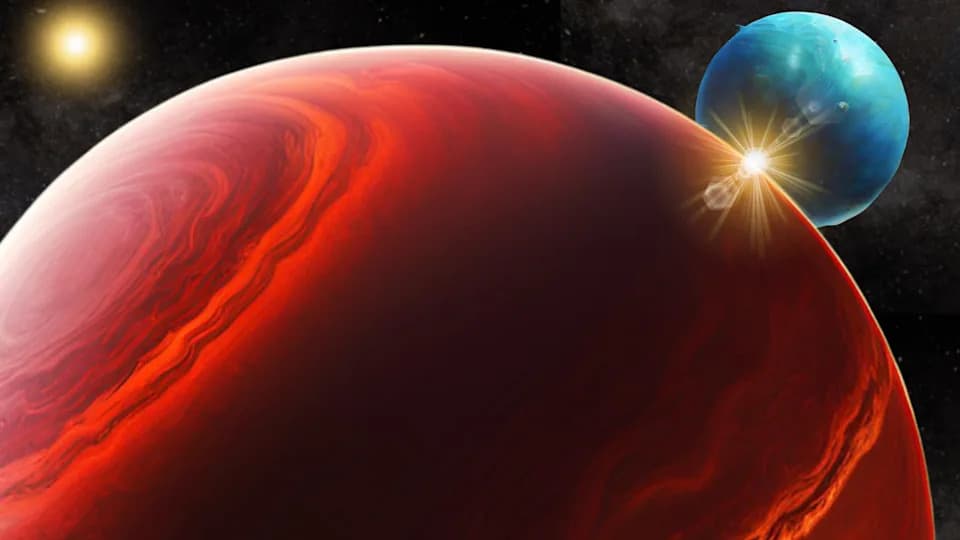
Zakamska and colleagues hypothesize the cloud may be the aftermath of a collision between two planets in the J0705+0612 system. Regardless of its origin, the event provides a rare window into late-stage dynamical processes that can reshape planetary systems long after their formation. The finding highlights that mature systems can still undergo dramatic, large-scale changes.
In short: a massive, metal-bearing wind cloud tied to an unseen companion caused an extreme dimming of a Sun-like star, offering new clues about collisions and disk formation in evolved planetary systems.
Help us improve.