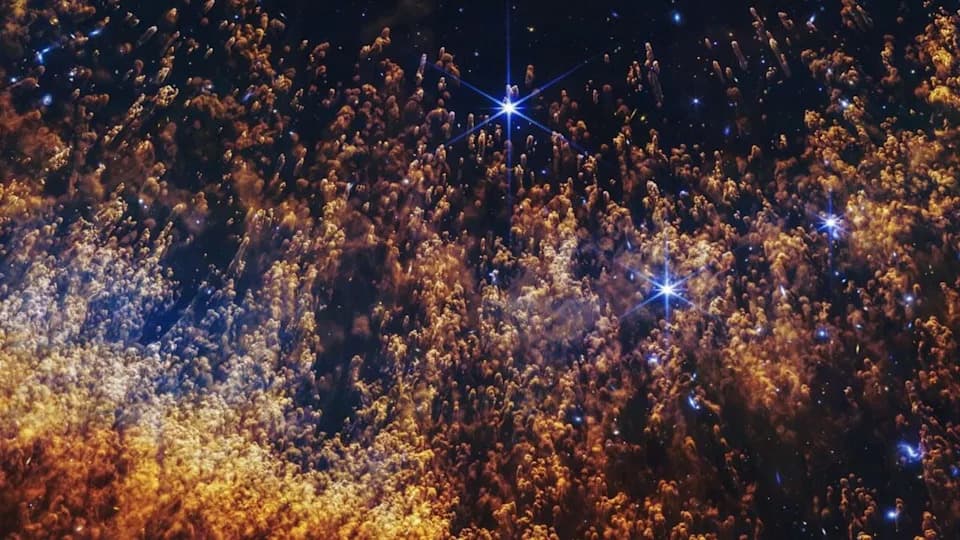
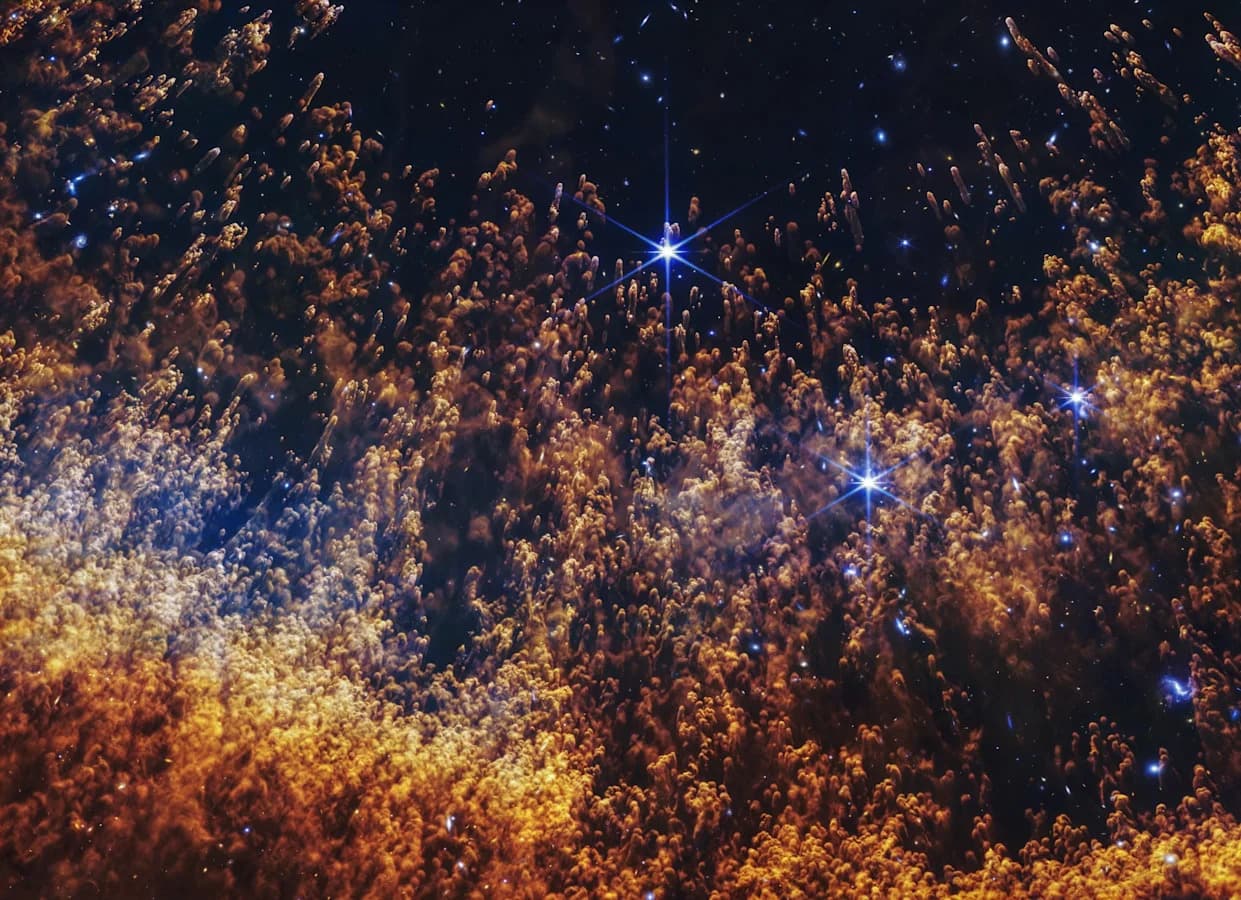
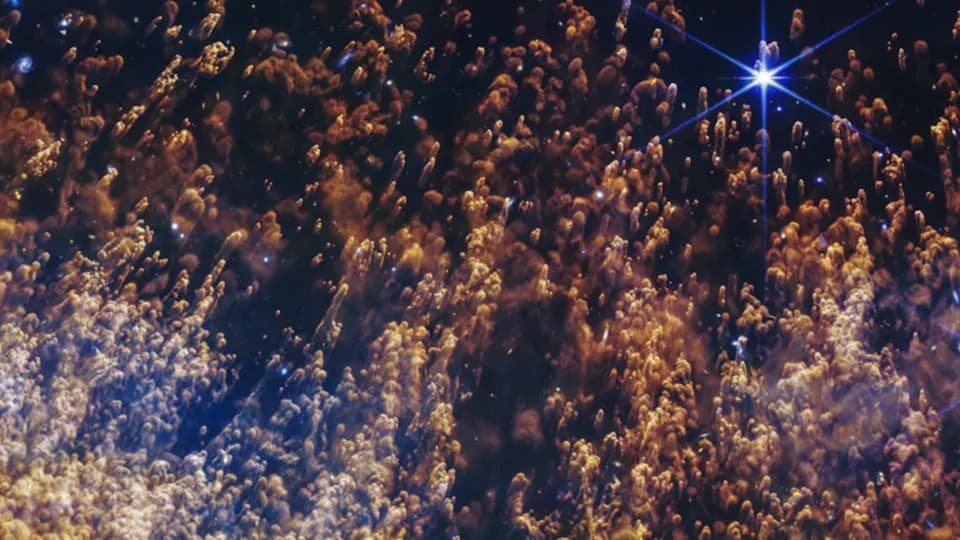
JWST’s NIRCam has captured a detailed infrared image of the Helix Nebula — the so-called “Eye of God” — revealing hot winds colliding with cool shells of gas and dust. Located about 650 light-years away in Aquarius (NGC 7293, Caldwell 63), the nebula is the remnant of a Sun-like star that left behind a white dwarf. Webb’s image highlights a sharp hot–cold boundary and cold pockets of molecular hydrogen where complex molecules could form, offering both a preview of the Sun’s distant future and insight into the chemistry that seeded our own solar system.
James Webb Reveals the “Eye of God” Nebula — A Cosmic Lava Lamp and a Preview of the Sun’s Fate
Credit: NASA, ESA, CSA, STScI, A. Pagan (STScI)
The James Webb Space Telescope (JWST) has produced a striking new infrared image of the Helix Nebula — the ring-like structure nicknamed the “Eye of God.” Captured by JWST’s Near-Infrared Camera (NIRCam), the image reveals intricate structures formed as material ejected by a dying star interacts with its surroundings.
What the Image Shows
The Helix Nebula (also cataloged as NGC 7293 and Caldwell 63) lies about 650 light-years away in the constellation Aquarius. It is a classic planetary nebula: the glowing shell of gas and dust thrown off when a star roughly the mass of the Sun exhausted the hydrogen in its core and shed its outer layers. The star’s remaining core became a dense white dwarf.
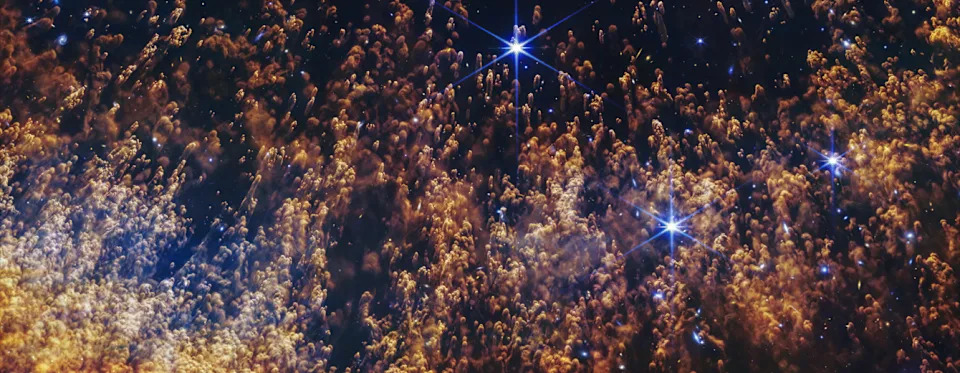
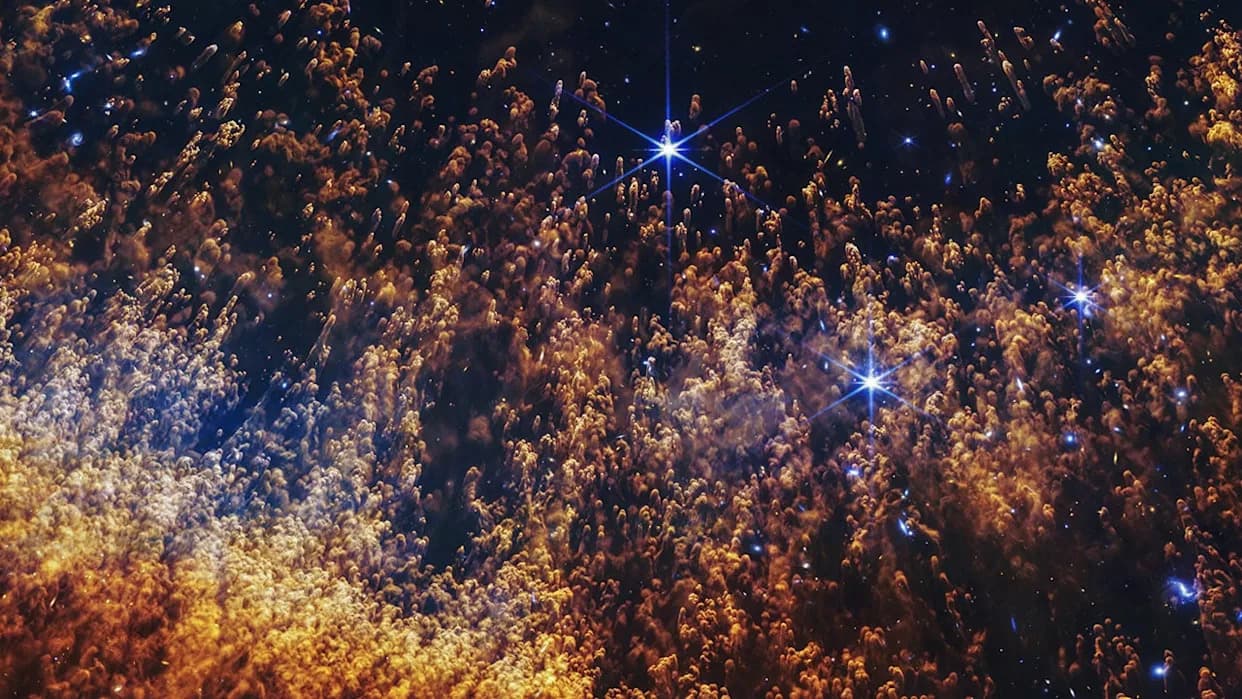
The Helix Nebula as seen by the JWST with its comet-like knots, fierce stellar winds, and layers of gas shed off by a dying star interacting with its surrounding environment. | Credit: NASA, ESA, CSA, STScI, A. Pagan (STScI)
NIRCam traces blisteringly hot winds of gas launching from the vicinity of the white dwarf as they slam into outer shells of previously shed cool gas and dust. Those collisions create a sharp boundary between the system’s hottest material and its coldest components, producing the intricate filamentary and knotty structures visible in the infrared.
The Central Star And Cold Molecular Pockets
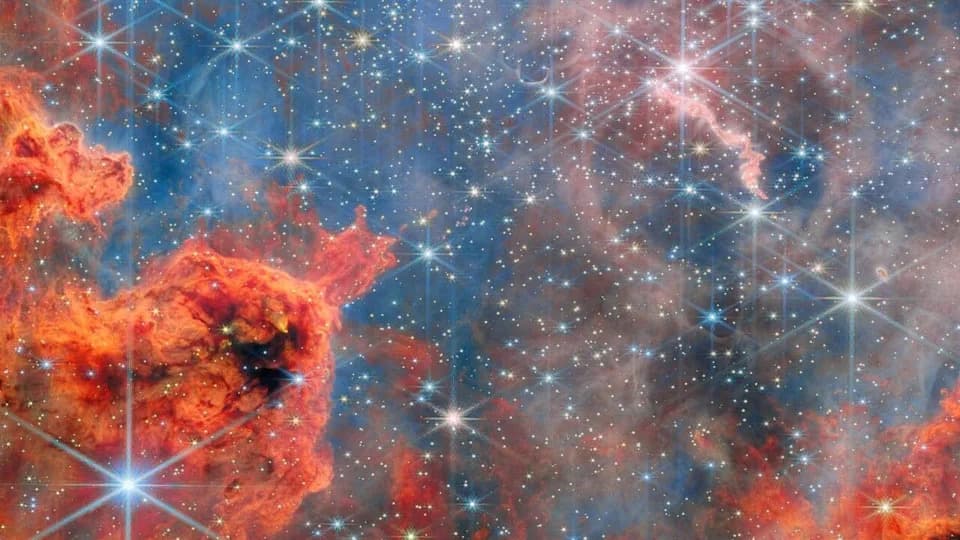
The white dwarf itself is not directly visible in the JWST infrared image, but its intense ultraviolet radiation lights and ionizes nearby gas, producing the glowing inner regions. Farther out, JWST reveals pockets of cold molecular hydrogen where temperatures and densities allow more complex molecules to form — the raw chemical ingredients that, under the right conditions, could seed future planet formation.
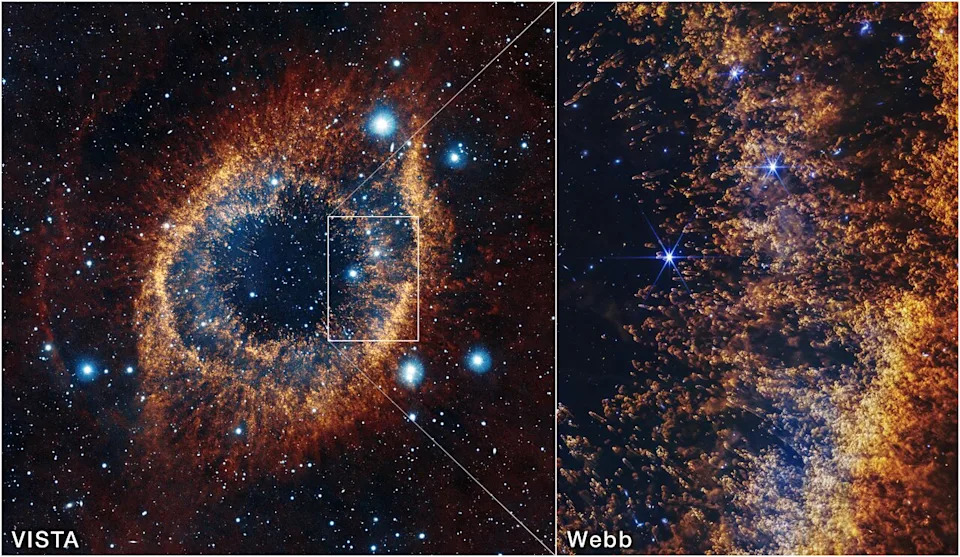
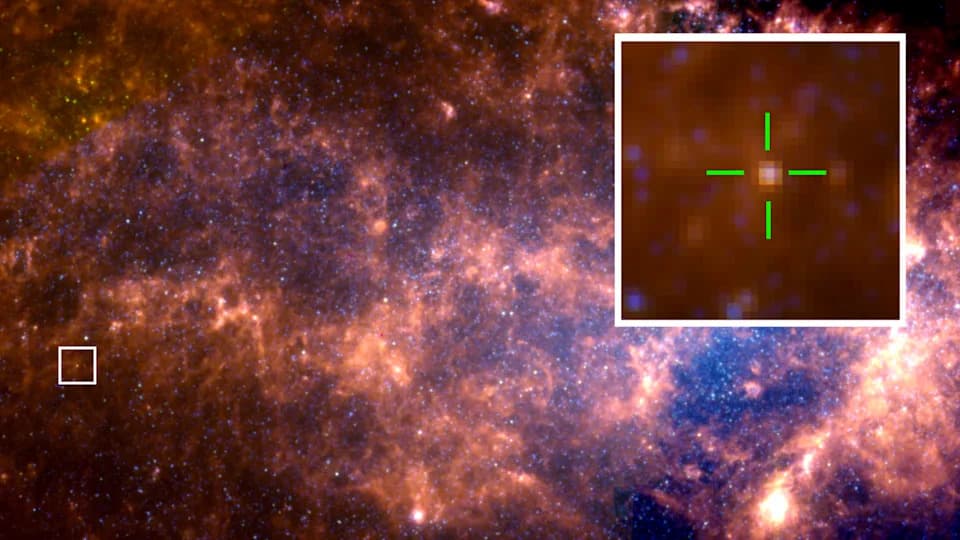
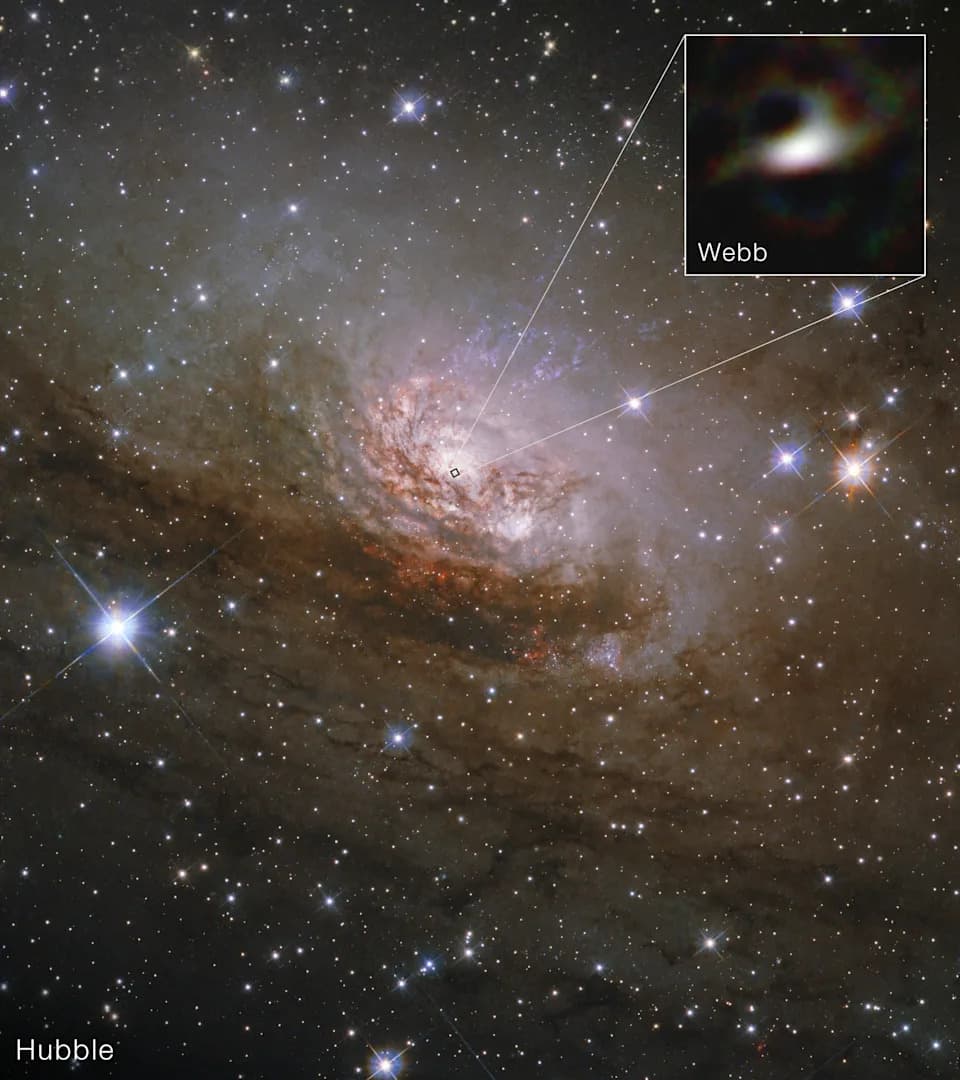
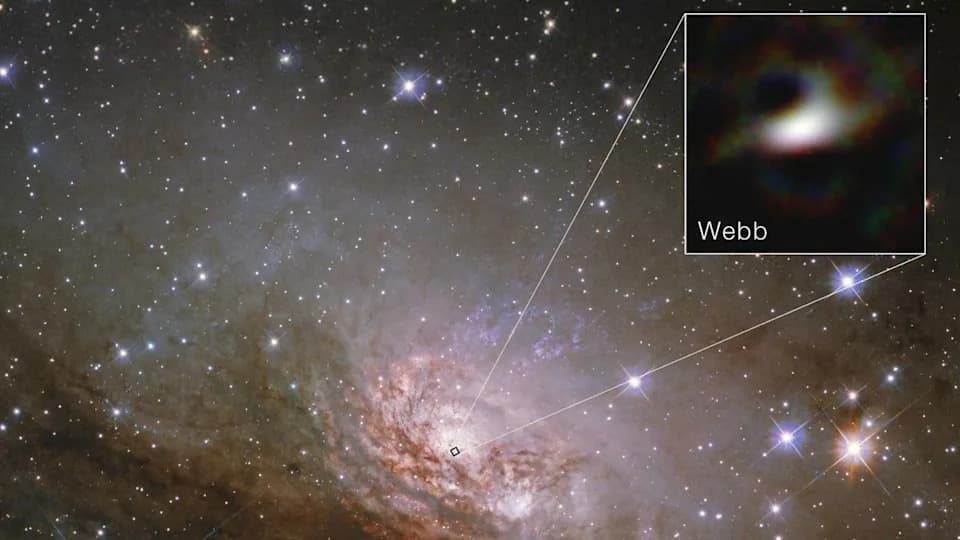
(Left) The Helix Nebula as seen by the Visible and Infrared Telescope for Astronomy. (Right) The smaller field of view from the JWST’s NIRCam (right). | Credit: NASA, ESA, CSA, STScI, A. Pagan (STScI)
Why It Matters
Because the Helix Nebula was produced by a star similar to the Sun, the new JWST view provides a preview of processes that will shape our own solar system in roughly 5 billion years, when the Sun leaves the main sequence. In addition, by showing both hot shocked gas and cold molecular regions in a single image, JWST helps astronomers better understand how stellar death recycles material into the interstellar medium and contributes to future generations of stars and planets.
Historical note: The Helix Nebula was first recorded by German astronomer Karl Ludwig Harding before 1824 and remains one of the nearest and brightest planetary nebulae visible from Earth.
Help us improve.