The James Webb Space Telescope’s COSMOS-Web survey has produced the most detailed dark-matter map yet, imaging about 800,000 galaxies with roughly twice the resolution of Hubble’s 2007 map. Using 255 hours of MIRI data and weak gravitational lensing, researchers traced filamentary dark-matter bridges that form the universe’s invisible scaffolding. Published in Nature Astronomy, the results support the Lambda-CDM model while revealing low-mass galaxy groups previously unseen and offering fertile ground for future discoveries.
Webb Maps the Universe’s Invisible ‘Skeleton’ — Most Detailed Dark-Matter Map Yet
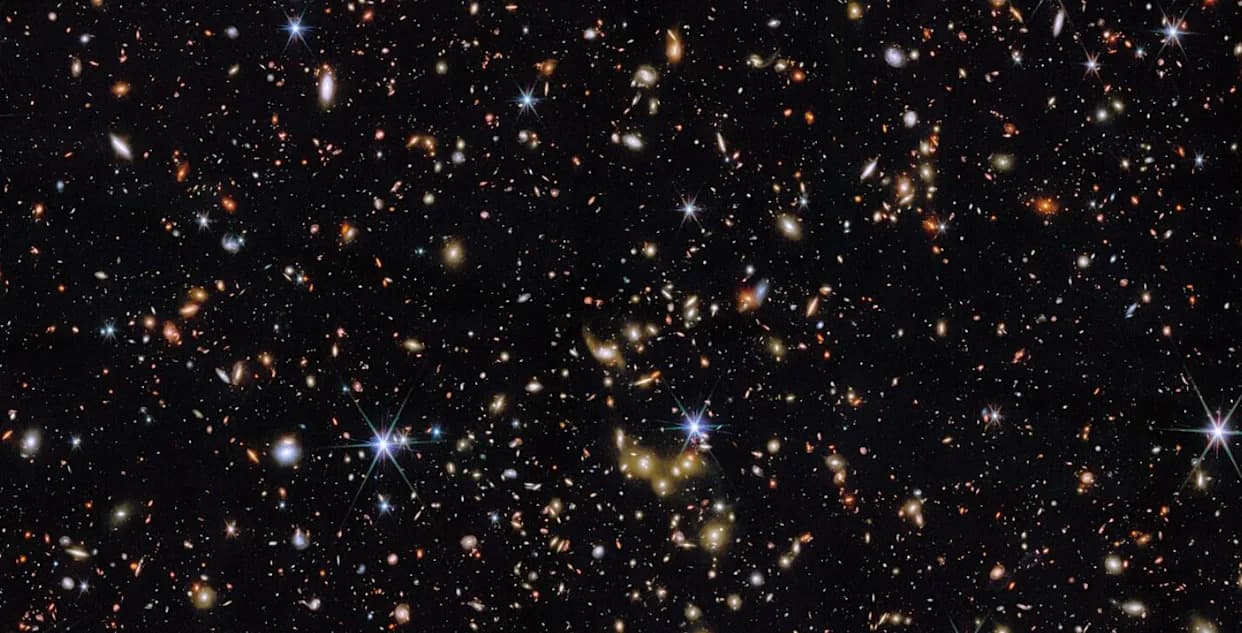
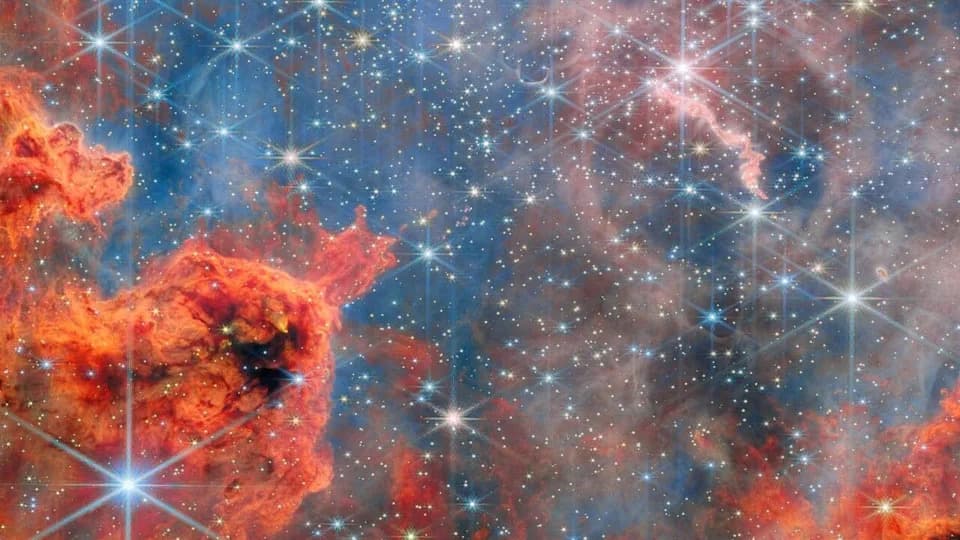
Image: ESA/Webb, NASA & CSA - Wikimedia Commons
The James Webb Space Telescope has produced the most detailed dark-matter map to date, imaging roughly 800,000 galaxies with about twice the resolution of Hubble’s landmark 2007 effort. The result is more than a striking picture: it is the clearest view so far of the universe’s unseen scaffolding.
How Webb Revealed the Invisible
Dark matter makes up roughly 85% of all matter but does not emit, absorb or reflect light, so it cannot be observed directly. Webb’s COSMOS-Web survey overcame that barrier using weak gravitational lensing, a technique that detects tiny distortions in the shapes of background galaxies caused by the gravity of intervening dark matter. It’s like inferring the shape of a glass sculpture by how it bends the scene behind it.
Deep, Wide, and Sharp
Webb’s Mid-Infrared Instrument (MIRI) spent 255 hours observing the COSMOS field, a patch of sky about 2.5 times the area of the full Moon. That campaign is the largest first-year survey Webb has undertaken and pushes the limits of what space-based infrared astronomy can reveal.
What the Map Shows
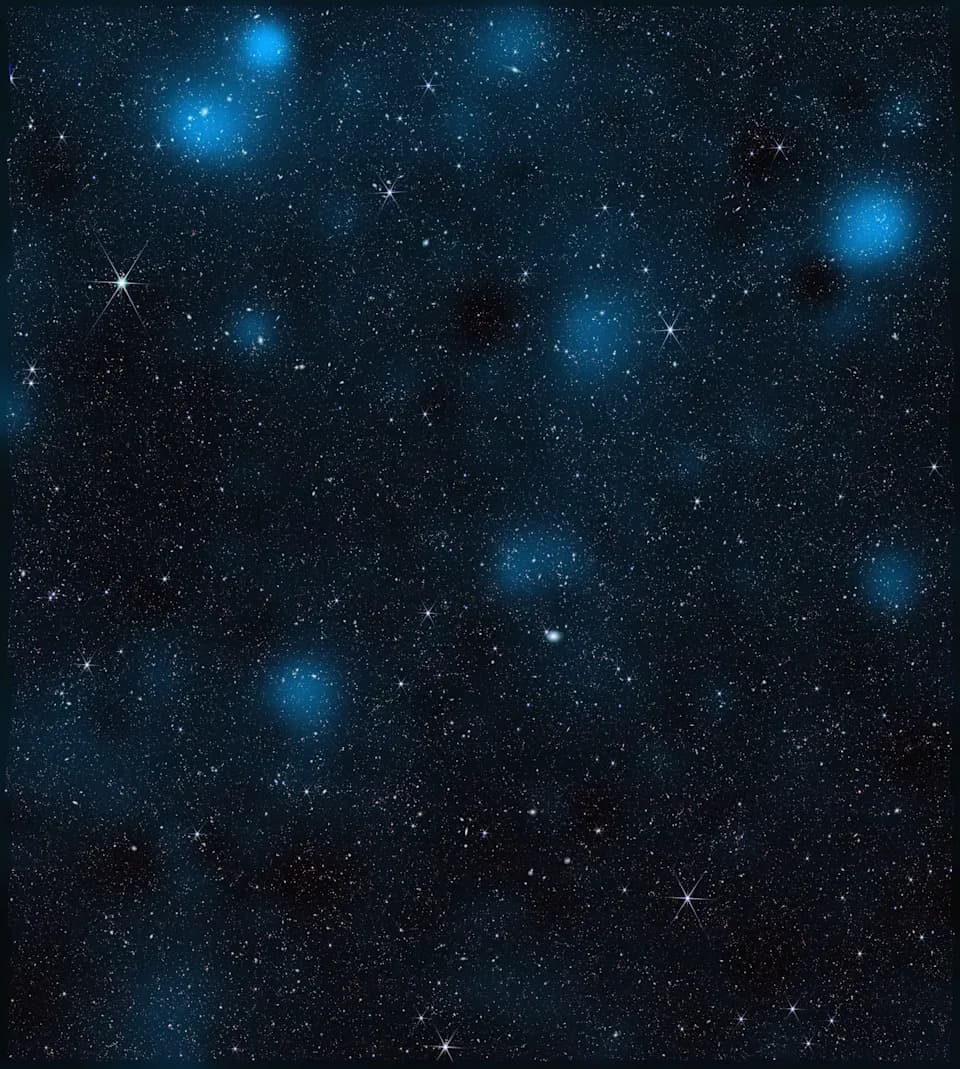
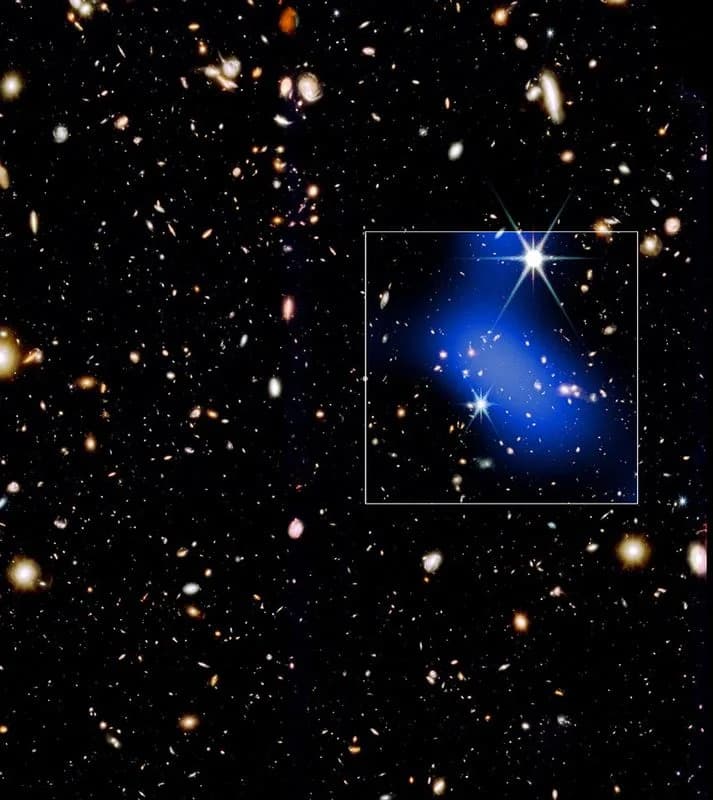
The new visuals overlay dark-matter density in blue, tracing filamentary bridges that connect galaxy clusters into a vast cosmic web. These filaments are the primordial corridors that funneled ordinary matter together to form the first stars and galaxies, and Webb’s sharper view exposes many low-mass galaxy groups that ground-based surveys missed.
“This is the largest dark matter map we’ve made with Webb, and it’s twice as sharp,” said Diana Scognamiglio, the JPL astrophysicist who led the study. “We can now see the invisible scaffolding in exquisite detail.”
Scientific Context and Impact
The COSMOS field has been the most intensively studied patch of sky for about two decades, observed by more than 15 telescopes since the early 2000s. Webb’s contribution is the payoff from that sustained, multi-instrument effort—comparable to finally watching a film in 4K after years of standard-definition viewing.
The new map supports predictions of the Lambda-CDM model of cosmic evolution while providing unprecedented detail on faint, low-mass structures. Published in Nature Astronomy, the dataset will keep cosmologists busy for years and may uncover subtle deviations from current models that point toward new physics.
Why This Matters
Beyond a stunning image, Webb’s infrared sensitivity pierces cosmic dust and reveals structures that remained hidden for decades. By mapping dark matter with improved resolution and depth, Webb helps researchers study how galaxies form and evolve within the cosmic web and test the limits of our cosmological theories.
Help us improve.