New SALT spectroscopy (Nov 2024–Dec 2025) detected titanium oxide in WOH G64's atmosphere, a molecule associated with cool red supergiants. That evidence suggests the star remains a red supergiant rather than having evolved into a hotter yellow hypergiant. Researchers propose a smaller, likely blue, companion is interacting with the giant and pulling its outer layers into a circumstellar disk, which could explain prior dimming and the dusty cocoon seen in 2024. Astronomers will keep monitoring WOH G64 for future changes.
Behemoth Star WOH G64 May Not Be Dying — New Spectra Show It's Still a Red Supergiant
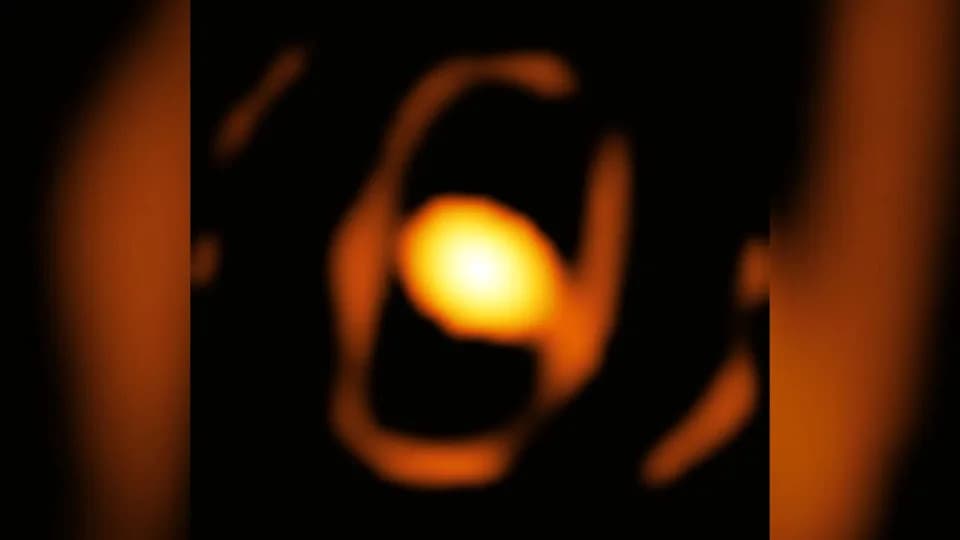
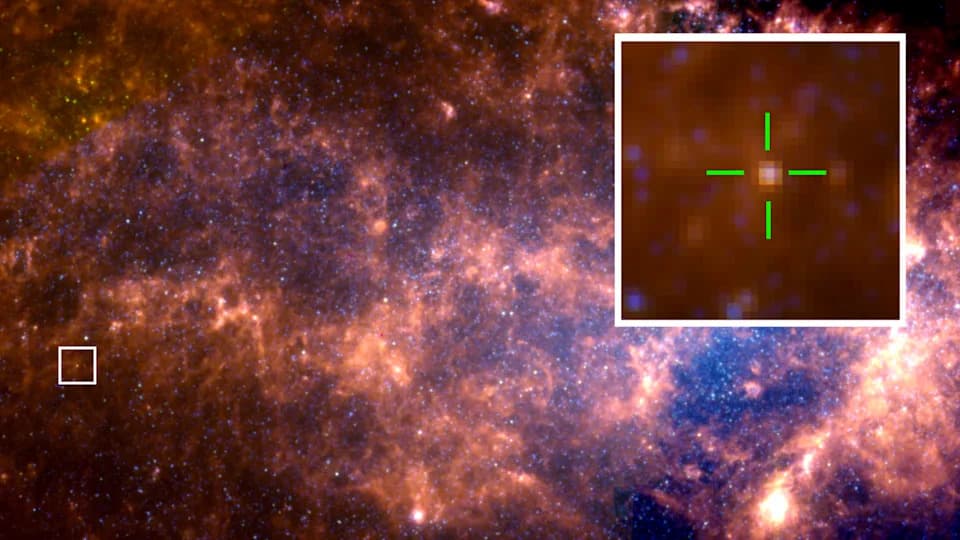
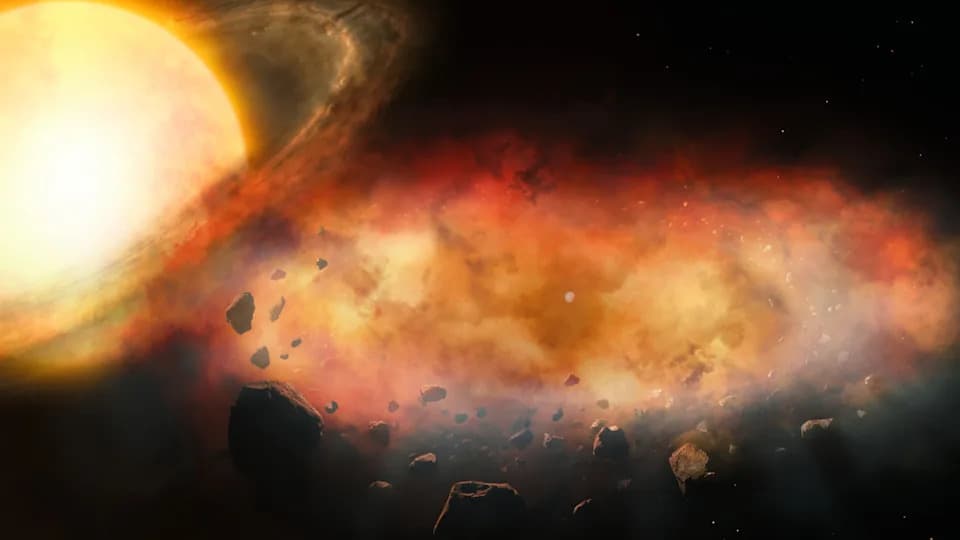
WOH G64, a.k.a. the "behemoth star," is a red supergiant that was previously predicted to imminently explode in a violent supernova, thanks to recent research that uncovered a cocoon of dust surrounding it. | Credit: ESO/K. Ohnaka et al.
One of the largest known stars in the nearby universe, long thought to be on the brink of a violent death, may not be about to explode after all. New spectroscopic observations suggest WOH G64 — the so-called "behemoth" red supergiant in the Large Magellanic Cloud — still shows signs of a cool, red atmosphere rather than the hotter state expected if it had recently evolved into a yellow hypergiant.
WOH G64 lies roughly 163,000 light-years from Earth in the Large Magellanic Cloud. It is enormous: about 1,500 times the Sun's radius and as much as 282,000 times more luminous. Because massive stars burn fuel quickly, WOH G64's estimated age of roughly five million years put it near the expected end of its life as a red supergiant — which is why recent dimming drew attention.
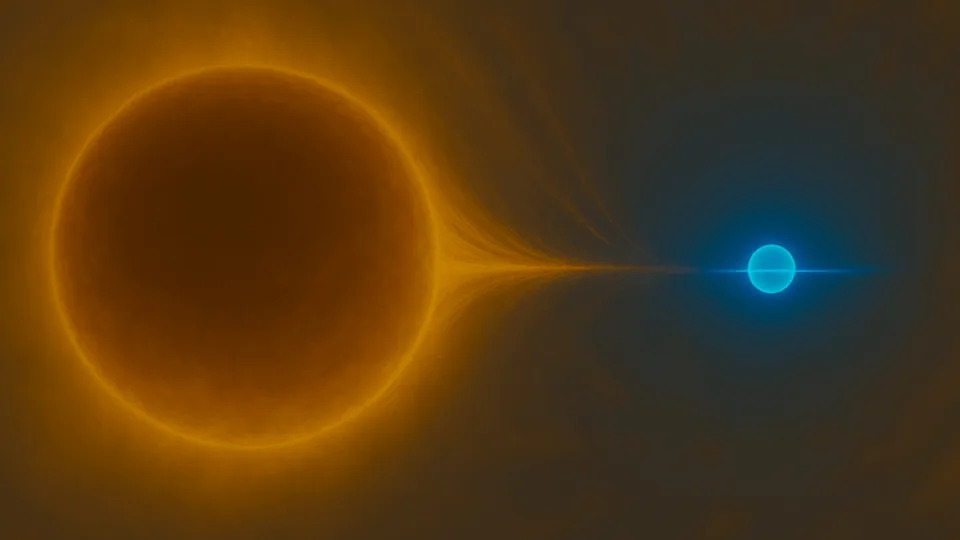
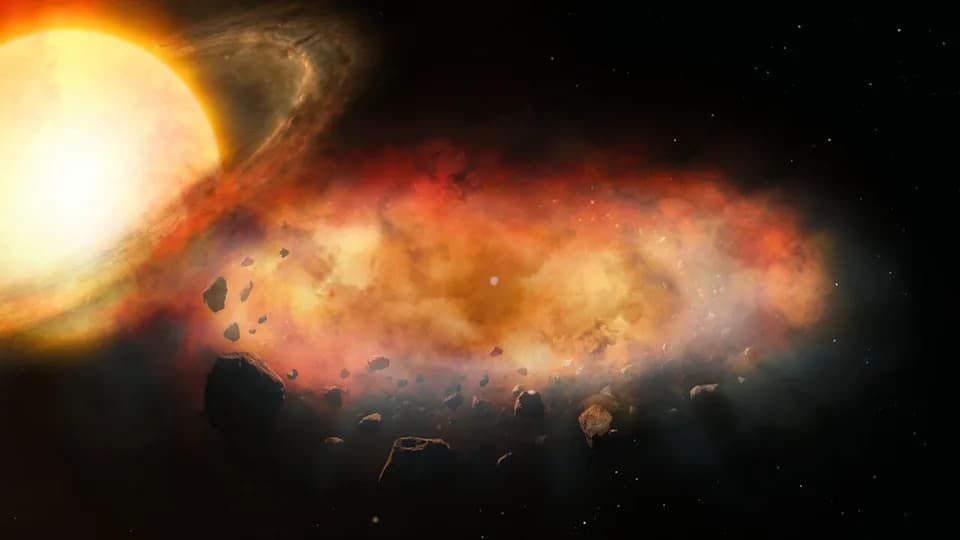
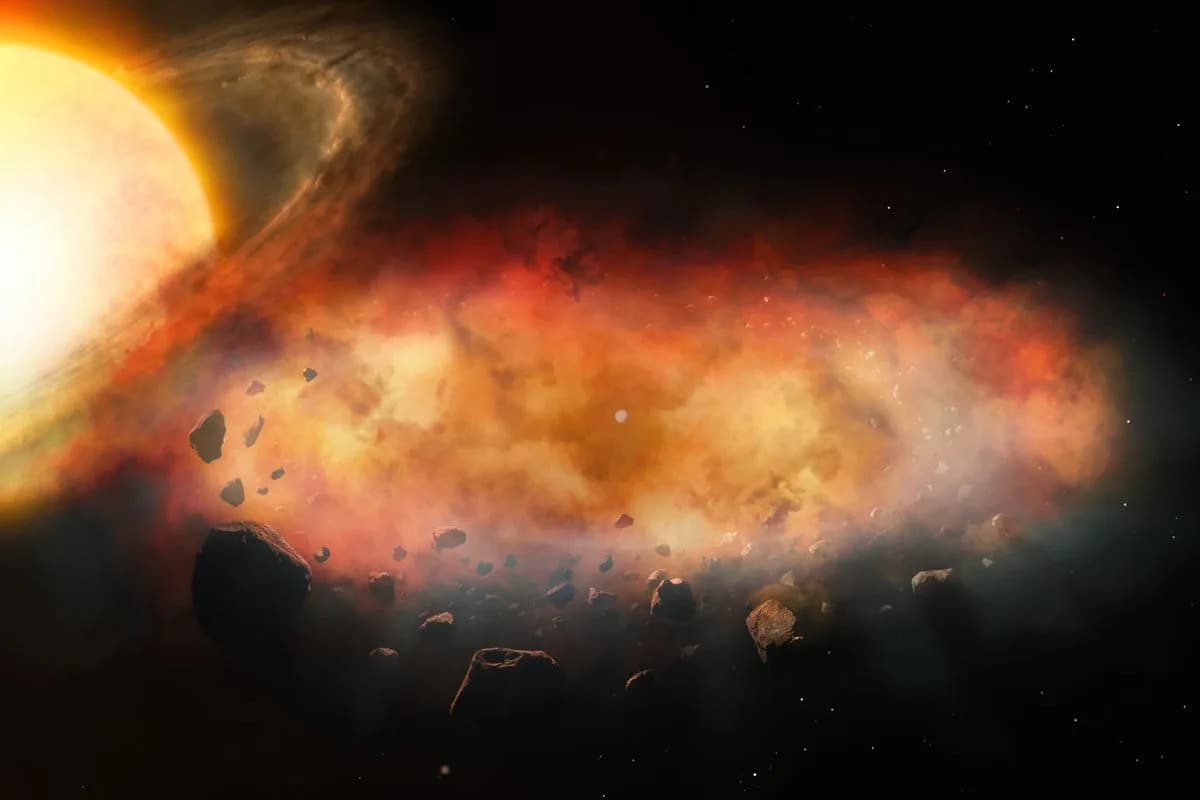
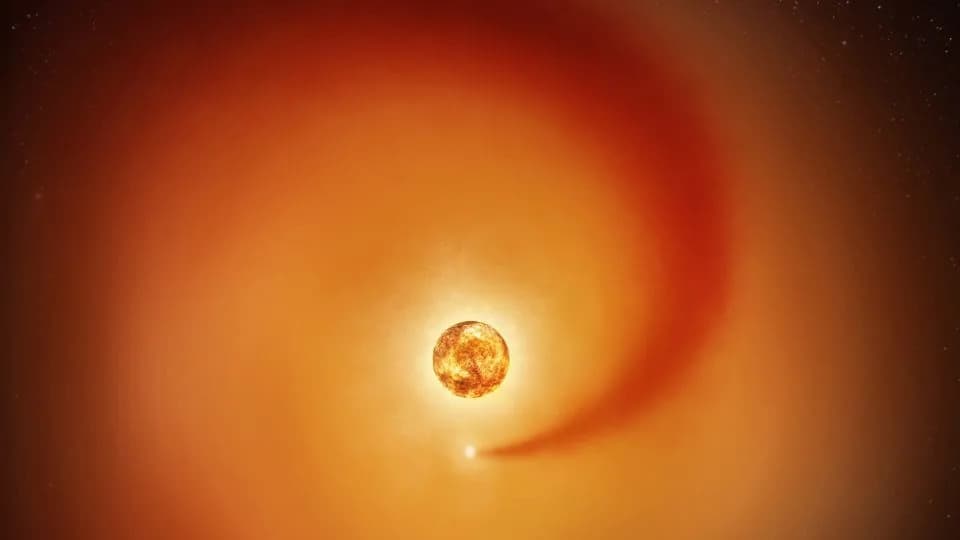
This AI-generated image shared by the researchers shows WOH G64 losing its gas to a cannibalistic sibling, which may explain its recent weirdness. | Credit: created by Jacco van Loon using Copilot
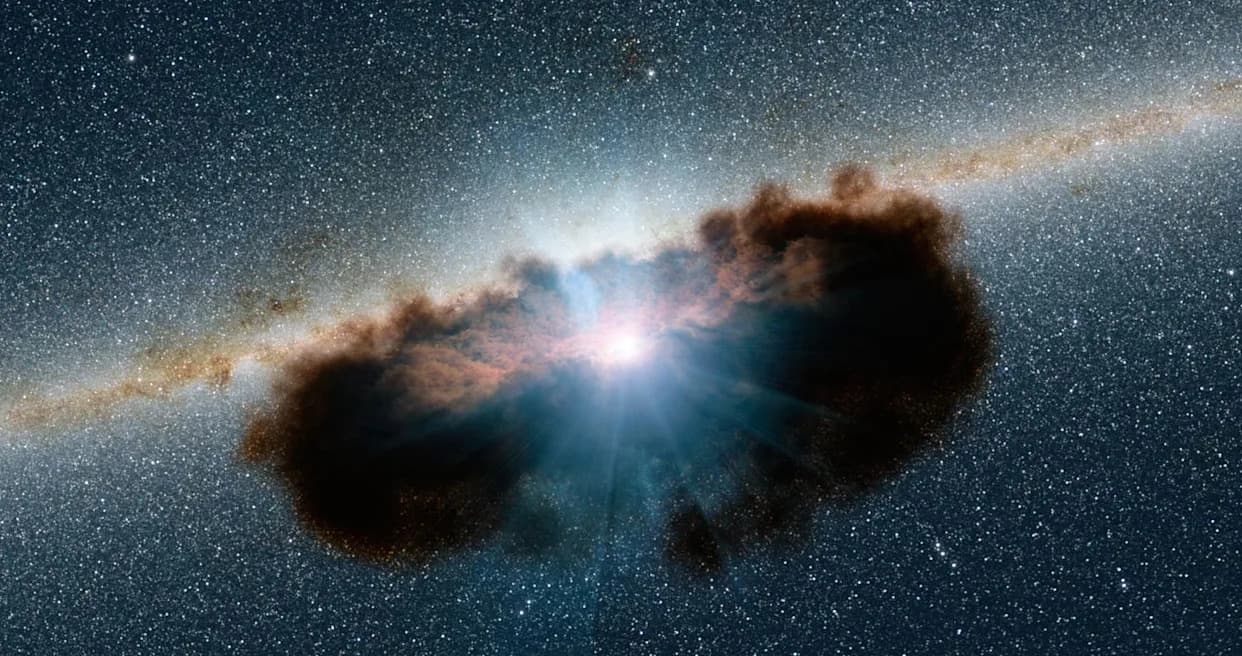
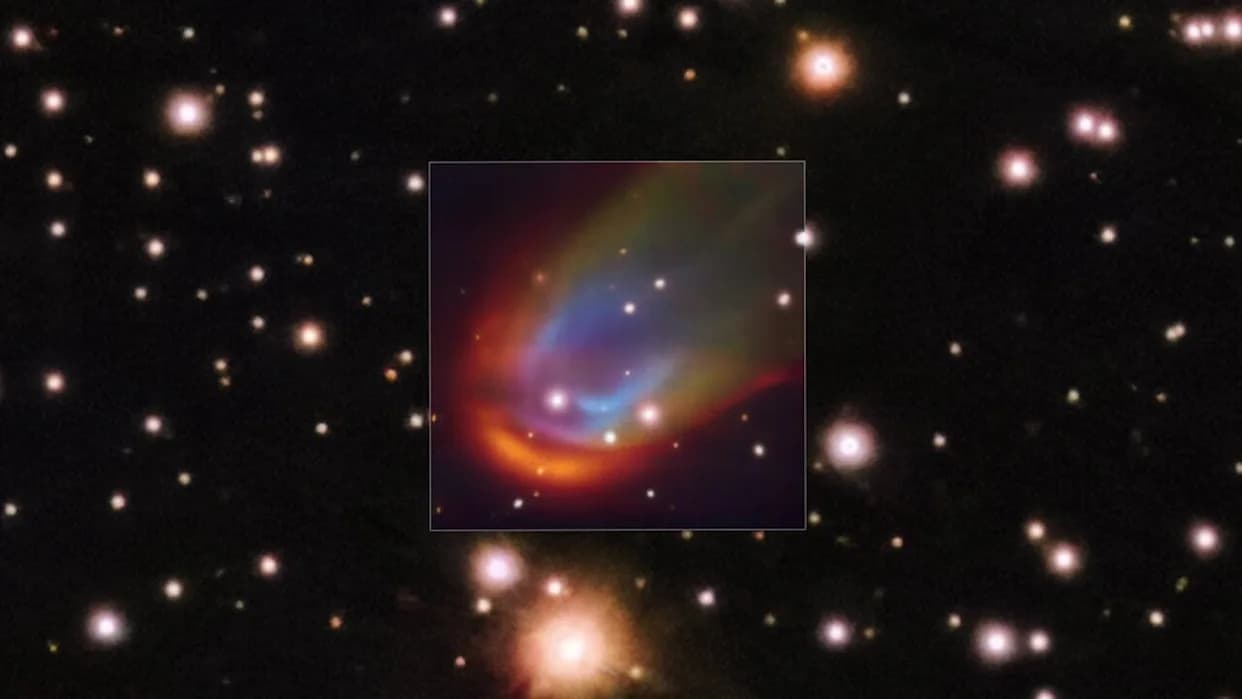
In November 2024, astronomers using the Very Large Telescope (VLT) in Chile captured a highly detailed image of WOH G64's surroundings, revealing an "egg-shaped" cocoon of gas and dust. That feature was widely interpreted as evidence the star had shed its outer layers and was transitioning to a hotter, yellow hypergiant — a potential prelude to a supernova.
However, a new study published Jan. 7 in Monthly Notices of the Royal Astronomical Society re-examined the star with the Southern African Large Telescope (SALT). Spectra collected between November 2024 and December 2025 show clear signatures of titanium oxide (TiO) in the star's atmosphere — a molecule that forms in cool, extended atmospheres and is a hallmark of red supergiants.
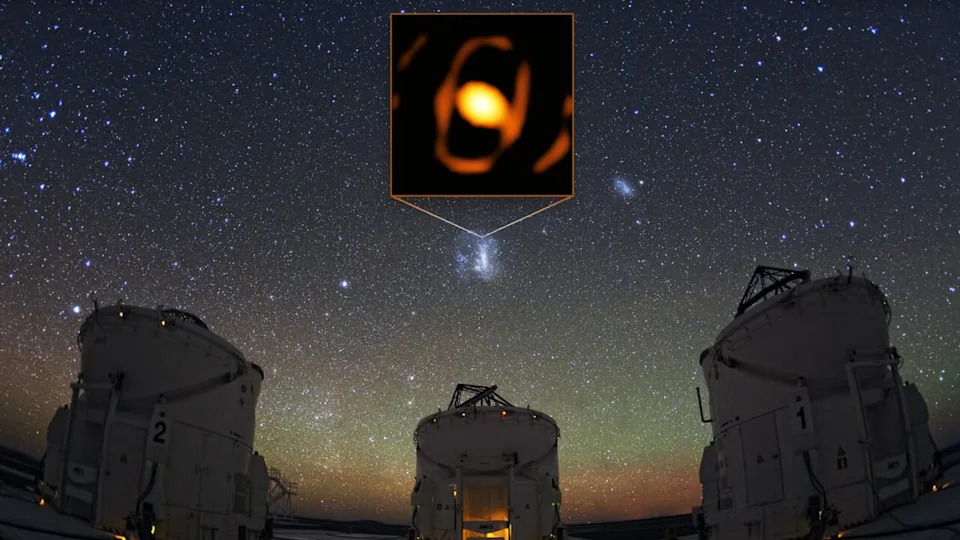
The high-def photo of WOH G64's egg-like cocoon was captured by the Very Large Telescope, Chile in November 2024. | Credit: ESO/K. Ohnaka et al./Y. Beletsky (LCO)
"This implies that WOH G64 is currently a red supergiant and may never have ceased to be," said study co-lead author Jacco van Loon, an astrophysicist at Keele University. "We are essentially witnessing a 'phoenix' rising from the ashes."
The TiO detection challenges the view that WOH G64 has already become a yellow hypergiant. To reconcile the conflicting observations (the dimming and the dusty cocoon versus the TiO-rich spectrum), the research team proposes that WOH G64 is part of a binary system. A smaller, likely hotter and bluer companion could be gravitationally interacting with the giant, pulling some of its outer layers into a circumstellar disk or otherwise redistributing the star's envelope without fully stripping it.
"The atmosphere of the red supergiant is being stretched out by the approach of the companion star, but it has not been stripped altogether," van Loon said. "It persists." This scenario can produce complex, asymmetric dust structures and variable brightness without requiring the primary to have evolved to a hotter spectral type.
Astronomers will continue to monitor WOH G64 across wavelengths to test the binary hypothesis and to watch for any future changes that could still presage a supernova. For now, the star appears to have retained the cool chemistry of a red supergiant, complicating earlier predictions of an imminent explosion.
Help us improve.