Researchers using LOFAR report that the supermassive black hole at the heart of galaxy J1007+3540 appears to have reactivated after roughly 100 million years of dormancy. Radio images reveal ancient, diffuse lobes (~240 million years) that enclose younger jets (~140 million years), showing the AGN restarted. The jets are being bent and distorted by the hot intracluster medium; higher-resolution follow-ups will map how these renewed outflows evolve.
Cosmic Restart: Supermassive Black Hole 'Reawakened' After ~100 Million Years
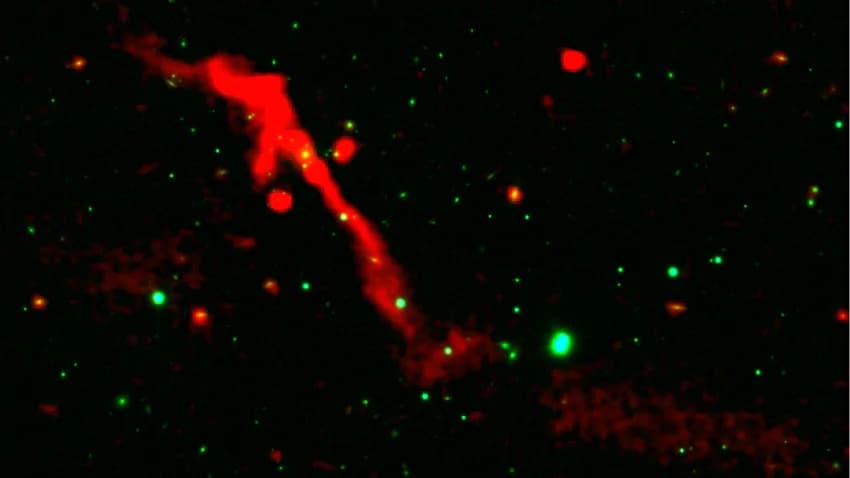
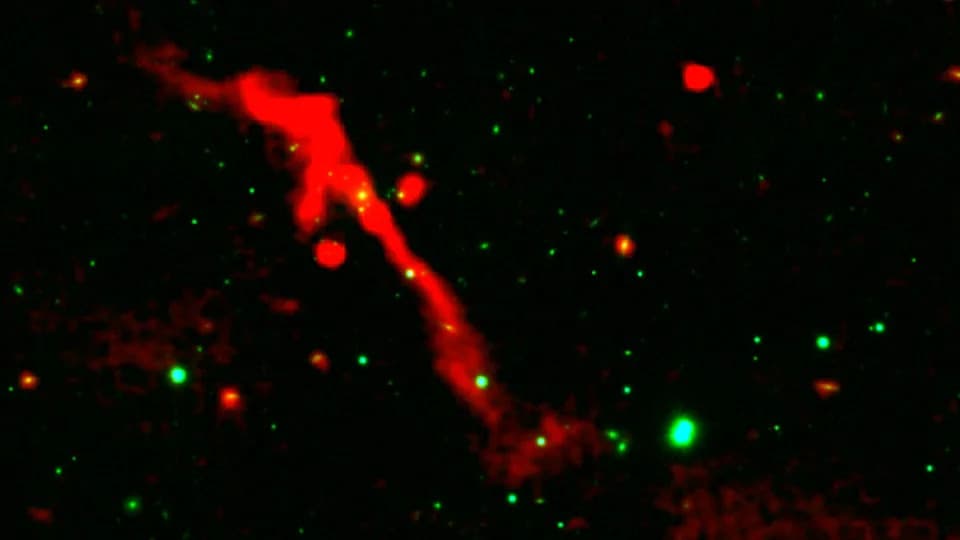
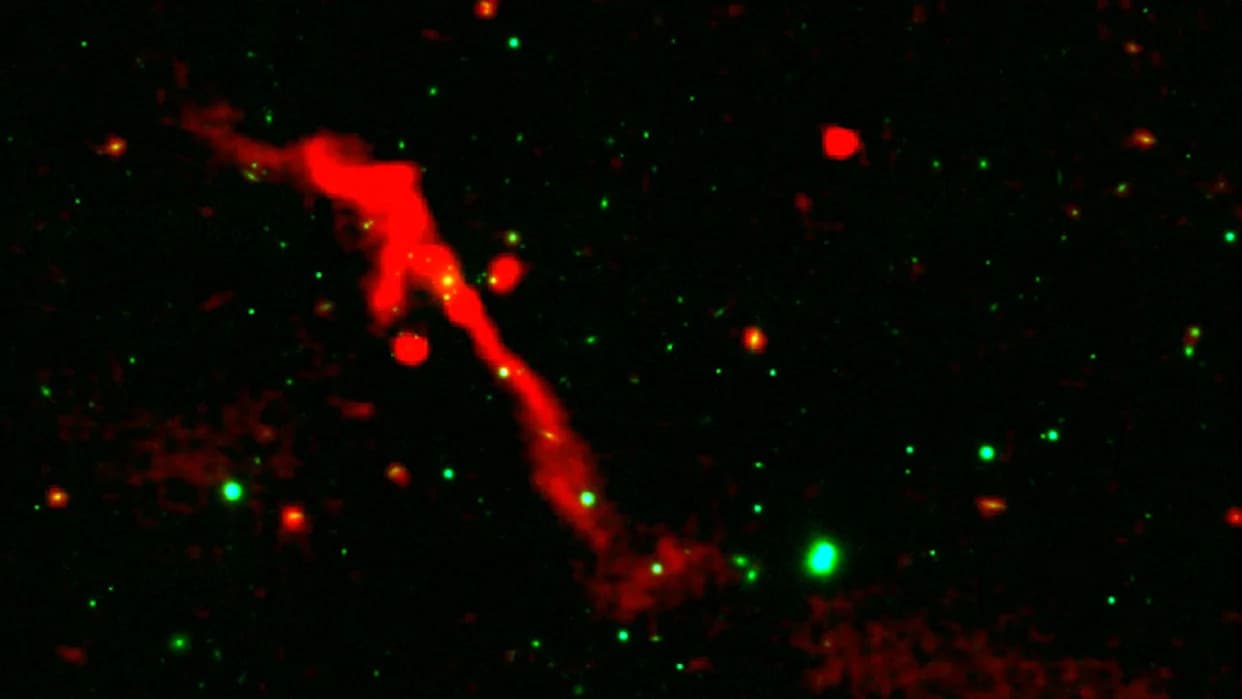
Seen as a ribbon of red radio emissions, a gigantic energy jet blasting out of a supermassive black hole tells the story of a reawakened monster. | Credit: LOFAR/Pan-STARRS/S. Kumari et al.
Scientists have observed a supermassive black hole that appears to have reactivated after roughly 100 million years of dormancy, producing fresh jets that are colliding with the hot gas around its host galaxy.
What Was Observed
The object sits at the center of a giant radio galaxy cataloged as J1007+3540. New radio analysis using the Low-Frequency Array (LOFAR) reveals two distinct generations of plasma outflows: very large, diffuse lobes that date to about 240 million years ago and smaller, brighter jets aged roughly 140 million years. The younger jets are embedded inside the older lobes, a clear sign that the galaxy's active galactic nucleus (AGN) has turned back on after a long quiet interval.
"It's like watching a cosmic volcano erupt again after ages of calm — except this one is big enough to carve out structures stretching nearly a million light-years across space," said Shobha Kumari, co-author of the study.
How It Works
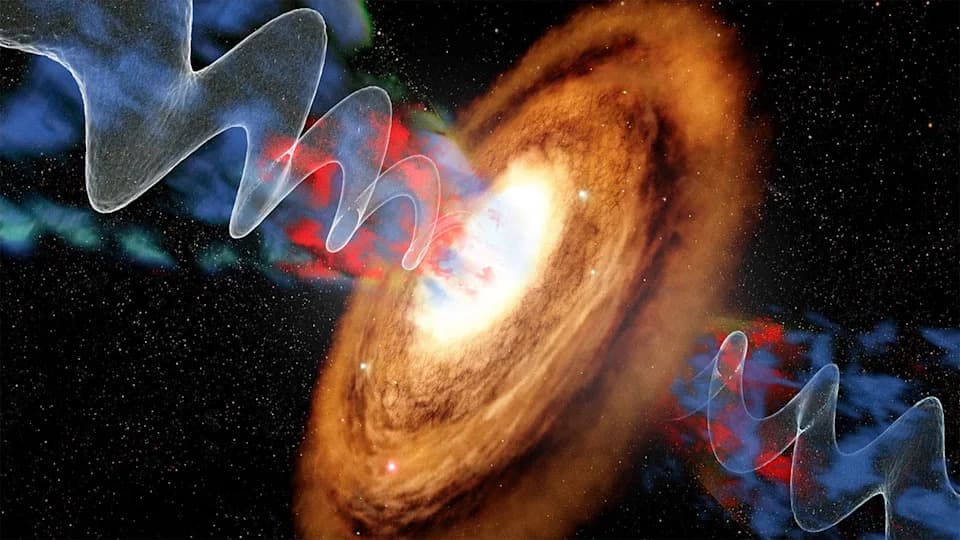
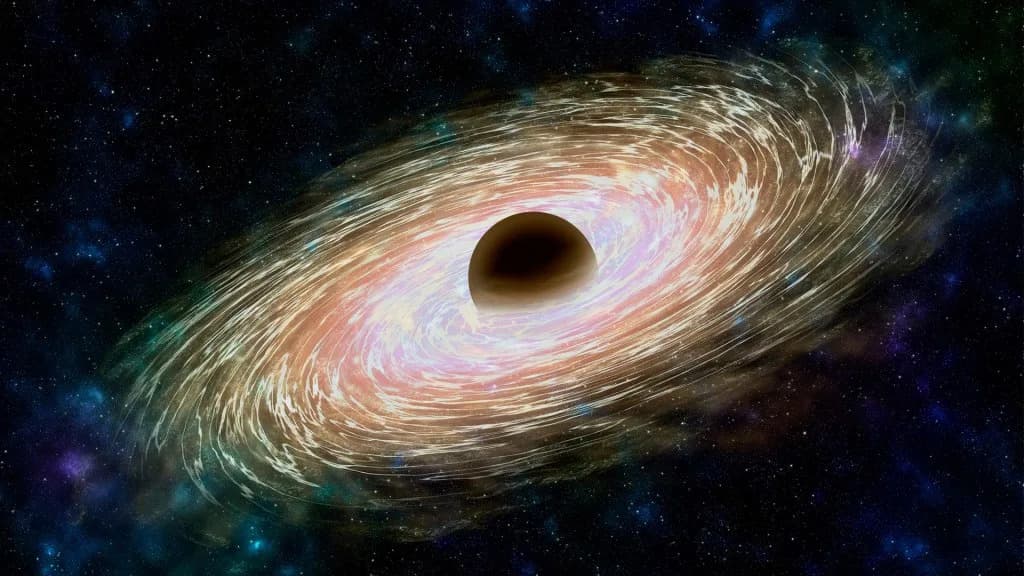
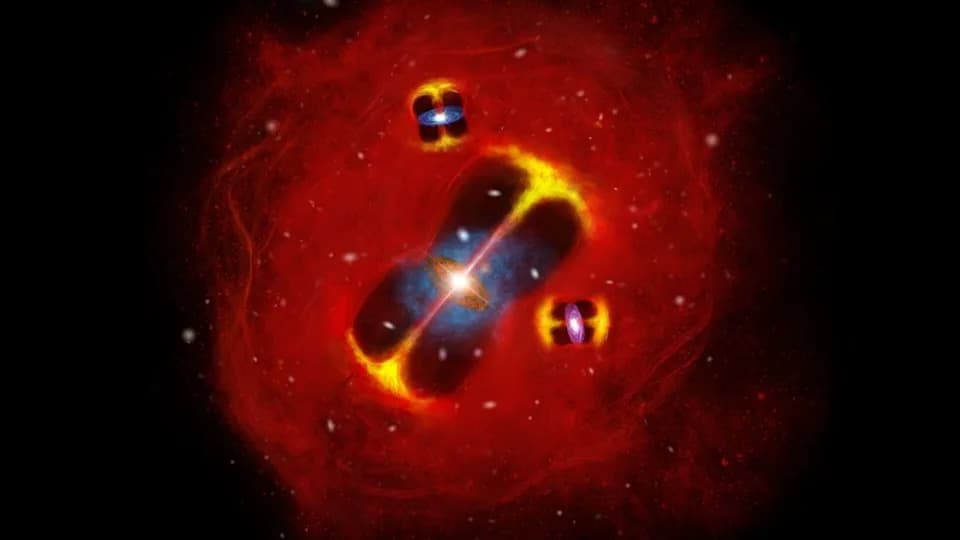
Only about 10%–20% of supermassive black holes produce powerful radio jets. In those systems, a rotating accretion disk of gas and dust funnels material toward the black hole; tangled magnetic fields in the disk can launch part of that material outward as collimated jets. Changes in the accretion flow can cause jets to switch off and later restart, producing the layered structures seen in J1007+3540.
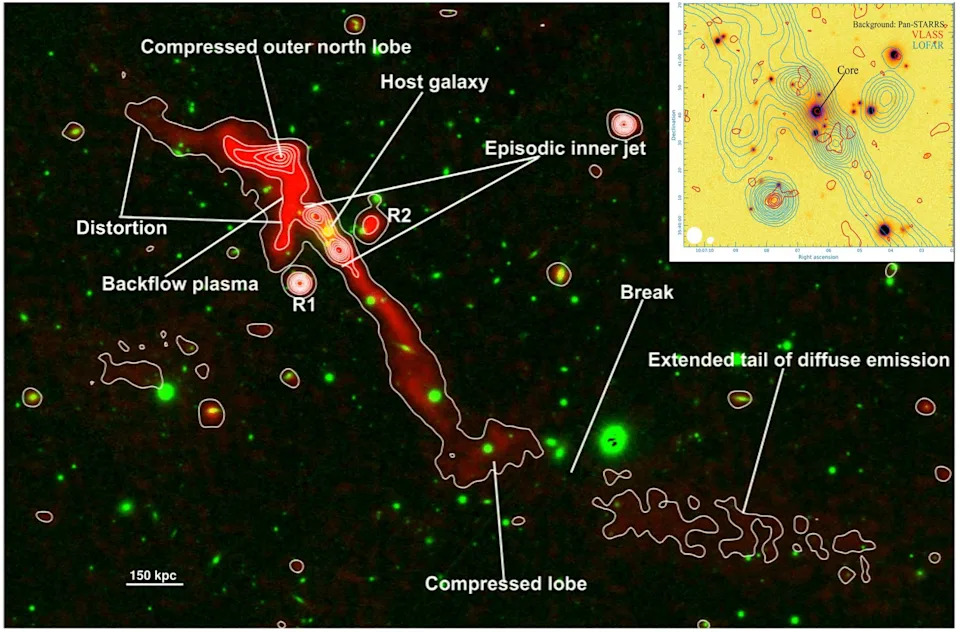
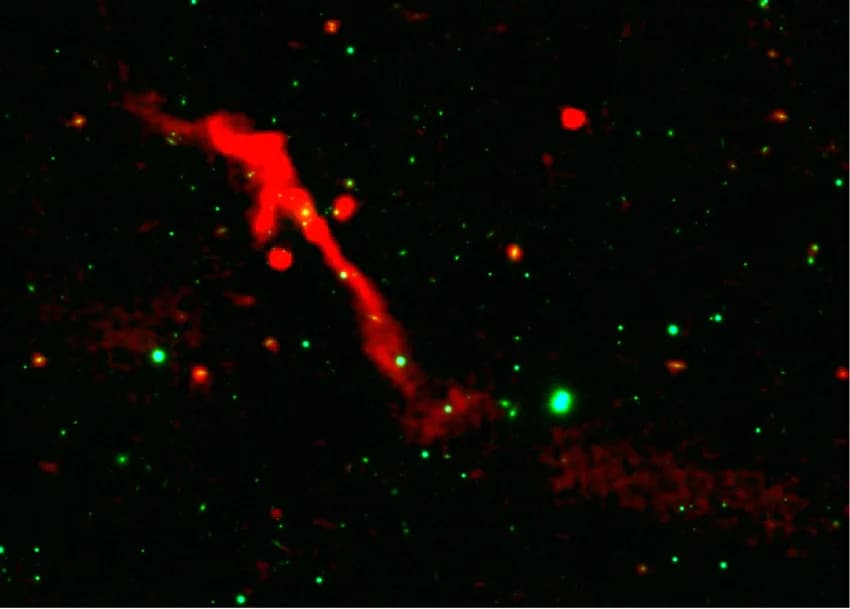
The active black hole (at the center of the area marked 'host galaxy') and its twin lobes of high-energy radio jets. | Credit: LOFAR/Pan-STARRS/S. Kumari et al.
Jet–Cluster Interaction
J1007+3540 lies in a galaxy cluster whose space is filled with very hot, diffuse gas known as the intracluster medium (ICM). The study finds that the ICM has distorted the older lobes: one lobe appears compressed and pushed back toward the galaxy, while the other shows a long, kinked tail — evidence that the environment sculpts jet morphology in different ways.
"J1007+3540 is one of the clearest and most spectacular examples of episodic AGN with jet–cluster interaction," said co-author Surajit Pal.
Study Details and Next Steps
The research, published on Jan. 15 in Monthly Notices of the Royal Astronomical Society, used LOFAR to survey more than 20 galaxy clusters and identify radio galaxies with irregular jet structures. The team plans higher-resolution follow-up observations to map how renewed jets propagate through the intracluster medium and to better constrain how often AGNs cycle on and off over cosmic time.
Why It Matters: Observing a restarted AGN provides a direct window into the life cycle of supermassive black holes and how their energetic outflows influence galaxy clusters, heating gas and shaping large-scale structures across hundreds of thousands of light-years.
Help us improve.