J1007+3540 hosts a supermassive black hole that reactivated after about 100 million years, producing a radio jet that extends nearly one million light-years. LOFAR and uGMRT images reveal a bright inner jet enveloped by a faint outer cocoon of fossil plasma, indicating repeated eruptive episodes. The jet is strongly distorted and compressed by the hot gas of a massive galaxy cluster, which has also produced a long, faint trailing tail. The findings, published in Monthly Notices of the Royal Astronomical Society, illuminate how AGNs cycle on and off and how environment shapes jet evolution.
Reawakened Supermassive Black Hole Erupts Like a "Cosmic Volcano" — Jet Spans Nearly One Million Light-Years
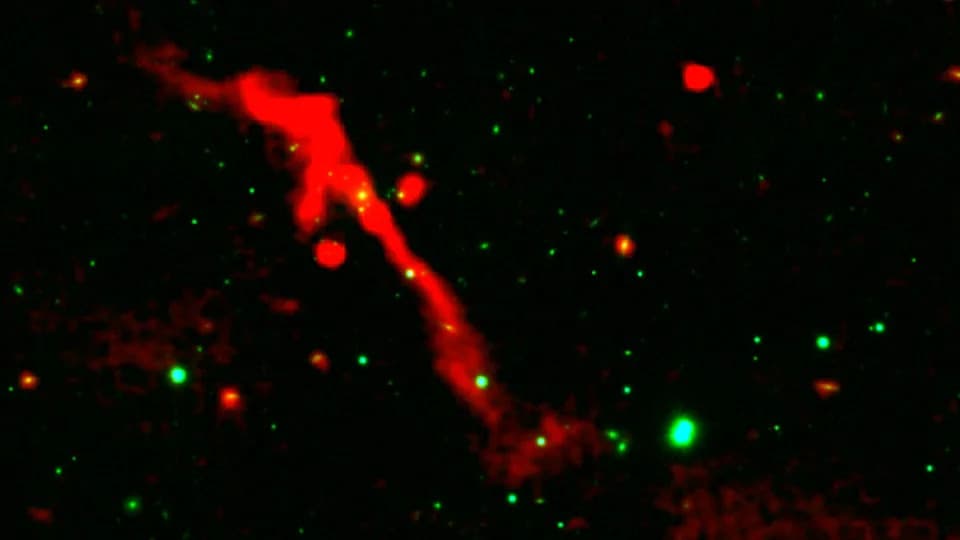
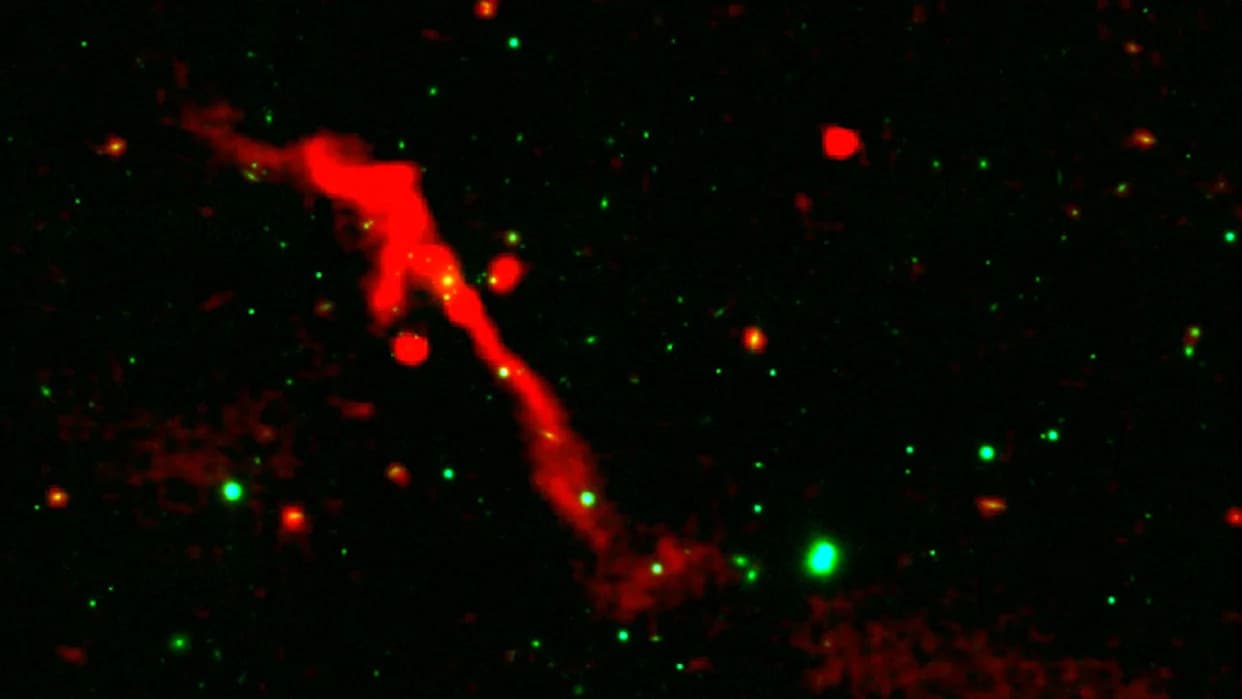
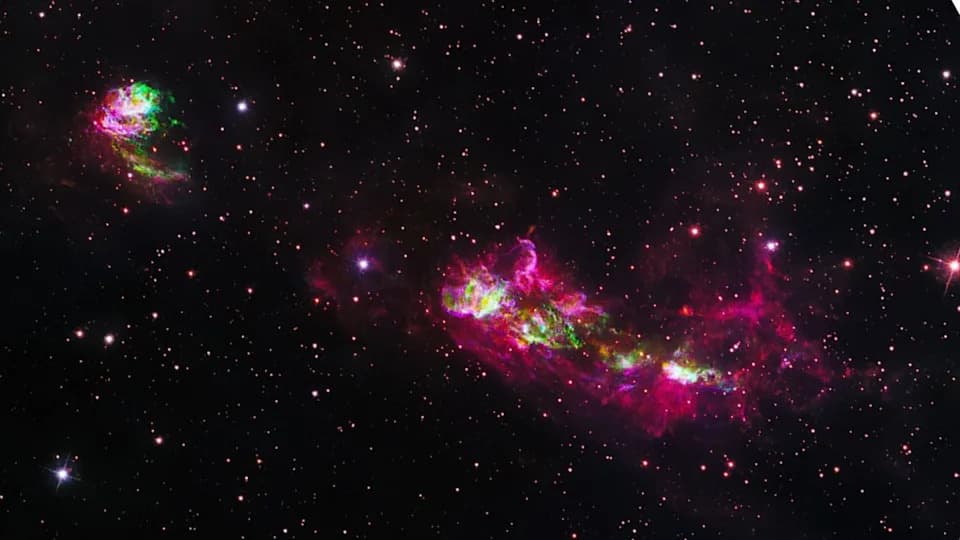
The comic volcano J1007+3540, the eruption of a once dormant black hole, as seen by LOFAR. | Credit: LOFAR/Pan-STARRS/S. Kumari et al.
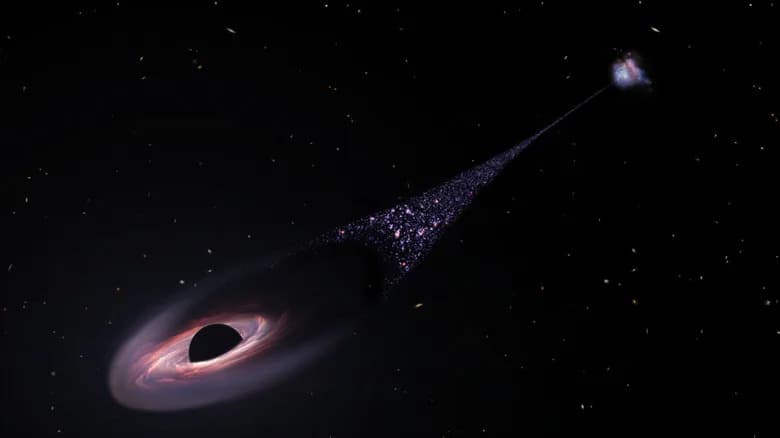
A once-dormant supermassive black hole at the heart of galaxy J1007+3540 has suddenly reactivated, launching a radio jet that stretches across almost one million light-years. Using complementary low-frequency radio data, researchers have captured a striking example of a restarting active galactic nucleus (AGN) interacting with the hot gas of its host galaxy cluster.
Radio Eyes Reveal a Restarting Engine
The team combined observations from the Low Frequency Array (LOFAR) in the Netherlands and India’s upgraded Giant Metrewave Radio Telescope (uGMRT) to map the radio emission from J1007+3540. The images show a bright, compact inner jet surrounded by a much fainter outer "cocoon" of aged plasma — a morphology that points to multiple episodes of jet activity separated by long quiet intervals.
"It's like watching a cosmic volcano erupt again after ages of calm — except this one is big enough to carve out structures stretching nearly a million light-years across space,"
said team leader Shobha Kumari of Midnapore City College, India.
How Jets Form and Why This One Is Special
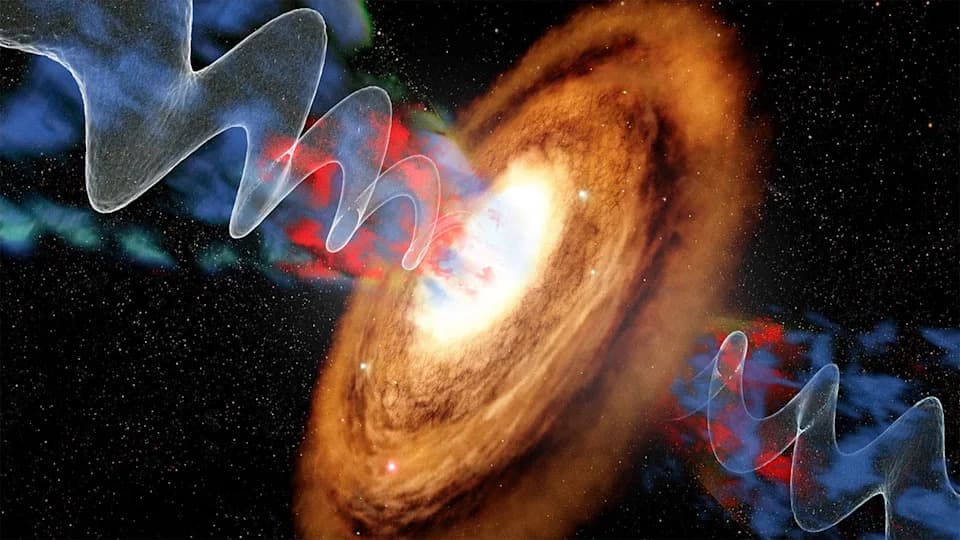
Active supermassive black holes are fed by rotating accretion disks of gas and dust. Magnetic fields can funnel charged particles into narrow, relativistic jets that shoot out from the black hole's poles and glow strongly at radio wavelengths. In J1007+3540, the radio maps reveal both a fresh inner jet and a diffuse outer lobe — the latter interpreted as fossil plasma from earlier eruptions roughly 100 million years ago.
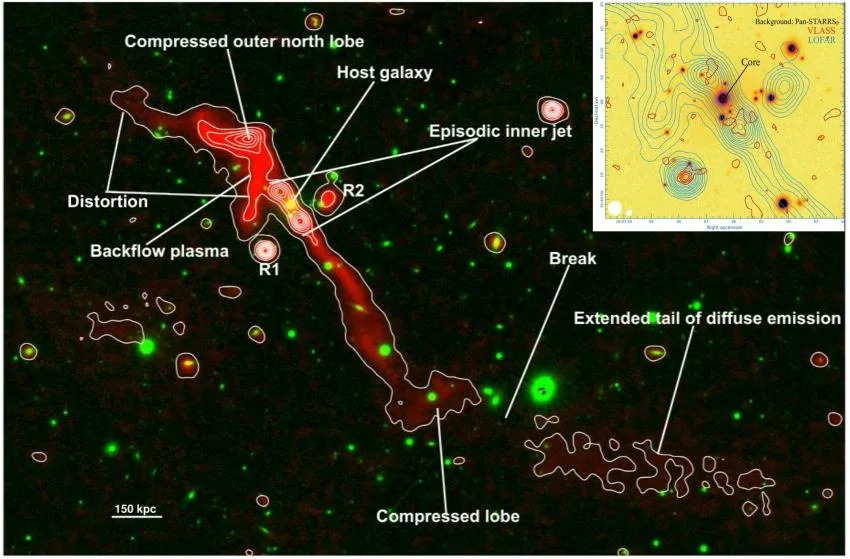
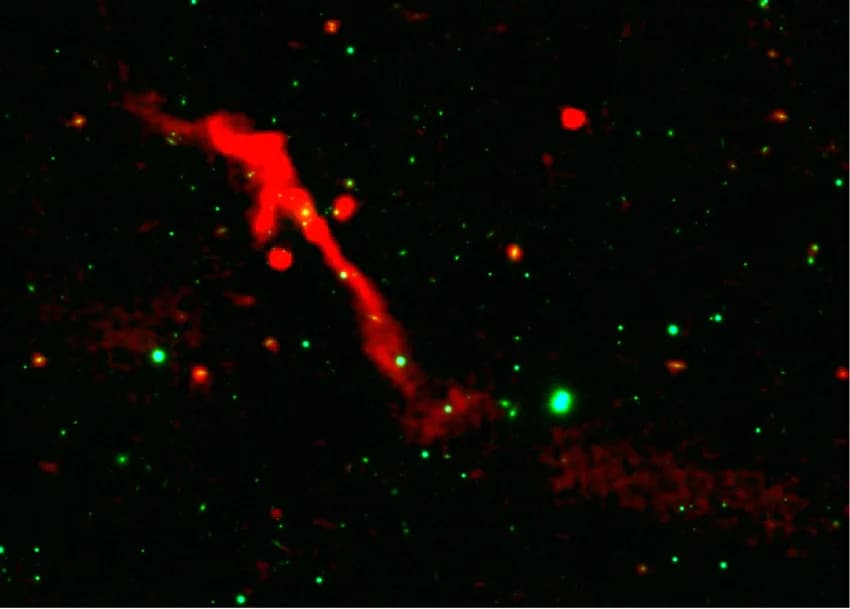
The LOFAR image of J1007+3540 annotated with labels indicating its structure | Credit: LOFAR/Pan-STARRS/S. Kumari et al
That layered appearance — young jets nested within older, exhausted lobes — is a clear signature of an episodic AGN, meaning the central engine has turned on and off over cosmic timescales. The researchers interpret the faint outer emission as the relic of previous outbursts, while the inner structure marks a recent reactivation.
Environmental Sculpting: Jets vs. Cluster Gas
J1007+3540 lives inside a massive galaxy cluster filled with very hot, dense gas. The cluster environment exerts strong external pressure that compresses, bends, and distorts the jet and its lobes. The LOFAR image shows a markedly compressed lobe to the north, where plasma appears to be pushed aside by surrounding gas. The uGMRT data indicate that this compressed region contains older particles that have lost energy, consistent with a relic component reshaped by the cluster medium.
Another telling feature is a long, faint tail extending to the southwest: a filament of plasma dragged through the intracluster medium and likely representing material millions of years old. Together, these structures show how dense cluster gas can both sculpt and age jet material over time.
Why This Matters
J1007+3540 provides a vivid case study of how AGNs can cycle between active and quiet phases and how their jets evolve across million-year intervals. Observations like these help astronomers understand feedback between black holes and their environments — a key process that influences galaxy growth and evolution across cosmic time.
The team's results were published on Jan. 15 in the Monthly Notices of the Royal Astronomical Society.
Help us improve.