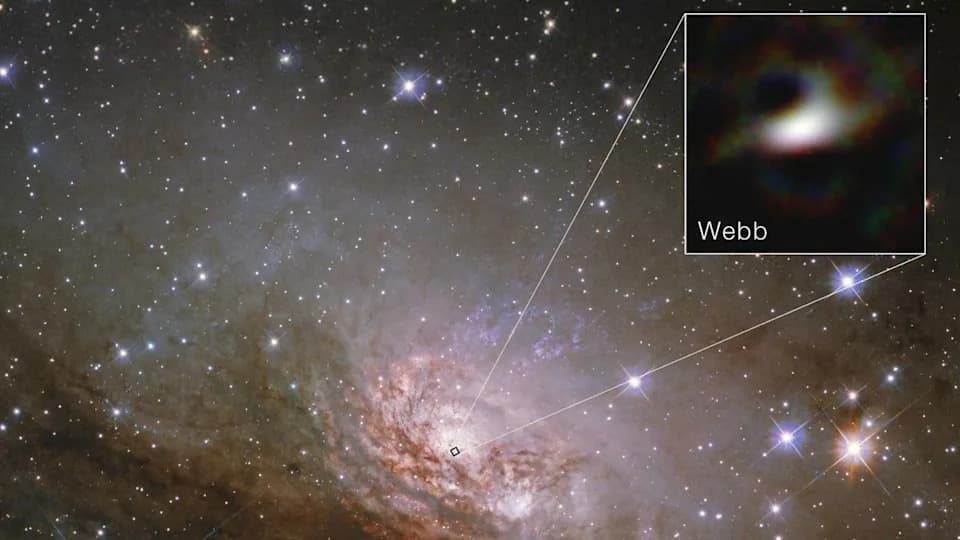
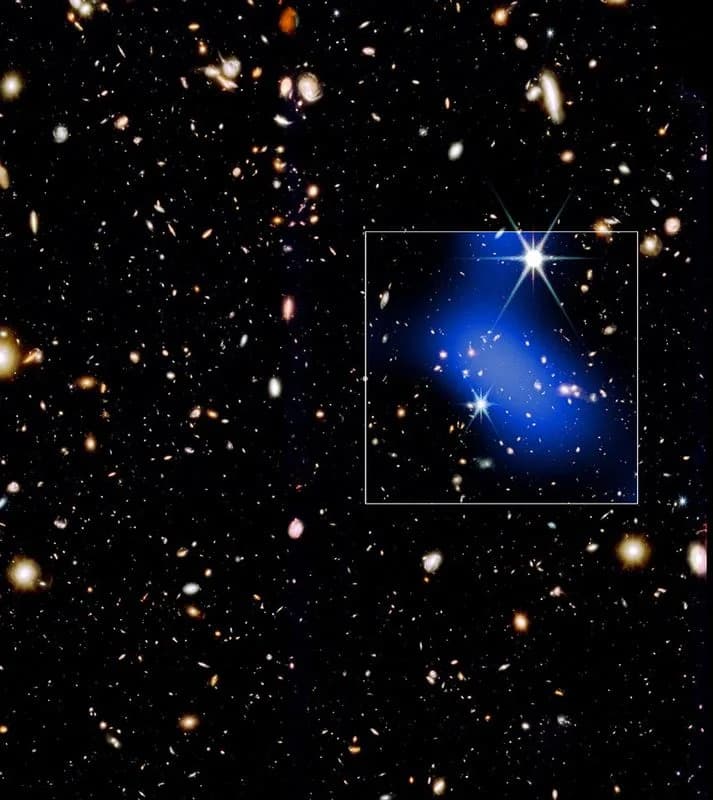
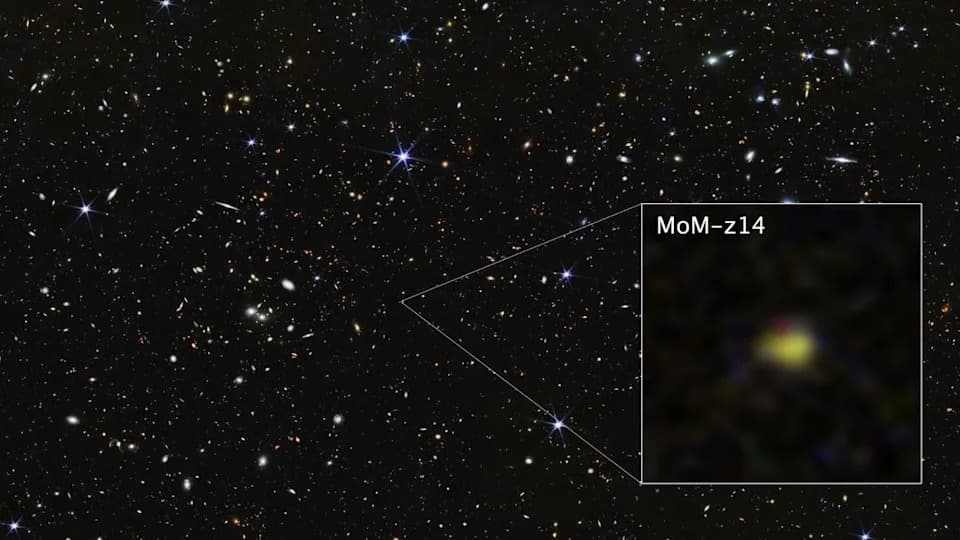
Researchers report an archival detection of a compact, intensely red source that also emits strong x‑rays — the so‑called “x‑ray dot.” The object, seen in Chandra and other data and dating to ~2 billion years after the Big Bang, combines the colour signature of JWST’s little red dots (LRDs) with emission typical of exposed accreting black holes. The team found no expected infrared reemission from dust and interprets this as possible evidence that the cocoon around a growing black hole is beginning to disperse. While the finding could link LRDs to later unobscured supermassive black holes, alternative explanations and skeptical voices mean follow‑up observations are required.
X‑Ray “Dot” May Reveal a Little Red Dot Shedding Its Cocoon — New Evidence in JWST Debate
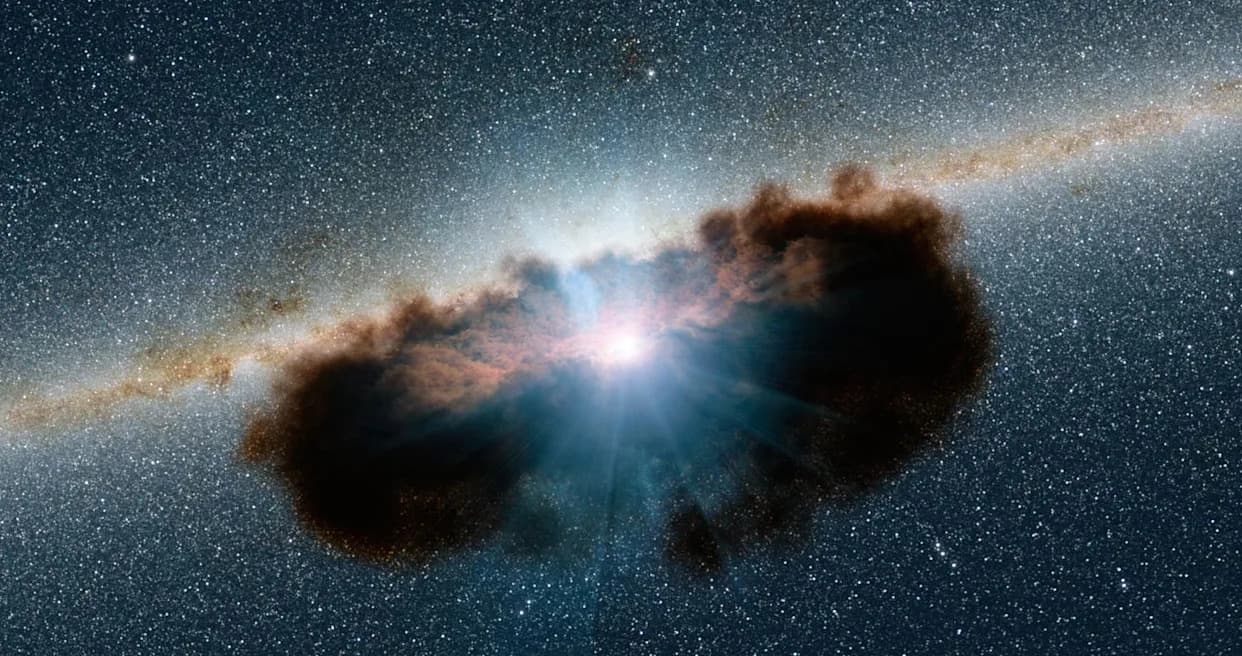
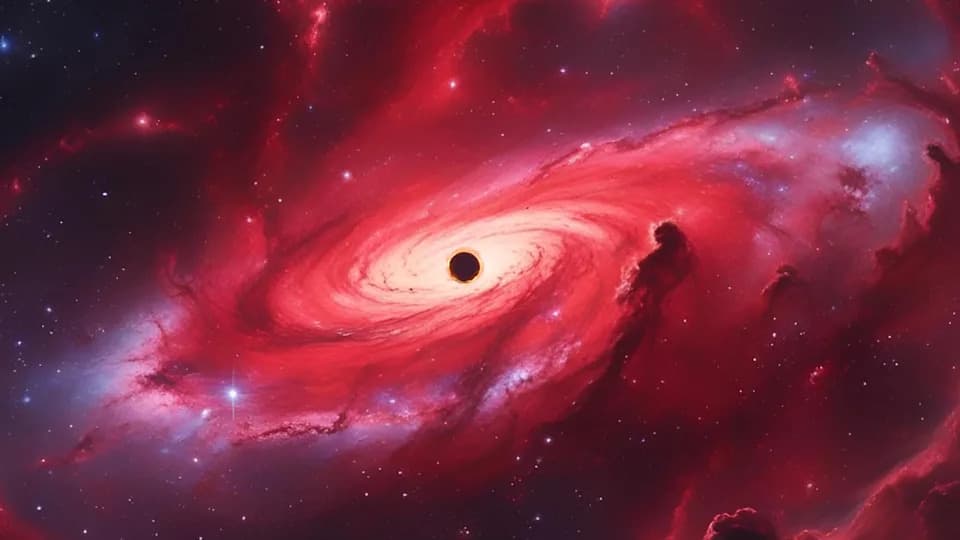
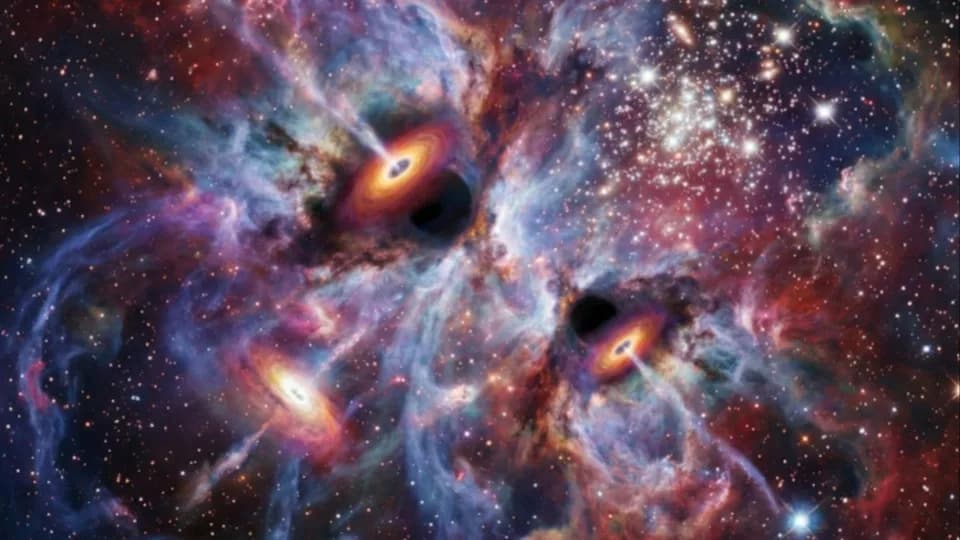
Artist’s rendering of a typical supermassive black hole partially obscured by a cloud of dust and gas. Astronomers are debating whether a strange newfound object in the early universe is one of these, or instead a “black hole star” chewing through its cocoon.(NASA/JPL-Caltech)
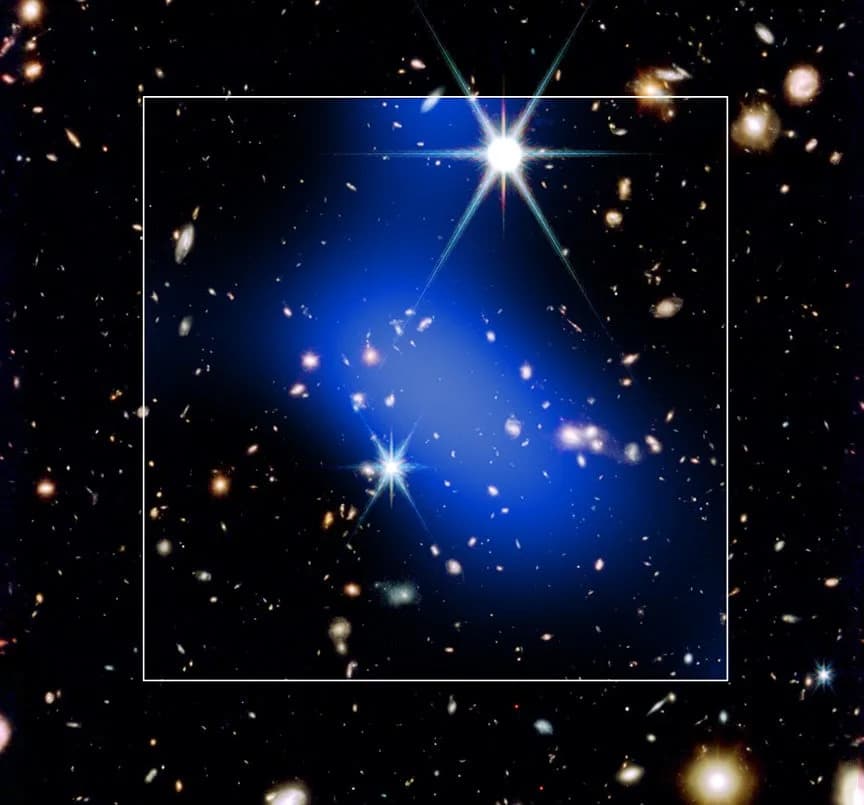
A compact, blood‑red source that also emits bright x‑rays has re‑ignited debate over the James Webb Space Telescope’s mysterious “little red dots” (LRDs). Found in archival data (including NASA’s Chandra X‑ray Observatory) and dating to when the universe was roughly two billion years old, this object — nicknamed the “x‑ray dot” — combines the deep red colour of LRDs with the high‑energy signature usually associated with exposed, actively accreting black holes.
The Little Red Dot Puzzle
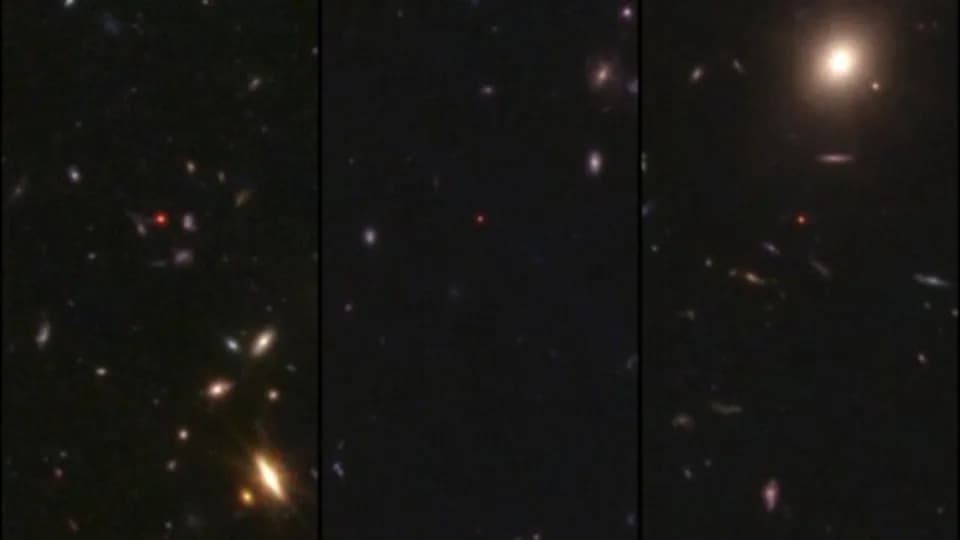
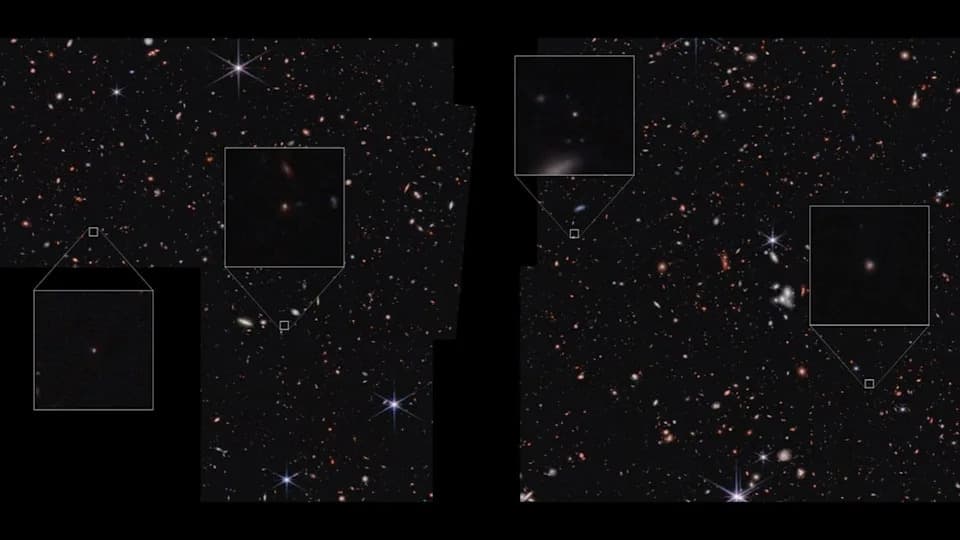
LRDs first appeared in JWST deep fields as compact, ruby‑hued sources that look star‑like but can span up to ~500 light‑years. In JWST surveys of very distant epochs these objects appear surprisingly common, constituting nearly 10% of the bright sources detected when the universe was about 5–15% of its current 13.8‑billion‑year age. One prominent idea is that many LRDs are not ordinary stars but are powered by rapidly growing black holes cloaked in dense, glowing cocoons of gas.
The X‑Ray Dot
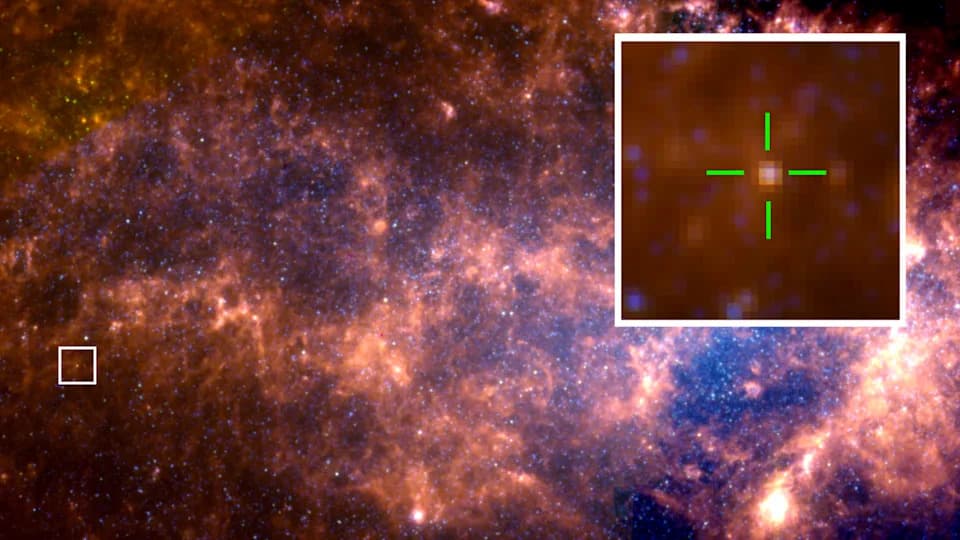
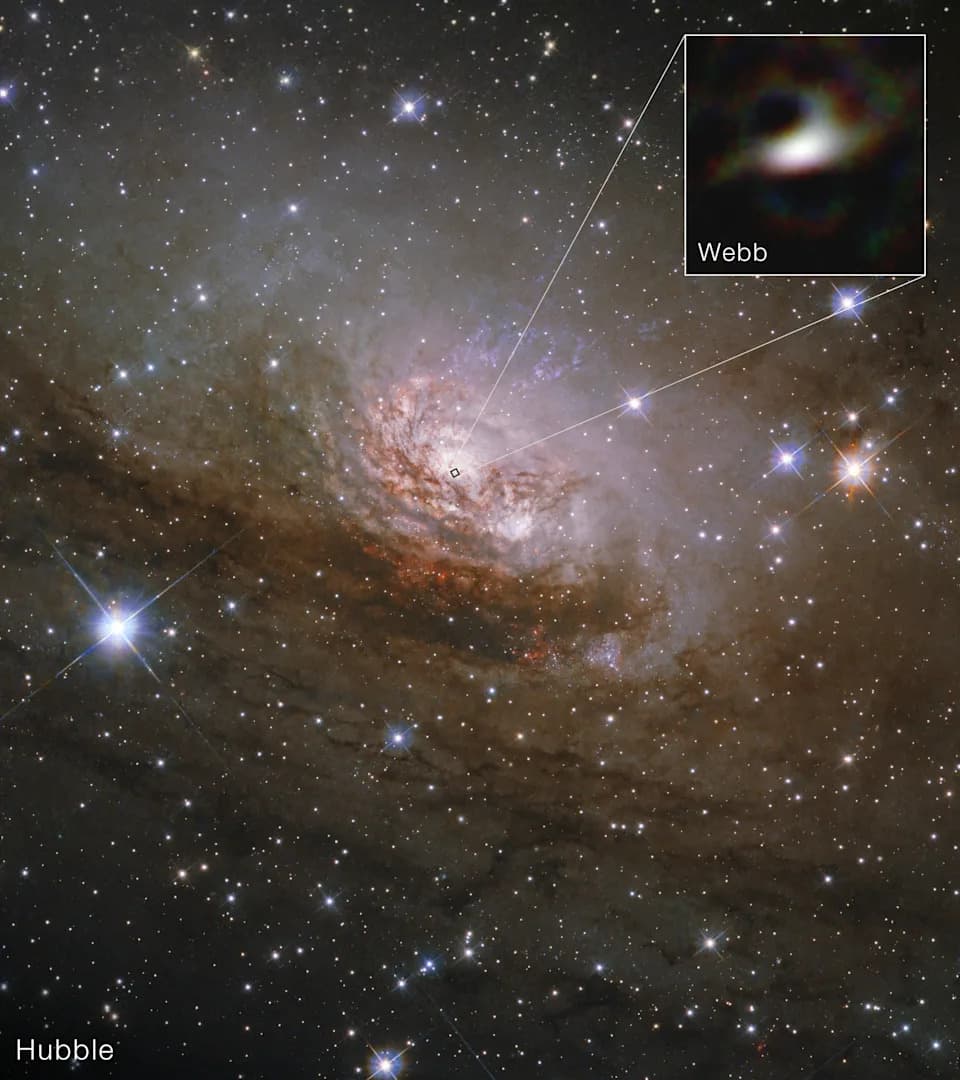
Researchers reexamined archival observations and identified a compact source near the handle of the Big Dipper that emits strong x‑rays yet appears intensely red in optical/near‑infrared images. The team suggests it may represent a black‑hole‑powered LRD caught in transition as its surrounding cocoon begins to break apart, potentially revealing the central engine.
“Have we found the rare LRD that is just on the precipice of its cocoon starting to fall apart?” — Raphael Hviding, Max Planck Institute for Astronomy.
Why The Object Is Intriguing — And Contested
Many active galactic nuclei (AGN) appear red simply because dust absorbs shorter wavelengths and re‑emits the energy in the infrared. The team searched archival mid‑ to far‑infrared data for this expected reemission and found none, which they interpret as evidence against simple dust reddening and in favour of a disintegrating cocoon. If correct, this would be a direct observational link between JWST’s LRD‑rich early universe and the unobscured supermassive black holes common at later times.
“The object looks to me like a simple, dust‑obscured and reddened accreting black hole.” — Roberto Maiolino, University of Cambridge.
Some puzzles remain: if the cocoon is only now opening, x‑rays might be expected to be partially attenuated — yet the source is unusually luminous in x‑rays. The authors have requested additional observations to measure spectra, variability and the infrared behaviour that would help distinguish between a dust‑reddened AGN and a genuine cocoon‑dispersing LRD.
Broader Context and Next Steps
The discovery adds momentum to several competing ideas for LRDs, including collapsing gas clouds forming black holes and models invoking irregular, nonspherical geometries. The team posted a preprint on January 14 and has submitted their paper to Astrophysical Journal Letters; follow‑up observations are planned. Finding more objects like the x‑ray dot will be crucial to confirm whether LRDs commonly host buried black holes and to map how these cocoons disperse over cosmic time.
Bottom line: The x‑ray dot is a tantalizing candidate for a black‑hole‑powered LRD in transition, but more data are needed to rule out a more prosaic explanation — a dust‑reddened active nucleus — and to understand how LRDs evolve into the familiar black‑hole populations of the modern universe.
Help us improve.