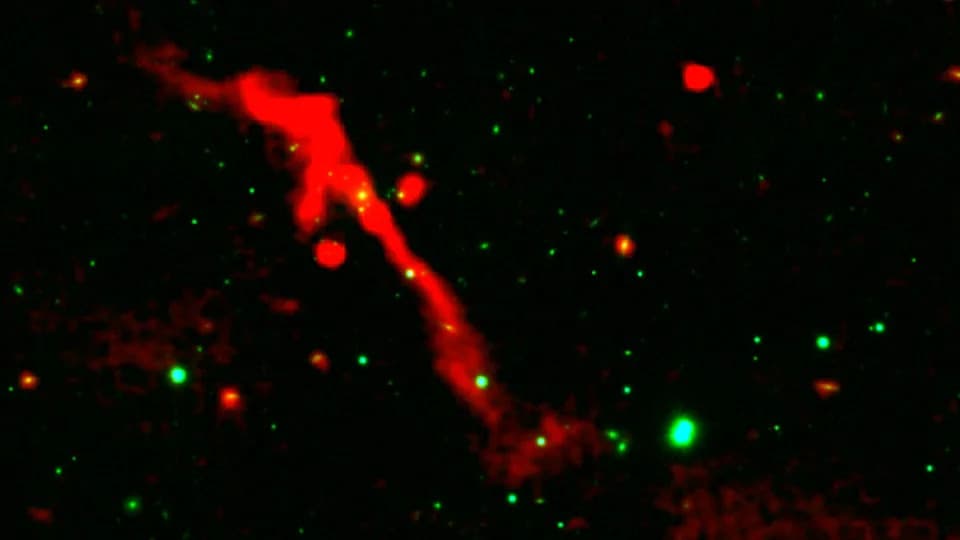
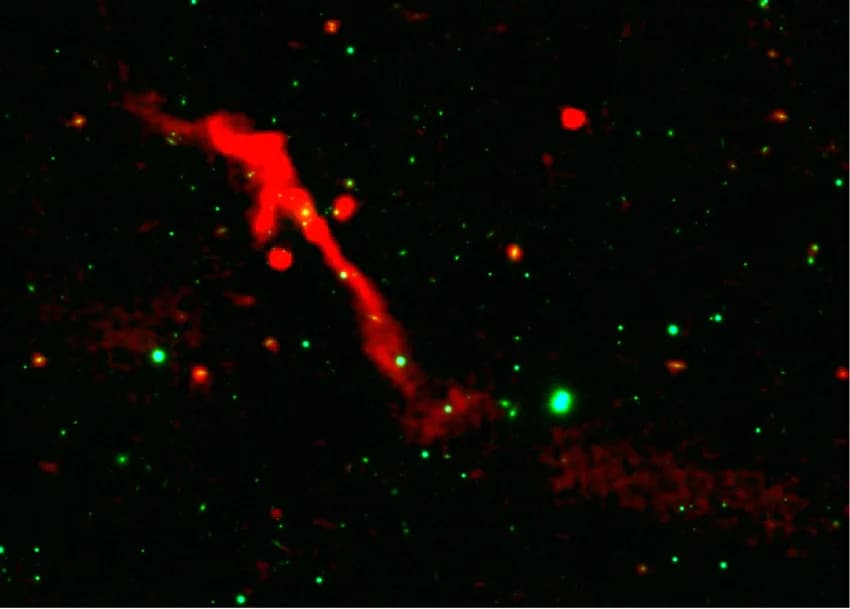
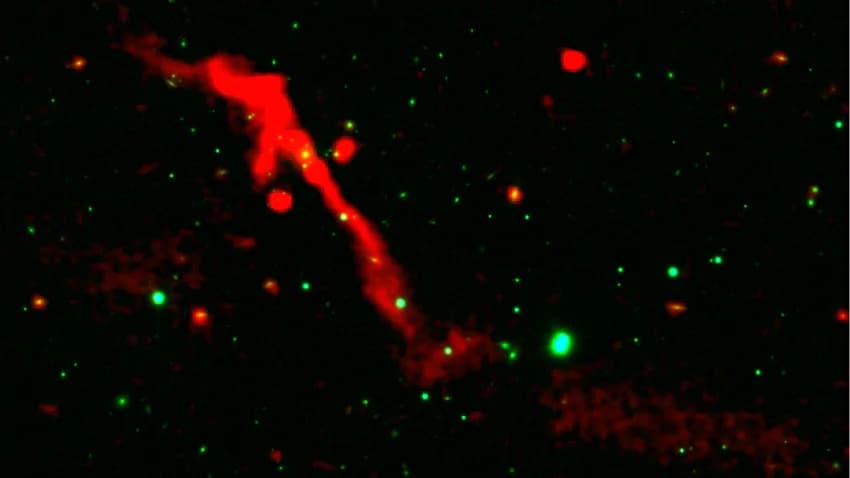
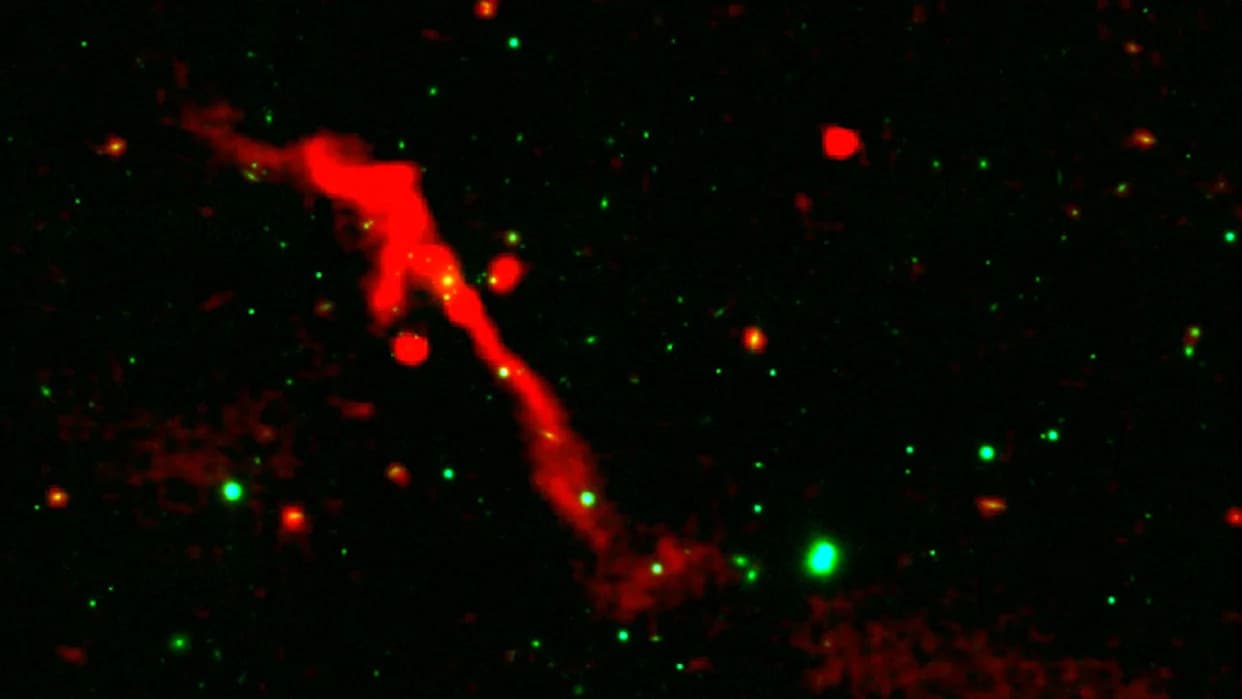
Researchers observed a supermassive black hole about 665 million light years away produce an unusually long-lived relativistic jet after tearing apart a red dwarf. The jet began roughly two years after the star was disrupted and has now been active for six years, growing about 50 times brighter in radio waves. Scientists say the cause is unclear (magnetic fields are suspected) and expect the emission to peak within a year or two before slowly fading over a decade or more.
Supermassive Black Hole Keeps Firing A Growing Jet Six Years After Tearing Apart A Star
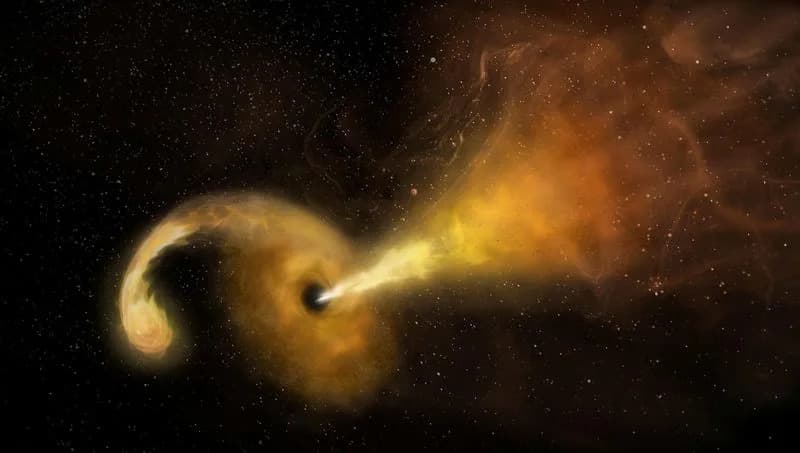
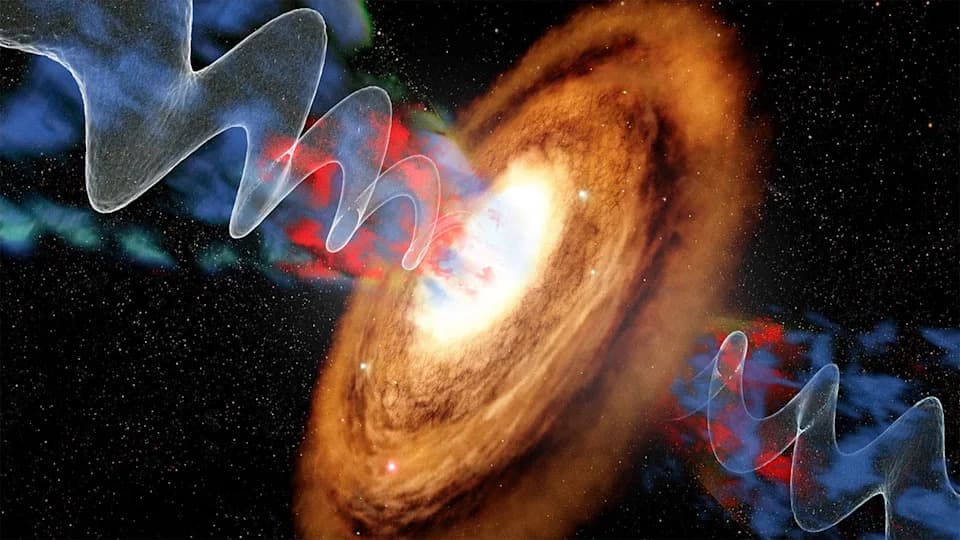
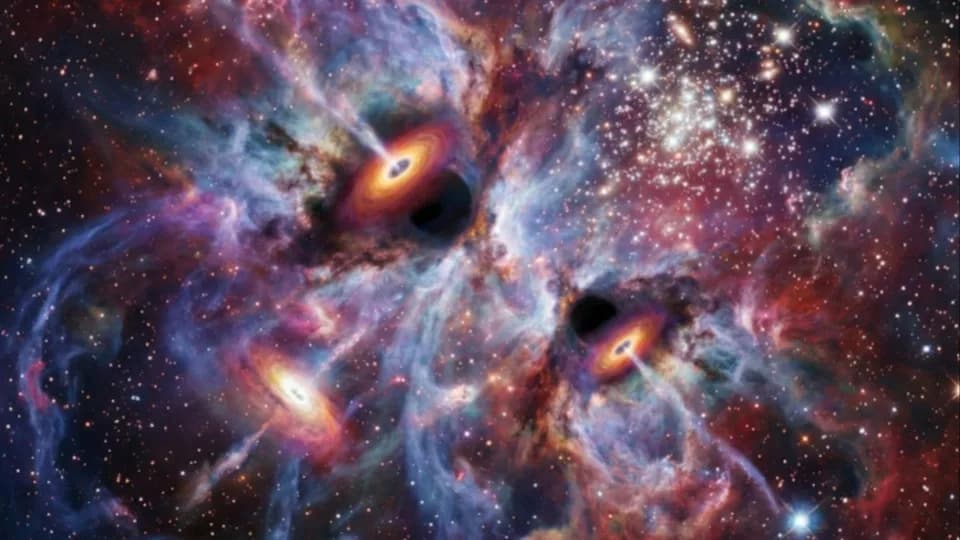
An artist's concept of a tidal disruption event that happens when a star passes fatally close to a supermassive black hole, which reacts by launching a relativistic jet, in this handout image released on June 15, 2018 and obtained by Reuters on February 5, 2026. NRAO/AUI/NSF/NASA/Handout via REUTERS
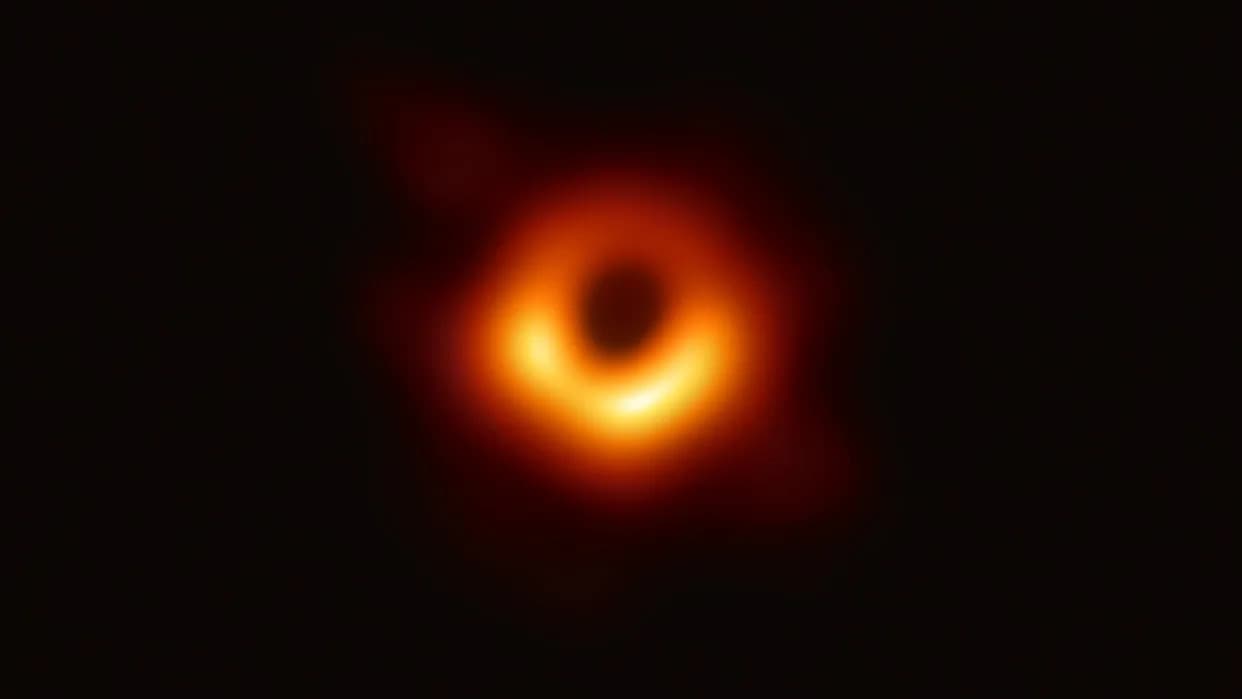
Scientists monitoring a distant galaxy have watched a supermassive black hole produce an unusually long-lived and intensifying relativistic jet after shredding a red dwarf star that wandered too close.
What Astronomers Saw
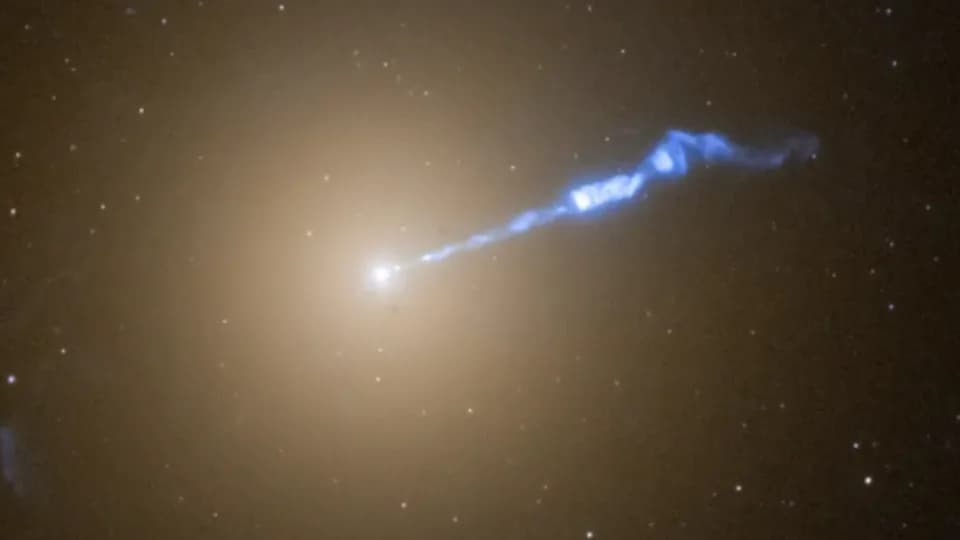
Using radio telescopes in New Mexico and South Africa, researchers tracked the object — located about 665 million light years from Earth — as it began ejecting a fast-moving jet of gas and debris roughly two years after the star was torn apart. That jet has now been active for about six years, longer than any comparable tidal disruption–driven jet observed so far, and its radio brightness has increased by a factor of roughly 50 since discovery.
"The exponential rise in the luminosity of this source is unprecedented," said University of Oregon astrophysicist Yvette Cendes, lead author of the study published in the Astrophysical Journal.
Key Details
The black hole’s mass is estimated at about 5 million times the mass of the Sun — similar in scale to the Milky Way’s central black hole. The doomed star was a red dwarf roughly one-tenth the Sun’s mass. The bright radio emission comes from stellar material that approached the black hole, heated and accelerated, but did not cross the event horizon.
"Objects that approach too close ... can be stretched into long streams of debris, a process called 'spaghettification,'" said University of Arizona astrophysicist Kate Alexander, a co-author on the paper. Much of the expelled material was accelerated and ejected rather than swallowed.
Why This Is Unusual
The researchers do not yet know precisely what powers such a spectacular, long-lasting relativistic jet. Magnetic fields near the black hole are a strong candidate, but the phenomenon likely requires uncommon conditions — otherwise these jets would be seen more often.
Outlook
Teams monitoring the source expect the radio emission may peak later this year or next year. After the peak, the brightness should decline slowly, and the event could remain visible for a decade or more.
Study: Published in the Astrophysical Journal. Reporting by Will Dunham; editing credited to Rosalba O'Brien.
Help us improve.