A supermassive black hole in galaxy J1007+3540 has reactivated after about 100 million years, launching a radio jet roughly one million light-years long. LOFAR and the upgraded GMRT captured both the new bright jet and an extended halo of older ejecta, revealing how repeated AGN outbursts interact with the intracluster medium (ICM). The clear, large-scale features make J1007+3540 a valuable laboratory for testing models of episodic AGN activity and its effects on star formation and galaxy evolution.
Back From 100 Million Years of Silence: A Supermassive Black Hole Erupts a Million-Light-Year Jet
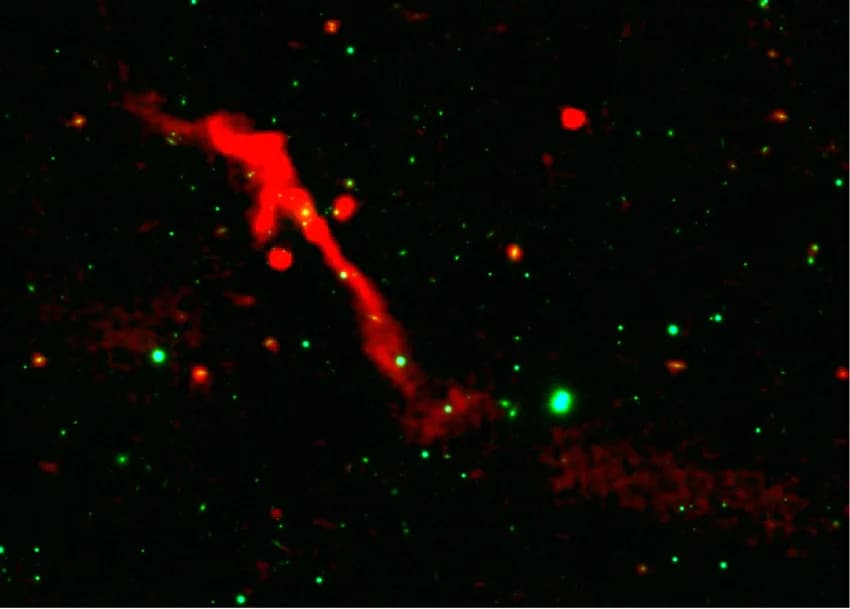
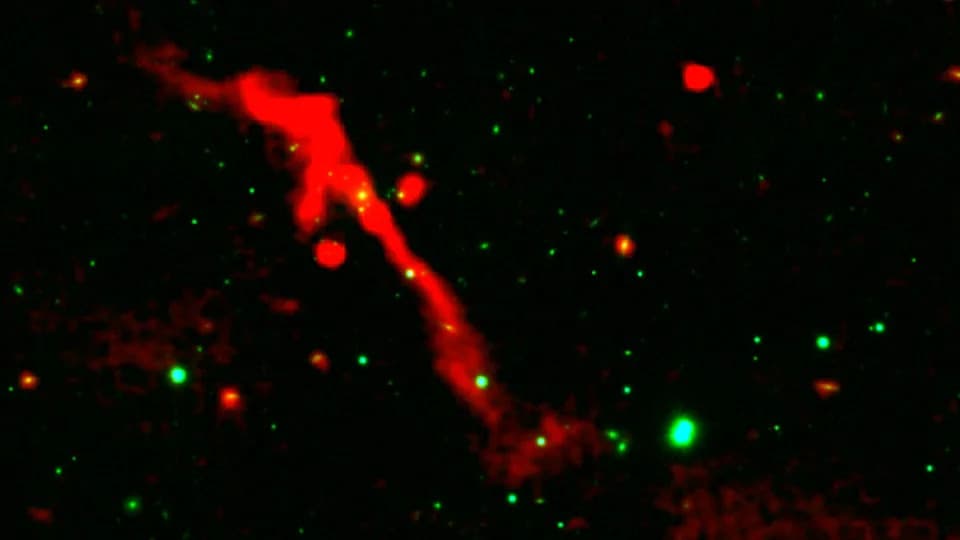
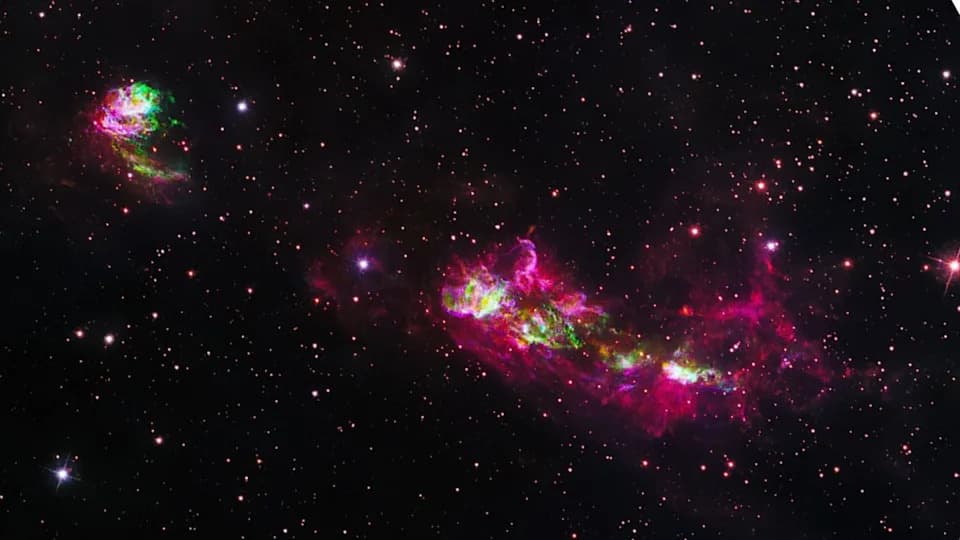
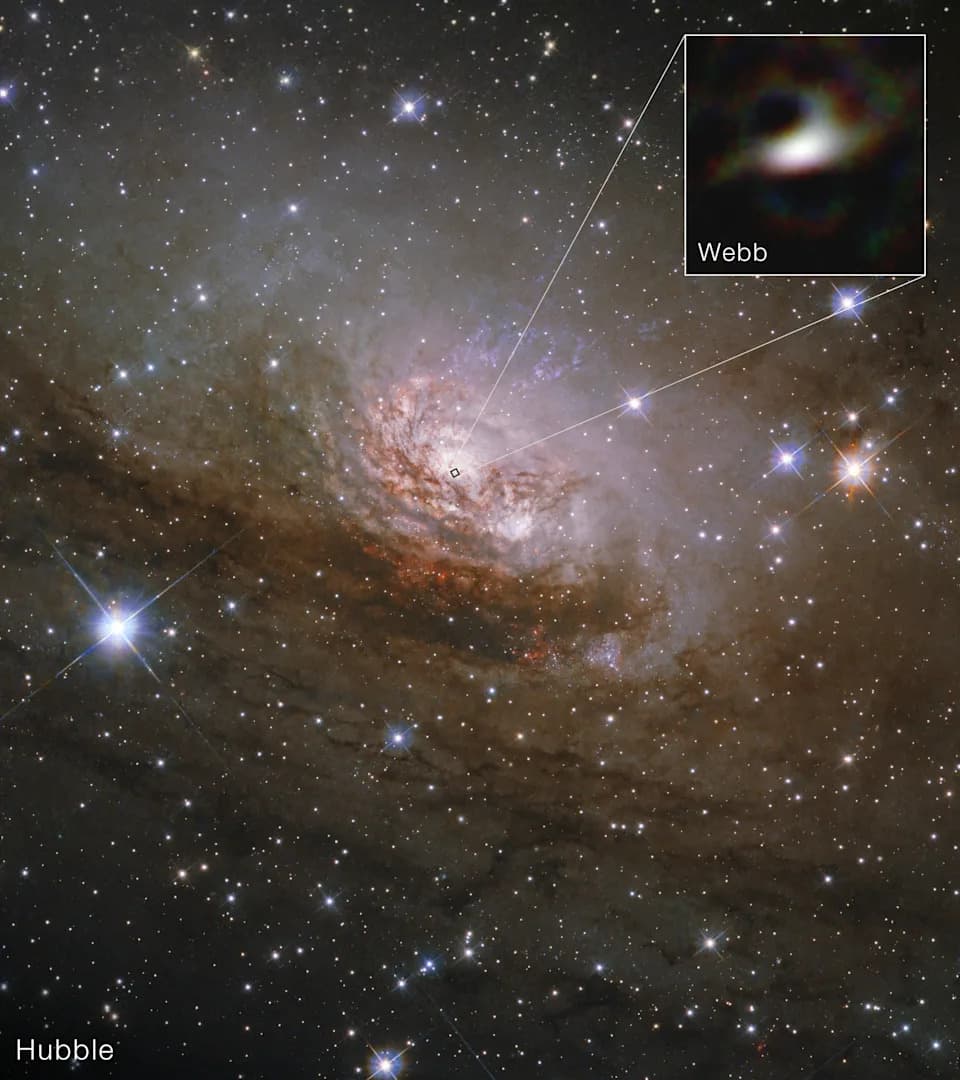
After 100 million years of dormancy, the supermassive black hole at the center of galaxy J1007+3540 is glowing bright.(LOFAR/Pan-STARRS/S. Kumari et al.)
Deep inside a very bright galaxy cluster, the supermassive black hole at the center of galaxy J1007+3540 has come alive after roughly 100 million years of dormancy. New low-frequency radio observations reveal a jet of particles and gas stretching about one million light-years from the galaxy's core, alongside an extended halo of older ejecta from previous active phases.
The discovery, led by Shobha Kumari of Midnapore City College and published in the Monthly Notices of the Royal Astronomical Society, highlights J1007+3540 as an unusually large and clear example of an episodic radio galaxy—systems in which a central black hole alternately powers bright jets and then falls quiet for long intervals.
Seeing Past and Present at Once
Radio interferometers at the Low Frequency Array (LOFAR) in the Netherlands and the upgraded Giant Metrewave Radio Telescope (uGMRT) in India captured both a fresh, luminous jet and a diffuse, older halo. The juxtaposition of new and relic emission in the same system makes J1007+3540 particularly valuable: it lets astronomers study how repeated outbursts interact with the environment over cosmic time.
“Although some ‘restarted’ radio galaxies are known in the literature, J1007+3540 stands out,”
—Shobha Kumari, lead author.
Impact on the Surrounding Cluster
A faint, fragmented tail of ancient ejecta extends into intergalactic space and has been re-illuminated by subsequent outbursts. Its shape and brightness record how the jet interacted with the hot gas that fills the galaxy cluster—the intracluster medium (ICM). Such interactions can reshape jets, redistribute energy, and either trigger or suppress star formation in the host galaxy and nearby galaxies.
“This system is just physically very large, and that makes it more amenable to study in many ways,”
—Niel Brandt, Pennsylvania State University.
“The jets don’t just carve a path through empty space—they are constantly shaped and changed by the gas they encounter.”
—Vivian U, University of California, Irvine.
Why Rare Cases Matter
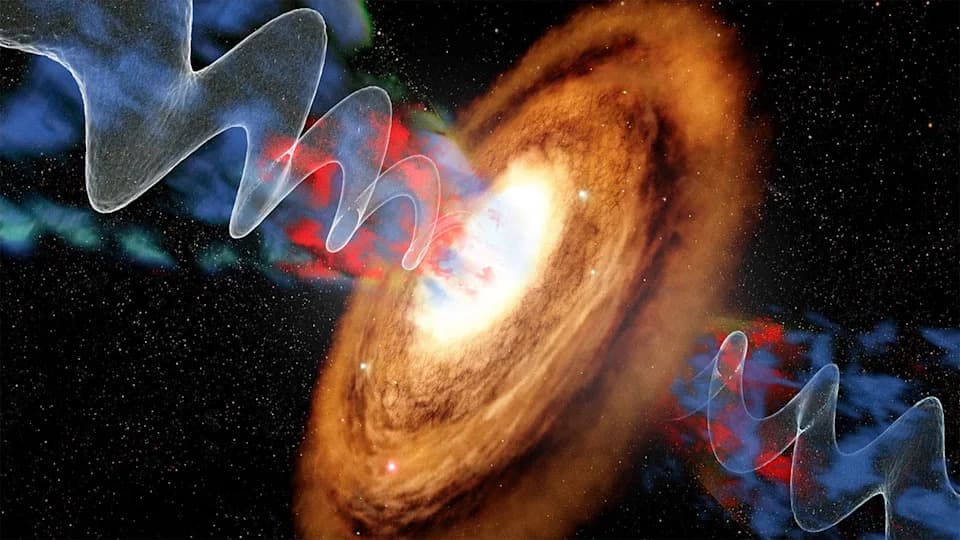
Because AGN on-off cycles unfold over thousands to millions of years, astronomers rarely witness transitions directly. Systems like J1007+3540—where both recent and ancient activity are visible—serve as natural laboratories to test theoretical models of jet formation, propagation, and feedback on galaxy evolution.
“The oddballs are exciting,” says Phil Hopkins of Caltech. Observing unusual examples helps refine our understanding of how black hole-driven jets develop and influence their cosmic neighborhoods.
Future multiwavelength follow-up (X-ray, optical, and higher-resolution radio imaging) will refine estimates of the jet’s energy, age, and environmental impact, improving our picture of how episodic AGN shape galaxies and clusters over cosmic time.
Help us improve.