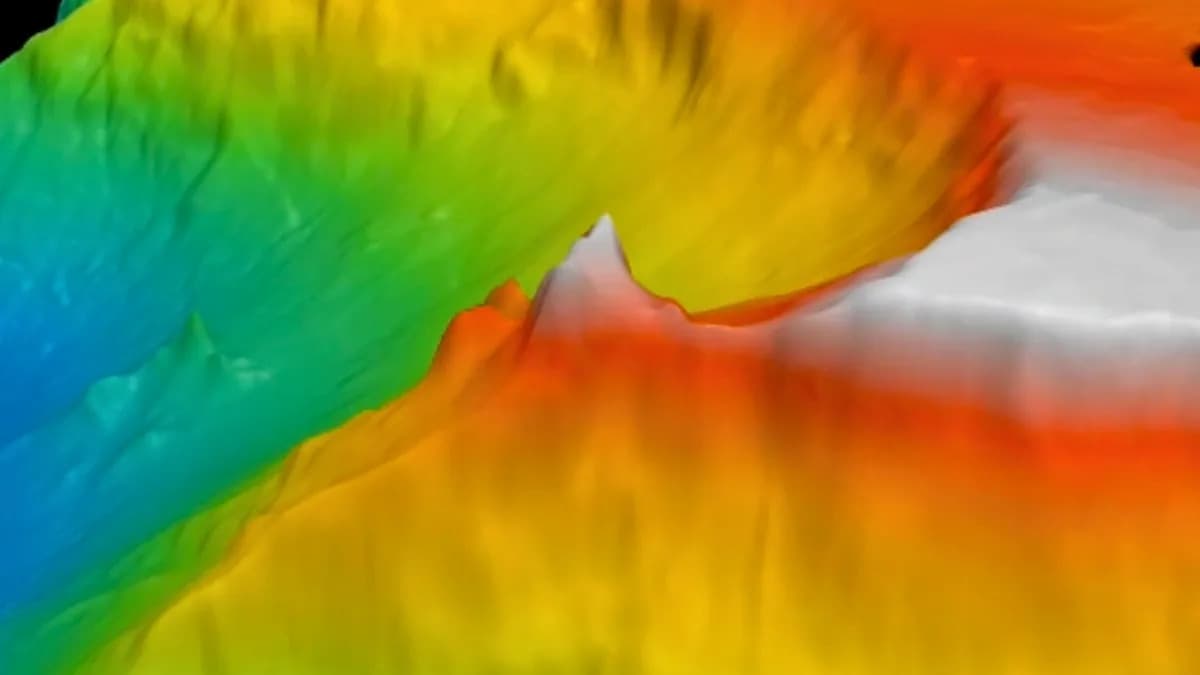
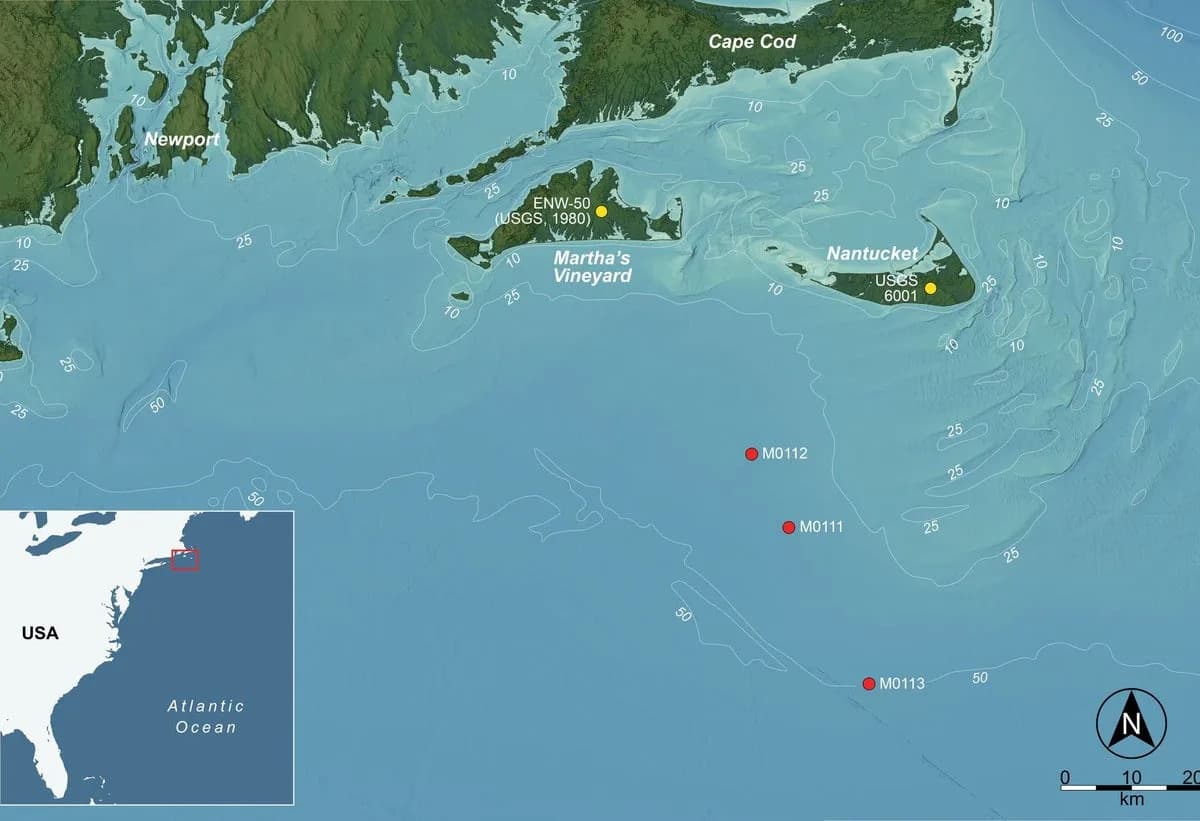
Researchers identify a massive mantle feature — the Northern Appalachian Anomaly (NAA) — that likely originated near the Labrador Sea about 80 million years ago and is migrating beneath North America. The NAA is estimated at about 350 km across and sits roughly 200 km beneath New England; models indicate it moves ~20 km per million years. The study supports a "mantle wave" or "drip" model, where molten blobs travel beneath continents, increasing buoyancy and potentially uplifting mountain ranges. Despite headlines, the anomaly presents no immediate threat: its center is not expected beneath New York for an estimated 15 trillion years.
Giant Mantle 'Blob' Slowly Heading Toward New York — Could It Have Split Greenland From Canada?

A Giant Hot Blob is Heading Toward NYCJose A. Bernat Bacete - Getty Images
Scientists report that a vast mass of hot rock, called the Northern Appalachian Anomaly (NAA), is migrating slowly beneath North America and is on a very long-term trajectory toward the northeastern United States.

Photo credit: Hearst Owned
More than a century after Alfred Wegener proposed the theory of continental drift, researchers continue to refine how deep-Earth processes shaped surface geography. An international team publishing in Geology argues that the NAA may have played a role in separating Greenland from Canada about 80 million years ago and that the same feature is now moving beneath the Appalachian region.

Photo credit: Hearst Owned
What Is the NAA?
The NAA is a thermal upwelling — a concentrated, partially molten region in the mantle — estimated to be roughly 350 km (218 miles) across and currently situated about 200 km (124 miles) beneath New England. Using seismic tomography, geodynamic simulations, and plate reconstructions, the team traced the feature back to the Labrador Sea, where rifting between Canada and Greenland began.

Photo credit: Hearst Owned
How Fast Is It Moving?
Model results suggest the anomalous mass migrates at about 20 km (12 miles) per million years. At that glacial pace, the authors calculate the center of the feature will not be beneath New York City for roughly 15 trillion years — a timescale far beyond any human or even planetary concern. In short: there is no imminent hazard to cities or populations.

Photo credit: Hearst Owned
Implications: The "Mantle Wave" or "Drip" Model
The paper advances a hypothesis often described as a "mantle wave" or "drip" model. When tectonic plates rift, hot, dense portions of the lower plate can detach and sink into the mantle, then migrate laterally beneath continental lithosphere. Beneath a continent, the added heat and buoyancy from such a blob can act like a hot-air balloon flame — subtly uplifting the overlying crust and potentially reinvigorating mountain ranges over millions of years.

Photo credit: Hearst Owned
“This thermal upwelling has long been a puzzling feature of North American geology,” lead author Tom Gernon said. “Our research suggests it’s part of a much larger, slow-moving process deep underground that could potentially help explain why mountain ranges like the Appalachians are still standing.”
Co-author Sascha Brune added that these drips can form in series and migrate sequentially, like dominoes, meaning deep consequences of ancient rifting can persist long after surface tectonics appear quiescent.

Photo credit: Hearst Owned
What This Means For Readers
The study highlights how sluggish mantle dynamics can leave long-lived imprints on continental structure and topography. While the idea that a single mantle blob could have helped split Greenland from Canada is provocative, it complements rather than overturns the broader framework of plate tectonics and continental breakup established over decades.
Bottom line: The NAA is a scientifically interesting, slow-moving mantle feature with possible ties to Cretaceous rifting. It poses no short-term danger to New York or other population centers, but deep-Earth processes like this help explain long-term changes in continental elevation and mountain persistence.
Help us improve.