Parker Solar Probe has produced the first detailed two-dimensional maps of the Alfvén surface—the boundary where the sun’s magnetic control gives way and plasma is swept into the solar wind—using seven years of SWEAP instrument data. The maps show the boundary becomes more irregular and turbulent during solar maximum. These findings refine our understanding of where the sun’s atmosphere ends and can improve space weather forecasts that protect satellites, communications and power systems. Parker remains operational and will continue sending data through at least mid-2029.
Parker Solar Probe Produces First Detailed Maps of the Sun’s Alfvén Surface During Peak Activity

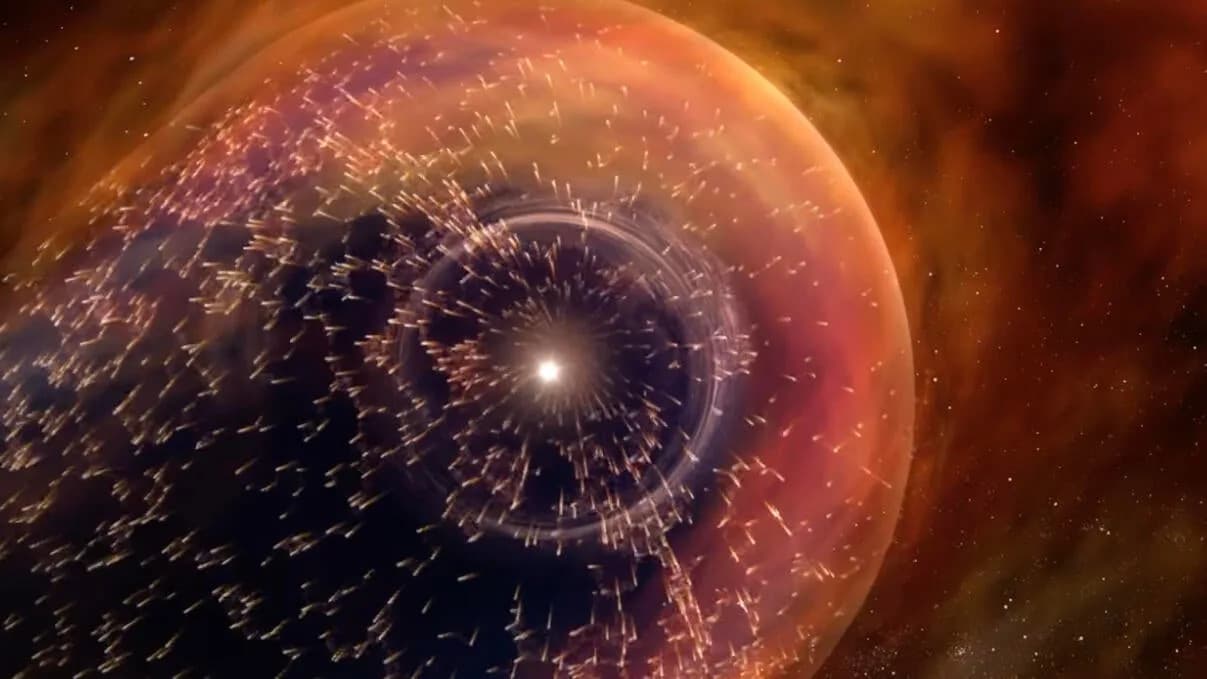
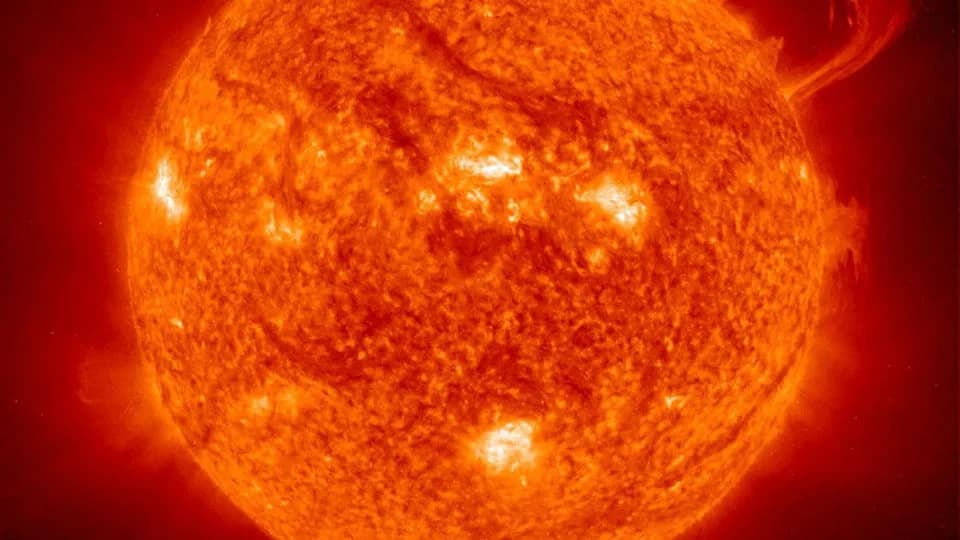
An illustration of the sun's elusive Alfvén surface, the point of no return beyond which solar particles stream away as solar wind. The graphic was made with new data collected by NASA's Parker Solar Probe. | Credit: CfA/Melissa Weiss
For the first time, scientists have produced high-resolution, two-dimensional maps of the sun's outermost atmosphere using seven years of measurements from NASA’s Parker Solar Probe. The data—collected intermittently as Parker skimmed the solar corona beginning in 2021—reveal the shape and behavior of the elusive Alfvén surface in unprecedented detail.
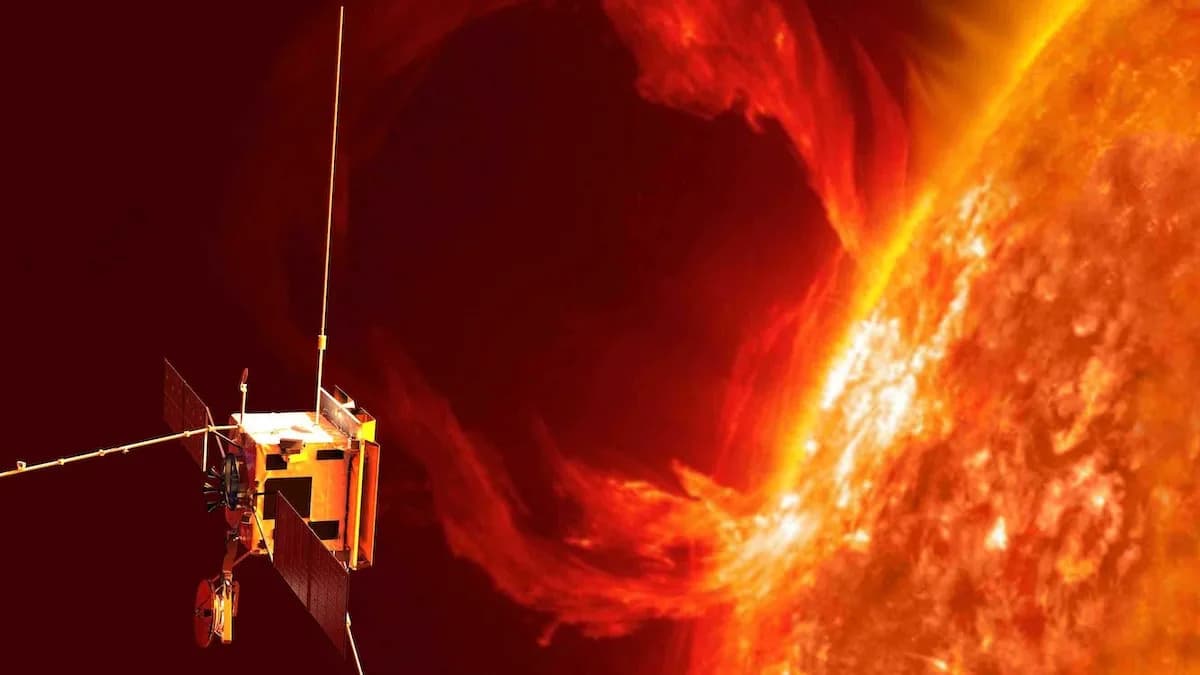
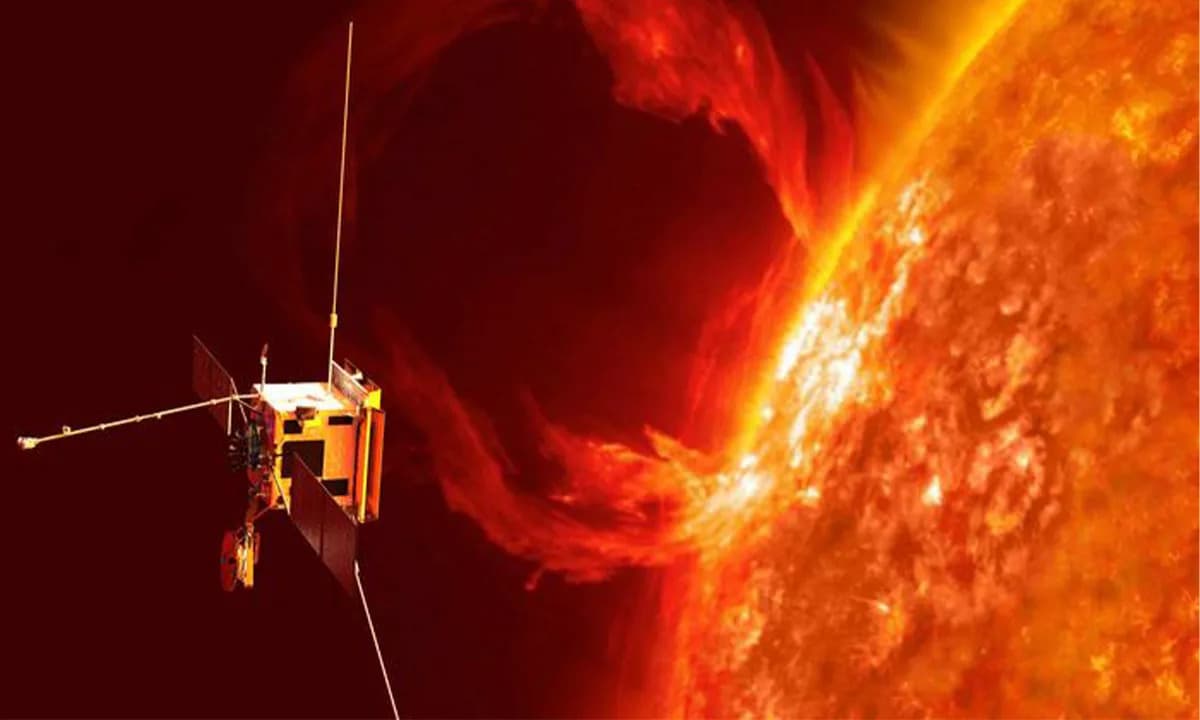
Parker's unique capabilities. Parker is the first human-made spacecraft to travel so close to a star. Its success depends on an advanced heat shield that endures temperatures above 2,500°F (about 1,370°C). Although the corona is much hotter—roughly 1–3 million kelvin (about 1.8–5.4 million °F)—it is extremely tenuous, so a fast-moving spacecraft encounters relatively few particles and can briefly pass through the corona's outer edge.
What Is the Alfvén Surface? The Alfvén surface is the invisible frontier where the sun's magnetic influence on charged particles weakens and the steady stream of the solar wind carries plasma outward. In physical terms, it marks where the solar wind speed exceeds the local Alfvén speed and magnetic forces no longer dominate plasma motion. Until now, its shape and dynamics were poorly constrained.
New maps and what they show. Using data from Parker’s Solar Wind Electrons Alphas and Protons instrument (SWEAP), researchers produced 2D maps that show the Alfvén surface changes routinely with solar activity. Over the sun’s roughly 11-year cycle, the boundary becomes more irregular, "spikier," and turbulent during solar maximum, when flares and eruptions are more frequent. These variations affect where and how the corona transitions into the solar wind.
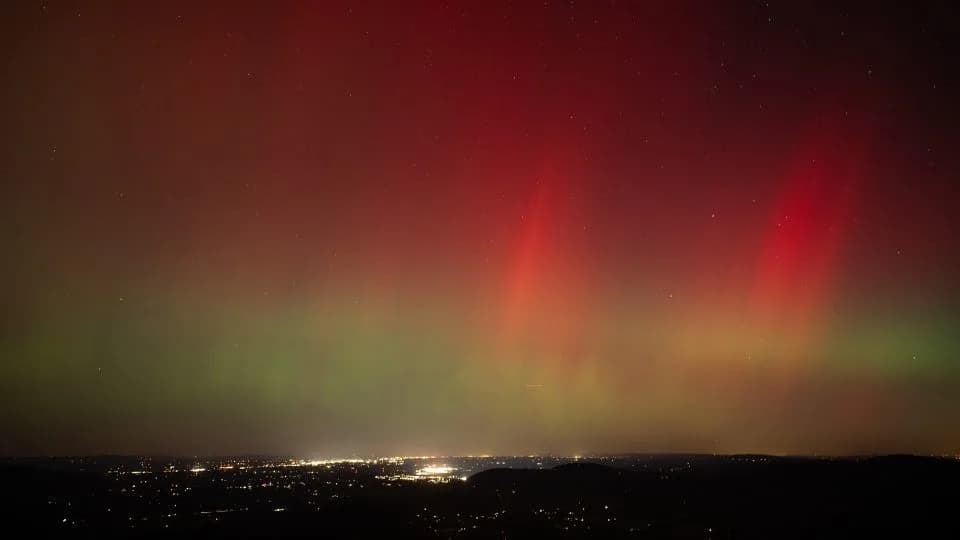
Why this matters for Earth. Better knowledge of the Alfvén surface and the corona–solar-wind transition improves our physical models of space weather. That, in turn, can help forecasters predict flare- and CME-driven disturbances that threaten satellites, GPS, radio communications and power grids, giving operators more lead time to protect critical systems.
Recent milestone passes and mission status. Parker completed its 25th solar flyby in September, matching its record closest approach of 3.8 million miles (6.2 million kilometers) from the sun’s surface and tying its top speed of 427,000 mph (687,000 km/h), the fastest velocity ever achieved by a human-made object. Those distance and speed records were first set in December 2024 and were matched again in March, June and September 2025. Although Parker’s prime mission has concluded, the spacecraft remains healthy and will continue collecting data at least through mid-2029.
Bottom line: Seven years of SWEAP measurements from Parker Solar Probe have produced the first detailed maps of the Alfvén surface, revealing how the corona’s outer boundary responds to the solar cycle and helping improve forecasts of space weather that can affect life on Earth.
Help us improve.