New simulations using Apollo regolith data, solar-wind models and geomagnetic reconstructions suggest charged particles from Earth were guided to the Moon by Earth’s magnetic field. Contrary to earlier ideas that a weak early field allowed atmospheric escape, a modern-style field better matches the particle mix found in lunar soil. The result implies the Moon could preserve a record of Earth’s ancient atmosphere and that delivered volatiles may help future lunar exploration.
How Earth’s Atmosphere Reached the Moon — Our Magnetic Field May Have Ferried Water and Gases

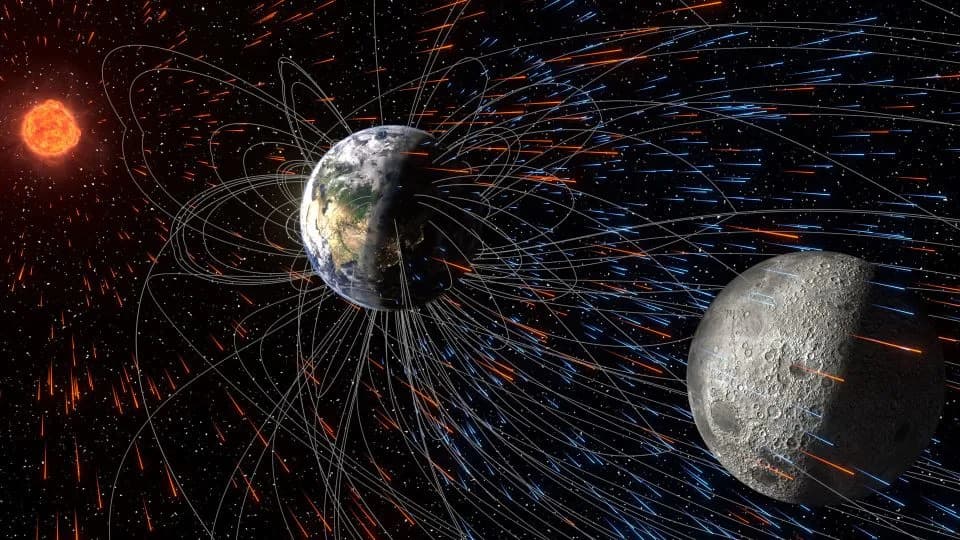
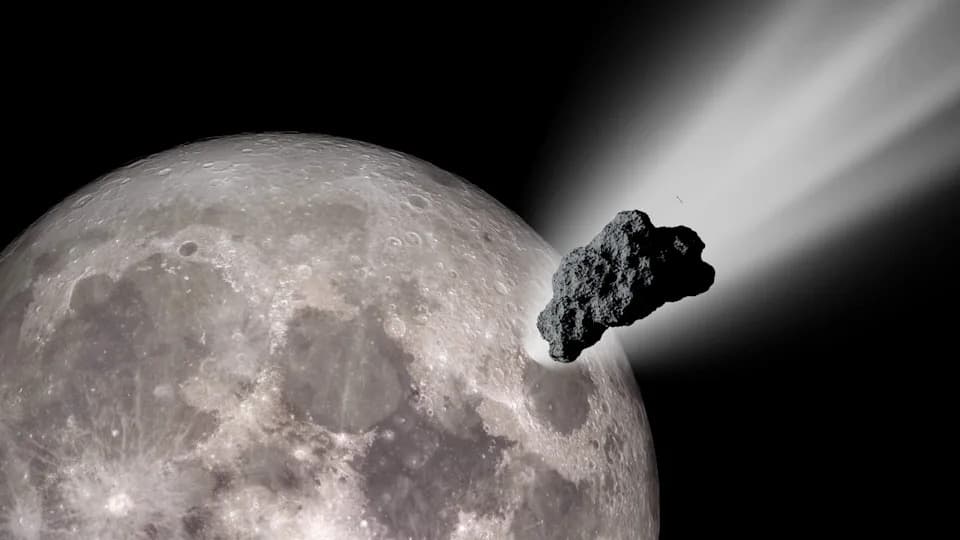
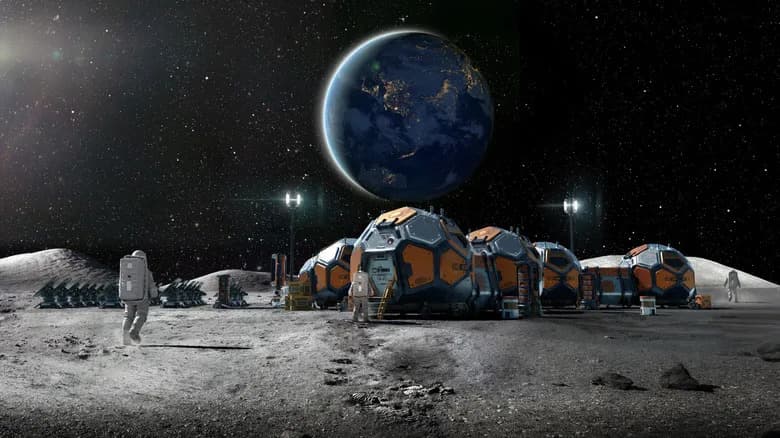
Credit: University of Rochester illustration / Shubhonkar Paramanick.
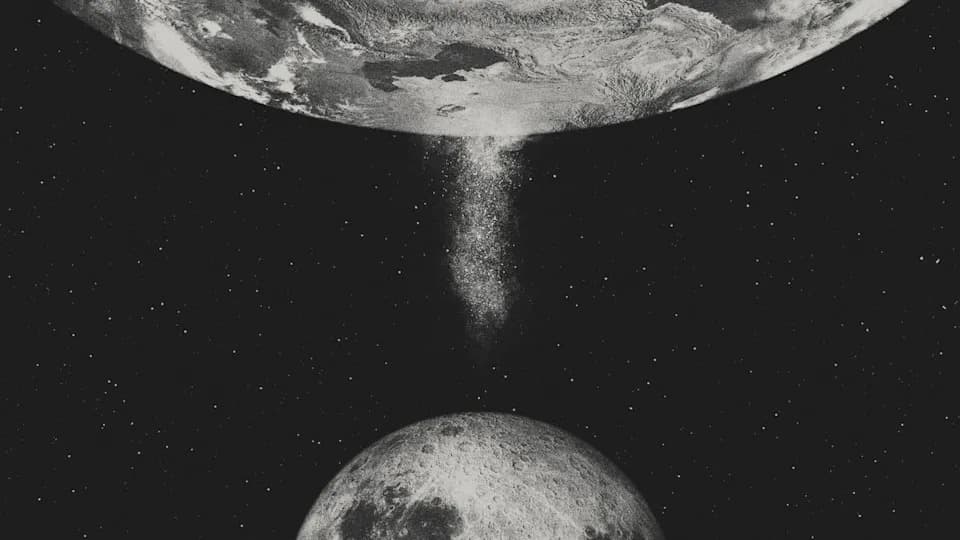
Scientists have long been puzzled by traces of Earth-derived material — including water — in Apollo-era lunar soil. New research combining Apollo regolith measurements, solar-wind models and geomagnetic reconstructions suggests a surprising mechanism: Earth’s magnetic field may have guided charged atmospheric particles to the Moon.
Early Apollo samples of moon dust (regolith) contained small amounts of water along with carbon dioxide, helium, argon and unexpectedly high concentrations of nitrogen. While the solar wind can strip and push some particles outward, the nitrogen levels and other signatures were difficult to reconcile with simple escape models.
In 2005, a team led by researchers at the University of Tokyo proposed that particles escaped Earth billions of years ago during a period of a weak geomagnetic field. Later studies of iron-rich Greenland rocks, however, indicated Earth’s magnetic field around 3.7 billion years ago was much stronger than that hypothesis allowed.
Researchers at the University of Rochester revisited the problem in a study published in Nature Communications Earth & Environment. They combined direct measurements from Apollo regolith, solar-wind data and reconstructions of Earth’s magnetic field, then ran computer simulations comparing two scenarios: an “Early Earth” case with a weak geomagnetic field and intense solar wind, and a “Modern Earth” case with a stronger field and milder solar wind.
Surprisingly, the simulations showed the Modern Earth model better reproduces the mix of particles found in lunar regolith. The proposed explanation is that the solar wind stripped and ionized atmospheric particles, and the Earth’s magnetic field then guided those charged particles along field lines toward the Moon — acting less like a pure shield and more like a conveyor belt under certain conditions.
“By examining planetary evolution alongside atmospheric escape across different epochs, we can gain insight into how these processes shape planetary habitability,” said Shubhonkar Paramanick, an astrophysics graduate student at the University of Rochester and a co-author of the study.
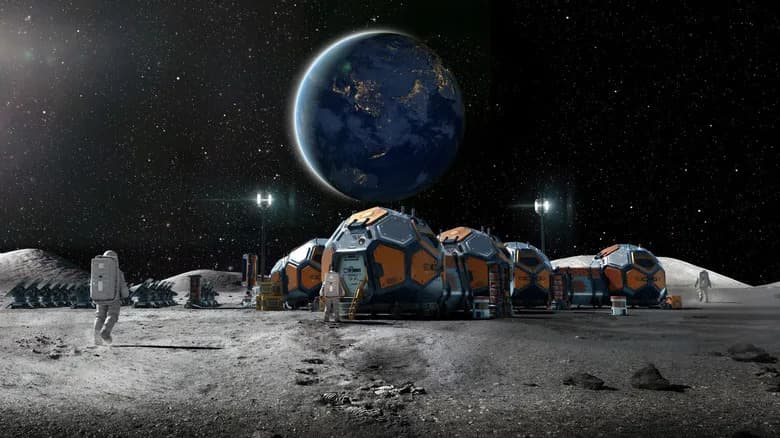
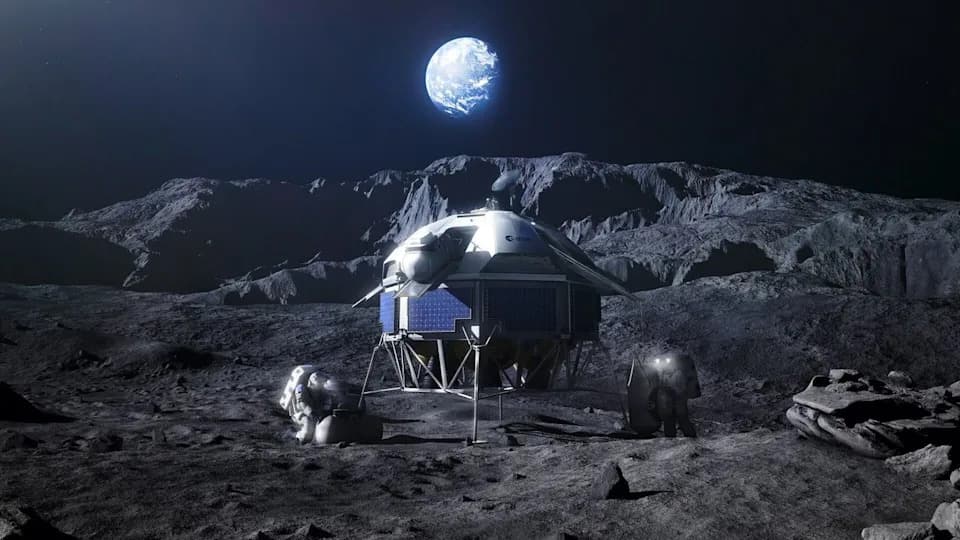
This reinterpretation has two main implications. First, the Moon’s regolith may preserve a long-term archive of Earth’s early atmosphere, offering a new window into our planet’s past. Second, delivery of water and other volatiles to the lunar surface could modestly reduce the logistics of future sustained human activities on the Moon and possibly aid in exploration of other bodies.
The findings also have broader relevance for planetary science: they suggest magnetic fields can play a dual role — shielding atmospheres from some forms of escape while channeling charged components under particular conditions. That nuance may matter when reconstructing atmospheric histories for planets such as Mars and for assessing past habitability across the Solar System.
Study Details: The work used a combination of laboratory analyses of Apollo samples, published solar-wind observations, geomagnetic field reconstructions and numerical simulations to test how charged particles could travel from Earth to the Moon under different ancient and modern conditions.
Lead Image: University of Rochester / Shubhonkar Paramanick
Originally featured on Nautilus.
Help us improve.