The PNAS study by Yuta Hirakawa and colleagues reports lab experiments showing that RNA-like polymers can form from plausible early-Earth ingredients when subjected to heating‑and‑drying cycles, with borate minerals stabilizing key sugars. The team argues that midsize impacts could supply and concentrate precursors, making RNA formation likely on many rocky planets. Critics note the experiments rely on human preparation of reagents and question how probable spontaneous RNA formation would be without guided conditions.
New PNAS Study: RNA Could Readily Form After Early-Planet Impacts — What That Means for Life Elsewhere

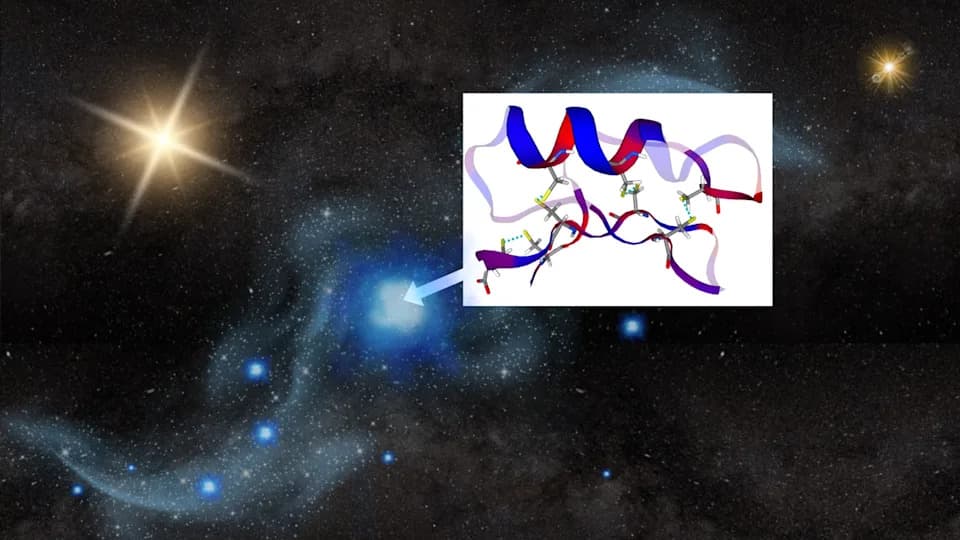
An artist’s impression of a single strand of ribonucleic acid, or RNA, a molecule thought to be an important precursor for life’s origins on Earth.
The origin of life remains one of science’s biggest unsolved questions. A new experimental study published in the Proceedings of the National Academy of Sciences (PNAS) by Yuta Hirakawa and colleagues proposes a plausible pathway for the formation of RNA-like molecules on the early Earth, and argues that similar chemistry could occur on other rocky worlds.
Laboratory Reconstruction of Early-Earth Chemistry
Hirakawa’s team recreated conditions thought to be common about 4.3 billion years ago. In controlled test-tube experiments they combined aqueous mixtures of ribose sugar, nucleobases, a reactive phosphorus source and borate-rich minerals, then subjected these mixtures to cycles of heating and drying meant to mimic impact-driven or geothermal environments on a young planet. The experiment produced RNA-like polymers that, with modest additional chemistry, could be converted into functional RNA.
Key Role of Borate Minerals
One of the study’s central findings is that borate minerals help stabilize unstable sugars such as ribose and promote reactions that form ribose phosphate and dehydrated phosphate—important intermediates in RNA assembly. Hirakawa summarizes:
"Borate is very important to stabilize the sugars, which are unstable molecules. The biggest finding of my research is that borate facilitates these reactions."
Impact Events as Triggers
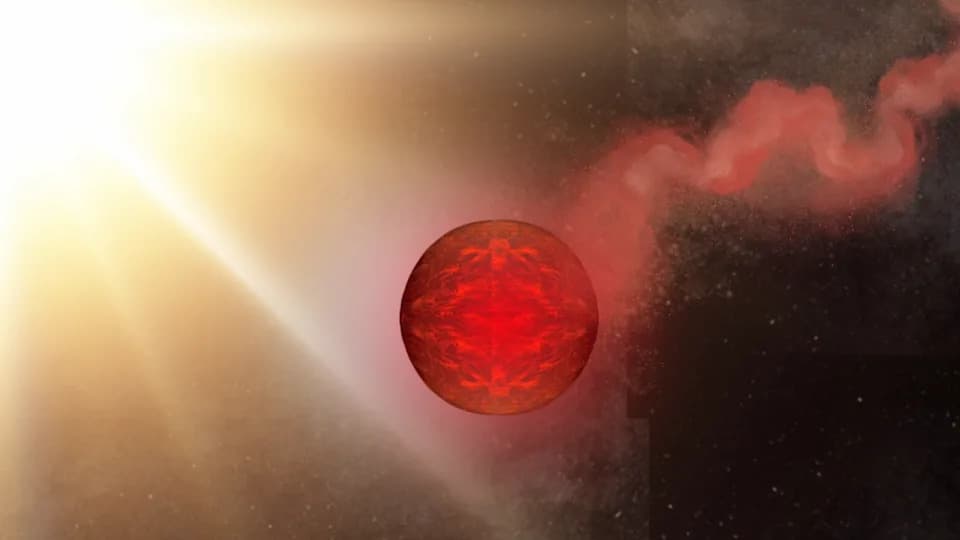
The authors propose that a midsize impact—on the order of the asteroid Vesta—could have delivered or concentrated the required precursor molecules and provided the heating-and-drying cycles needed to drive the chemistry. Planet-formation models indicate such impacts were relatively common during Earth’s accretion, so the scenario is plausible within current astrophysical understanding.
Planetary Context: Mars and Bennu
Supportive planetary evidence includes the detection of borate minerals on Mars and the identification of ribose in samples returned from asteroid Bennu by NASA’s OSIRIS-REx mission. Co-author Yoshihiro Furukawa notes that Bennu-like meteorites could have supplied ribose and related building blocks to the prebiotic Earth.
Implications and Big Claims
Steven Benner, a co-author, interprets the sequence of steps as suggesting that RNA could be an intrinsic chemical outcome on many rocky planets, which would raise the possibility that life is common across the cosmos:
"That RNA is an intrinsic outcome of planets everywhere ... would imply that there’s life everywhere."
Skepticism and Limitations
Not all experts are convinced. Lee Cronin (University of Glasgow), who was not involved in the work, argues that the experiments require careful human assembly of reactants and conditions, which weakens claims of natural plausibility. He also emphasizes the low statistical likelihood of assembling functional RNA without guided intervention and suggests many other molecules could plausibly serve as life's starting chemistry. Cronin nevertheless praises the borate-related findings as intriguing and valuable.
Conclusion
The new PNAS experiments strengthen a plausible pathway by which RNA-building chemistry could arise on a young planet, particularly in environments impacted by meteoritic collisions and influenced by borate minerals. While the work advances our understanding of prebiotic chemistry and highlights promising planetary contexts (Mars, meteorites like Bennu), crucial debates remain about how likely these pathways would play out in nature without directed or highly constrained conditions. Future work will need to test these reactions under more varied and less-controlled scenarios and to explore alternative molecular routes to life.
Help us improve.