This peer-reviewed PNAS study from the University of Arizona uses protein-domain phylogenies and NCBI sequence data to trace many protein components back to LUCA about four billion years ago. The authors argue that earlier models overemphasize modern biological frequencies and may misorder when the 20 canonical amino acids entered the genetic code. A notable result: tryptophan appears ~1.2% pre-LUCA vs ~0.9% post-LUCA, a relative 25% drop, suggesting competing early codes and noncanonical chemistry. The findings have implications for origin-of-life research and astrobiology, including possible chemistry on Enceladus.
We May Be Reading Life’s Origins Wrong — New Study Reorders How Amino Acids Entered the Genetic Code

We May Have Been Wrong About the Origin of LifePobytov - Getty Images
Researchers at the University of Arizona are challenging a long-standing reconstruction of how the 20 canonical amino acids became part of life’s genetic code. In a peer-reviewed paper in Proceedings of the National Academy of Sciences, senior author Joanna Masel and first author Sawsan Wehbi use protein-domain phylogenies and sequence data to show that many protein components trace back roughly four billion years to the last universal common ancestor (LUCA).
What the Study Did
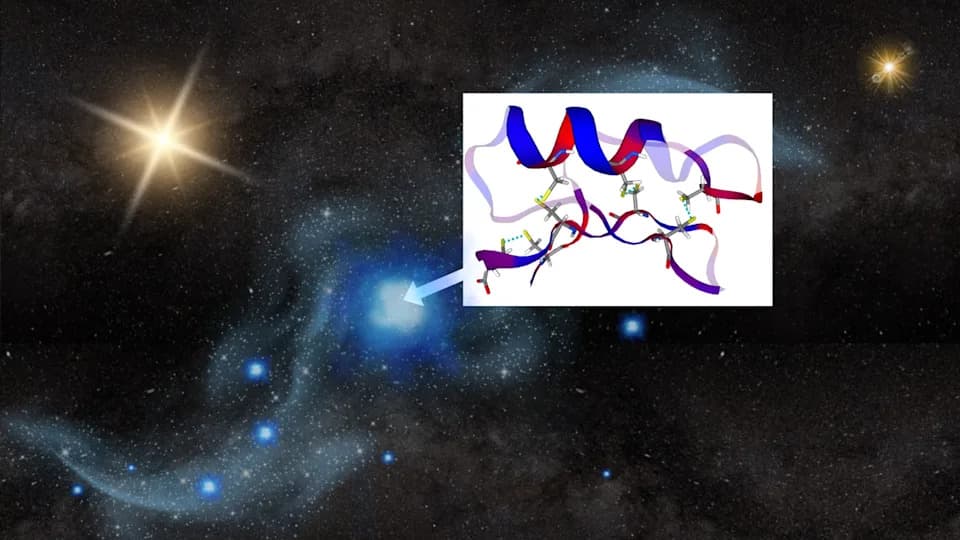
The team analyzed protein domains using specialized software and sequence records from the National Center for Biotechnology Information (NCBI) to build evolutionary histories for these modular protein parts. Protein domains are reused across many proteins, which Wehbi illustrated with a simple analogy: "It's a part that can be used in many different cars, and wheels have been around much longer than cars." By mapping which amino acids appear in domains that predate LUCA versus those that appear after, the authors tested assumptions about the order in which amino acids entered the genetic code.
Key Finding: Rethinking Amino Acid Order
Previous reconstructions tended to infer that amino acids most common in early biology must have been added earliest to the genetic code. The Arizona team argues this approach can be biased by later biological amplification of certain residues, and thus may misorder the true arrival times. One striking example is tryptophan (W), often cited as a late addition: the study reports ~1.2% W frequency in pre-LUCA data versus ~0.9% after LUCA — a relative drop of about 25%.
Interpretation and Hypotheses
Instead of a single, linear sequence of amino-acid additions, the authors suggest a more complex picture: competing early genetic codes, local environmental variation across Hadean Earth, and the use of noncanonical amino acids in ancient systems. They note that some amino acids could have been synthesized in different niches (for example, near alkaline hydrothermal vents) and later sorted by evolutionary dynamics.
“Stepwise construction of the current code and competition among ancient codes could have occurred simultaneously,” the authors write, adding that ancient systems might also have incorporated amino acids not used by modern life.
Astrobiology: Why This Matters Beyond Earth
The paper draws an astrobiological connection: abiotic synthesis of aromatic amino acids (like tryptophan) may be possible at water–rock interfaces such as those believed to exist beneath Enceladus’s icy shell. If similar chemistry operated on early Earth and on icy worlds, those environments become more compelling targets in the search for prebiotic chemistry or life.
Limitations and Next Steps
The authors emphasize the incompleteness of any reconstruction that reaches back to the origin of life, and they call for more data and refined models. Future laboratory simulations, additional comparative genomics, and targeted space missions sampling ocean worlds could help test these ideas.
Bottom line: The study argues we should be cautious about inferring the chronological order of amino-acid incorporation from modern biological frequency alone. A richer, spatially and chemically diverse view of early Earth — and possibly other worlds — may better explain how life built its molecular toolkit.
Help us improve.