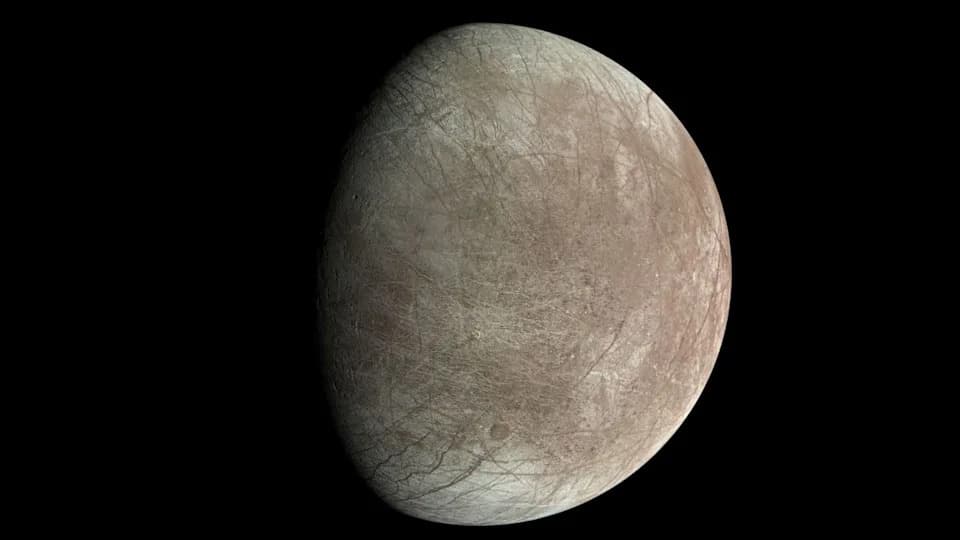
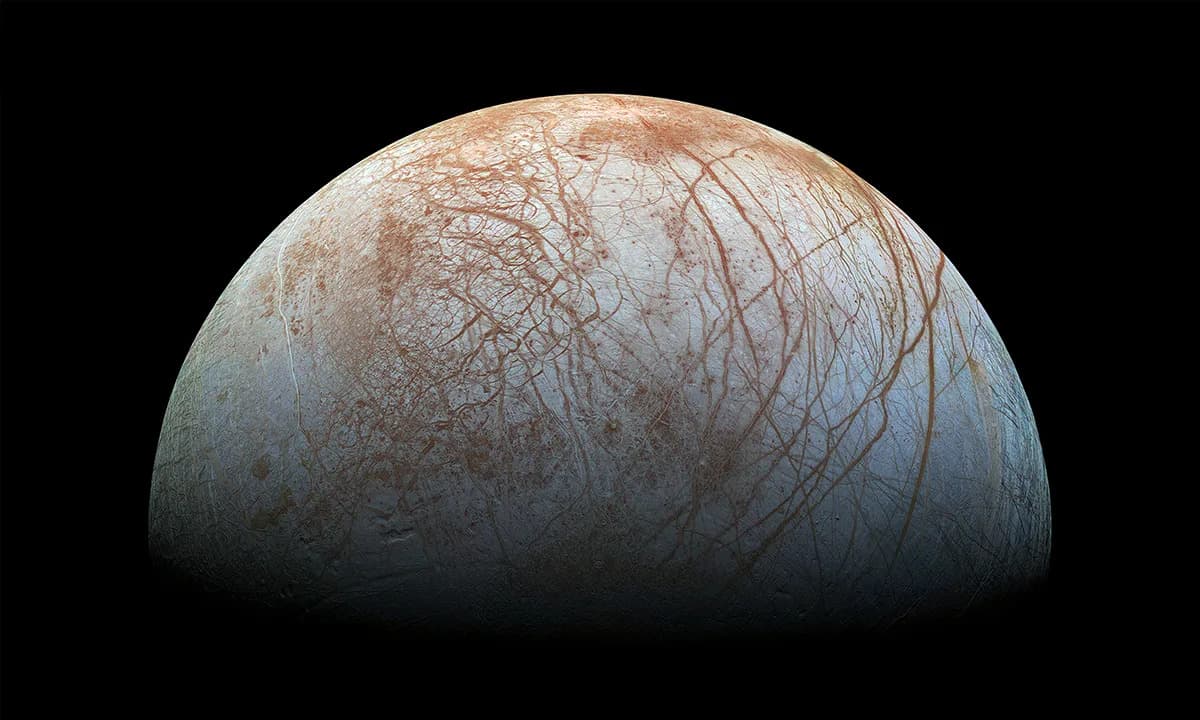
A team of planetary scientists analyzed a spider-like feature on Europa and named it Damhán Alla, Gaelic for “spider” or “wall demon.” The roughly one-kilometre structure shows dendritic, radiating channels that the authors compare to small Earth "lake stars," suggesting melt or briny water once flowed through fractures in the ice. Published in The Planetary Science Journal, the study proposes that pressurized brine broke through the shell, which would point to subsurface oceans or local brine pockets. NASA’s Europa Clipper could confirm these processes with future observations.
Spider-Like 'Damhán Alla' on Europa May Be Scars From Bursting Brine

Prof. Lauren Mc Keown
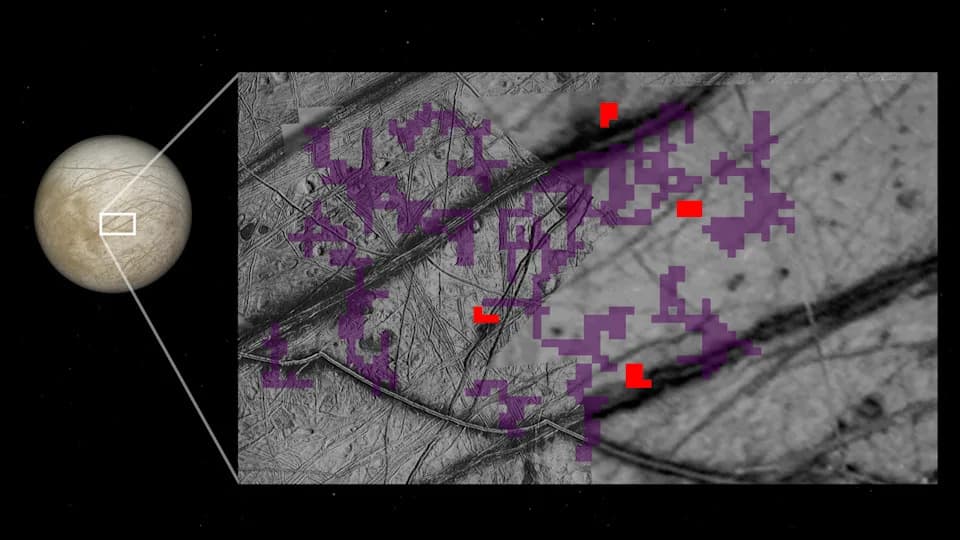
A team of planetary scientists has examined a striking spider-shaped feature on Jupiter's icy moon Europa and given it the evocative Gaelic name Damhán Alla (literally “spider,” sometimes rendered poetically as “wall demon”). The researchers argue that this formation — roughly one kilometre across — and other similar patterns on Europa may be the scars left where pressurized briny water pierced the moon’s frozen shell.
What the feature looks like
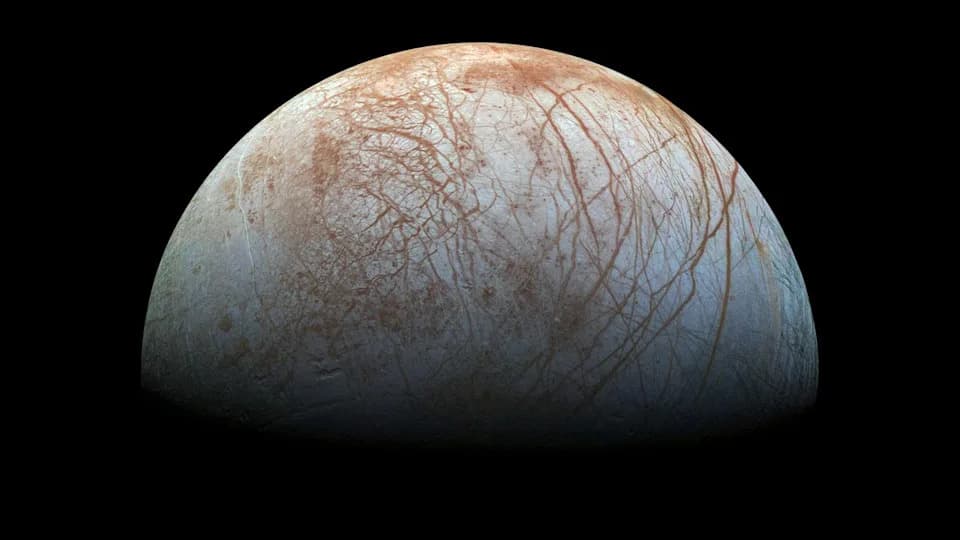
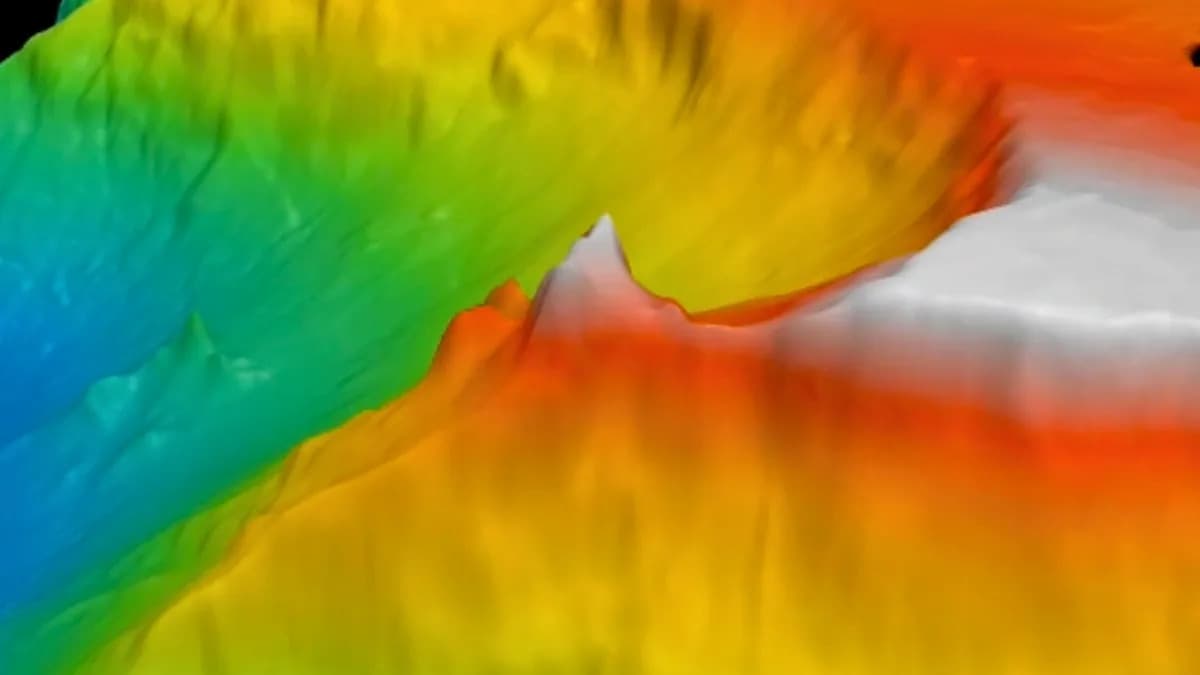
Damhán Alla resembles a central pit with numerous radiating, branching channels, a pattern scientists call dendritic. The structure was first recorded in images from NASA’s Galileo mission, which performed 11 flybys of Europa between 1989 and 2003.
How scientists interpret it
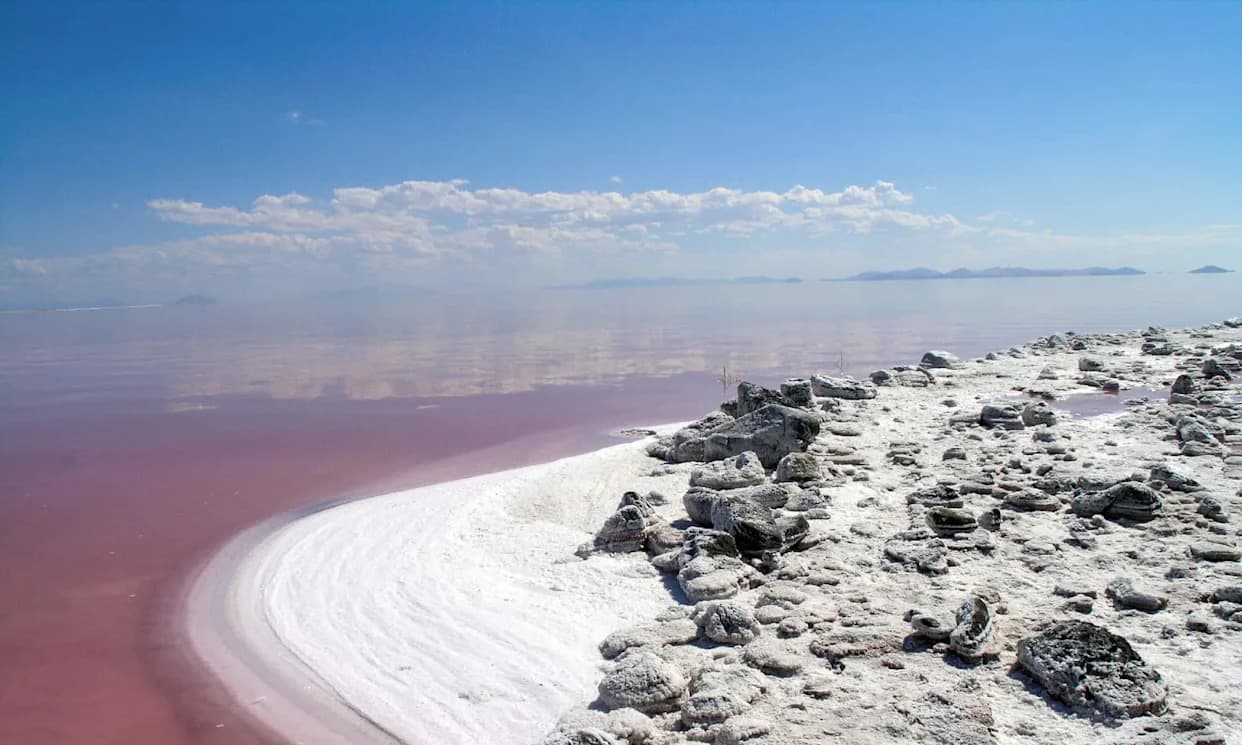
In a study published in The Planetary Science Journal, the research team compares the Europa structure to small terrestrial analogues called lake stars or ice stars. On Earth, lake stars form when meltwater flows through a hole in snow on top of frozen lakes and carves radial, branching channels a few feet across. The Europa patterns are far larger — about a kilometre across — but the similarity in geometry suggests a common process: water finding paths through weakened or fractured ice.
Lead author Lauren McKeown of the University of Central Florida said in a statement that such surface features can provide valuable clues about activity beneath the ice. The team’s favoured scenario is that an impact or other disruption fractured Europa’s ice shell, allowing pressurized, salty water to seep up and carve the observed channels before freezing or evaporating.
Why it matters
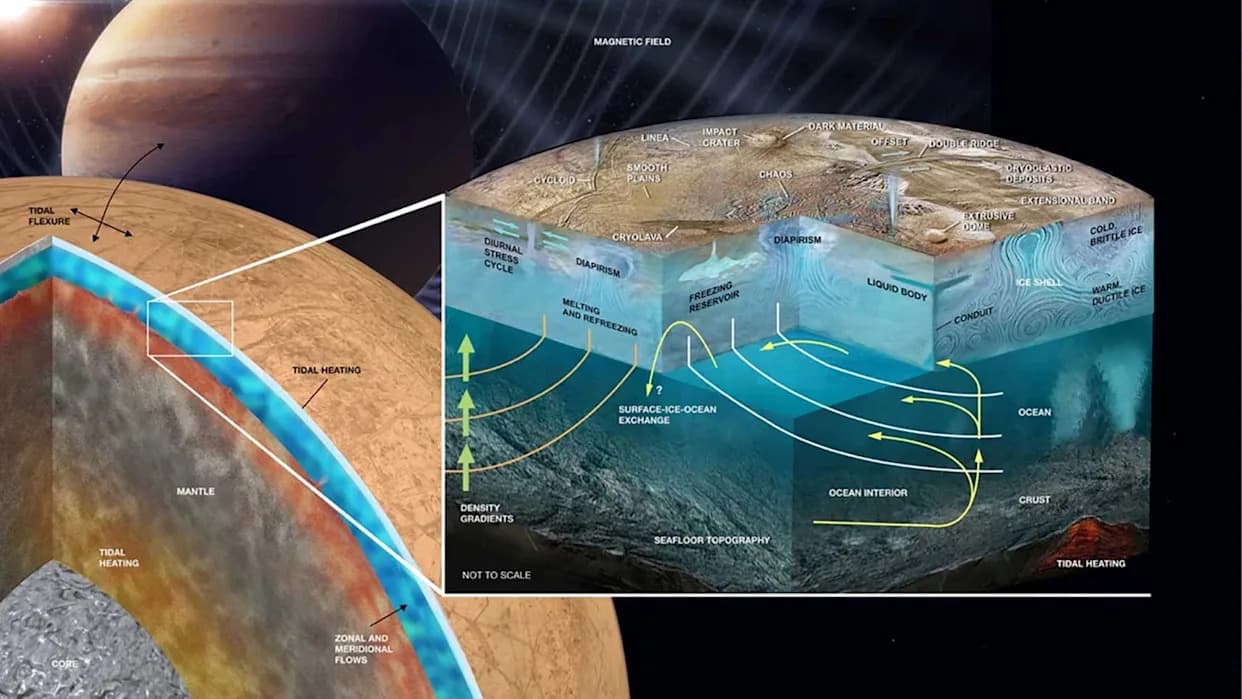
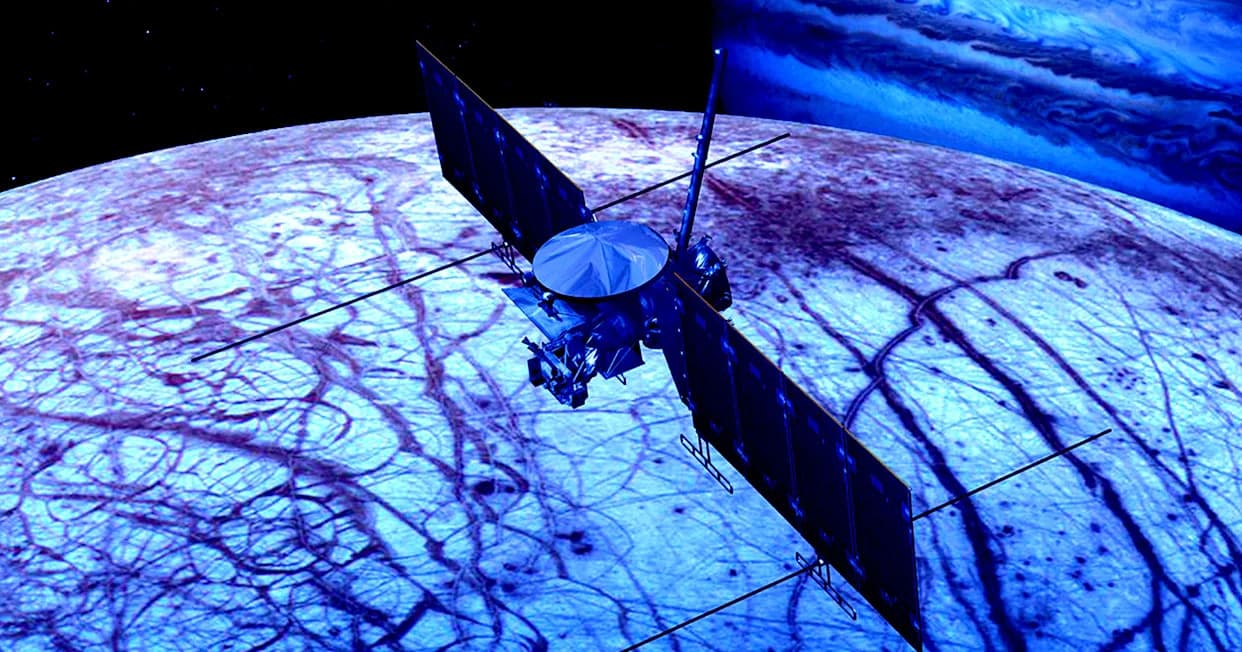
If these spider-like scars are indeed formed by erupting brine, they strengthen the case for either a global subsurface ocean or localized near-surface brine pockets on Europa — both of which are important for assessing the moon’s habitability. Future high-resolution observations from NASA’s Europa Clipper, currently en route to Jupiter, may identify more examples and test the brine-eruption hypothesis.
Bottom line: Damhán Alla is a compelling clue to ongoing or past water-driven processes on Europa and a useful target for upcoming missions seeking evidence of subsurface liquid on icy worlds.
Help us improve.