Reanalysis of Galileo spacecraft data reveals faint spectral signatures consistent with ammonia on Europa's icy surface, concentrated near surface fractures. Ammonia contains nitrogen and can lower water's freezing point, which could help liquid reservoirs persist in colder conditions. Because ammonia is rapidly altered by space radiation, its surface presence likely reflects recent delivery from beneath the ice. Europa Clipper, arriving in the Jupiter system in 2030, will probe these findings more deeply.
Galileo Data Shows Ammonia — A Life-Friendly Molecule — Reaching Europa's Surface
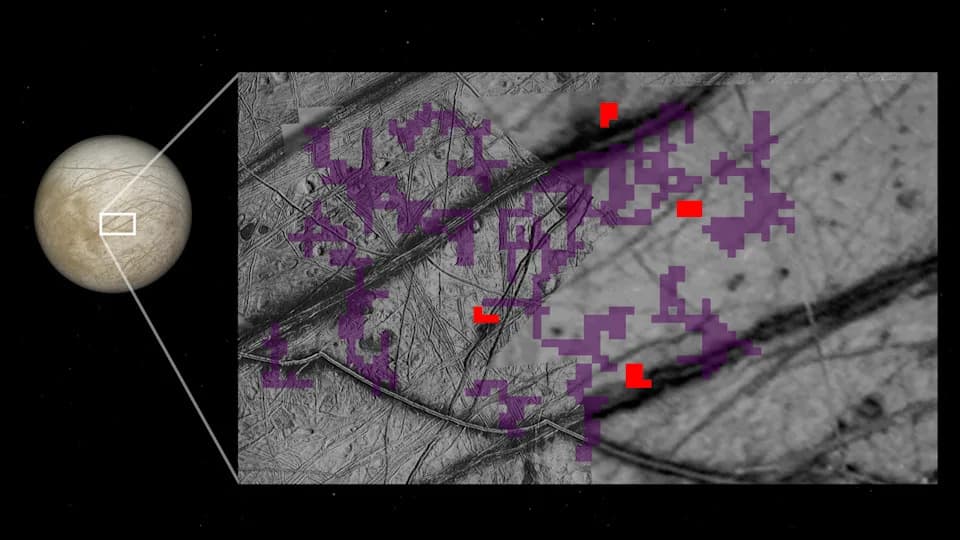
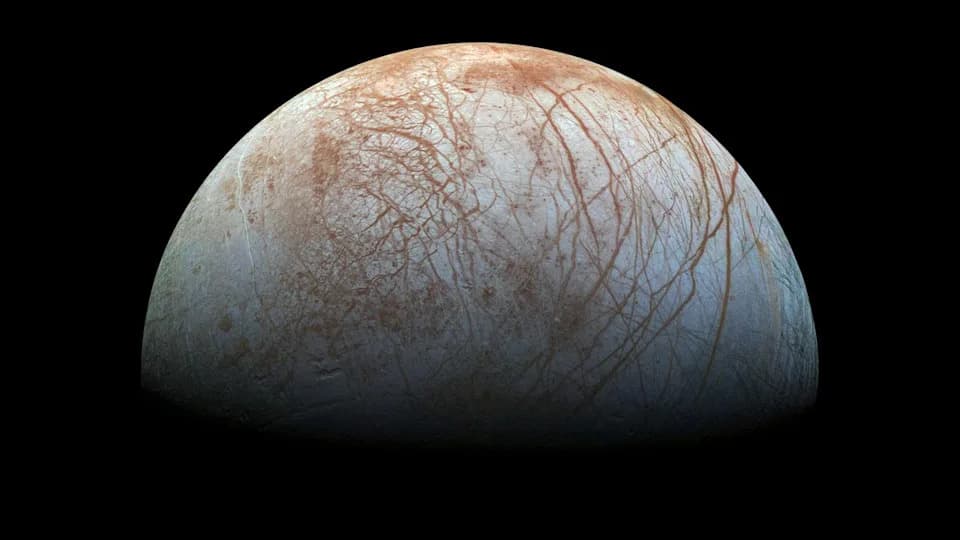
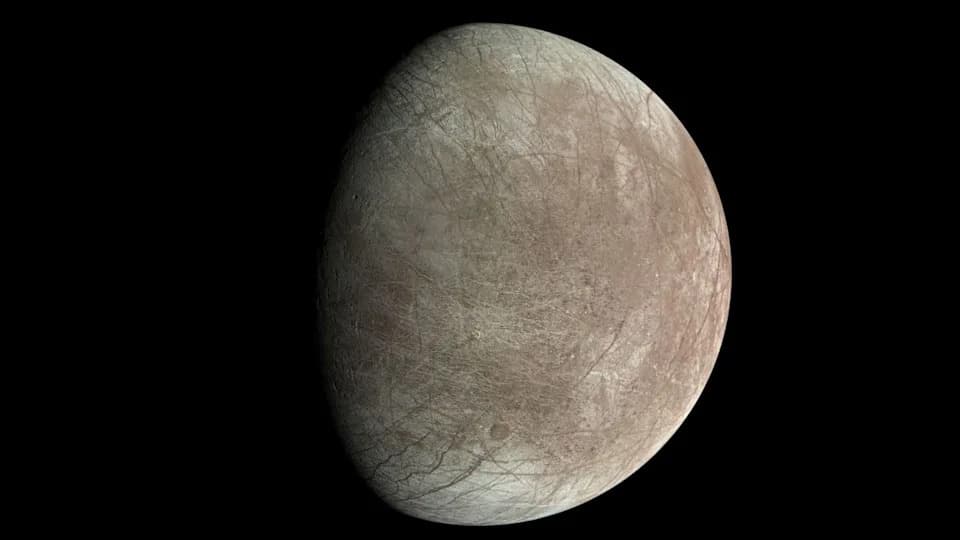
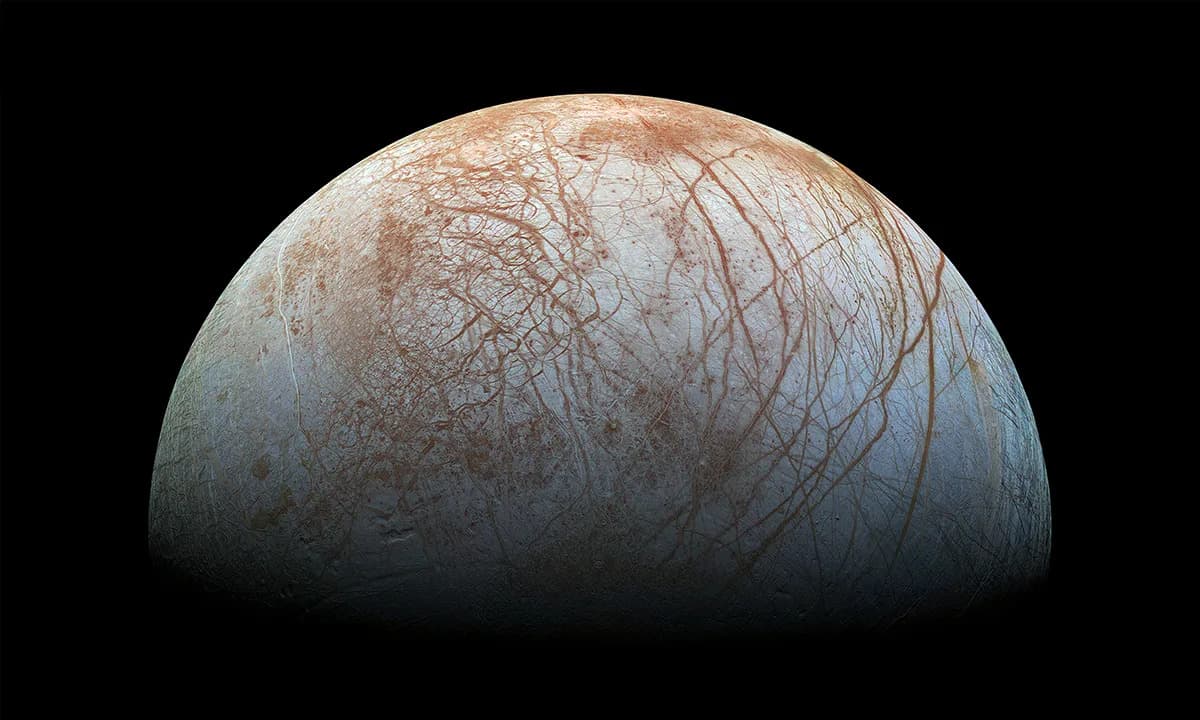
Ammonia-bearing compounds on Jupiter's moon Europa, shown in red, were found by the Galileo spacecraft in 1997. The finding was uncovered by a new analysis of the Galileo mission's data. | Credit: NASA/JPL-Caltech
Scientists reexamining archival data from NASA's Galileo spacecraft have found faint spectral signatures consistent with ammonia on the ice-covered surface of Jupiter's moon Europa. The signals were identified by Al Emran of NASA's Jet Propulsion Laboratory in near-infrared measurements taken in 1997 and reported last year in The Planetary Science Journal.
Why This Matters
Ammonia contains nitrogen, an element essential to the chemistry of life on Earth, and can act like an antifreeze when mixed with water, lowering its freezing point and helping liquid persist at colder temperatures. The detection — described by researchers as the first reported ammonia signal at Europa — therefore has important implications for the moon's potential habitability.
Where The Ammonia Might Come From
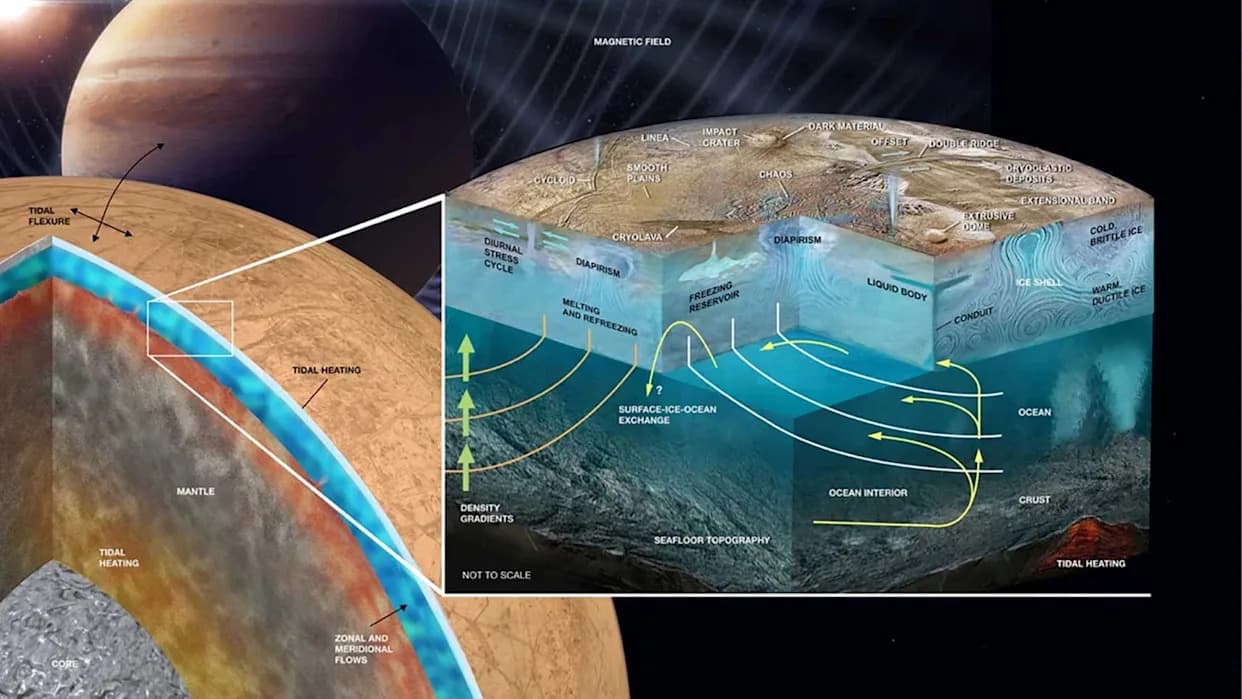
The ammonia-like signatures were concentrated near fractures in Europa's icy shell. Because ammonia is easily broken down by ultraviolet radiation and energetic particles in space, its presence on the surface suggests it was supplied relatively recently. NASA scientists propose the material was delivered from below — either from Europa's deep subsurface ocean or from a shallower layer beneath the ice — likely by cryovolcanic activity, resurfacing, or the exposure of subsurface pockets through fracturing.
Context And Caution
Galileo explored the Jupiter system from 1995 to 2003 before mission controllers deliberately sent the probe into Jupiter to avoid contaminating Europa. Although the mission ended more than two decades ago, modern analysis techniques and fresh scrutiny of archival datasets continue to produce new discoveries. Still, the ammonia signal is described as faint and localized; it is not a direct detection of life or a definitive measurement of Europa's ocean composition.
What Comes Next
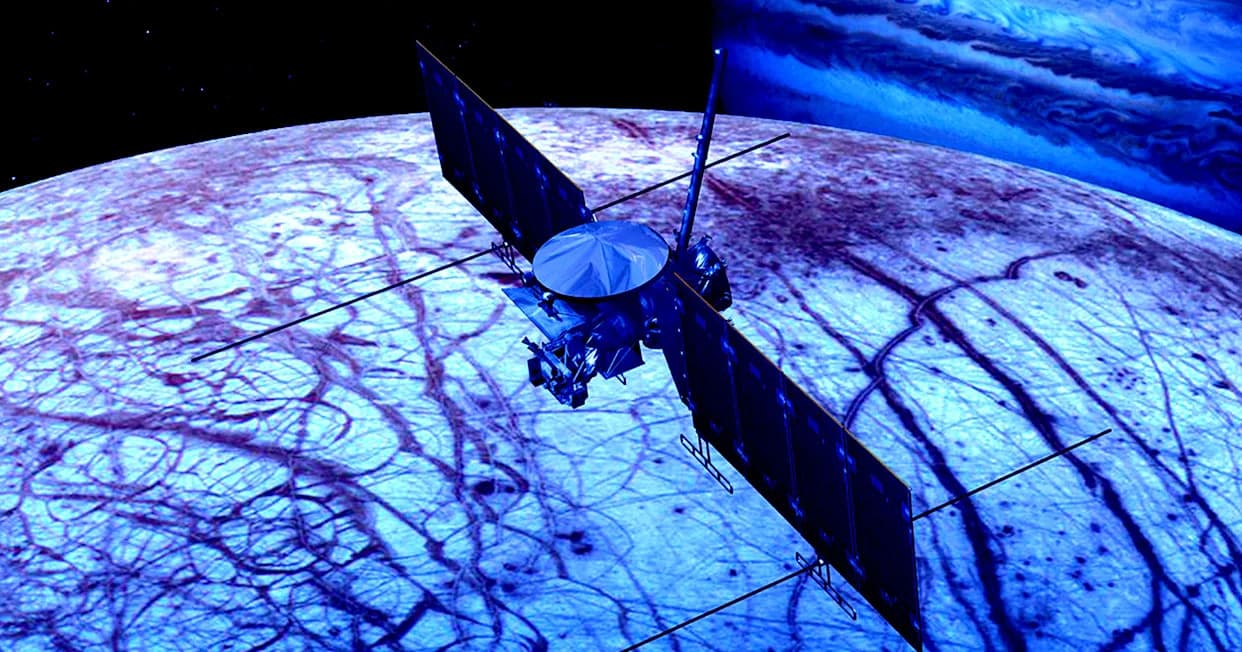
The Europa Clipper mission, launched in October 2024, is expected to arrive at Jupiter in April 2030. It will conduct focused, higher-resolution observations of Europa's surface and tenuous atmosphere to search for chemical signs of habitability and to test whether subsurface materials — including ammonia and other volatile compounds — are indeed reaching the surface.
Bottom line: Faint ammonia signals in Galileo’s 1997 data hint that nitrogen-bearing compounds may be transported from Europa’s interior to its surface, a finding that sharpens interest in the moon’s astrobiological potential and will be a target for Europa Clipper.
Help us improve.