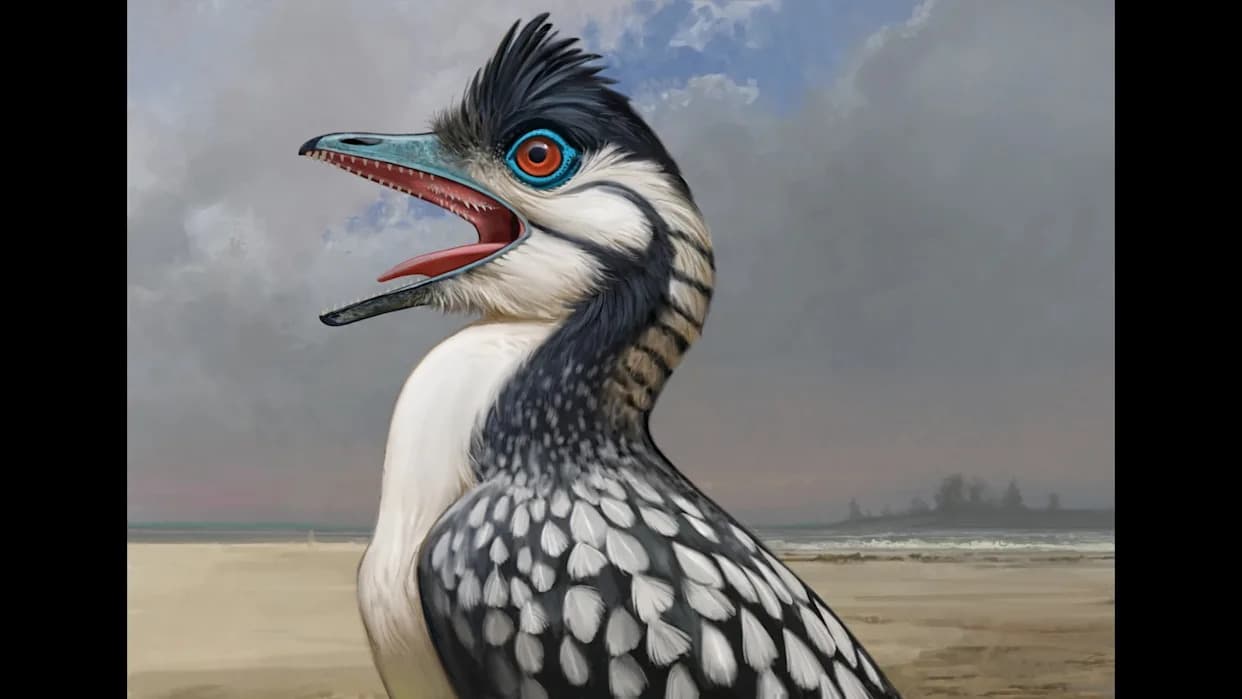
Chromeornis funkyi, a sparrow-sized bird from about 120 million years ago, was found fossilized with more than 800 tiny pebbles packed in its esophagus. The pebbles differ from the surrounding rock and from one another, indicating they were swallowed during life. Because this species shows no evidence of a gastric mill and the objects include clay-like beads, researchers tentatively suggest illness or nutritional stress drove the bird to ingest the pebbles, and that attempting to regurgitate them caused fatal choking.
120-Million-Year-Old Bird Found Choked By 800+ Pebbles — A Paleontological Puzzle

Unusual Fossil Reveals a Fatal Load of Pebbles
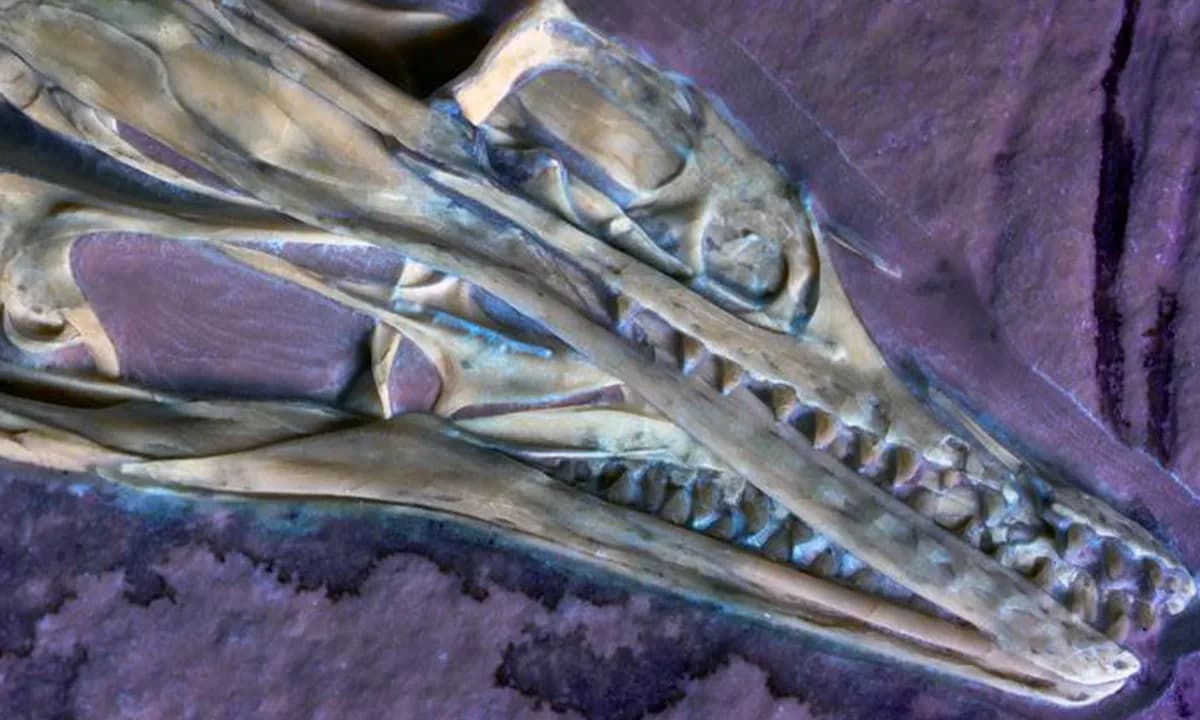
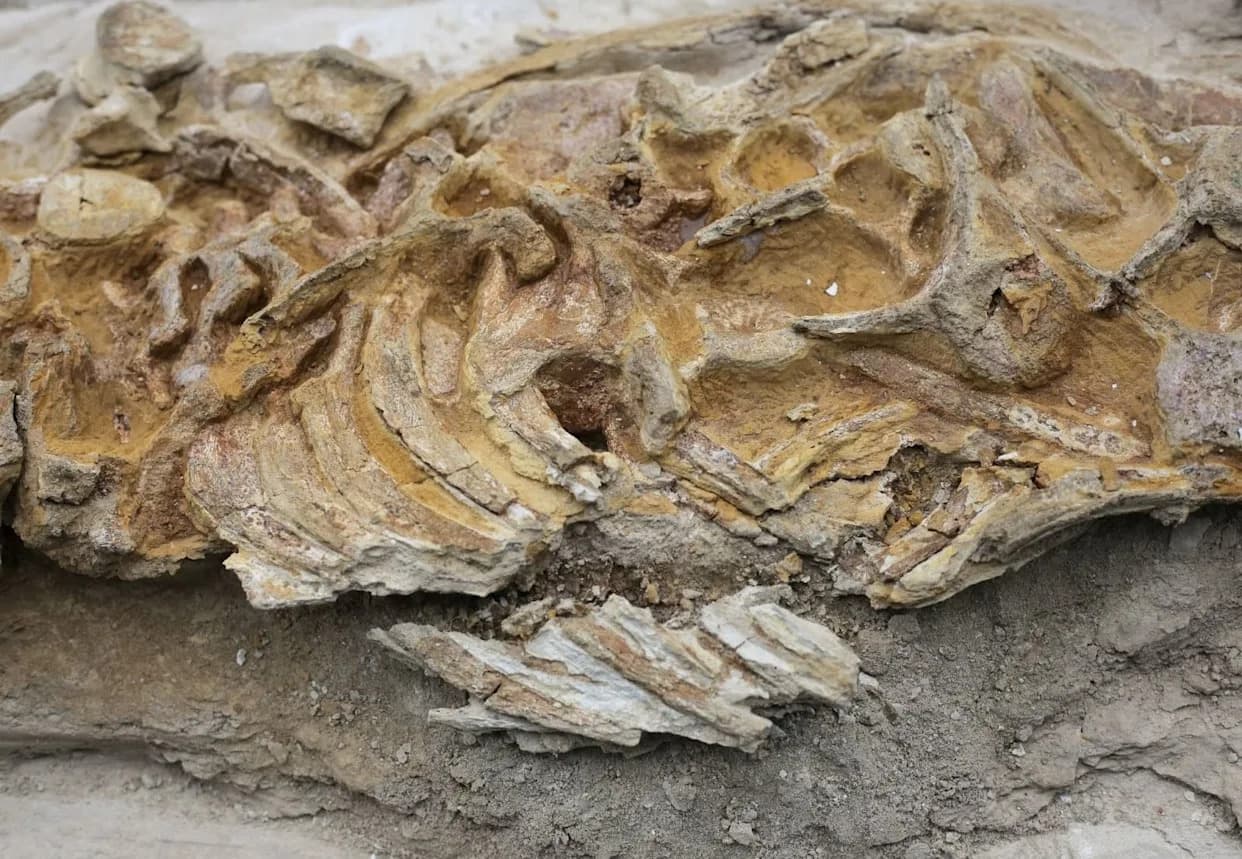
A sparrow-sized prehistoric bird, Chromeornis funkyi, discovered in the Shandong Tianyu Museum (China), was fossilized with more than 800 tiny pebbles lodged in its throat. The specimen comes from an exceptionally preserved Lagerstätte, allowing scientists to see not only the skeleton and beak but also outlines of skin, feathers, traces of eye pigment and hints of muscle tissue.
Field Museum paleontologist Jingmai O'Connor, who examined the specimen, calls the find ‘‘unprecedented.’' She notes that it is rare to identify a likely cause of death in an individual fossil. "Even though we don't know exactly why this bird swallowed so many pebbles, the mass stuck in its esophagus was almost certainly fatal," O'Connor says.
"It's pretty rare to be able to know what caused the death of a specific individual in the fossil record. I'm fairly certain that regurgitation of that mass caused it to choke, and that's what killed that little bird." — Jingmai O'Connor
What the Stones Tell Us
Careful analysis showed the pebbles differ in mineralogy from the surrounding rock matrix and from one another, which strongly suggests they were swallowed while the bird was alive rather than deposited after death. Some of the objects appear to be tiny clay balls rather than conventional stones.
Many modern birds swallow gastroliths—stones retained in a muscular gizzard (the gastric mill) to help grind food. But Chromeornis belongs to the extinct family Longipterygidae, which shows no evidence of a gastric mill, and the sheer number and volume of pebbles are far greater than would be expected for a bird weighing roughly 33 grams (about 1.16 ounces). Based on these observations, researchers conclude the stones were unlikely to have been used for normal digestive grinding.
A Tentative Hypothesis: Illness or Nutritional Stress
The team proposes a cautious hypothesis: the bird may have been ill or otherwise physiologically stressed and began ingesting unusual objects. Some living birds do swallow non-food items when sick—perhaps to dislodge parasites or to compensate for mineral deficiencies. In Chromeornis's case, it may have swallowed an excessive number of small pebbles and then tried to regurgitate them as a single mass, which became lodged in the esophagus and caused fatal choking.
While this scenario cannot be proven definitively, the combination of exceptional preservation and the stones' mineral composition makes the pathologic explanation plausible and uniquely informative about individual behavior in deep time.
Broader Significance
This specimen offers a rare, intimate view of the life—and possible vulnerabilities—of an early bird lineage. Chromeornis and its relatives ultimately disappeared from the fossil record by the end of the Cretaceous period. Studying such well-preserved fossils helps paleontologists reconstruct ancient ecologies and may even shed light on factors that made some lineages more vulnerable to extinction.
Publication: The find and interpretation are reported in Palaeontologica Electronica.
Help us improve.