Foskeia pelendonum is a newly named Early Cretaceous herbivore from northern Spain about 125 million years old. At roughly 0.5 metres long, its unusually shaped skull and teeth suggest a previously unrecognized feeding strategy. Published in Papers in Paleontology, the find — first made by the director of the Dinosaur Museum in Salas de los Infantes — could force a reassessment of early ornithischian and ornithopod evolution.
Chicken-Sized Dinosaur From Spain Challenges Evolutionary Ideas
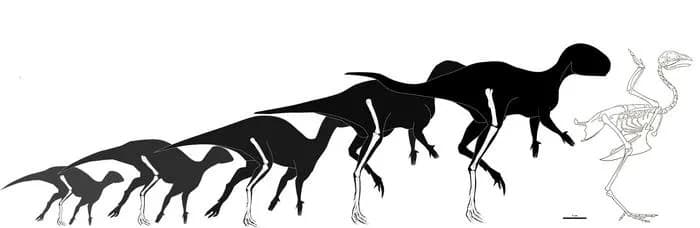
The growth trajectory ofF. pelendonumcompared with an adult chicken.Dieudonné et al., 2026
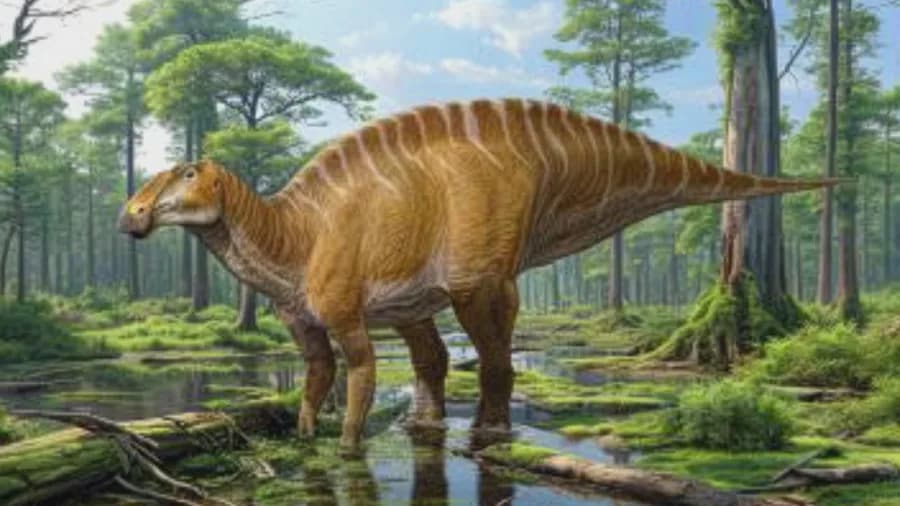
A tiny plant-eating dinosaur roughly the size of a chicken has been described from fossils found in northern Spain, and its unusual anatomy is forcing paleontologists to rethink parts of dinosaur evolutionary history.
Foskeia pelendonum — a species named from Greek words meaning "light" and "foraging" — lived during the Early Cretaceous about 125 million years ago. The animal measured roughly 0.5 metres long and displays an atypical skull and tooth shape that the authors of the new study say point to a likely novel mode of feeding.
The research, published in Papers in Paleontology (Dieudonné et al., 2026), includes a comparison of the growth trajectory of F. pelendonum with that of an adult chicken, highlighting the species' exceptionally small adult size.
“Its anatomy is weird in precisely the kind of way that rewrites evolutionary trees,”
said Penélope Cruzado-Caballero, an associate professor at the University of La Laguna and a co-author of the paper.
Fossils were first discovered by Fidel Torcida Fernández-Baldor, director of the Dinosaur Museum in Salas de los Infantes, who is also a co-author. He noted that the bones were remarkable for their minute size and said the findings "overturn global ideas on ornithopod dinosaur evolution."
Why This Discovery Matters
The unusual combination of skull and dental features in Foskeia pelendonum may indicate a previously unrecognized feeding strategy among ornithischian ("bird-hipped") dinosaurs. Because these traits do not fit neatly into established groups, the species could alter our understanding of relationships within ornithischians, particularly early ornithopods.
Future study of additional specimens and comparative analyses will be essential to place this species more precisely in the dinosaur family tree and to clarify how its anatomy relates to diet and ecology during the Early Cretaceous.
Help us improve.